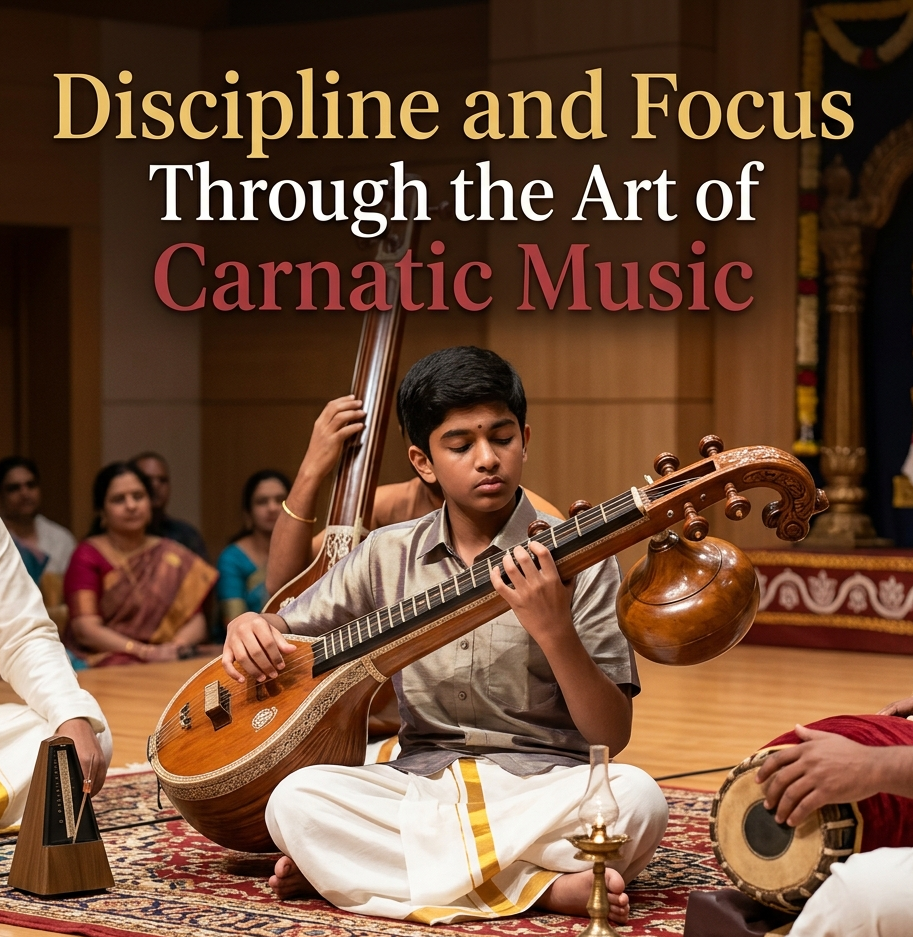
Discipline and Focus Through the Art of Carnatic Music
In today’s fast-moving world, distractions have become a constant part of everyday life. Notifications interrupt conversations, schedules leave little room for silence, and attention spans continue to shrink. As a result, many people struggle to develop patience, consistency, and deep concentration. While modern productivity techniques attempt to solve this challenge, ancient art forms have quietly nurtured these qualities for centuries. Among them, Carnatic music stands as a remarkable example of how discipline and focus can be cultivated naturally through practice, dedication, and mindful learning.
More than just a classical music tradition, Carnatic music is a journey of self-training. Every lesson, every note, and every rhythm pattern encourages the learner to sharpen the mind while developing emotional balance and inner stability. The process may appear artistic on the surface, yet beneath it lies a powerful system that teaches structure, commitment, and mental clarity.
The Foundation of Discipline and Focus in Carnatic Music
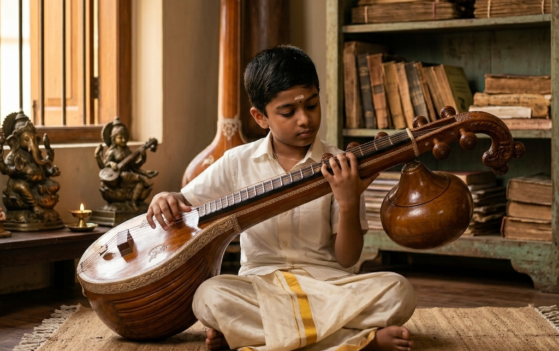
Originating in South India, Carnatic music is one of the oldest and most sophisticated forms of classical music in the world. Built upon ragas, talas, compositions, improvisation, and intricate rhythmic structures, it demands both creativity and precision from the learner. Unlike casual singing, Carnatic training follows a carefully designed progression where students gradually move from basic exercises to advanced improvisational techniques.
At the beginning, students spend significant time mastering simple swara patterns and vocal exercises. Although repetitive, these exercises build the essential foundation required for higher learning. Through this process, learners understand that growth does not happen instantly. Instead, improvement emerges through steady effort and regular practice.
This gradual approach itself becomes an important lesson in discipline. Modern lifestyles often encourage quick results, yet Carnatic music teaches the value of patience. Students begin to realize that mastery cannot be rushed, and consistency becomes more important than speed.
Daily Practice as the Key to Discipline and Focus
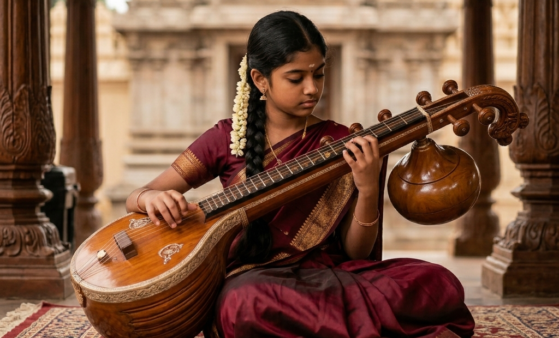
One of the strongest aspects of Carnatic training is the importance given to regular practice, commonly known as sadhakam. Progress in music depends heavily on repetition and refinement. A student who practices daily, even for a short duration, develops stronger control than someone who practices occasionally for long hours.
Over time, this routine transforms into a habit of self-discipline. Learners become more aware of time management because practice requires commitment and scheduling. Early morning vocal training, breath control exercises, and rhythm practice slowly shape a structured lifestyle.
Furthermore, Carnatic music encourages learners to remain accountable to their own progress. Teachers provide guidance, but personal dedication determines improvement. This creates a sense of responsibility where students learn to push themselves with sincerity and consistency.
Another important aspect is perseverance. Certain ragas or rhythmic patterns may initially seem difficult to understand. However, repeated attempts slowly strengthen confidence and patience. Instead of giving up easily, learners become comfortable with gradual progress. Such resilience often extends beyond music and positively influences academic, professional, and personal life.
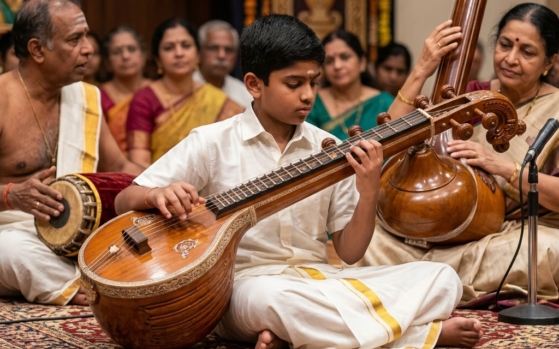
How Carnatic Music Enhances Focus and Concentration
Focus is not developed overnight. It grows through activities that demand sustained attention, and Carnatic music is deeply rooted in concentrated listening and mindful execution.
When learning a composition, students must carefully observe pitch, pronunciation, rhythm alignment, and emotional expression simultaneously. Even a slight lapse in concentration can affect the flow of the performance. Because of this, the mind gradually learns to remain attentive for longer durations.
Listening also plays a major role in Carnatic training. Students are encouraged to listen closely to their teachers and experienced musicians. Such attentive listening sharpens auditory memory and improves mental alertness. Gradually, learners begin identifying subtle differences in ragas, tonal variations, and rhythmic movements. This process strengthens cognitive focus in a highly natural manner.
Additionally, improvisational elements such as alapana and kalpana swaras require intense mental engagement. The musician must think creatively while staying within the framework of the raga and tala. As a result, the brain learns to balance imagination with control. This combination significantly improves concentration and mental flexibility.
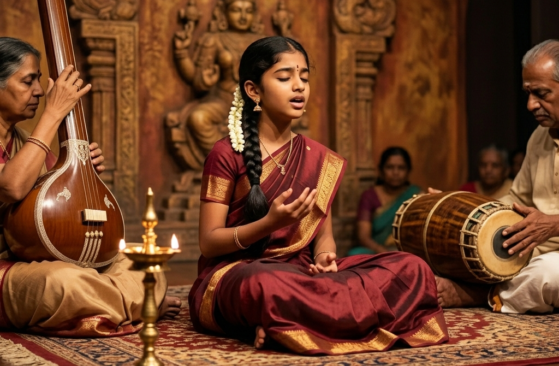
Rhythm Training for Greater Discipline and Focus
Rhythm in Carnatic music is far more than keeping time. The tala system involves structured rhythmic cycles that require accuracy and continuous awareness. Students often practice complex rhythmic patterns using hand gestures and vocal recitation. Such exercises engage both the mind and body together, creating stronger coordination and mental discipline.
As learners advance, they begin handling increasingly intricate rhythmic combinations. Performing these patterns correctly demands calmness and precision. Consequently, students learn to remain mentally present and composed under pressure.
Interestingly, rhythmic training can also create a meditative effect. Repeating patterns with focus helps quiet unnecessary thoughts and improves mental stability. Many learners experience a sense of inner calm after practice sessions because music channels attention into a single purposeful activity.
This ability to remain centered becomes especially valuable in modern life where stress and overstimulation are common challenges.
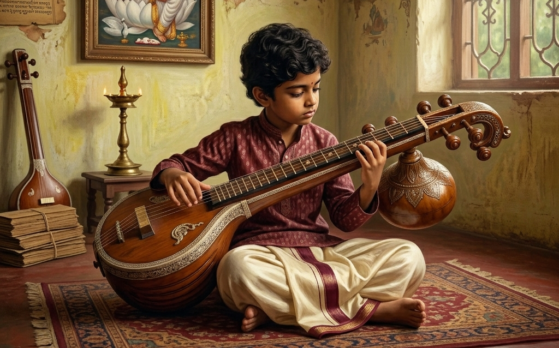
Patience and Emotional Control Through Musical Learning
Carnatic music is not merely technical; it is deeply emotional and expressive. Yet emotional expression in this art form is guided by discipline rather than impulsiveness. Students must first gain control over voice, rhythm, and phrasing before expressing deeper musical emotion effectively.
This balance between emotion and structure teaches an important life lesson. Feelings become more meaningful when guided with awareness and restraint. Learners gradually develop emotional maturity because music encourages reflection, sensitivity, and patience.
Performing before an audience also strengthens emotional control. Stage performances can create nervousness and pressure, particularly for young students. However, repeated exposure helps them manage anxiety and build confidence. Over time, performers learn to stay calm and focused even in demanding situations.
Such experiences nurture inner strength and self-belief, qualities that extend well beyond the world of music.
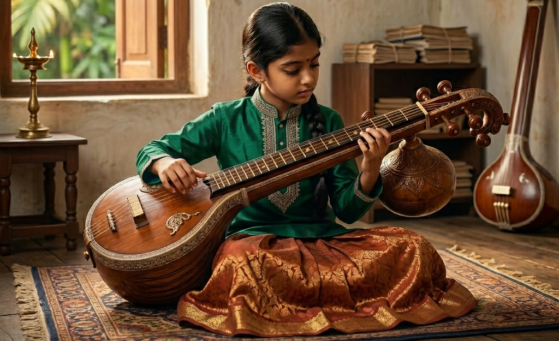
The Guru-Shishya Tradition in Shaping Discipline and Focus
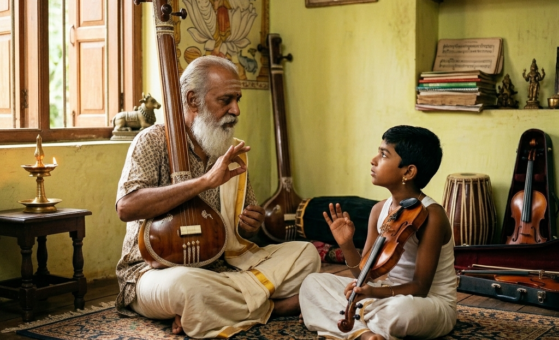
A significant aspect of Carnatic music education is the traditional teacher-student relationship known as the Guru-Shishya Parampara. This system is built on respect, humility, dedication, and trust.
Students are encouraged to approach learning with sincerity and openness. The process teaches them to value guidance and remain patient during gradual improvement. Unlike environments driven purely by competition, Carnatic training emphasizes growth through devotion and disciplined effort.
Moreover, observing experienced musicians inspires learners to appreciate lifelong learning. Even accomplished artists continue practicing and refining their craft. Witnessing this humility encourages students to adopt a similar mindset in their own lives.
The teacher’s influence often shapes not only musical ability but also personal character. Values such as punctuality, perseverance, respect, and commitment become naturally integrated into the learner’s behavior.
Mindfulness, Discipline and Focus Through Carnatic Music
In many ways, Carnatic music functions as a form of mindfulness. Singing or practicing an instrument requires complete presence in the moment. The mind cannot wander while maintaining pitch accuracy, rhythmic alignment, and expressive clarity together.
Because of this, regular musical practice creates mental discipline similar to meditation. Learners become more aware of breath, sound, timing, and emotion. Gradually, they develop a stronger connection between mind and action.
Unlike temporary motivation techniques, this form of focus develops steadily over years of practice. The discipline acquired through music becomes deeply internalized and continues influencing daily habits, communication, and thought processes.
Even individuals who do not pursue music professionally often carry these benefits throughout life. Students trained in Carnatic music frequently demonstrate improved patience, stronger concentration, and greater emotional balance in other areas such as academics, leadership, and creative pursuits.
The Relevance of Carnatic Music in the Modern World
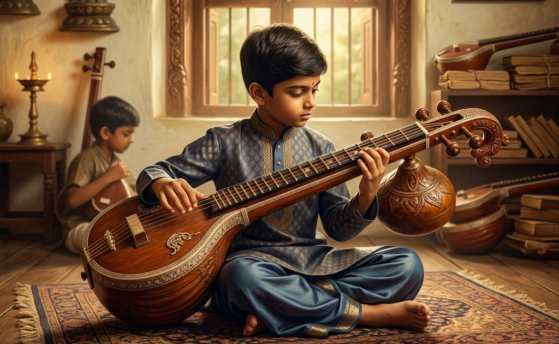
Despite being an ancient art form, Carnatic music remains highly relevant today. Modern society increasingly values multitasking and constant stimulation, yet these habits often weaken attention and mental clarity. Carnatic training offers a meaningful counterbalance by encouraging stillness, consistency, and mindful engagement.
Parents also recognize the value of music education beyond performance. Many introduce children to Carnatic music not only to preserve cultural heritage but also to help develop discipline, listening skills, and confidence from an early age.
Similarly, adults who return to music later in life often describe it as a deeply grounding experience. The structured practice routines and immersive concentration provide relief from stress while fostering emotional stability.
In this sense, Carnatic music serves both as an artistic pursuit and a powerful tool for personal development.
Conclusion
People develop discipline and focus through meaningful and consistent practice rather than instant effort. Carnatic music nurtures these qualities in a unique way by blending structure, creativity, patience, and mindfulness into a deeply enriching learning experience. Through programs like Carnatic Vocal Lessons Online at The Mystic Keys, learners of all ages can experience how structured musical training strengthens both the mind and character.
When learners practice every raga with dedication, repeat every tala with precision, and approach every lesson with humility, they gradually strengthen their minds. Along with creating skilled musicians, Carnatic training develops individuals who think attentively, remain emotionally balanced, and respond to challenges with resilience.
In a world overflowing with distractions, Carnatic music encourages people to slow down, listen carefully, and commit themselves wholeheartedly to growth. Its timeless traditions continue to inspire learners to pursue not only musical excellence but also greater discipline and focus in everyday life.
For more information and exciting resources about learning music, visit our website at The Mystic Keys. For more music content and exciting offers follow us on
Facebook, Instagram, YouTube, LinkedIn, Twitter, Pinterest, and Threads.