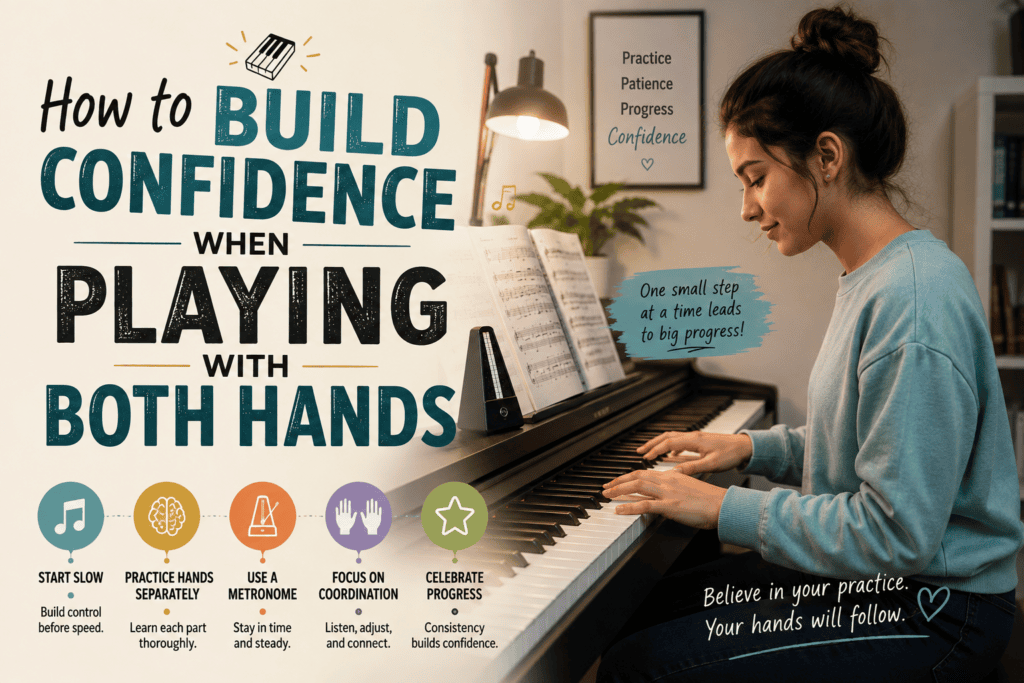
How to Build Confidence When Playing With Both Hands
Learning to play the piano with both hands is one of the most important milestones for any pianist. At first, coordinating two hands can feel surprisingly difficult. One hand may seem comfortable on its own, but once the other hand joins in, the rhythm can become uneven, notes may be missed, and simple passages can suddenly feel complicated. Building confidence while playing with both hands takes patience, coordination, and a practice approach that allows your brain and fingers to adapt gradually.
The challenge is not necessarily that the music is difficult. Your hands are simply being asked to perform different movements at the same time. The right hand may be playing a melody while the left hand provides chords or accompaniment. Sometimes both hands follow different rhythms, making coordination even more demanding. With consistent practice, however, these movements gradually become more familiar, and what once felt complicated begins to feel natural.
Confidence comes from knowing that you can control what your hands are doing. Rather than rushing toward difficult pieces, pianists benefit from developing coordination step by step. The goal is not simply to get both hands through a piece once. The goal is to make the movements comfortable enough that you can play with control, musicality, and confidence.
Why Playing With Both Hands Feels Difficult
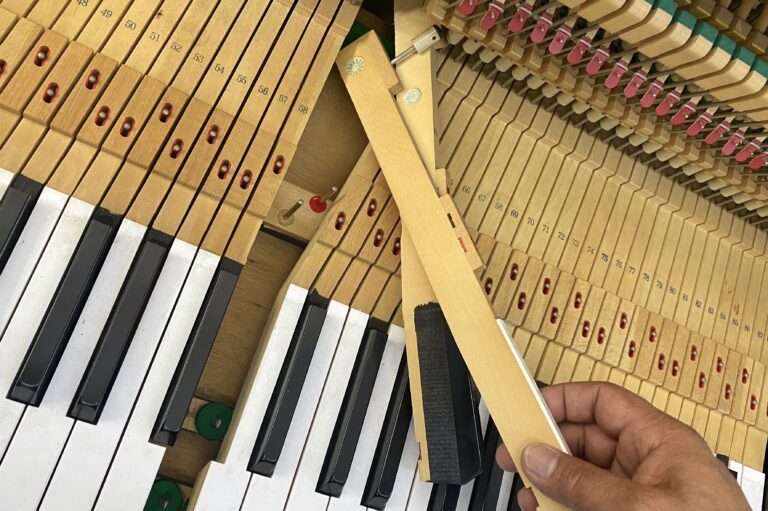
When learning a new piano piece, your brain has to process several things at once. You need to read the music, understand the rhythm, remember finger positions, coordinate both hands, and listen to the sound you are producing.
When playing with one hand, there are fewer things competing for your attention. Adding the second hand increases the amount of information your brain must process.
Your Brain Needs Time to Coordinate
The difficulty is completely normal, especially for beginners. Your brain is learning to control two separate movements while keeping them connected to the same musical pulse.
This coordination develops through repetition. The more correctly you repeat a movement, the more familiar it becomes.
Start With Simple Pieces
One of the biggest mistakes pianists make is choosing music that is too difficult.
If both hands are still developing coordination, beginning with a technically demanding piece can create unnecessary frustration.
Instead, choose a piece with a simple melody and predictable accompaniment.
Build Success Gradually
A simple piece that you can play confidently is more useful for developing coordination than a difficult piece that you cannot play accurately.
As your confidence increases, you can gradually introduce more complicated rhythms, wider hand movements, and independent musical lines.
Practice Each Hand Separately First
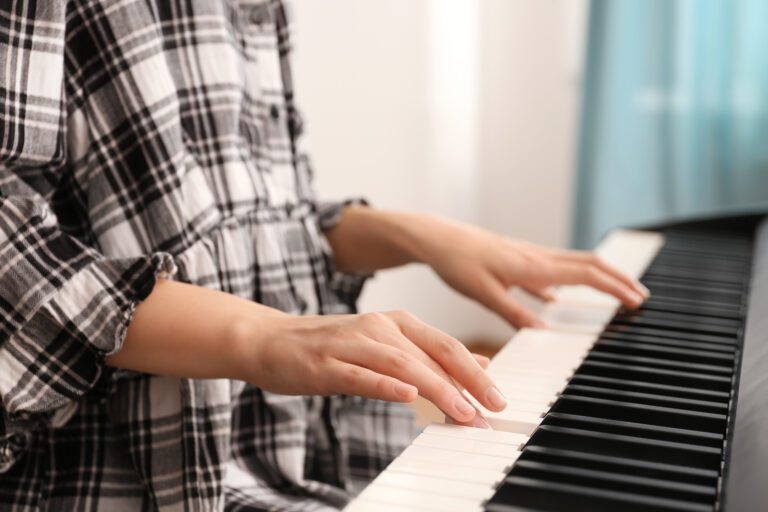
Practicing each hand independently is one of the most effective ways to prepare for playing together.
Learn the right-hand part until the notes and fingering feel familiar. Then work on the left-hand part separately.
This gives each hand a chance to understand its role before the two parts are combined.
Know Your Parts Before Combining Them
If you struggle with both hands simultaneously, return to separate-hand practice rather than repeatedly forcing yourself through mistakes.
The better you know each part independently, the easier it becomes to combine them.
Bring the Hands Together Slowly
Once both hands are reasonably comfortable separately, begin combining them at a very slow tempo.
Do not worry about performance speed.
Your priority should be accuracy and coordination.
Play a small section, stop, check your hands, and repeat it until the movement feels comfortable.
Slow Practice Builds Confidence
Slow practice gives your brain enough time to coordinate the two hands correctly.
As the movement becomes automatic, gradually increase the tempo.
Use Small Sections Instead of the Whole Piece
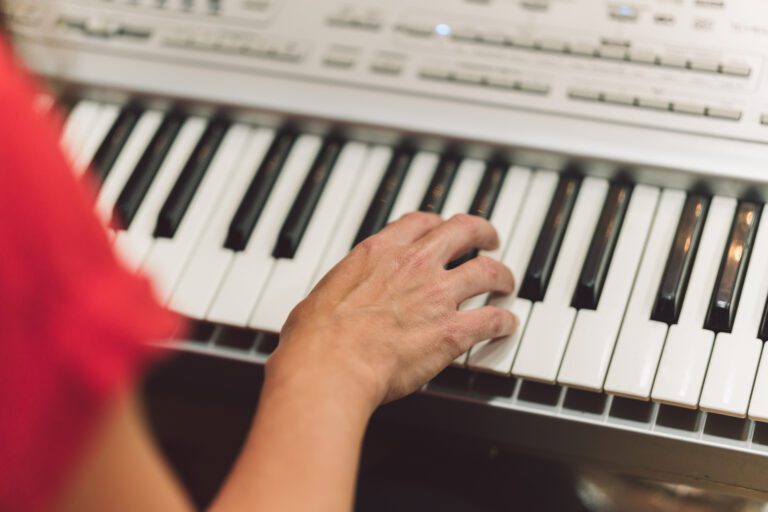
Trying to play an entire piece from beginning to end can make practice feel overwhelming.
Instead, divide the music into short sections.
You might practice four measures at a time, focusing carefully on the coordination between the hands.
Once that section becomes comfortable, move to the next.
Short Sections Create Faster Progress
Small sections allow you to identify exactly where coordination breaks down.
You can then repeat the difficult transition instead of wasting time replaying parts you already know.
Practice the Difficult Transitions
Most pieces have specific moments where coordination becomes challenging.
It could be a chord change, a rhythm change, a scale passage, or a section where one hand moves while the other holds notes.
These transitions deserve extra attention.
Isolate the Problem
Take the two or three beats surrounding the difficult movement and practice them repeatedly.
Start slowly and make the movement as accurate and relaxed as possible.
Once it becomes comfortable, connect it to the surrounding measures.
Develop Independent Hand Movements
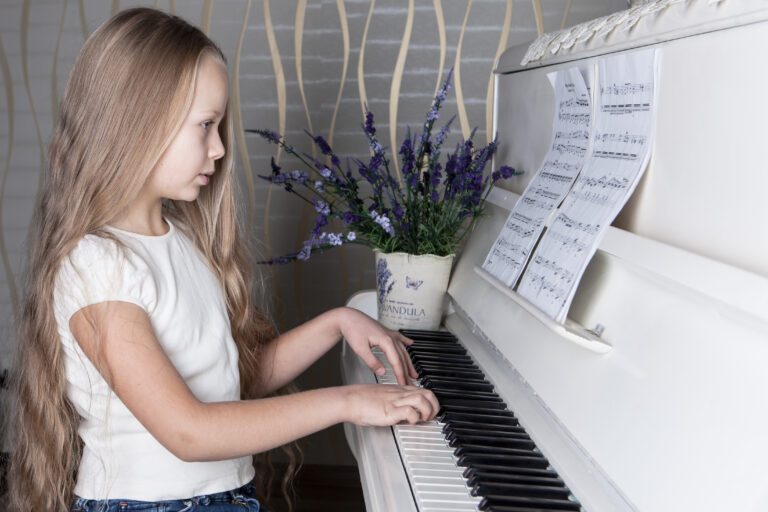
Playing with both hands requires independence.
Your hands should be able to perform different movements without one automatically copying the other.
Simple coordination exercises can help develop this ability.
For example, the left hand can repeat a steady pattern while the right hand plays a simple melody.
Independence Comes Through Repetition
At first, your hands may want to move together in the same way. Regular practice teaches your brain that each hand can perform a separate musical role.
Over time, this independence becomes increasingly natural.
Use a Metronome
A metronome is an excellent tool for improving coordination.
Start at a tempo where you can play the passage comfortably.
The beat gives both hands a shared rhythmic reference point.
Keep the Pulse Steady
If one hand consistently moves ahead of the other, a metronome can reveal the problem.
Practice slowly enough that both hands remain aligned with the beat.
Once the coordination becomes stable, increase the tempo gradually.
Listen to Both Hands
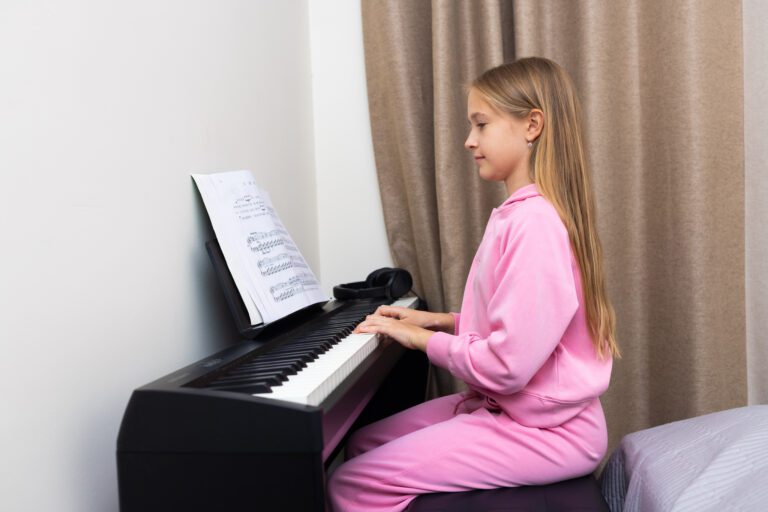
Pianists sometimes focus too heavily on their dominant hand.
For example, a player may concentrate on the melody in the right hand while barely listening to the left-hand accompaniment.
Good piano playing requires awareness of both.
Balance the Hands Musically
The melody usually needs to be heard clearly, while the accompaniment supports it without overpowering it.
Listening carefully helps you develop this balance while improving coordination.
Avoid Tension While Playing
Physical tension can make two-hand playing much more difficult.
When pianists become nervous, they may raise their shoulders, squeeze their fingers, or press the keys too forcefully.
These habits restrict movement and make coordination less comfortable.
Relaxation Improves Control
Keep your shoulders relaxed, allow your wrists to move naturally, and avoid unnecessary pressure.
A relaxed body gives your hands greater freedom to respond to the music.
Practice Rhythms Before Notes
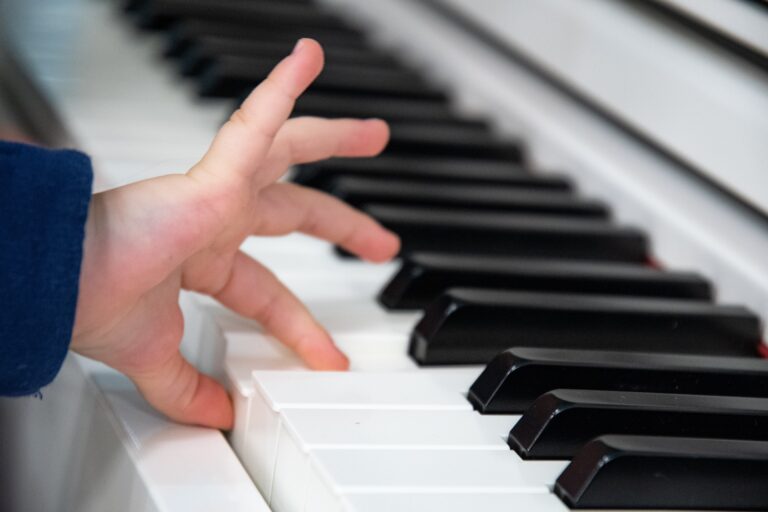
Sometimes the biggest difficulty is not the notes themselves but the different rhythms played by each hand.
Before playing the actual notes, try tapping the rhythm of each hand separately.
Then tap both rhythms together.
This helps your brain understand the timing before adding the physical movements of playing.
Rhythm Makes Coordination Easier
Once you understand how the two rhythms fit together, learning the notes becomes much more manageable.
Use Repetition Without Mindless Practice
Repetition is essential, but repeating the same mistake over and over does not build confidence.
Every repetition should have a purpose.
Ask yourself what you are trying to improve.
Are you working on timing? Finger movement? A chord transition? Hand independence?
Practice Correctly, Not Just Frequently
A smaller number of accurate repetitions can be more valuable than many careless repetitions.
Stay focused and stop when your technique becomes tense or inaccurate.
Record Yourself Playing With Both Hands
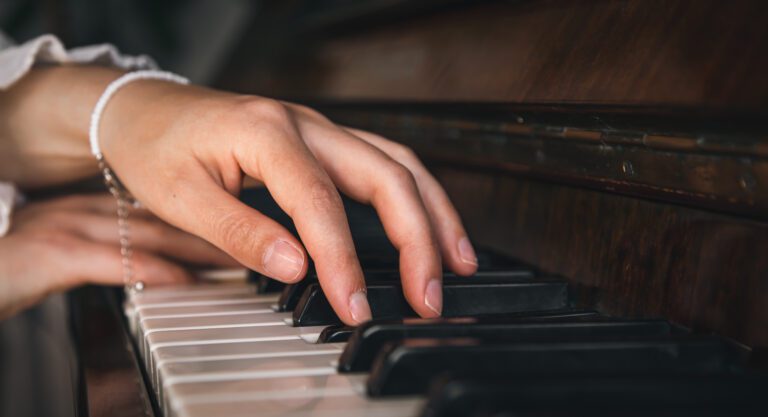
Recording your practice can reveal problems you may not notice while concentrating on your hands.
Listen for uneven rhythm, accidental pauses, inconsistent volume, and moments where one hand becomes too dominant.
Recording also allows you to hear improvements over time.
Progress Becomes Easier to Recognize
You may feel as though you are improving slowly, but comparing recordings from different stages of your practice can reveal how much your coordination has developed.
Build Confidence Through Familiar Music
Once your basic coordination improves, use songs you genuinely enjoy.
Playing familiar music can reduce the mental pressure associated with learning every note from scratch.
Because you already know how the song should sound, your ears can guide your hands.
Enjoyment Encourages Better Practice
When you enjoy the music you are playing, you are more likely to practice consistently.
Consistency is one of the most important factors in developing reliable two-hand coordination.
Conclusion
Learning playing with both hands is a major step toward becoming a confident pianist, but it does not have to happen all at once. The most effective approach is to develop coordination gradually through separate-hand practice, slow repetition, rhythm exercises, small sections, metronome work, and consistent practice. When you give your brain enough time to understand the movements, your hands gradually begin working together more naturally.
Remember that confidence does not come from avoiding mistakes. It comes from learning how to correct them and continuing to practice. Start with music that matches your current ability, keep your hands relaxed, listen carefully, and increase difficulty only when your technique feels comfortable. With patience, the coordination that once seemed difficult can become an automatic part of your playing.
At The Mystic Keys, our personalized Piano Lessons Online help students develop hand coordination, rhythm, technique, sight-reading, musical expression, and performance confidence through one-on-one instruction. With structured guidance and experienced teachers, you can build strong piano foundations and learn to play with both hands comfortably and confidently.
For more information and exciting resources about learning music, visit our website at The Mystic Keys. For more music content and exciting offers follow us on
Facebook, Instagram, YouTube, LinkedIn, Twitter, Pinterest, and Threads.