How to Maintain Music Practice During Australian School Holidays
Introduction
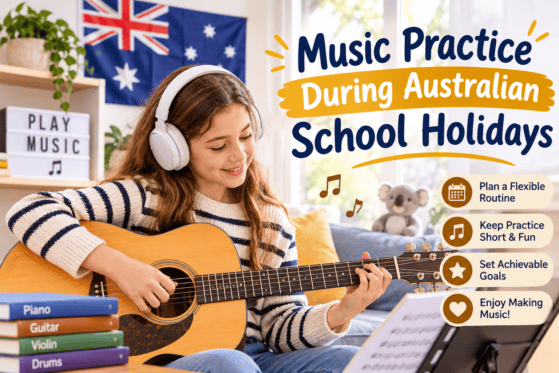
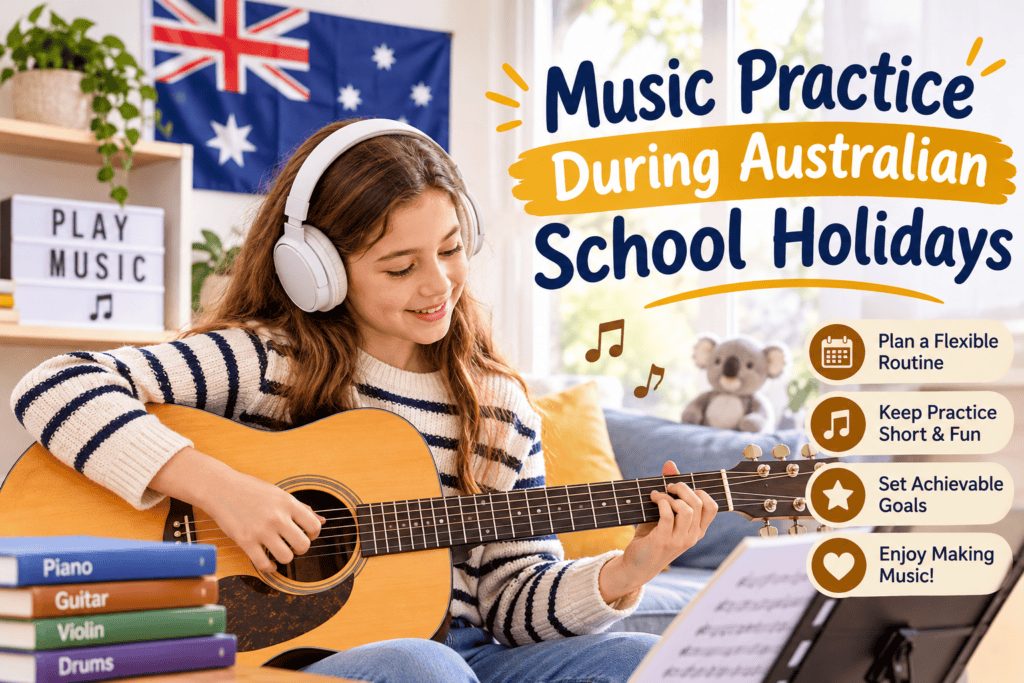
Music Practice During Australian School Holidays can sometimes become challenging as children move away from their regular school routines. Family trips, outdoor activities, and holiday plans can make it difficult to maintain consistent music practice. However, with flexible planning and enjoyable activities, children can continue developing their musical skills without sacrificing their holiday time. Whether they are learning piano, guitar, violin, drums, or singing, a balanced routine can help them stay connected to music throughout the break.
The good news is that maintaining music practice during Australian school holidays does not require long hours or a strict timetable. With flexible planning, enjoyable activities, and realistic goals, children can continue developing their musical skills while making the most of their holidays.
Whether a child is learning piano, guitar, violin, drums, or singing, a balanced approach can help them stay connected to music without sacrificing their free time.

Why Maintaining Music Practice During Australian School Holidays Matters
School holidays often change a child’s daily routine. Family trips, outdoor activities, visits with relatives, and other holiday plans can make regular music practice less predictable.
Although taking occasional breaks is perfectly normal, stopping completely for several weeks may make it harder to remember previously learned techniques and pieces.
Maintaining music practice during Australian school holidays helps children stay familiar with their instruments and retain the skills they have already developed.
Regular practice can help children:
Maintain familiarity with musical techniques.
Remember songs and musical patterns.
Continue improving coordination and timing.
Build confidence through gradual progress.
Develop consistency and independent learning habits.
The aim is not to recreate a demanding school routine. Instead, children should have opportunities to enjoy music while keeping their skills active.
1. Create a Flexible Music Practice Schedule for the Holidays
One of the easiest ways to maintain music practice during Australian school holidays is to create a flexible weekly schedule.
Unlike regular school weeks, holidays often involve changing plans and activities. Therefore, a strict daily timetable may not always be practical.
Parents can help children choose convenient practice times that fit around their holiday activities.
For example, a child might practise in the morning before going out or spend a short period playing their instrument in the afternoon.
A simple weekly routine could include:
Monday: Practise previously learned songs.
Tuesday: Work on finger exercises or vocal warm-ups.
Wednesday: Learn a new musical section.
Thursday: Revise difficult techniques.
Friday: Practise a favourite song.
Saturday: Explore a new musical style.
Sunday: Enjoy relaxed playing or take a rest day.
The schedule should remain flexible. If a family outing or holiday activity interrupts practice, children can simply continue on another suitable day.
2. Keep Music Practice Short and Consistent
Children may not want to spend long periods practising during their holidays, especially when they have other activities planned.
Fortunately, effective music practice does not always require lengthy sessions. Short, focused practice periods can help children maintain their abilities without feeling overwhelmed.
Depending on their age, experience, and teacher’s recommendations, children might aim for 10–30 minutes of focused practice on suitable days.
A short session could include:
Five minutes of warm-ups or basic exercises.
Ten minutes of practising a difficult section.
Five minutes of revising a familiar song.
A few minutes of playing something enjoyable.
The duration can be adjusted according to the child’s concentration and musical level.
Consistency is generally more useful than attempting a long practice session after several days without playing.
3. Revise Previously Learned Songs and Techniques
School holidays are an excellent opportunity to revisit musical pieces that children have already learned.
During regular lessons, students often move from one topic to another as they develop new skills. Holidays provide additional time to strengthen earlier learning.
For example, a piano student can revise scales, finger positioning, and familiar melodies. A guitar student can practise chord transitions and strumming patterns.
Children can also revisit:
Previously learned songs.
Basic musical notation.
Chord progressions.
Rhythm exercises.
Finger coordination techniques.
Vocal warm-ups and breathing exercises.
Revising familiar material helps children recognise their progress and become more confident with skills they may not have practised recently.
4. Make Music Practice More Enjoyable With Favourite Songs
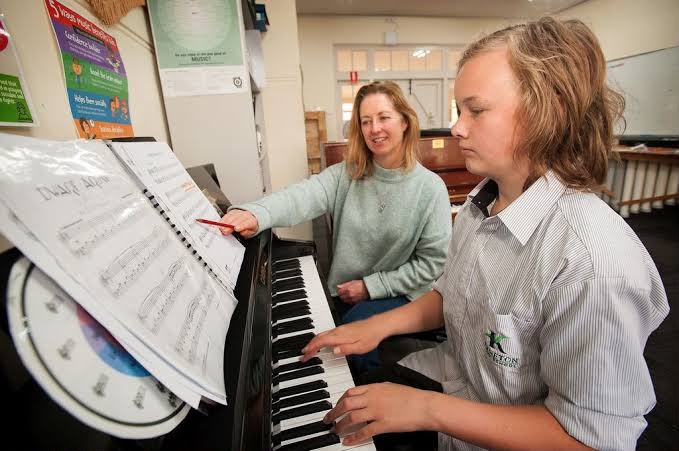
Children are often more enthusiastic about practising when they can connect music lessons with songs they genuinely enjoy.
Instead of focusing exclusively on exercises and lesson material, encourage children to explore their favourite music.
For example, a beginner guitarist might learn a simple version of a favourite pop song. A piano student could practise the melody of a familiar film soundtrack, while a young singer might work on a song they enjoy performing.
Favourite songs can make practice feel less like a formal lesson and more like a creative activity.
Parents can encourage children to:
Choose one favourite song to learn during the holidays.
Explore music from films and television.
Experiment with different musical genres.
Play familiar melodies for family members.
Create simple arrangements of songs they enjoy.
Enjoyment is an important part of developing a lasting interest in music.
5. Set Small Musical Goals for the School Holidays
Having a clear goal can help children stay motivated throughout the holiday period.
However, goals should be realistic and suitable for the child’s current ability. Expecting a beginner to master an advanced composition in a short time may create unnecessary pressure.
Instead, encourage children to focus on achievable milestones.
Examples include:
Piano: Learn a short melody, improve a scale, or practise smoother transitions between chords.
Guitar: Master two new chords, improve strumming accuracy, or learn a simple song.
Violin: Improve bow control, practise accurate intonation, or revise a familiar piece.
Drums: Work on basic rhythms, improve coordination, or practise keeping a steady beat.
Singing: Learn a new song, practise breath control, or improve pitch accuracy.
Breaking larger musical goals into smaller steps helps children recognise progress and remain encouraged.
6. Use Online Music Lessons to Maintain Learning Momentum
Family travel and changing holiday routines can make it difficult to attend in-person music classes consistently.
Online music lessons can offer a convenient alternative for students who want to continue learning while staying at home or travelling, provided they have suitable internet access and equipment.
Children can attend lessons from a familiar environment without spending additional time commuting.
Online music lessons can help students:
Continue receiving guidance from their teachers.
Review previously learned techniques.
Work towards specific musical goals.
Receive feedback on their performance.
Maintain a connection with their regular learning routine.
For families travelling within Australia or overseas, lesson timings may need to be adjusted to accommodate different time zones and availability.
7. Encourage Children to Explore New Musical Styles
Holidays provide an opportunity to explore music beyond regular lesson material.
Children can use their free time to discover different genres, instruments, and musical traditions. This can make learning more exciting while helping them develop a broader understanding of music.
For example, a piano student who usually learns classical pieces might explore simple jazz melodies. A guitarist could experiment with acoustic fingerpicking or basic rock rhythms.
Other ideas include:
Listening to classical compositions.
Discovering jazz and blues.
Learning simple folk melodies.
Exploring different cultural musical traditions.
Experimenting with songwriting and improvisation.
Exploring new musical styles encourages curiosity and helps children discover what they enjoy most.
8. Make Music a Family Activity During the Holidays
Music practice does not always have to be an individual activity. Families can create enjoyable musical experiences by participating together.
Parents do not need to be trained musicians to encourage their children’s musical interests.
Simple family activities can include singing together, playing familiar songs, creating rhythms using household objects, or organising a small performance at home.
Some enjoyable ideas include:
Family music evening: Choose a day when family members can share songs, play instruments, or listen to favourite music together.
Mini home concert: Encourage children to perform a song they have been practising for family members.
Music listening activity: Listen to a piece of music and discuss the instruments, rhythm, and mood.
Create a family playlist: Let children select songs from different genres and explain why they enjoy them.
Musical games: Try rhythm-clapping games, melody guessing, or simple musical quizzes.
These activities make music a shared experience and can help children associate learning with enjoyment.
9. Maintain Music Practice While Travelling
Australian school holidays often include family trips, visits to relatives, and outdoor adventures. Travelling does not necessarily mean children need to stop engaging with music altogether.
Although carrying a full-sized instrument may not always be practical, there are several ways to stay connected to musical learning.
Children can:
Listen to familiar songs and identify their melodies.
Practise rhythm patterns through clapping.
Review music theory concepts.
Sing familiar songs.
Use music-learning apps for short activities.
Watch educational music demonstrations.
For families travelling with portable instruments, a small keyboard, travel guitar, or compact percussion instrument may also be useful.
The objective is to maintain musical interest rather than force a full practice routine into every holiday activity.
10. Avoid Turning Holiday Practice Into Another School Responsibility
One of the most important things parents should remember is that children need time to relax.
School holidays are intended to provide a break from regular academic routines. If music practice becomes another strict responsibility, children may begin to associate it with pressure rather than enjoyment.
A balanced approach can help prevent this.
Parents should:
Avoid demanding lengthy practice sessions.
Allow children to choose some of their practice activities.
Recognise effort rather than expecting perfection.
Provide breaks when children feel tired.
Adjust practice expectations during family holidays.
Make room for spontaneous musical activities.
Children should understand that music is something they can enjoy, explore, and improve at their own pace.
11. Prepare Children to Return to Regular Music Lessons
As Australian school holidays come to an end, children may need some time to adjust to their regular school and music schedules.
Returning to a structured routine gradually can make this transition easier.
During the final week of the holidays, parents can encourage children to:
Review songs they were learning before the break.
Practise basic techniques and exercises.
Organise their music books and equipment.
Identify areas they would like to improve.
Discuss new musical goals with their teacher.
This preparation helps children return to lessons with greater familiarity and confidence.
12. How Parents Can Support Music Learning During Australian School Holidays
Parents play an important role in helping children maintain their musical interests during school breaks.
Rather than supervising every practice session, parents can create an environment that encourages independence, curiosity, and consistency.
Here are some practical ways to provide support:
Create a comfortable practice space: Make sure children have access to their instruments, music books, and any necessary equipment.
Encourage independent practice: Allow children to decide which songs or techniques they want to revise occasionally.
Recognise small achievements: Celebrate improvements, even when they seem minor.
Respect holiday plans: Adjust practice schedules around family activities and travel.
Stay connected with music teachers: Ask for suitable exercises or revision material that children can practise independently.
Keep expectations realistic: Focus on maintaining interest and building confidence rather than achieving rapid progress.
A supportive approach can help children develop a positive relationship with music that continues beyond the holidays.
How The Mystic Keys Helps Students Maintain Their Musical Progress
At The Mystic Keys, students can continue developing their musical abilities through structured online lessons guided by internationally certified teachers.
Whether children are learning piano and keyboard, guitar, violin, drums, or vocal training, lessons can help them strengthen their foundations, improve technique, and work towards achievable musical goals.
For families in Australia, online learning can offer a convenient way to coordinate music lessons around school holidays, family commitments, and changing routines.
With suitable scheduling and individual guidance, students can continue exploring music while enjoying their time away from school.
The goal is to make music learning accessible, engaging, and flexible throughout the year.
Conclusion
Maintaining music practice during Australian school holidays does not require a strict timetable or hours of daily practice. Short sessions, familiar songs, achievable goals, and enjoyable musical activities can help children retain their skills while making the most of their break. With encouragement from parents and guidance from supportive teachers, children can return to school feeling confident, motivated, and ready to continue their musical journey.
For more information and exciting resources about learning music, visit our website at The Mystic Keys. For more music content and exciting offers follow us on
Facebook, Instagram, YouTube, LinkedIn, Twitter, Pinterest, and Threads,