
Common Strumming Mistakes in Worship Music write blog
Playing guitar in worship music requires more than knowing chords and strumming patterns. A worship guitarist must understand timing, dynamics, musical space, and how to support the entire team. Many beginners can learn a song’s chords quickly but still struggle to make their playing sound smooth and consistent. These strumming mistakes can affect the rhythm of the entire arrangement, especially when playing alongside drums, bass, keyboards, and vocals.
Worship guitar is different from playing guitar alone in a bedroom. When you are part of a worship team, every strum contributes to the overall sound. Playing too loudly, rushing the tempo, using too much movement, or following the same pattern throughout an entire song can make the arrangement feel crowded. Good worship guitar playing requires awareness and restraint as much as technical ability.
The good news is that most strumming problems can be corrected with focused practice. By understanding the most common mistakes and learning how to approach rhythm more musically, guitarists can become more confident, consistent, and supportive worship musicians.
Why Strumming Matters in Worship Music

Strumming provides one of the primary rhythmic foundations of an acoustic guitar part. It connects chords to the beat and helps create movement within the song.
In a worship setting, the guitarist often works closely with the drummer and bass player. The strumming pattern needs to complement what they are doing rather than compete with it.
A simple pattern played with excellent timing can sound far more effective than a complicated pattern played inconsistently.
Rhythm Comes Before Complexity
One of the most important principles for worship guitarists is to prioritize a steady groove over technical complexity. If the rhythm is unstable, adding more strums rarely improves the performance.
A guitarist who plays fewer notes with excellent timing can contribute much more effectively than someone constantly changing patterns without control.
Strumming Mistakes Caused by Rushing the Tempo
One of the most common problems among developing guitarists is rushing.
A player may begin a song at the correct tempo but gradually become faster as excitement increases. This can happen particularly during powerful choruses or sections where the guitarist becomes more energetic.
When the guitarist rushes, the rest of the band may feel pressured to follow. The drummer may have to compensate, while the vocals can begin feeling uncomfortable.
Use a Metronome to Control Tempo
Practicing with a metronome is one of the simplest ways to develop reliable timing.
Start with a slow tempo and play the complete strumming pattern repeatedly. Focus on keeping every movement evenly spaced before increasing the speed.
Over time, your internal sense of timing becomes stronger, making it easier to maintain the tempo during live worship.
Playing Too Hard Can Affect the Worship Arrangement

Another common problem is excessive force.
Some guitarists believe that playing harder makes their guitar sound more powerful. While increased intensity can be useful during a musical climax, playing aggressively throughout the entire song leaves no room for dynamics.
A worship arrangement needs contrast.
A quiet verse should not sound as powerful as the final chorus.
Let Dynamics Shape Your Strumming
Instead of using physical force to create every change in intensity, adjust your strumming naturally.
Play lightly during intimate sections and gradually increase your energy as the arrangement develops.
This creates a more musical performance and allows the congregation and other musicians to experience the movement of the song.
Using the Same Strumming Pattern Throughout the Song
Playing one strumming pattern from the beginning to the end can make a worship song sound repetitive.
Although consistency is important, musical consistency does not mean playing exactly the same thing throughout the entire arrangement.
The verse, pre-chorus, chorus, bridge, and ending may all require different levels of rhythmic activity.
Change the Pattern with the Arrangement
A simple downstroke pattern may work beautifully during a quiet verse. As the song develops, you can introduce additional upstrokes or more rhythmic movement.
During a powerful section, fuller strumming may help support the arrangement.
The important thing is to make changes intentionally rather than adding complexity simply because you can.
Ignoring the Drummer Is One of the Biggest Strumming Mistakes

A worship guitarist should never treat the guitar as an isolated instrument.
The drummer is often responsible for establishing the main rhythmic framework, while the guitarist contributes to that framework.
If the guitarist does not listen to the drummer, the two parts can compete rather than work together.
Lock In with the Rhythm Section Strumming Mistakes
Listen carefully to the kick drum and snare.
Notice where the drummer places accents and how the groove develops.
Your strumming does not need to copy the drums exactly, but it should feel connected to them.
This relationship between guitar and drums creates a much tighter worship arrangement.
Changing Chords Too Early
Chord changes can create another timing problem.
Some beginners begin moving to the next chord before the musical phrase has actually reached the change. Others pause their strumming completely because they are concentrating too much on moving their fingers.
Both situations interrupt the groove.
Practice Chord Changes Without Stopping Strumming Mistakes
Start by practicing the chord progression slowly.
Keep your strumming hand moving consistently while your fretting hand changes chords.
The goal is to make the chord change part of the rhythm rather than an interruption to it.
With enough repetition, the movement becomes automatic.
Overcomplicating Simple Worship Songs

One of the most important lessons for worship guitarists is learning when not to play.
A guitarist may know several advanced strumming techniques and feel tempted to use them during every song.
However, worship music often benefits from simplicity.
A simple chord progression played with excellent timing can create a stronger foundation for vocals than an elaborate rhythm pattern.
Support the Song Instead of Showing Technique
Ask yourself whether your strumming helps the worship leader and congregation engage with the song.
If the answer is yes, keep it.
If the guitar is becoming distracting, simplify.
Musical maturity means knowing when your technique should be heard and when it should quietly support the arrangement.
Losing the Groove During Chord Changes of Strumming Mistakes
Some guitarists maintain good timing while holding a chord but lose the rhythm when changing positions.
This usually happens because the fretting hand receives too much attention.
The result can be small pauses or uneven spaces between chords.
Separate the Skills During Practice
Practice the strumming pattern on a single chord until it feels automatic.
Then practice the chord progression slowly.
Finally, combine the two.
This approach allows the right hand to develop rhythmic independence while the left hand focuses on chord movement.
Holding the Pick Too Tightly

Physical tension can have a major effect on strumming.
A guitarist who grips the pick too tightly may produce a harsh tone and struggle to move the wrist naturally.
Excess tension can also cause fatigue during longer worship services.
Keep the Strumming Hand Relaxed
Hold the pick securely but avoid unnecessary pressure.
Allow the wrist to move naturally and let the pick glide across the strings instead of forcing it through them.
A relaxed movement generally produces a smoother and more controlled sound.
Neglecting the Upstroke Strumming Mistakes
Some beginners focus almost entirely on downstrokes.
While downstrokes are useful, ignoring upstrokes limits rhythmic possibilities and can make patterns feel stiff.
Upstrokes are especially important for creating flowing eighth-note patterns.
Practice Down-Up Movement
Try slowly alternating down and up movements while keeping the hand moving continuously.
You do not have to strike every string on every movement.
The important part is learning to maintain a consistent motion.
This creates a natural foundation for more advanced strumming patterns.
Failing to Leave Space

One of the less obvious strumming mistakes is believing that every beat needs to contain a guitar sound.
In reality, silence is part of rhythm.
Leaving space can make a guitar arrangement feel more dynamic and allow vocals to come forward.
Silence Can Strengthen the Groove
Try removing selected strums from a familiar pattern.
Listen to how the rhythm changes when certain beats are intentionally left open.
This exercise teaches you that rhythm is created by both sound and silence.
Not Practicing with a Full Band
Practicing alone is essential, but it cannot completely prepare you for playing with other musicians.
A strumming pattern that sounds perfect by itself may become too busy when combined with drums, bass, keyboards, and another guitar.
Practice with Backing Tracks
Playing along with worship recordings or backing tracks helps you learn how your guitar fits into a larger arrangement.
Listen carefully to the relationship between your strumming and the other instruments.
This develops the ability to adjust your playing based on what you hear.
Failing to Adjust Volume During Worship
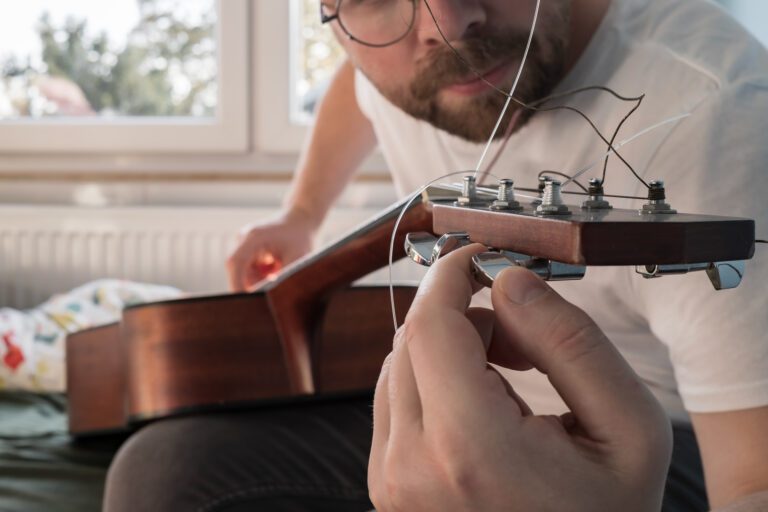
Volume is another important part of effective strumming.
A guitarist who plays at the same volume throughout the entire service may overpower the vocals during quieter moments.
Worship guitarists need to recognize when their instrument should sit in the background and when it should contribute more strongly.
Let the Worship Leader Guide the Energy
Watch and listen to the worship leader.
Pay attention to vocal intensity, arrangement changes, and visual cues.
These signals can help you decide whether your guitar should become softer, stronger, or temporarily disappear.
Not Listening to the Other Guitarist
When a worship team has two guitarists, communication becomes even more important.
If both guitarists play identical rhythms, the arrangement may become unnecessarily dense.
One guitarist may provide rhythmic support while the other adds melodic textures, single-note lines, or atmospheric effects.
Create Complementary Parts
Listen to what the other guitarist is doing before deciding what you should play.
Different parts can create a much wider and more interesting arrangement than two musicians playing exactly the same thing.
How to Practice Better Worship Strumming

mproving your strumming requires deliberate practice rather than simply playing songs repeatedly.
A useful practice routine can include:
- Five minutes of relaxed downstrokes.
- Five minutes of down-up patterns.
- Chord-change exercises with a metronome.
- Playing complete songs at a slow tempo.
- Practicing dynamic changes.
- Playing along with worship recordings.
- Recording yourself and listening back.
The goal is not to practice as fast as possible.
The goal is to make your movements consistent, relaxed, and musical.
Record Yourself Regularly
Recording your playing can reveal problems that are difficult to notice while performing.
Listen for rushing, uneven strumming, excessive volume, unnecessary movement, and missed chord changes.
Then choose one problem to work on at a time.
Conclusion
Avoiding common strumming mistakes is an important step toward becoming a stronger worship guitarist. Problems such as rushing the tempo, playing too loudly, using repetitive patterns, ignoring the drummer, stopping during chord changes, and filling every musical space can make a worship arrangement less effective. The solution is not necessarily more complicated technique. It is better timing, stronger listening, controlled dynamics, relaxed movement, and a deeper understanding of your role within the team.
Great worship guitarists understand that their responsibility is to serve the song. Sometimes that means playing a full rhythmic pattern, while at other times it means reducing the number of strums or leaving space completely. When you learn to listen, adapt, and play with intention, your guitar becomes a supportive part of the worship experience rather than simply another instrument in the arrangement.
At The Mystic Keys, our personalized Worship Guitar Lessons Online help students develop rhythm, strumming technique, chord transitions, musical listening, dynamics, and confident worship accompaniment. With one-on-one guidance from experienced instructors, you can build the technical and musical skills needed to play with greater consistency, sensitivity, and confidence.
For more information and exciting resources about learning music, visit our website at The Mystic Keys. For more music content and exciting offers follow us on
Facebook, Instagram, YouTube, LinkedIn, Twitter, Pinterest, and Threads.