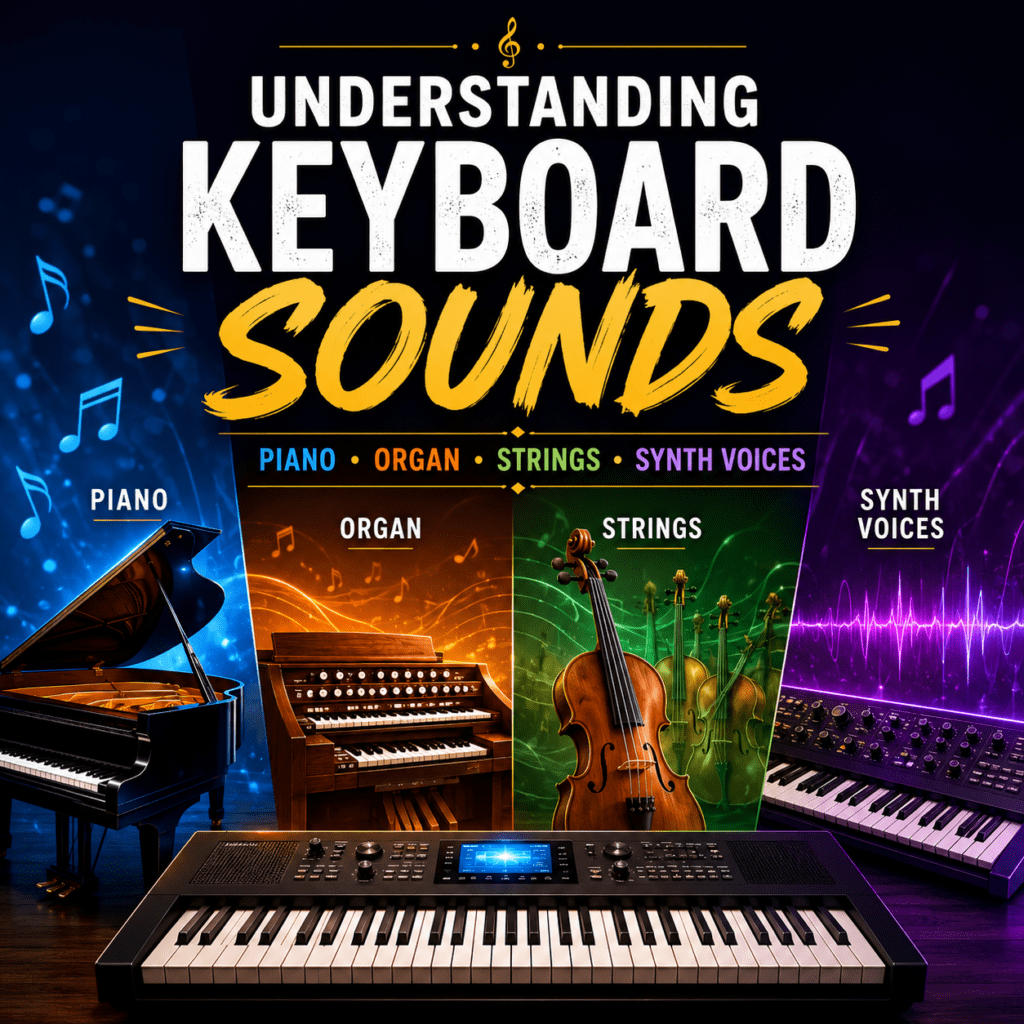
Understanding Keyboard Sounds Piano, Organ, Strings, and Synth Voices
Modern keyboards are much more than digital pianos. They are powerful musical instruments capable of reproducing hundreds of sounds, allowing musicians to explore different styles, genres, and creative possibilities. Understanding Keyboard Sounds is essential for anyone looking to unlock the full potential of a keyboard. Whether you are a beginner learning your first notes or an advanced performer playing on stage, understanding the various keyboard voices can dramatically improve your musical expression. Among the most commonly used sounds are piano, organ, strings, and synthesizer voices. Each of these sound categories has its own unique character, purpose, and role in music. Learning when and how to use them can help students become more versatile musicians, expand their creativity, and make their performances more engaging and professional. By understanding keyboard sounds, musicians can choose the right voice for every musical situation and create richer, more expressive performances.
1. What Are Keyboard Voices and Why Are They Important?
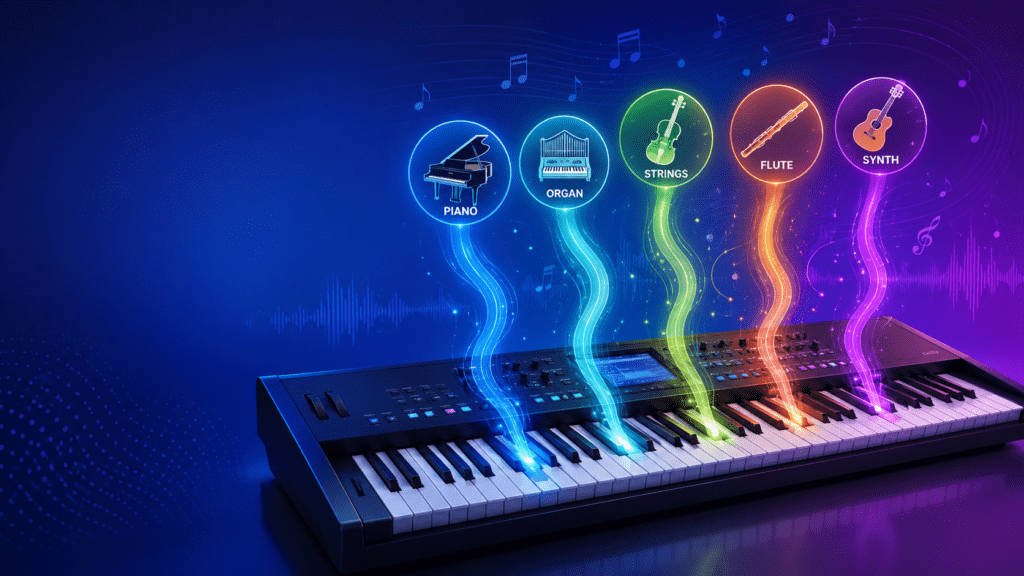
Understanding Keyboard Sounds begins with learning what a keyboard voice is and how it shapes the music you create. A keyboard voice refers to the sound or instrument that the keyboard reproduces when a key is pressed. Unlike traditional acoustic instruments that produce only one type of sound, modern electronic keyboards can emulate dozens or even hundreds of instruments. These sounds are created using advanced digital sampling and sound synthesis technologies that capture the tonal characteristics of real instruments. Understanding keyboard voices is important because the sound you choose can completely change the mood, style, and impact of a piece of music. A simple melody played with a piano sound may feel elegant and emotional, while the same melody played with a synth lead can sound energetic and futuristic. Developing familiarity with different voices helps students make better musical choices, improve their musical expression, and enhance their creativity during practice and performance. By understanding keyboard sounds, musicians can confidently select the right voice for every song and create more engaging and professional performances.
2. Understanding Keyboard Sounds Through Piano Voices | The Foundation of Keyboard Learning
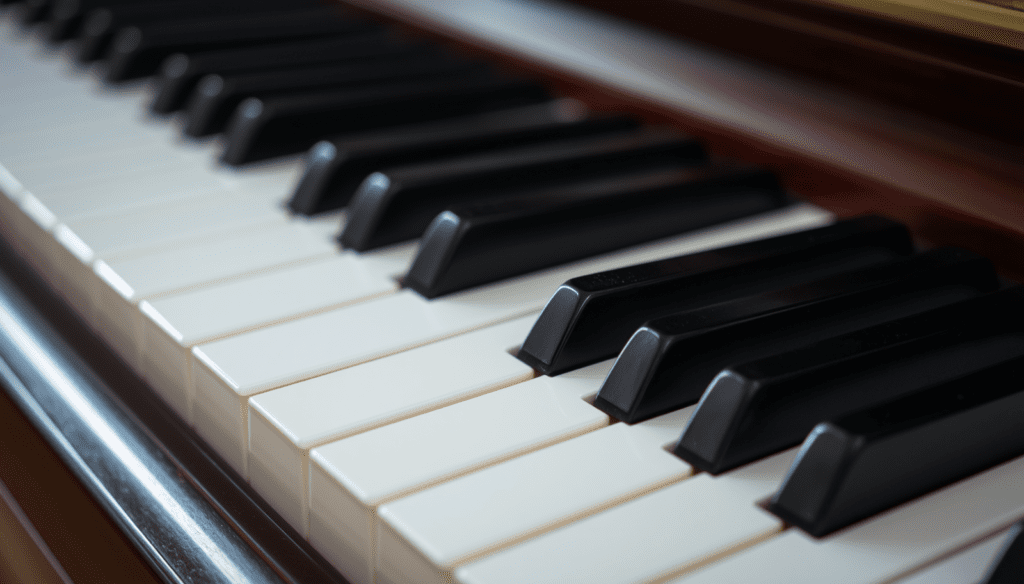
The piano voice is the most frequently used and essential sound on any keyboard. It closely replicates the sound of an acoustic grand piano, making it the preferred choice for learning music fundamentals such as finger technique, scales, chords, dynamics, and musical expression. Piano voices are incredibly versatile and can be used across numerous genres, including classical, pop, jazz, gospel, and film music. Most keyboards offer several piano variations, such as grand piano, bright piano, mellow piano, and electric piano. Each variation has a slightly different tonal quality that suits specific musical situations. For beginners, practicing primarily with a piano voice helps develop proper touch sensitivity and musical control, creating a strong foundation that supports future growth as a musician.
3. Understanding Keyboard Sounds with Organ Voices | Rich Sounds with Timeless Appeal
Organ voices are among the most recognizable sounds available on a keyboard. Originally inspired by church pipe organs and later by electric organs like the Hammond organ, these voices produce sustained tones that continue as long as the key is held down. Organ sounds are widely used in gospel music, worship music, jazz, blues, classic rock, and contemporary pop arrangements. Unlike piano sounds that naturally fade away after being played, organ voices maintain their volume, creating a rich and powerful texture. Many professional keyboard players use organ sounds to add warmth, depth, and energy to their performances. Learning to play organ voices also helps students develop better control over phrasing, articulation, and chord voicing techniques, which are valuable skills in many musical styles.
4. String Voices: Adding Emotion and Orchestral Depth
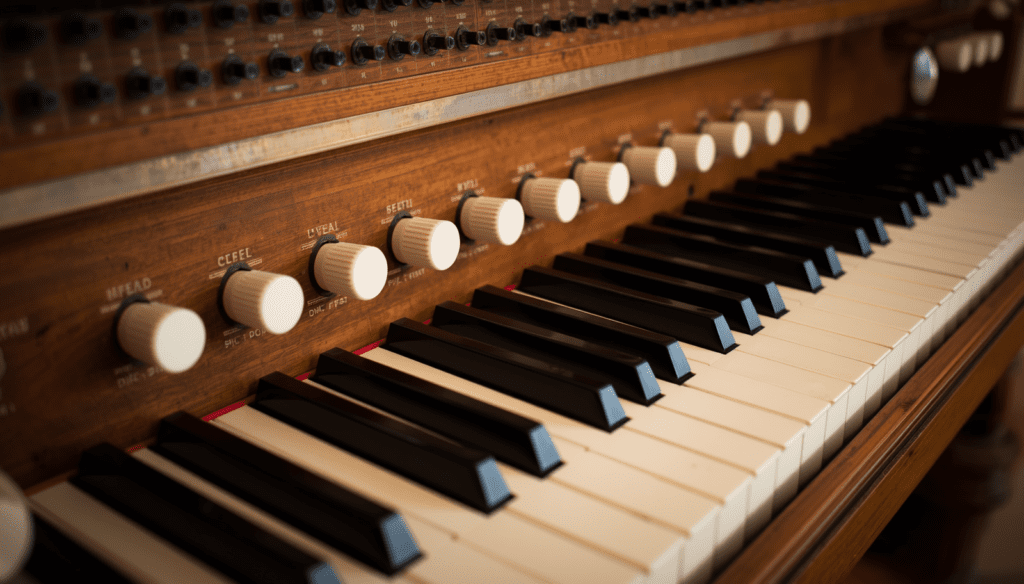
String voices simulate instruments from the string family, including violins, violas, cellos, and orchestral ensembles. These sounds are highly valued for their ability to create emotional, cinematic, and dramatic musical atmospheres. String voices are frequently used in movie soundtracks, worship music, ballads, and orchestral arrangements because they can instantly add richness and depth to a performance. Keyboard players often use string sounds to support melodies, create background layers, or build powerful musical climaxes. Many keyboards also offer different types of string patches, ranging from soft and gentle ensembles to large symphonic sections. Understanding how to use string voices effectively enables musicians to create fuller arrangements and develop a more sophisticated musical sound.
5. Understanding Keyboard Sounds with Synth Voices | Exploring Modern and Creative Sounds
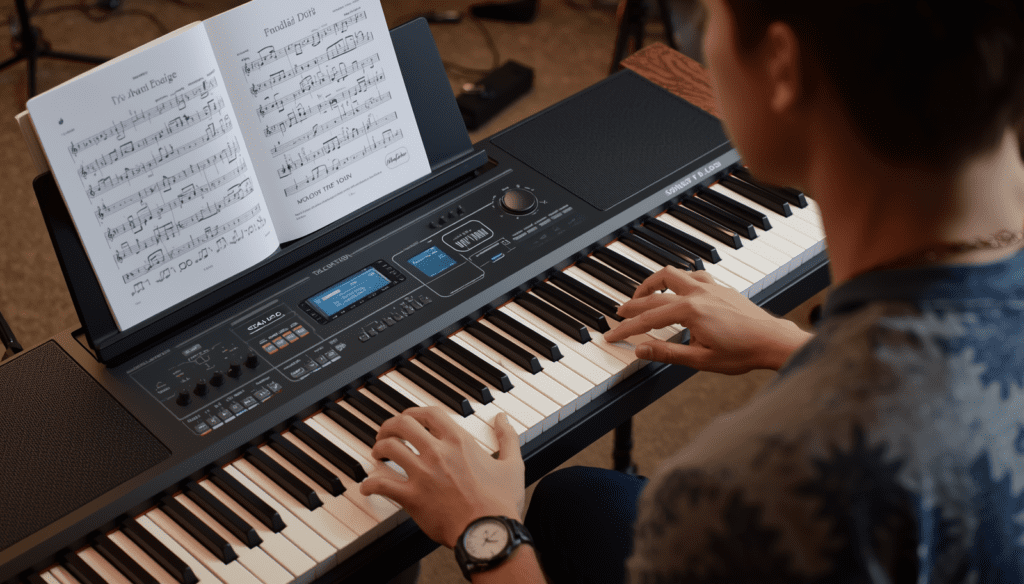
Synthesizer voices, commonly known as synth sounds, are among the most exciting features of modern keyboards. Unlike piano, organ, or string voices that imitate traditional instruments, synth voices are electronically created and can produce entirely unique sounds. They are widely used in electronic dance music, pop, hip-hop, film scoring, ambient music, and modern worship productions. Synth sounds can range from smooth pads and atmospheric textures to powerful leads and deep bass tones. Because of their versatility, synth voices encourage creativity and experimentation. Learning to use synth sounds helps students understand modern music production techniques and broadens their ability to create original musical arrangements. As technology continues to shape contemporary music, familiarity with synth voices becomes increasingly valuable for aspiring musicians.
6. How to Choose the Right Keyboard Sound for Your Music
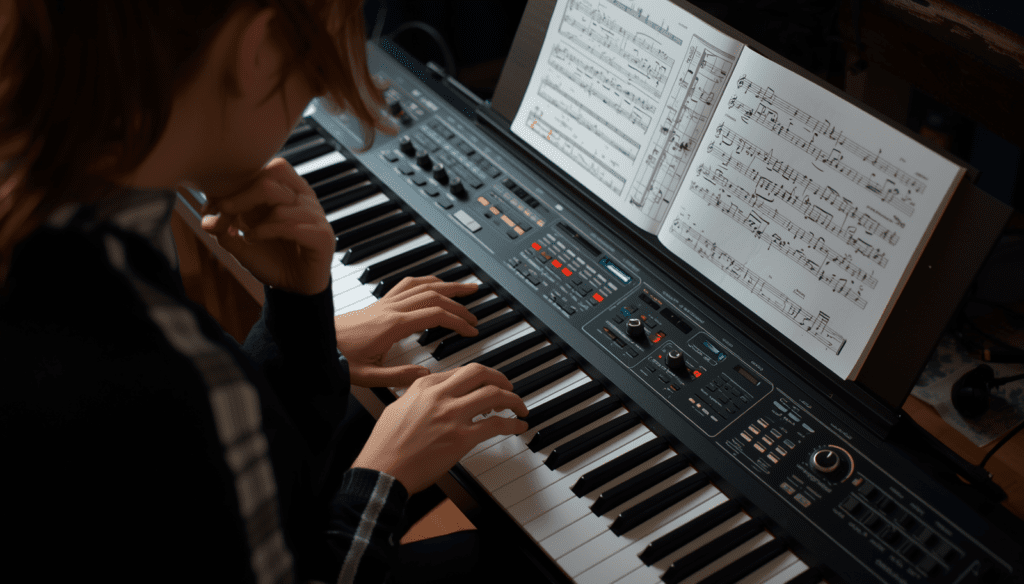
Selecting the right keyboard voice depends on the style, mood, and purpose of the music you are playing. Piano voices are ideal for practice, solo performances, and foundational learning. Organ sounds work exceptionally well in worship settings, jazz ensembles, and classic rock music. String voices add emotional depth and orchestral character to ballads and cinematic compositions. Synth sounds bring modern energy, creativity, and unique textures to contemporary music. Experienced keyboard players often combine multiple voices through layering and split functions to create richer and more dynamic performances. By experimenting with different sounds and understanding their characteristics, students can develop their musical identity and learn how to communicate emotions more effectively through their playing.
Conclusion
Understanding keyboard sounds is an important step in becoming a well-rounded musician. Piano, organ, strings, and synth voices each offer unique qualities that contribute to different musical experiences. While the piano remains the foundation of keyboard education, exploring organ, string, and synth sounds allows students to expand their creativity and adapt to a wide range of musical genres. At The Mystic Keys, students are encouraged to explore these diverse keyboard voices while building strong technical and musical skills through structured Piano lessons online and comprehensive keyboard training programs. By learning how each sound functions and where it is most effective, aspiring musicians can unlock the full potential of their keyboard, enhance their musical expression, and create more engaging, confident, and professional performances.
For more information and exciting resources about learning music, visit our website at The Mystic Keys. For more music content and exciting offers follow us on
Facebook, Instagram, YouTube, LinkedIn, Twitter, Pinterest, and Threads.