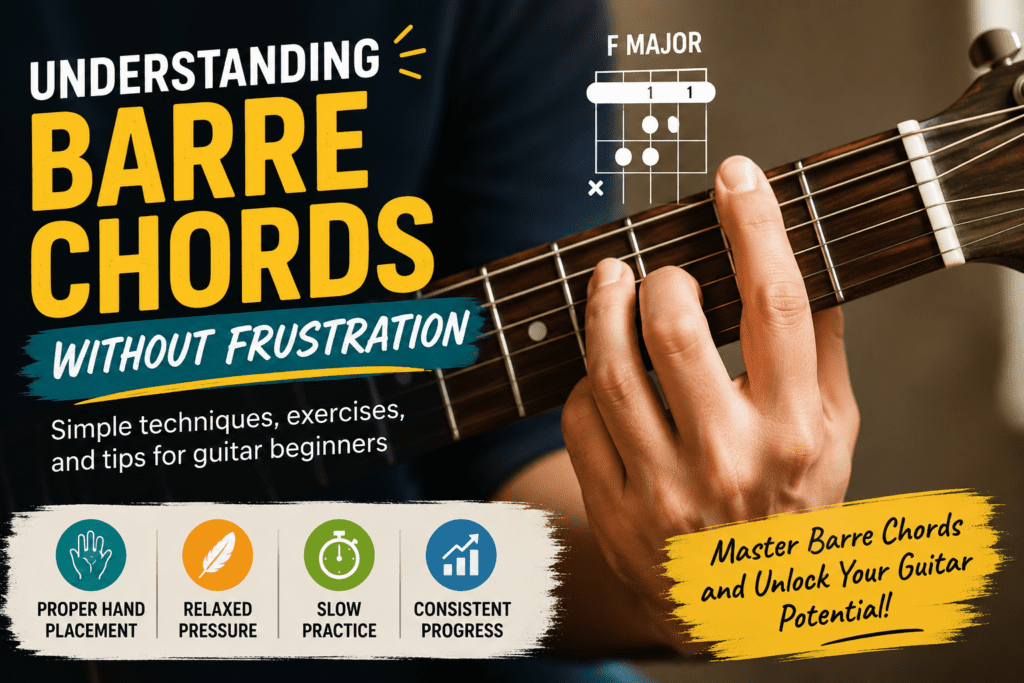
Understanding Barre Chords Without Frustration – A Beginner’s Guide for Guitar Players
Learning barre chords is one of the biggest milestones in playing guitar, and Understanding Barre Chords Without Frustration can help beginners approach them with confidence. For many beginners, barre chords feel difficult, painful, and frustrating at first. Buzzing strings, sore fingers, and muted notes can make players feel like they are not progressing. The good news is that barre chords become easier with the right technique, patience, and practice routine.
In this guide, you will learn what barre chords are, why they feel challenging, and how to master them without frustration. Whether you are learning acoustic guitar or electric guitar, these tips will help you improve your barre chord technique faster.
What Are Barre Chords?
A barre chord is a guitar chord where one finger, usually the index finger, presses down multiple strings across the same fret. This finger acts like a movable capo, allowing you to play different chords all over the neck.
Common examples include:
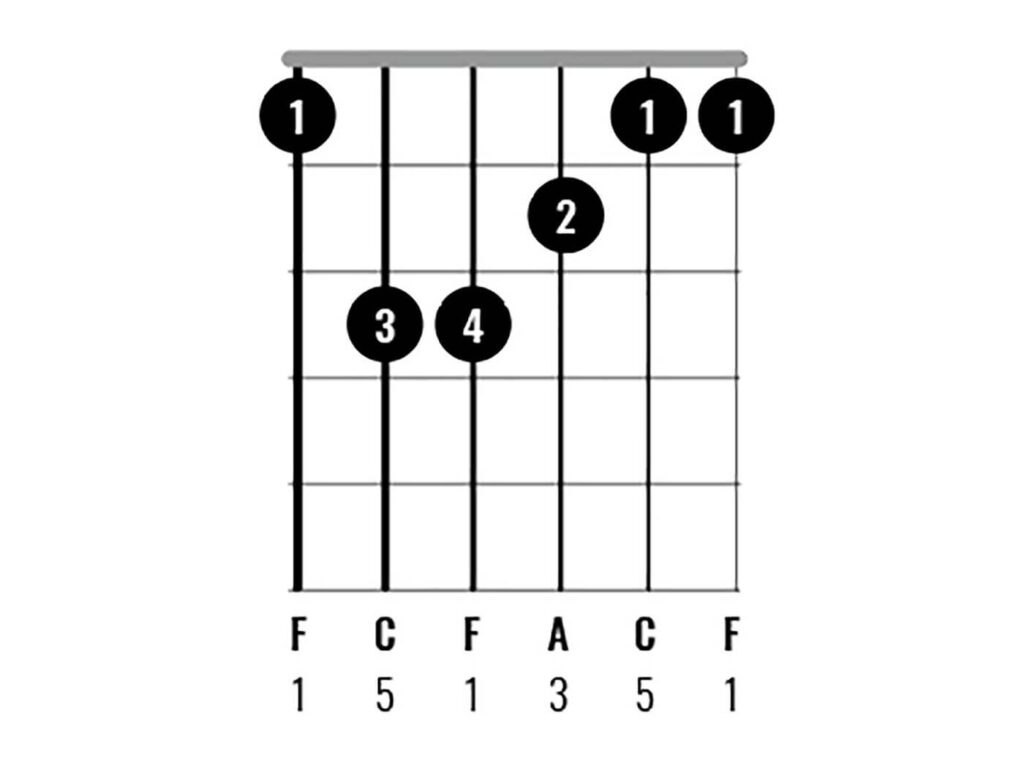
F Major Barre Chord
B Minor Barre Chord
F# Minor Barre Chord
Barre chords are important because they allow guitarists to:
Once you understand barre chords, your guitar playing becomes much more flexible and professional.
Why Barre Chords Feel So Difficult
Many beginners struggle with barre chords because they require several skills at the same time.
1. Finger Strength
Your index finger must press multiple strings evenly. At first, your hand muscles are not used to this pressure.
2. Poor Finger Placement
If your finger is slightly tilted or positioned incorrectly, some strings may buzz or stay muted.
3. Too Much Pressure
Many players squeeze the neck too hard. This creates unnecessary tension and hand fatigue.
4. Incorrect Thumb Position
The thumb should support the barre from behind the neck. If the thumb placement is wrong, the chord becomes harder to hold.
5. Lack of Patience
Barre chords are not mastered overnight. They take consistent practice and muscle memory.
The Correct Way to Play Barre Chords
Step 1: Position Your Index Finger Properly
Place your index finger close to the fret wire, not directly in the middle of the fret. Use the side of the finger slightly instead of the soft flat part.
This helps create cleaner notes with less effort.
Step 2: Relax Your Hand
Do not squeeze the neck too tightly. Most beginners use more pressure than necessary.
Try this:
Play the chord
Slowly reduce pressure
Find the minimum pressure needed for clear sound
This improves endurance and reduces frustration.
Step 3: Keep Your Thumb Behind the Neck
Your thumb should rest roughly behind your index finger. This creates balance and leverage.
Avoid wrapping the thumb over the neck when learning barre chords.
Step 4: Check Each String Individually
Strum one string at a time.
If a note sounds muted:
Adjust finger angle
Move closer to the fret
Relax unused tension
Small adjustments make a huge difference.
Best Beginner Barre Chords to Practice
Start with easier shapes before difficult ones.
Easy Barre Chords for Beginners
1. B Minor (Partial Barre)
This chord uses fewer strings and helps build confidence.
2. F Major Mini Barre
A simplified version of the full F chord.
3. Power Chords
These are technically simpler barre shapes and excellent for beginners.
Exercises for Understanding Barre Chords Without Frustration
Exercise 1: Finger Pressure Training
Barre all six strings lightly at the 5th fret.
Pick each string slowly.
Focus on clarity rather than strength.
Exercise 2: Moveable Chord Practice
Practice moving the same chord shape:
3rd fret
5th fret
7th fret
This improves flexibility and coordination.
Exercise 3: Chord Switching
Switch slowly between:
G Major to F Major
C Major to B Minor
Use a metronome for steady timing.
How Long Does It Take to Learn Barre Chords?
Every guitarist learns at a different pace.
Most beginners notice improvement within:
2–4 weeks of consistent practice
10–15 minutes daily practice
The key is regular practice rather than long practice sessions.
Common Problems While Understanding Barre Chords Without Frustration
Pressing Too Hard
Excess force creates tension and pain.
Bent Wrist Position
Keep your wrist relaxed and natural.
Skipping Warm-Ups
Warm up your fingers before difficult chord practice.
Practicing Too Fast
Slow practice builds clean technique.
Tips for Understanding Barre Chords Without Frustration Faster
Use Lighter Guitar Strings
Heavy strings are harder for beginners.
Adjust Guitar Action
High action makes barre chords more difficult. A proper guitar setup helps a lot.
Practice on Electric Guitar First
Electric guitars often require less pressure.
Stay Consistent
Short daily sessions work better than occasional long sessions.
These songs use repetitive chord progressions that build confidence.
Barre chords are challenging at first, but every guitarist goes through the same learning process. In Understanding Barre Chords Without Frustration, the key is learning proper technique gradually instead of trying to force the chord.
Focus on:
Correct hand placement
Relaxed pressure
Slow practice
Consistency
With patience and daily practice, barre chords will eventually feel natural. Once you master them, you unlock a whole new level of freedom on the guitar.
If you keep practicing consistently, you will soon play barre chords cleanly and confidently in your favorite songs. Taking Guitar Lessons Online can also help beginners learn proper barre chord techniques faster with guided practice and expert instruction.
Intersted in learning music with us? Register now
For more information and exciting resources about learning music, visit our website at The Mystic Keys. For more music content and exciting offers follow us on