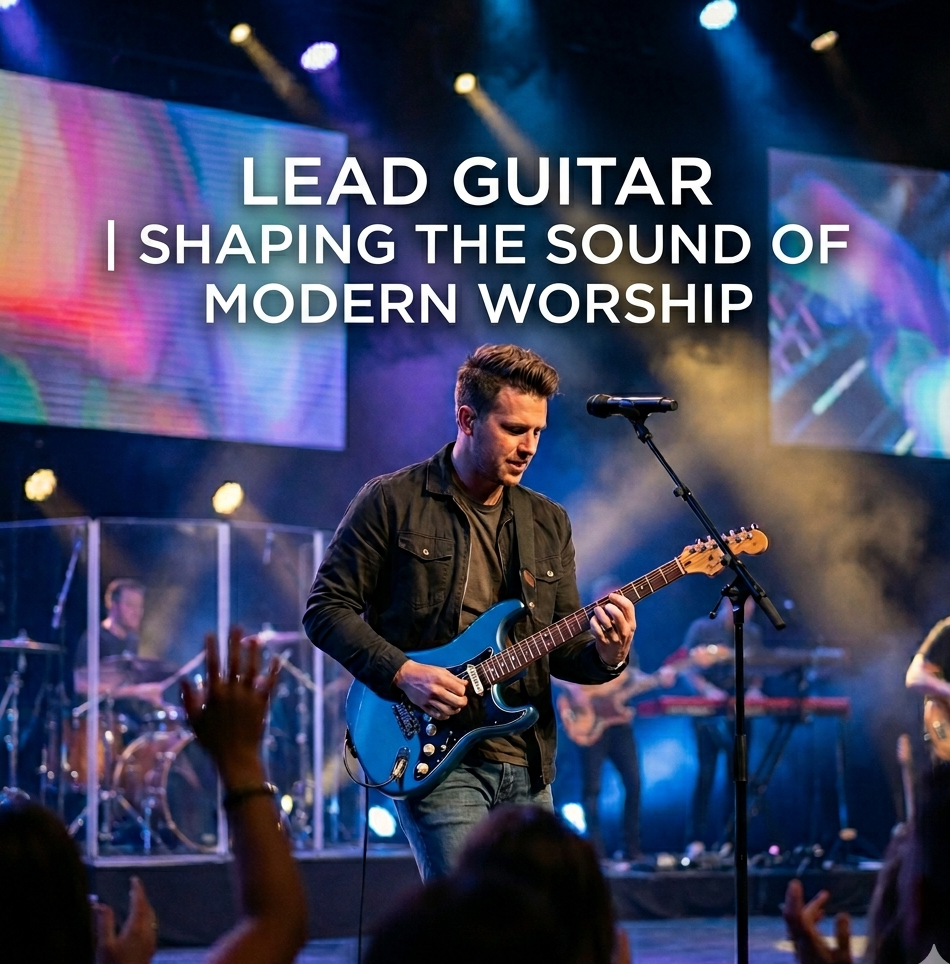
Lead Guitar | Shaping the Sound of Modern Worship
Modern worship music has evolved into a rich and expressive musical landscape that connects congregations with meaningful spiritual experiences. While vocals often carry the message of worship, the instrumental elements play an equally important role in creating atmosphere, emotion, and engagement. Among these instruments, the lead guitar stands out as one of the most influential voices in contemporary worship music.
Far more than a supporting instrument, the lead guitar helps shape the emotional journey of a worship song. Through melodic phrases, ambient textures, dynamic builds, and expressive solos, it adds depth and character that can transform a simple arrangement into a powerful worship experience. Whether gently underscoring a reflective moment or driving an energetic chorus, the lead guitar serves as a bridge between musical expression and congregational participation.
As worship music continues to embrace modern production styles and diverse musical influences, the role of the lead guitarist has become increasingly significant. Understanding how this instrument contributes to worship not only enhances appreciation for the music itself but also highlights the artistry behind creating meaningful moments of praise.

The Evolution of Lead Guitar in Worship Music
Worship music has undergone remarkable changes over the past few decades. Traditional hymn-based arrangements often relied heavily on piano, organ, and choir accompaniment. As contemporary worship emerged, however, churches began incorporating elements from rock, pop, folk, and ambient music, leading to a greater emphasis on guitar-driven arrangements.
This transition introduced a new approach to worship instrumentation. Instead of simply accompanying vocals, lead guitars started contributing memorable melodic hooks, atmospheric soundscapes, and rhythmic patterns that became integral parts of worship songs. Influential worship bands and ministries helped establish a distinctive guitar-centered sound that many churches around the world continue to embrace today.
Consequently, the lead guitar evolved from being an occasional feature to becoming a defining element of modern worship music. Its ability to convey emotion without words allows it to complement the lyrical message while creating an immersive worship environment.

Creating Atmosphere Through Musical Expression
One of the most unique contributions of the lead guitar is its ability to create atmosphere. Worship is often about fostering moments of reflection, gratitude, reverence, and celebration. Musical textures play a crucial role in establishing these moods, and the lead guitar excels in this area.
Through the use of effects such as delay, reverb, modulation, and volume swells, guitarists can produce expansive sounds that fill the space without overwhelming the congregation. These ambient layers create a sense of openness and depth, allowing listeners to engage more fully with the worship experience.
Moreover, atmospheric guitar parts often serve as emotional cues within a song. Gentle melodic lines can encourage contemplation during quieter moments, while soaring phrases can amplify feelings of joy and praise. Because these musical elements communicate beyond language, they often resonate deeply with worshippers from diverse backgrounds.

Lead Guitar as a Tool for Supporting the Message of a Song
Every worship song is designed to communicate a message. Lyrics may express faith, gratitude, hope, surrender, or celebration, but the music itself significantly influences how that message is received. The lead guitar helps reinforce these themes through carefully crafted melodies and expressive phrasing.
A well-played guitar line can emphasize key moments within a song, drawing attention to particular emotions or transitions. During verses, subtle melodic motifs may provide gentle support to the vocals. As the song progresses into the chorus, the guitar often expands in intensity, helping elevate the emotional impact of the message.
This relationship between lyrics and instrumentation creates a more complete worship experience. Rather than competing with the vocals, the lead guitar enhances them, adding layers of meaning that help listeners connect with the song on a deeper level.

Building Dynamics and Musical Momentum
Dynamics are essential in modern worship music. Songs frequently move through various levels of intensity, beginning softly before building toward powerful climactic moments. The lead guitar plays a critical role in guiding these dynamic shifts.
During quieter sections, guitarists may use sparse notes, ambient swells, or simple melodic phrases that leave space for reflection. As the arrangement develops, additional rhythmic patterns and melodic embellishments gradually increase energy and anticipation. This progression creates momentum that keeps the congregation engaged throughout the song.
Furthermore, dynamic guitar playing helps prevent arrangements from feeling repetitive. By adjusting tone, volume, phrasing, and note density, lead guitarists can continuously shape the musical landscape. These subtle changes contribute to a sense of movement that supports the emotional flow of worship.

Lead Guitar Enhances Congregational Engagement
Although the lead guitar often performs intricate musical parts, its ultimate purpose in worship extends beyond technical performance. Effective worship music encourages participation, and the lead guitar contributes significantly to this goal.
Memorable guitar hooks and melodic themes help make songs more recognizable and engaging. When worshippers become familiar with these musical elements, they often anticipate and connect with them, strengthening their overall involvement in the worship experience.
Additionally, instrumental interludes provide opportunities for personal reflection between lyrical sections. These moments allow congregants to process the message of the song while remaining immersed in the atmosphere created by the music. As a result, the lead guitar becomes a valuable tool for fostering both active participation and personal contemplation.

The Art of Musical Restraint
An important aspect of worship guitar playing is knowing when not to play. Unlike many performance-oriented musical settings, worship often requires a balance between expression and restraint. The most effective lead guitarists understand that their role is to serve the song rather than draw attention to themselves.
This approach involves listening carefully to the overall arrangement and choosing parts that enhance rather than dominate. Sometimes a single sustained note can be more impactful than a complex run of notes. In other situations, silence itself becomes a powerful musical choice.
Such restraint demonstrates musical maturity and allows other elements of the worship team to contribute effectively. By prioritizing the collective sound over individual performance, lead guitarists help create a more unified and meaningful worship experience.

Technology and the Modern Worship Lead Guitar Sound
Advancements in music technology have significantly influenced the role of lead guitar in worship settings. Digital effects processors, amp modelers, pedalboards, and recording software have expanded the range of sounds available to worship musicians.
Today’s guitarists can seamlessly transition between shimmering ambient textures, clean rhythmic tones, and powerful lead sounds within a single song. These technological tools provide greater flexibility and enable musicians to craft sounds that support a wide variety of worship styles.
At the same time, technology serves as a means rather than an end. While equipment can enhance creativity, the effectiveness of worship guitar playing still depends on musical sensitivity, intentionality, and an understanding of the song’s purpose. Ultimately, the goal remains the same: supporting worship through meaningful musical expression.

Developing Skills as a Worship Lead Guitarist
Becoming an effective worship lead guitarist requires more than technical proficiency. Strong musicianship is certainly important, but successful worship guitarists also develop listening skills, adaptability, and an awareness of how their playing affects the congregation.
Regular practice helps build confidence and precision, while studying contemporary worship music provides insight into common stylistic approaches. Equally important is learning how to collaborate with vocalists, keyboardists, drummers, and other members of the worship team.
Over time, guitarists discover how to balance creativity with sensitivity, allowing them to contribute in ways that enhance both the music and the worship experience. This combination of technical skill and musical awareness ultimately defines excellence in worship guitar playing.

Conclusion
The lead guitar is a defining element of modern worship music, shaping both its sound and emotional impact. Through expressive melodies, atmospheric textures, and dynamic accompaniment, it helps create meaningful moments of worship and reflection.
Its role goes beyond simply adding musical layers. The lead guitar reinforces the message of a song, enhances emotional engagement, and supports the overall worship experience. When played with purpose, it enriches the music while helping congregations connect more deeply through worship.
As contemporary worship continues to evolve, the lead guitar will undoubtedly remain a vital part of its sound, inspiring congregations and helping create meaningful expressions of faith through music. For aspiring musicians looking to develop these skills, structured Guitar Lessons Online can provide the technical foundation and creative understanding needed to play with confidence and purpose. At The Mystic Keys, students receive expert guidance that helps them master lead guitar techniques while learning how to use music as a powerful tool for expression, worship, and artistic growth.
For more information and exciting resources about learning music, visit our website at The Mystic Keys. For more music content and exciting offers follow us on
Facebook, Instagram, YouTube, LinkedIn, Twitter, Pinterest, and Threads.