Creating Harmonies That Enhance Congregational Singing
Congregational singing harmonies play a major role in creating a powerful and unified worship experience. When harmonies are arranged correctly, they support the melody, encourage participation, and help the congregation sing with greater confidence and emotion.
In many churches, worship leaders and choir teams focus heavily on instruments and song selection, but vocal harmony is equally important. Well-balanced harmonies can make worship feel fuller, more engaging, and spiritually uplifting without distracting from the main melody.
At The Mystic Keys, we help students and worship teams understand how proper harmony techniques can improve congregational worship and overall musical excellence.
Why Congregational Singing Harmonies Matter in Worship
Congregational singing harmonies help create unity within the church. Instead of a single melody line, harmonies add depth and warmth that make worship songs sound richer and more inspiring.
When harmonies are balanced properly, the congregation feels more comfortable joining in worship.
Understanding the Basics of Congregational Singing Harmonies
Congregational singing harmonies are created when additional vocal notes are sung alongside the main melody. Each harmony part has a specific role in supporting the song.
Provides a deep musical foundation that strengthens the entire arrangement.
Understanding these harmony parts helps worship teams create smoother and more balanced vocal arrangements.
Keep Congregational Singing Harmonies Simple
One of the most important principles of congregational singing harmonies is simplicity. Worship songs should remain easy for the congregation to follow.
Overcomplicated harmonies can distract worshippers and make participation difficult. Simple harmonies often sound more powerful because they naturally support the melody.
Simple arrangements help the congregation stay connected during worship.
Build Better Vocal Blending for Congregational Singing Harmonies
Good congregational singing harmonies depend heavily on vocal blending. Even technically correct harmonies can sound weak if singers do not blend properly.
A blended worship team creates a smoother and more unified worship atmosphere.
Use Dynamics in Congregational Singing Harmonies
Not every part of a worship song requires full harmony. Dynamic harmony arrangements create emotional movement and prevent songs from sounding repetitive.
Song Section
Harmony Style
Verse
Light harmony or unison
Pre-Chorus
Gentle supporting harmonies
Chorus
Full congregational singing harmonies
Bridge
Layered harmonies for intensity
Final Chorus
Strongest harmony arrangement
Using dynamics carefully helps worship songs feel more expressive and impactful.
Use harmonies strategically rather than constantly
Balanced arrangements help worshippers follow the song more easily.
Practice Listening Skills
Creating harmonies is not only about singing correct notes. It also involves listening carefully to the entire group.
Strong listening skills help singers:
Stay in tune
Adjust volume naturally
Maintain timing
Blend with other voices
Respond to worship flow
Choir members and worship leaders should practice active listening during rehearsals.
Use Harmonies to Support Worship Emotionally
Different harmonies create different emotional effects. Soft harmonies can create intimacy, while fuller harmonies can build celebration and energy.
For example:
Gentle harmonies work well during reflective worship moments
Strong layered harmonies fit powerful choruses
Sustained harmony notes can create a peaceful atmosphere
The goal is always to support the meaning and emotion of the worship song.
Rehearse Harmonies Carefully
Good harmonies require preparation and consistency. During rehearsals:
Practice each harmony part separately
Rehearse difficult transitions slowly
Record rehearsals for review
Work on pitch accuracy
Focus on timing and entrances
Consistent rehearsal helps worship teams sing confidently during live services.
Technology Can Help, But Balance Is Important
Some churches use backing tracks, vocal processors, or choir pads to enhance harmonies. While technology can help create fullness, live voices should remain natural and authentic.
The congregation connects most deeply with genuine worship rather than heavily processed vocals.
How Music Training Helps Worship Teams
Formal vocal and music training helps singers understand harmony structure, ear training, pitch control, and vocal blending. Learning these skills improves confidence and overall worship quality.
These skills help musicians and singers contribute more effectively in church worship settings.
Final Thoughts
Creating harmonies that enhance congregational singing is about balance, simplicity, and musical sensitivity. Strong harmonies support worship without distracting from the congregation’s participation. When voices blend together with purpose, worship becomes more engaging, unified, and meaningful.
Whether you are part of a church choir, worship band, or music ministry, learning how to arrange and sing harmonies effectively can greatly improve the worship experience for everyone involved.
If you want to develop your vocal skills, worship leading abilities, or choir techniques, The Mystic Keys offers structured music training designed for aspiring musicians and worship teams.
For more information and exciting resources about learning music, visit our website at The Mystic Keys. For more music content and exciting offers follow us on
Learning guitar is exciting in the beginning. The first few chords feel like major milestones, and playing even a simple song can feel incredibly rewarding. However, after those initial moments of excitement, many beginners run into the same frustrating challenge — switch chords smoothly and quickly. One moment your fingers are in position, and the next moment everything falls apart while moving to the next chord.
The good news is that chord switching is not a talent that only experienced guitarists possess naturally. Speed and smoothness come from muscle memory, proper technique, and consistent practice. Even professional players once struggled with awkward transitions, buzzing strings, and long pauses between chords.
Improving chord changes is less about forcing your fingers to move faster and more about teaching your hands to move efficiently. Once your movements become smaller, cleaner, and more intentional, transitions begin to feel natural. Songs start flowing better, rhythm becomes steadier, and playing guitar suddenly feels much more enjoyable.
Start Slowly to Switch Chords Faster
At first, your brain treats every chord like a completely new puzzle. Each finger placement requires conscious thought, which slows down your movement. While trying to remember where every finger belongs, your hand becomes tense and your rhythm breaks.
Another common issue is lifting all fingers too far away from the fretboard during transitions. Beginners often move their entire hand dramatically between chords, which wastes valuable time and makes accuracy harder. In many cases, the fingers are capable of reaching the next chord quickly, but unnecessary movement creates delays.
Finger strength also plays a role. Since your muscles are still developing coordination, certain chord shapes may feel uncomfortable or unstable. Because of this, the hand hesitates during transitions, especially when switching between unfamiliar chord combinations.
Patience becomes extremely important during this stage. Faster chord changes are built slowly through repetition, not through rushing.
Start Slowly Before Trying to Play Fast
One of the biggest mistakes guitar learners make is attempting to play at full song speed too early. Speed without control usually leads to sloppy playing, muted strings, and frustration.
Instead, focus on clean transitions first. Move between two chords very slowly while paying attention to finger placement. Make sure every note rings clearly before increasing speed. Although this may feel repetitive initially, slow practice builds the foundation for fast playing later.
For example, if you are practicing between G and C chords, avoid worrying about rhythm at first. Concentrate on landing your fingers accurately. Once the movement begins to feel comfortable, gradually reduce the pause between changes.
Over time, your brain starts recognizing these patterns automatically. Eventually, your fingers move into position almost without conscious effort.
Keep Your Fingers Close to the Strings
Efficient movement is the secret behind fast chord transitions. Many beginners unknowingly lift their fingers several inches away from the fretboard every time they switch chords. This creates extra distance for the fingers to travel and slows everything down.
Professional guitarists usually keep their fingers hovering very close to the strings. Their movements are compact and controlled. Instead of dramatic motions, they make tiny adjustments that save time and energy.
Imagine your fingers barely leaving the strings during transitions. The closer they stay to the fretboard, the faster they can form the next chord. Besides improving speed, this technique also increases accuracy because the fingers remain oriented toward the correct position.
At first, keeping the fingers close may feel unnatural. With regular practice, though, the hand begins to move more efficiently on its own.
Learn Common Patterns to Switch Chords Smoothly
Certain chord transitions appear repeatedly in countless songs. Because of this, practicing common combinations can dramatically improve your playing ability.
Transitions like G to C, C to D, Am to G, and Em to C are found in many beginner-friendly songs. Repeating these combinations helps your muscles memorize the movement patterns faster.
While practicing, try observing whether some fingers remain in similar positions between chords. Occasionally, one finger can stay anchored on the same string or fret while the others move around it. These “anchor fingers” help guide your hand and make transitions smoother.
Recognizing these connections between chords reduces unnecessary movement and makes playing feel much more fluid.
Focus on Rhythm Instead of Stopping Completely
Many beginners pause entirely while switching chords. Even if the pause lasts only a second, it disrupts the flow of the song.
A better approach is to keep the rhythm moving, even when chord changes are imperfect. Initially, your transitions may sound messy, but maintaining rhythm trains your hands to adapt under real playing conditions.
Think of rhythm as the backbone of guitar playing. Listeners often notice timing mistakes more than small chord imperfections. If the beat continues steadily, the music still feels alive and connected.
Practicing with a metronome can help tremendously here. Begin at a slow tempo and switch chords on each count. As your consistency improves, gradually increase the speed little by little.
Train Your Fingers Without Looking Constantly
Looking at the fretboard during every chord change can slow down progress. While visual guidance is useful in the beginning, relying on it too much prevents your fingers from developing natural memory.
Eventually, your hands should know where the chords are without constant visual confirmation. This happens through repeated practice and touch-based familiarity.
One effective method is practicing simple chord transitions while briefly looking away from the guitar. At first, this may feel difficult, but it forces the fingers to rely on muscle memory instead of eyesight.
As confidence grows, your movements become quicker and more automatic.
Daily Exercises to Switch Chords Faster
Short transition drills can improve chord speed faster than randomly playing songs for hours. Focused exercises train the exact movements that cause difficulty.
Choose two chords and switch between them continuously for one minute. During the exercise, prioritize clean placement and steady rhythm. Afterward, move to another pair of chords and repeat the process.
Consistency matters more than long practice sessions. Even fifteen focused minutes every day can produce noticeable improvement over time.
Gradually, the fingers stop feeling confused during transitions. What once seemed impossible starts becoming comfortable and natural.
Relax Your Hand to Switch Chords Easily
Tension slows everything down. When the hand becomes stiff, finger movement loses flexibility and speed decreases.
Many guitar learners squeeze the neck too hard without realizing it. Others tense their shoulders and wrists while concentrating intensely. Unfortunately, this extra tension makes smooth transitions much harder.
Try checking your posture and grip regularly. Your fingers should press firmly enough to produce clear notes, but not so hard that the hand becomes rigid.
Relaxed hands move faster because they waste less energy. Fluid movement always beats forceful movement when it comes to guitar playing.
Build Muscle Memory Through Repetition
Chord switching improves through repeated exposure. There is no shortcut around practice, but repetition does not need to feel boring.
Playing along with simple songs can make practice more engaging while reinforcing chord transitions naturally. As you repeat the same movements in musical situations, your fingers begin memorizing them subconsciously.
Eventually, your hands stop processing each chord individually. Instead, the movements blend together smoothly, allowing you to focus more on rhythm, emotion, and expression.
This stage takes time, but every practice session contributes to that progress.
Avoid Comparing Yourself to Advanced Players
Watching experienced guitarists can sometimes feel discouraging. Their fingers move effortlessly across the fretboard, making difficult transitions look easy. What is important to remember, however, is that those players developed their skills through years of repetition and patience.
Progress on guitar rarely happens overnight. Some days chord changes will feel smoother, while other days may feel frustratingly slow. That inconsistency is completely normal during the learning process.
Instead of measuring yourself against advanced musicians, focus on small improvements. Even shaving a fraction of a second off a chord change is meaningful progress.
Growth becomes much more noticeable when you stay consistent and patient with yourself.
Final Thoughts
Switching chords faster on guitar is not about magical finger speed. It comes from efficient movement, steady rhythm, relaxed technique, and repeated practice. Once your fingers begin understanding chord patterns naturally, transitions become smoother without requiring as much conscious effort. At The Mystic Keys – Guitar Lessons Online, this idea is often emphasized because real progress comes from structured learning rather than rushed practice.
The key is consistency. Practicing slowly, staying relaxed, and focusing on clean movement will gradually transform awkward pauses into seamless transitions. Although progress may seem slow initially, every practice session strengthens your coordination and confidence.
Over time, songs that once felt impossible begin flowing naturally under your fingers. That moment when chord changes finally become effortless is incredibly rewarding — and it arrives sooner than most beginners expect when they practice with patience and purpose.
For more information and exciting resources about learning music, visit our website at The Mystic Keys. For more music content and exciting offers follow us on
Understanding Barre Chords Without Frustration – A Beginner’s Guide for Guitar Players
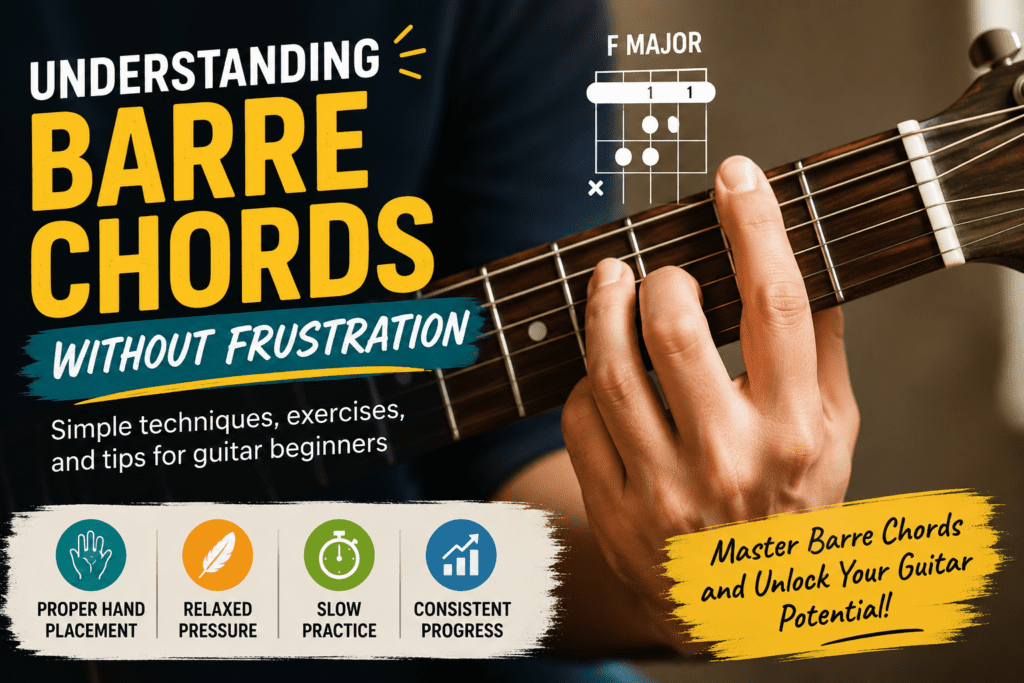
Learning barre chords is one of the biggest milestones in playing guitar, and Understanding Barre Chords Without Frustration can help beginners approach them with confidence. For many beginners, barre chords feel difficult, painful, and frustrating at first. Buzzing strings, sore fingers, and muted notes can make players feel like they are not progressing. The good news is that barre chords become easier with the right technique, patience, and practice routine.
In this guide, you will learn what barre chords are, why they feel challenging, and how to master them without frustration. Whether you are learning acoustic guitar or electric guitar, these tips will help you improve your barre chord technique faster.
What Are Barre Chords?
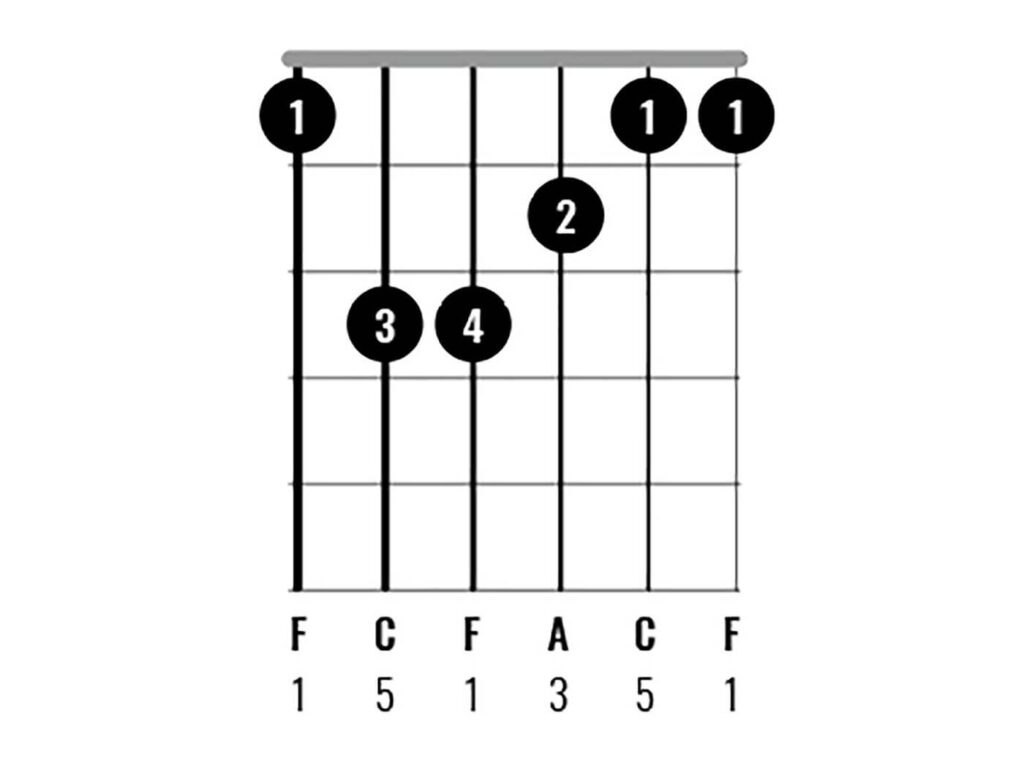
A barre chord is a guitar chord where one finger, usually the index finger, presses down multiple strings across the same fret. This finger acts like a movable capo, allowing you to play different chords all over the neck.
Common examples include:
F Major Barre Chord
B Minor Barre Chord
F# Minor Barre Chord
Barre chords are important because they allow guitarists to:
Once you understand barre chords, your guitar playing becomes much more flexible and professional.
Why Barre Chords Feel So Difficult
Many beginners struggle with barre chords because they require several skills at the same time.
1. Finger Strength
Your index finger must press multiple strings evenly. At first, your hand muscles are not used to this pressure.
2. Poor Finger Placement
If your finger is slightly tilted or positioned incorrectly, some strings may buzz or stay muted.
3. Too Much Pressure
Many players squeeze the neck too hard. This creates unnecessary tension and hand fatigue.
4. Incorrect Thumb Position
The thumb should support the barre from behind the neck. If the thumb placement is wrong, the chord becomes harder to hold.
5. Lack of Patience
Barre chords are not mastered overnight. They take consistent practice and muscle memory.
The Correct Way to Play Barre Chords
Step 1: Position Your Index Finger Properly
Place your index finger close to the fret wire, not directly in the middle of the fret. Use the side of the finger slightly instead of the soft flat part.
This helps create cleaner notes with less effort.
Step 2: Relax Your Hand
Do not squeeze the neck too tightly. Most beginners use more pressure than necessary.
Try this:
Play the chord
Slowly reduce pressure
Find the minimum pressure needed for clear sound
This improves endurance and reduces frustration.
Step 3: Keep Your Thumb Behind the Neck
Your thumb should rest roughly behind your index finger. This creates balance and leverage.
Avoid wrapping the thumb over the neck when learning barre chords.
Step 4: Check Each String Individually
Strum one string at a time.
If a note sounds muted:
Adjust finger angle
Move closer to the fret
Relax unused tension
Small adjustments make a huge difference.
Best Beginner Barre Chords to Practice
Start with easier shapes before difficult ones.
Easy Barre Chords for Beginners
1. B Minor (Partial Barre)
This chord uses fewer strings and helps build confidence.
2. F Major Mini Barre
A simplified version of the full F chord.
3. Power Chords
These are technically simpler barre shapes and excellent for beginners.
Exercises for Understanding Barre Chords Without Frustration
Exercise 1: Finger Pressure Training
Barre all six strings lightly at the 5th fret.
Pick each string slowly.
Focus on clarity rather than strength.
Exercise 2: Moveable Chord Practice
Practice moving the same chord shape:
3rd fret
5th fret
7th fret
This improves flexibility and coordination.
Exercise 3: Chord Switching
Switch slowly between:
G Major to F Major
C Major to B Minor
Use a metronome for steady timing.
How Long Does It Take to Learn Barre Chords?
Every guitarist learns at a different pace.
Most beginners notice improvement within:
2–4 weeks of consistent practice
10–15 minutes daily practice
The key is regular practice rather than long practice sessions.
Common Problems While Understanding Barre Chords Without Frustration
Pressing Too Hard
Excess force creates tension and pain.
Bent Wrist Position
Keep your wrist relaxed and natural.
Skipping Warm-Ups
Warm up your fingers before difficult chord practice.
Practicing Too Fast
Slow practice builds clean technique.
Tips for Understanding Barre Chords Without Frustration Faster
Use Lighter Guitar Strings
Heavy strings are harder for beginners.
Adjust Guitar Action
High action makes barre chords more difficult. A proper guitar setup helps a lot.
Practice on Electric Guitar First
Electric guitars often require less pressure.
Stay Consistent
Short daily sessions work better than occasional long sessions.
These songs use repetitive chord progressions that build confidence.
Barre chords are challenging at first, but every guitarist goes through the same learning process. In Understanding Barre Chords Without Frustration, the key is learning proper technique gradually instead of trying to force the chord.
Focus on:
Correct hand placement
Relaxed pressure
Slow practice
Consistency
With patience and daily practice, barre chords will eventually feel natural. Once you master them, you unlock a whole new level of freedom on the guitar.
If you keep practicing consistently, you will soon play barre chords cleanly and confidently in your favorite songs. Taking Guitar Lessons Online can also help beginners learn proper barre chord techniques faster with guided practice and expert instruction.
Intersted in learning music with us? Register now
For more information and exciting resources about learning music, visit our website at The Mystic Keys. For more music content and exciting offers follow us on