Why Practicing Scales Incorrectly Slows Your Musical Progress (Complete Guide)
Scales are often the first technical exercise every musician learns. Whether you play piano, guitar, violin, flute, or any other instrument, scales are the foundation of: why practicing scales incorrectly slows progress in music
Finger strength
Hand coordination
Speed and fluency
Understanding musical keys
Overall technique development
But here is the problem: Many students practice scales every day but still don’t improve properly.
Why? Because they are practicing incorrectly without realizing it.
Incorrect scale practice does not just slow progress—it can actually build bad habits that block improvement for months or even years.
This is exactly why practicing scales incorrectly slows progress in music.
Let’s understand this clearly.
1. What Does “Incorrect Scale Practice” Really Mean?
Before understanding the problem, we need to define it simply.
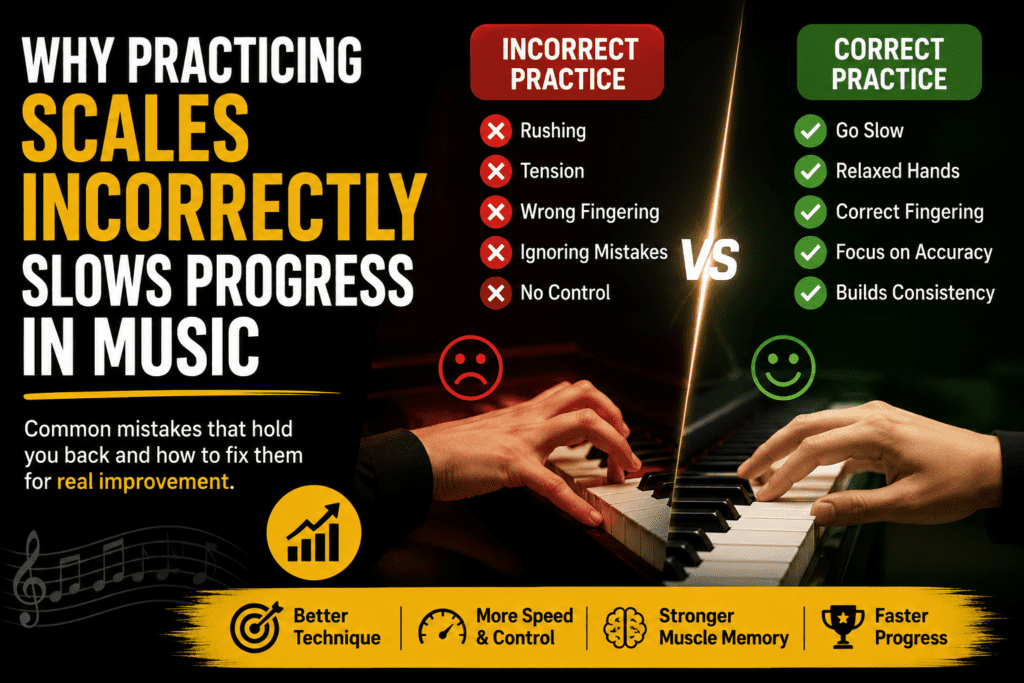
You are practicing scales incorrectly if you are:
Playing without proper finger pattern
Rushing through scales without control
Ignoring rhythm and timing
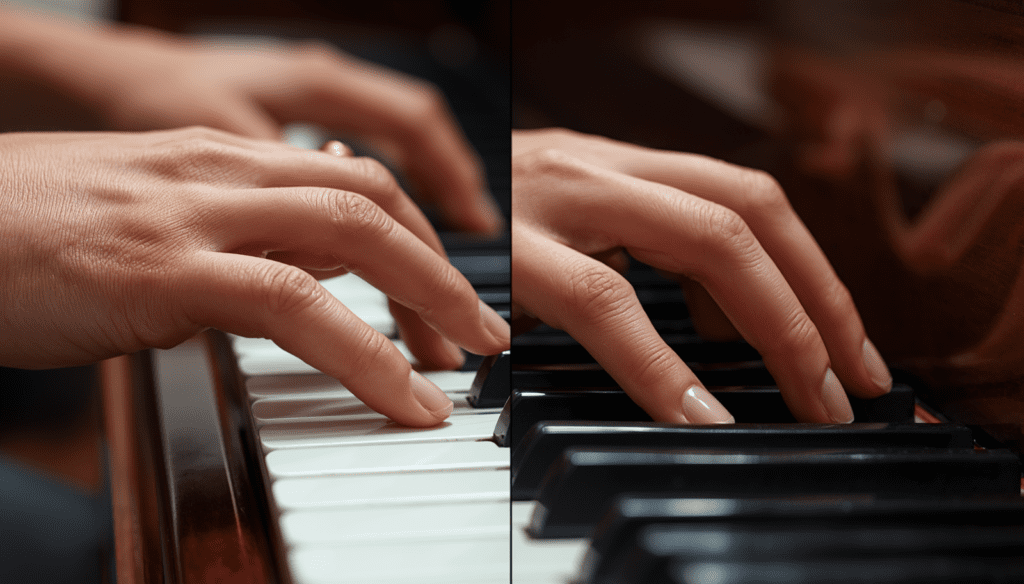
Using unnecessary hand tension
Not paying attention to mistakes
Practicing without structure
Even if you practice daily, these mistakes can completely reduce your progress.
2. Bad Muscle Memory Gets Locked In
One of the biggest issues with incorrect practice is muscle memory formation.
Your brain and fingers learn what you repeat. If you repeat mistakes, your body memorizes those mistakes.
Example:
If you always:
Miss a note
Use wrong fingering
Or play unevenly
Your fingers will “remember” that as the correct way.
Result:
You keep repeating the same errors
Fixing them later becomes very difficult
Your progress slows down significantly
This is why slow, correct practice is always better than fast, messy practice.
3. Speed Without Control Creates Confusion
Many learners think:
“If I play faster, I will improve faster.”
But this is not true.
When you increase speed without control:
Notes become unclear
Fingers lose coordination
Timing becomes unstable
Instead of improving, you start training your hands to rush and lose accuracy.
Scales are designed to build finger independence and control.
But incorrect practice leads to:
Uneven finger strength
One hand dominating the other
Lack of coordination between fingers
Over time, this affects:
Song performance
Improvisation ability
Technical pieces
You may feel “stuck” even after months of practice.
5. Timing and Rhythm Problems Develop
Scales are not just finger exercises—they are rhythm training tools.
If you practice without a metronome or proper timing:
You develop unstable rhythm
You speed up randomly
You slow down in difficult parts
This becomes a serious issue when playing real music.
Result:
Even simple songs feel difficult to play in time.
6. Tension Builds in Hands and Fingers
Incorrect scale practice often leads to unnecessary tension.
Common signs:
Tight fingers
Stiff wrists
Shoulder or arm strain
Fatigue while playing
This happens when:
You press too hard
You rush scales
You don’t relax while playing
Why this is dangerous:
Tension slows down your speed and can even cause long-term discomfort.
7. Lack of Awareness During Practice
Many students practice scales while:
Thinking about something else
Watching TV or phone
Not listening carefully
This leads to “automatic playing” without improvement.
Problem:
If you are not mentally present, your brain does not correct mistakes.
8. No Structured Practice Plan
Random practice is one of the biggest reasons for slow progress.
Without structure:
You repeat easy scales only
You avoid difficult ones
You don’t track improvement
A structured plan should include:
Slow practice
Medium tempo practice
Technical focus (fingering, rhythm, dynamics)
Daily consistency
9. Ignoring Mistakes Instead of Fixing Them
Many learners keep playing even after making mistakes.
But every ignored mistake becomes a permanent habit.
Correct habit:
Stop when you make an error
Identify the problem
Fix it slowly
Then continue
10. How to Practice Scales Correctly (Step-by-Step)
Now let’s fix everything.
Step 1: Start Very Slow
Do not focus on speed. Focus on clean notes.
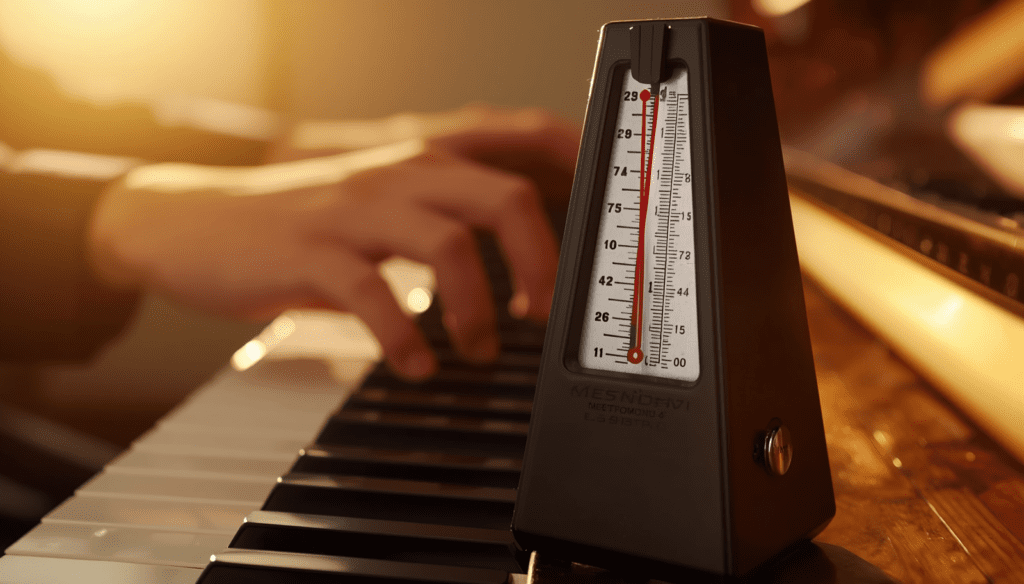
Step 2: Use a Metronome
This builds strong rhythm and timing control.
Step 3: Follow Proper Finger Patterns
Every scale has correct fingering—never ignore it.
Step 3: Follow Proper Finger Patterns
Every scale has correct fingering—never ignore it.
Step 5: Break the Scale Into Parts
Practice difficult sections separately.
Step 6: Increase Speed Gradually
Only increase speed when accuracy is perfect.
Step 7: Stay Focused While Practicing
Listen carefully to every note you play.
11. Simple Daily Scale Practice Routine
Here is a simple structure:
Warm-up (2–3 min)
Slow scale practice (5–10 min)
Metronome practice (5 min)
Speed building (5 min)
Problem fixing (2–5 min)
Total: 15–25 minutes daily is enough if done correctly.
Practicing scales is essential for every musician, but how you practice matters more than how much you practice.
Incorrect scale practice leads to:
Bad habits
Slow progress
Poor technique
Lack of control
But correct, mindful practice leads to:
Faster improvement
Strong technique
Better musical expression
Long-term growth
Remember: Slow, correct, and focused practice will always beat fast, careless repetition.
Intersted in learning music with us? Register now
For more information and exciting resources about learning music, visit our website at The Mystic Keys. For more music content and exciting offers follow us on