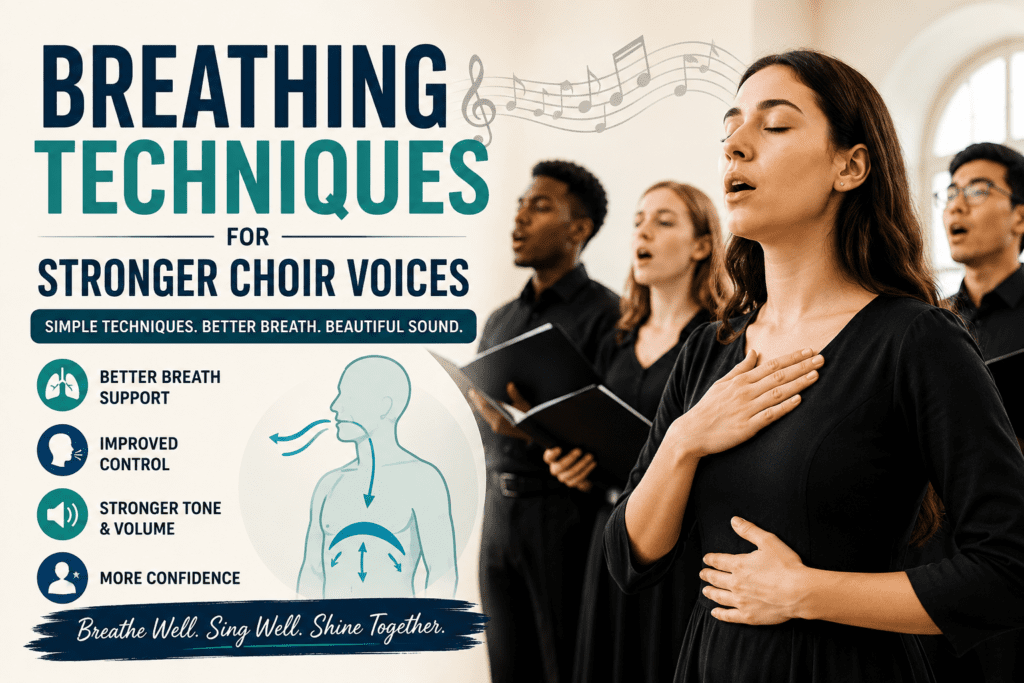
Singing in a choir is about more than knowing the right notes. One of the most important skills every choir singer can develop is proper breathing. Breathing Techniques for Stronger Choir Voices help singers improve tone, increase vocal strength, enhance control, and build confidence. Many beginners focus only on the words and melody, but experienced singers know that breath is the foundation of every great performance. Learning a few simple breathing techniques can make a significant difference in the quality of your singing.
Why Breathing Matters in Choir Singing
Your voice is powered by air. When you breathe correctly, you provide steady support for your vocal cords, allowing them to produce a clear and consistent sound.
Proper breathing helps you:
Sing longer phrases without running out of breath
Improve vocal strength and projection
Maintain better pitch and tone
Reduce vocal strain and fatigue
Blend more effectively with other choir members
Without proper breath support, even talented singers can struggle with weak or shaky voices.
1. Breathing Techniques: Breathe From Your Diaphragm
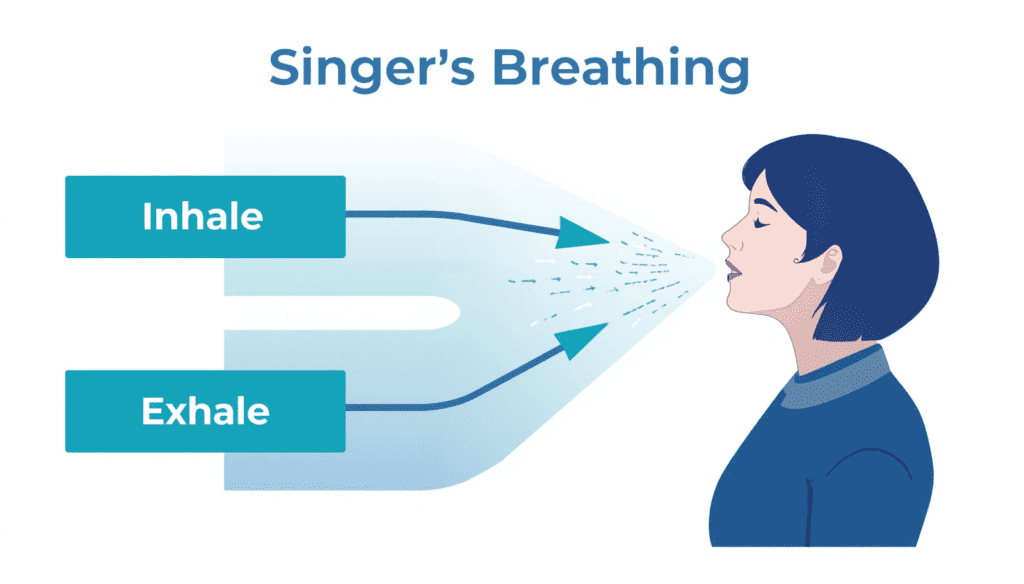
One of the most important breathing techniques for singers is diaphragmatic breathing, often called belly breathing.
Instead of lifting your shoulders when you inhale, allow your stomach and lower ribs to expand outward. This gives your lungs more room to fill with air.
How to Practice
Place one hand on your chest and the other on your stomach.
Practice for a few minutes each day until it becomes natural.
2. Breathing Techniques: Take Silent Breaths
In a choir, loud gasping breaths can distract both the audience and other singers.
Train yourself to take quick, quiet breaths through your mouth when preparing to sing. Silent breathing helps maintain a smooth and professional performance.
Practice Tip
Imagine breathing in as if you are surprised but trying not to make any sound.
3. Breathing Techniques: Control Your Airflow
Strong singing does not mean using all your air at once. Good singers learn to release air slowly and steadily.
If you let air escape too quickly, your voice may sound weak before the end of a phrase.
Try to maintain the sound evenly for 15–20 seconds.
Gradually increase the duration as your control improves.
This exercise helps build breath support and endurance.
4. Plan Your Breathing Points
Before singing a song, identify places where you can comfortably take breaths.
Breathing in the wrong place can interrupt the meaning of lyrics and make phrases sound awkward.
Choir directors often mark breathing spots in sheet music to help the entire choir breathe together and maintain a unified sound.
5. Maintain Good Posture
Good breathing begins with good posture.
Standing correctly allows your lungs to expand fully and helps air flow freely.
Proper Singing Posture
Stand tall but relaxed
Keep your shoulders down
Lift your chest naturally
Keep your head level
Avoid slouching
Even the best breathing techniques become less effective when posture is poor.
6. Practice Breath Expansion Exercises
Regular breathing exercises strengthen the muscles used in singing.
Simple Exercise
Inhale slowly for four counts.
Hold the breath for four counts.
Exhale slowly for four counts.
Repeat several times.
As you improve, increase the counts to six or eight.
Common Breathing Mistakes to Avoid
Many beginner choir singers make similar mistakes:
Raising the shoulders when inhaling
Taking shallow breaths
Running out of air before finishing a phrase
Holding unnecessary tension in the neck or shoulders
Releasing air too quickly
Being aware of these habits is the first step toward correcting them.
Developing proper breathing techniques is one of the best ways to build a stronger choir voice. By learning to breathe from the diaphragm, controlling airflow, maintaining good posture, and practicing regularly, you can improve your vocal strength, tone, and confidence.
Remember, every great choir singer started as a beginner. Consistent practice of these breathing techniques will help you sing more comfortably and effectively, allowing your voice to contribute beautifully to the overall choir sound.
Ready to take your singing to the next level? Join our Worship Piano & Singing Lessons Online and receive professional training to strengthen your voice, improve your technique, and grow in your musical journey.
Intersted in learning music with us? Register now
For more information and exciting resources about learning music, visit our website at The Mystic Keys. For more music content and exciting offers follow us on