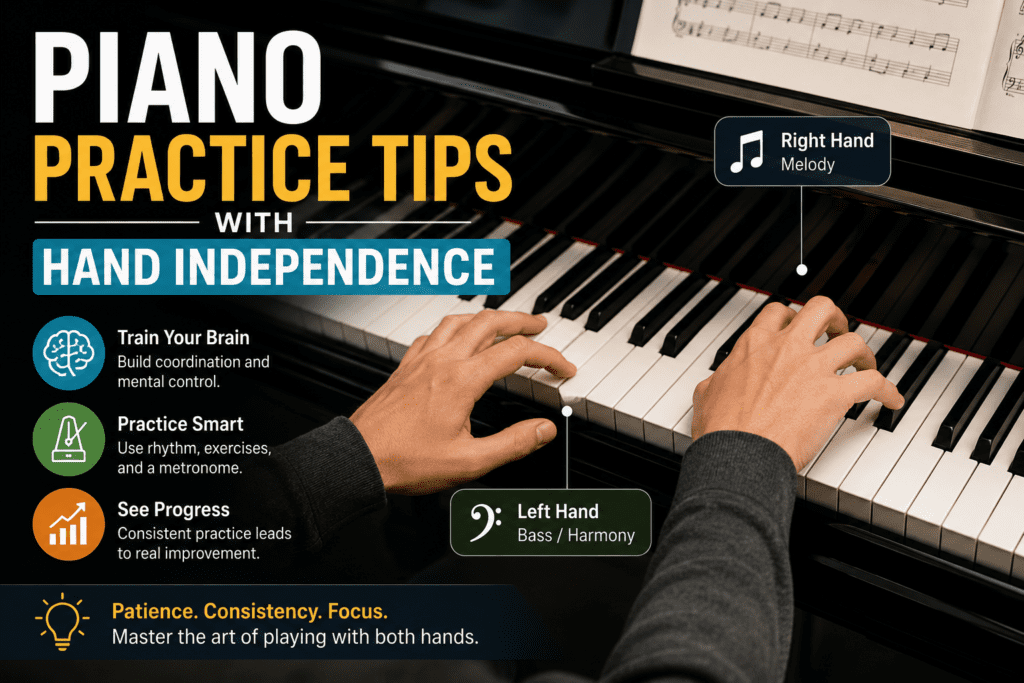
Why Many Piano Players Struggle With Hand Independence
One of the most common frustrations among piano students is developing hand independence. Many beginners—and even intermediate players—find it difficult to make each hand perform different movements at the same time. While the right hand may be playing a melody, the left hand is often responsible for chords, bass notes, or rhythm patterns. Coordinating these separate tasks can feel overwhelming. Because hand independence is such an essential skill, it is often featured among the most important piano practice tips recommended by teachers and professional musicians.
The good news is that struggling with hand independence is completely normal. It is not a sign of a lack of talent. It is simply a skill that requires time, proper practice, and patience to develop.
In this article, we’ll explore why hand independence is challenging and share practical piano practice tips and techniques that can help piano players improve faster.
What Is Hand Independence?

Hand independence is the ability to perform different musical tasks with each hand simultaneously. For example:
- The right hand plays a melody while the left hand plays chords.
- One hand plays fast notes while the other maintains a steady rhythm.
- Each hand follows a different pattern or dynamic level.
This skill is essential for playing most piano music, from classical pieces to worship songs, jazz, pop, and contemporary arrangements.
Why Hand Independence Feels So Difficult
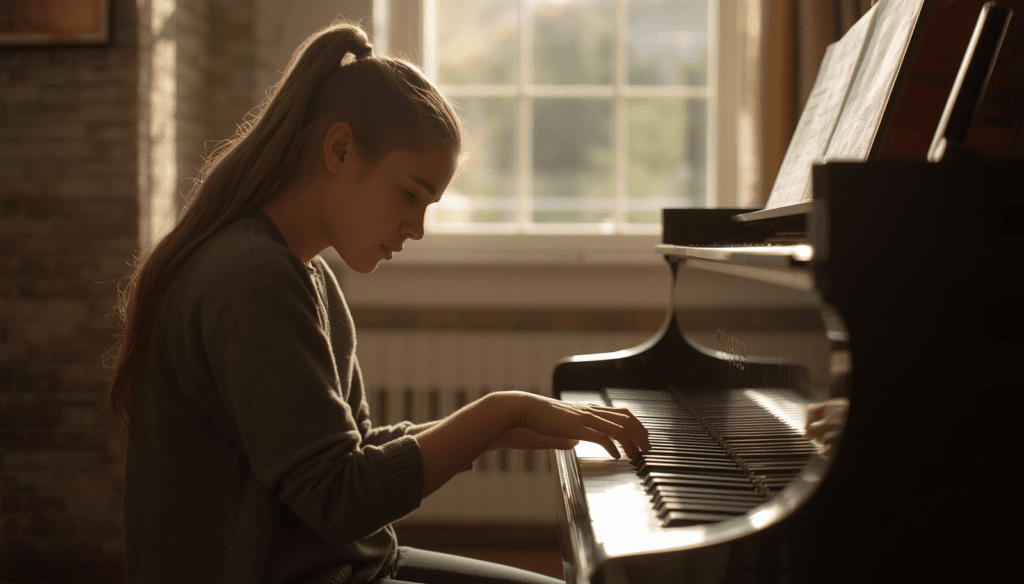
1. The Brain Prefers Symmetrical Movements
Humans naturally find it easier to perform the same movement with both hands. Tasks such as clapping, lifting objects, or typing often involve coordinated actions.
Piano playing is different. It frequently requires each hand to perform completely separate movements. The brain must create new neural pathways to manage these independent actions, which takes time and repetition.
2. Beginners Focus Too Much on One Hand
Many students instinctively focus on their dominant hand. As a result, the other hand becomes less accurate and less confident.
When attention shifts entirely to one hand, mistakes often occur in the other. Developing equal awareness of both hands is an important part of piano growth.
3. Rhythm Coordination Can Be Challenging
Hand independence isn’t only about finger movement. Rhythm plays a major role as well.
For example, one hand may play quarter notes while the other plays eighth notes. Keeping both rhythms steady requires strong internal timing and concentration.
This is why rhythm exercises are often recommended alongside technical piano practice.
4. Tension Slows Progress
Physical tension in the wrists, fingers, arms, or shoulders can make coordination more difficult.
When players become nervous or frustrated, they often tighten their muscles without realizing it. Relaxed technique allows the hands to move more freely and independently.
5. Practice Methods Are Sometimes Ineffective
Many students repeatedly play difficult passages from beginning to end, hoping improvement will happen automatically.
Unfortunately, this approach can reinforce mistakes. Focused practice methods are far more effective for building hand independence.
Signs That You Need More Hand Independence Practice
You may need to strengthen hand independence if you experience these common challenges:
- One hand stops when the other makes a mistake.
- The left hand loses rhythm when the melody becomes difficult.
- Fast passages cause both hands to become uncoordinated.
- You can play each hand separately but struggle when combining them.
- Complex accompaniment patterns feel overwhelming.
These challenges are extremely common among developing piano players.
How to Improve Hand Independence
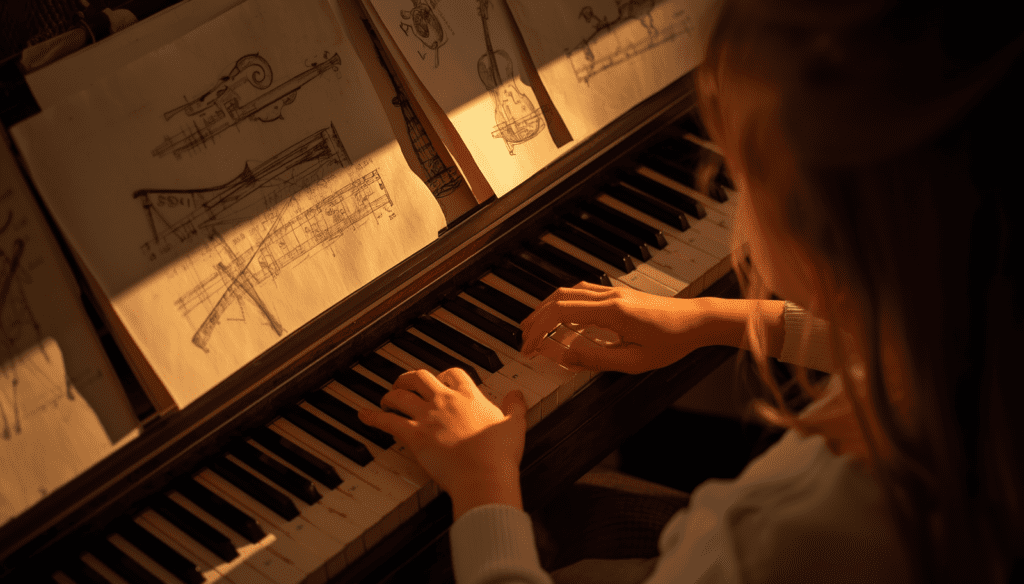
Practice Hands Separately First
Before attempting both hands together, master each hand individually.
This allows your brain to learn each movement pattern without additional complexity. When both hands are eventually combined, the coordination process becomes much easier.
Start Slowly
One of the biggest mistakes piano students make is practicing too fast.
Use a slow tempo where you can play accurately and comfortably. Speed develops naturally as coordination improves.
Remember:
Accuracy before speed.
Counting aloud strengthens rhythm awareness and helps both hands stay synchronized.
Try counting:
“1 and 2 and 3 and 4 and”
while practicing scales, exercises, and songs.
This simple technique dramatically improves coordination over time.
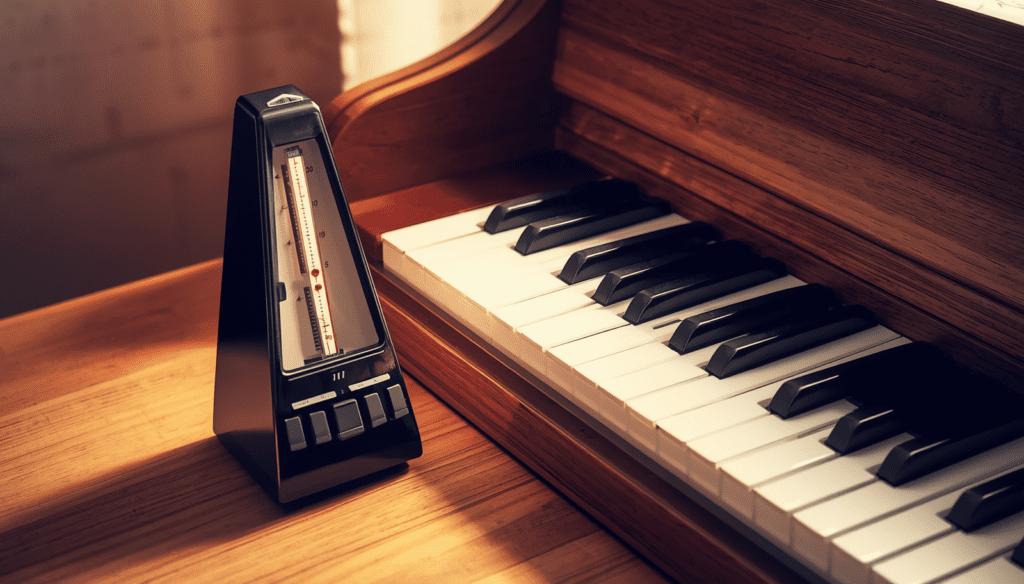
Use a Metronome
A metronome provides a consistent rhythmic reference and prevents tempo fluctuations.
Regular metronome practice helps both hands maintain stable timing, especially when learning challenging patterns.
Practice Scales and Technical Exercises
Scales are excellent for developing hand independence because they train both hands to work together in organized patterns.
Exercises from methods such as Hanon, Czerny, and other technical studies can also improve finger control and coordination.
Break Music Into Small Sections
Instead of practicing an entire piece repeatedly, focus on short sections of two to four measures.
Master each section before moving to the next.
This approach reduces mental overload and allows for more focused improvement.
Train the Weaker Hand
Most players have one hand that feels less comfortable.
Spend extra time practicing simple exercises with your weaker hand to build strength, control, and confidence.
Over time, the balance between both hands will improve.
The Role of Consistency
Hand independence is not developed in a single practice session.
Like learning a new language or sport, the brain requires repeated exposure to create stronger neural connections.
Even 10–15 minutes of focused hand independence practice each day can produce significant results over several weeks and months.
Consistency is far more important than occasional long practice sessions.
Common Mistakes to Avoid
When working on hand independence, avoid these mistakes:
- Practicing too fast.
- Ignoring rhythm accuracy.
- Skipping hands-separate practice.
- Playing through mistakes repeatedly.
- Becoming tense while practicing.
- Expecting immediate results.
Progress may feel slow initially, but steady practice leads to noticeable improvement.
Hand independence is one of the most important and challenging skills every piano player must develop. The struggle is completely normal because the brain is learning how to coordinate two different sets of movements simultaneously.
With slow practice, rhythm training, hands-separate exercises, and consistent repetition, piano players can dramatically improve coordination and confidence.
Remember that every advanced pianist once faced the same challenge. The difference is not talent—it is consistent, focused practice over time.
As your hand independence improves, you’ll find it easier to play more complex songs, maintain steady rhythms, and express yourself more freely at the piano.
Intersted in learning music with us? Register now
For more information and exciting resources about learning music, visit our website at The Mystic Keys. For more music content and exciting offers follow us on
Facebook, Instagram, YouTube, LinkedIn, Twitter, Pinterest, and Threads.