Understanding Ragas in Carnatic Music | A Beginner-Friendly Guide
If you are beginning your journey into Indian classical music, one of the first concepts you will encounter is ragas in Carnatic music. While the word “raga” is often translated as a melody, it represents much more than a simple sequence of notes. A raga provides the musical framework that gives a composition its identity, mood, and emotional expression.
Every song, kriti, varnam, or improvisation in Carnatic music is built around a raga. Learning to understand ragas helps students appreciate not only the technical side of music but also its artistic and emotional depth.
In this beginner-friendly guide, we’ll explore what ragas are, how they work, why they are important, and how you can begin recognizing them as you progress in your Carnatic music journey.
What Are Ragas in Carnatic Music?
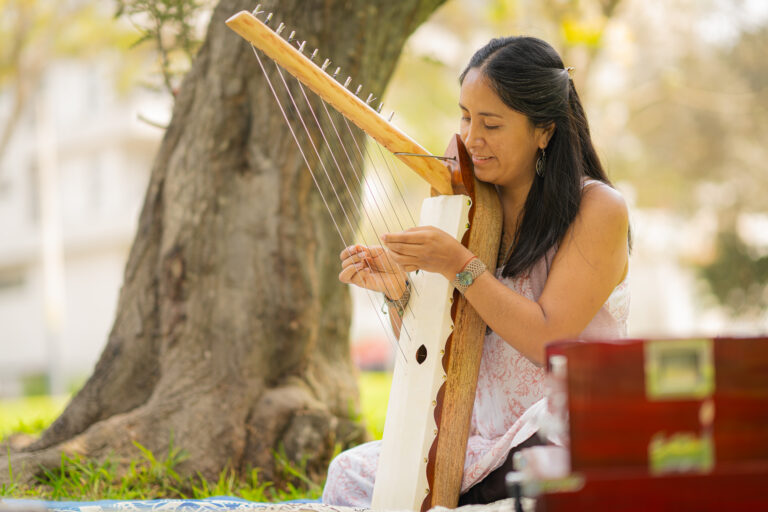
Ragas in Carnatic music are melodic frameworks that define how a composition is created and performed. Rather than being random collections of notes, every raga follows a specific set of musical rules while allowing room for creativity and expression.
A raga includes:
- A defined set of swaras (notes)
- Rules for ascending and descending scales
- Characteristic musical phrases
- Emotional qualities
- Unique identity
These elements work together to create a musical personality that listeners can recognize.
Why Ragas in Carnatic Music Are Important
Without ragas, Carnatic music would lose much of its structure and beauty.
Every raga creates a unique musical atmosphere. Some ragas sound peaceful and devotional, while others express joy, courage, compassion, or longing. This emotional connection is one of the reasons Carnatic music has remained relevant for centuries.
As students understand ragas in Carnatic music, they begin appreciating why two songs using different ragas can evoke completely different feelings.
The Building Blocks of Ragas in Carnatic Music
Before learning advanced compositions, students become familiar with the essential elements that form every raga.
These include:
Swaras
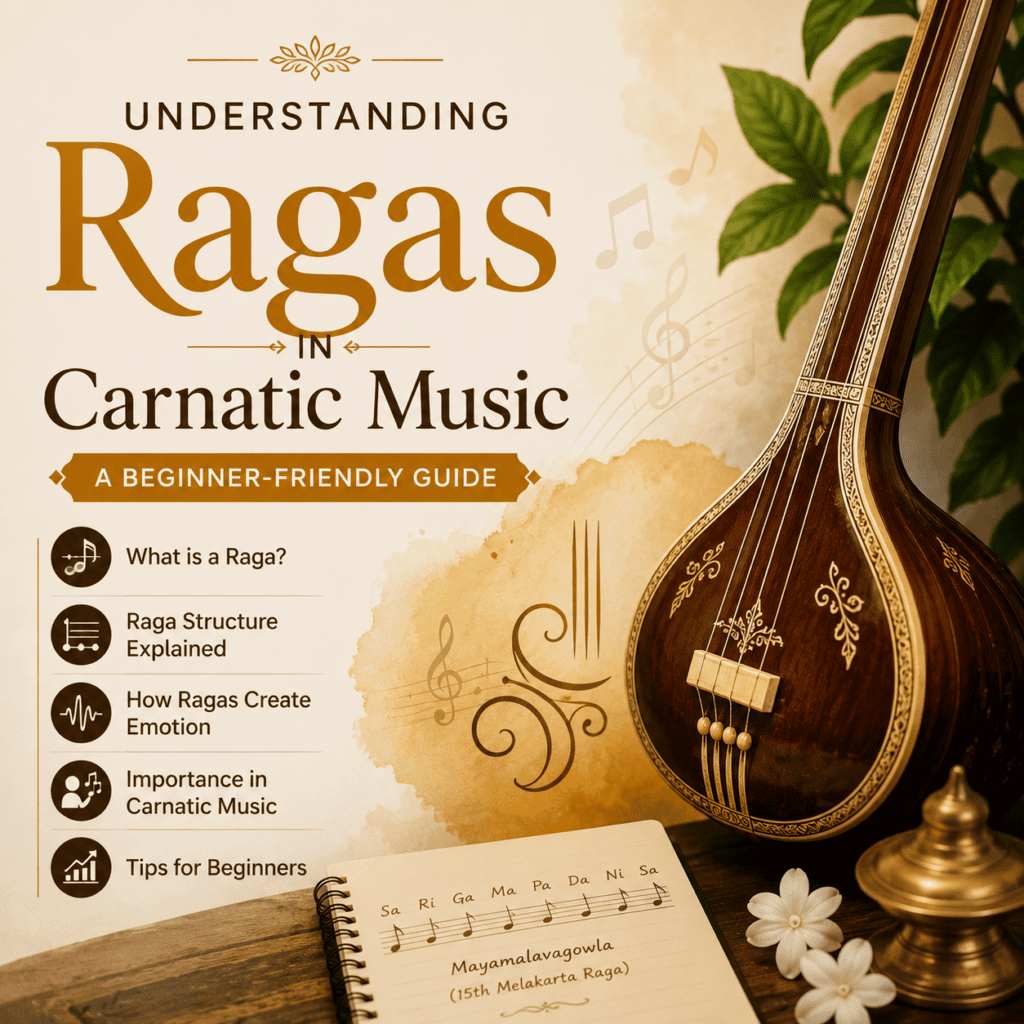
Carnatic music uses seven basic swaras:
- Sa
- Ri
- Ga
- Ma
- Pa
- Da
- Ni
Different combinations and variations of these swaras create hundreds of unique ragas.
Arohanam
Arohanam refers to the ascending order of notes in a raga.
Each raga follows its own ascending pattern, which gives it a distinctive sound.
Avarohanam
Avarohanam is the descending order of notes.
Interestingly, the ascending and descending scales are not always symmetrical. Many ragas use different note sequences while descending.
Learn Ragas in Carnatic Music Through Listening
One of the easiest ways to understand ragas in Carnatic music is by listening carefully.
Listening develops:
- Pitch recognition
- Musical memory
- Raga identification
- Appreciation of expression
Students should regularly listen to experienced Carnatic vocalists and instrumentalists to become familiar with different ragas.
Over time, your ears naturally begin recognizing recurring melodic patterns.
Common Ragas in Carnatic Music for Beginners

Students are usually introduced to a few foundational ragas before exploring more advanced ones.
Some beginner-friendly ragas include:
Mayamalavagowla
Often taught first because of its balanced note arrangement, this raga forms the foundation for many beginner exercises.
Shankarabharanam
Known for its bright and pleasant character, this raga is used in numerous compositions and helps students understand melodic development.
Mohanam
One of the easiest ragas to recognize, Mohanam uses only five notes and has a joyful, uplifting sound.
Hamsadhwani
Popular in devotional compositions, Hamsadhwani is energetic and vibrant, making it enjoyable for beginners.
How Ragas in Carnatic Music Create Emotion
One of the most fascinating aspects of ragas in Carnatic music is their ability to communicate emotions without words.
Some ragas create:
- Peace
- Devotion
- Happiness
- Courage
- Compassion
- Longing
This emotional expression is known as Raga Bhava.
As students progress, they learn not only to sing the correct notes but also to communicate the intended emotion behind every phrase.
Understanding Gamakas in Ragas in Carnatic Music
A raga is not defined only by its notes.
Equally important are gamakas, the graceful oscillations and ornamentations that bring each raga to life.
Without gamakas, even the correct sequence of notes may fail to capture the true identity of a raga.
Learning gamakas requires careful listening, patient practice, and guidance from an experienced teacher.
Practice Ragas in Carnatic Music Every Day
Consistency plays a major role in learning Carnatic music.
Students can strengthen their understanding by:
- Practicing swaras daily
- Singing simple exercises
- Revising varnams
- Listening to concerts
- Singing with a tanpura or shruti box
Even twenty to thirty minutes of focused practice every day produces steady improvement.
Common Challenges Beginners Face

Every student experiences difficulties while learning ragas.
Some common challenges include:
- Confusing similar ragas
- Forgetting note sequences
- Maintaining shruti
- Singing gamakas accurately
- Identifying ragas by listening
These challenges are completely normal and improve gradually through regular practice.
Learn Ragas in Carnatic Music with a Teacher
Although many online resources are available, learning from an experienced teacher provides several advantages.
A qualified instructor helps students:
- Correct mistakes immediately
- Understand raga characteristics
- Improve voice control
- Develop confidence
- Learn proper musical expression
Personalized guidance makes learning faster and more enjoyable.
How Long Does It Take to Understand Ragas?
There is no fixed timeline for mastering ragas in Carnatic music.
Some students begin identifying basic ragas within a few months, while developing a deeper understanding may take several years.
The important thing is to enjoy the learning process rather than rushing through it.
Even experienced Carnatic musicians continue discovering new dimensions of familiar ragas throughout their careers.
Tips to Remember Ragas More Easily
If you are just starting out, these simple habits can make learning easier:
- Practice one raga at a time.
- Listen to recordings repeatedly.
- Sing along with your teacher.
- Revise previously learned ragas every week.
- Record your practice sessions.
- Focus on understanding rather than memorizing.
Small, consistent efforts produce lasting results.
The Beauty of Lifelong Learning

One of the greatest qualities of Carnatic music is that it offers endless opportunities for growth.
Every new raga introduces fresh musical ideas, emotions, and techniques. As students become comfortable with one raga, they naturally develop the confidence to explore another.
This continuous learning keeps the musical journey exciting and rewarding.
Conclusion
Understanding ragas in Carnatic music is one of the most rewarding steps in learning Indian classical music. While the concept may seem complex at first, regular listening, structured practice, and expert guidance make it much easier to understand over time.
Remember that every accomplished Carnatic musician once began by learning the basics of swaras and simple ragas. With patience, consistency, and the right instruction, you will gradually develop the ability to recognize, sing, and appreciate the unique beauty of each raga.
At The Mystic Keys, our experienced instructors provide personalized online Carnatic vocal lessons that help students build a strong musical foundation while exploring the rich world of ragas with confidence and clarity.
For more information and exciting resources about learning music, visit our website at The Mystic Keys. For more music content and exciting offers follow us on
Facebook, Instagram, YouTube, LinkedIn, Twitter, Pinterest, and Threads.