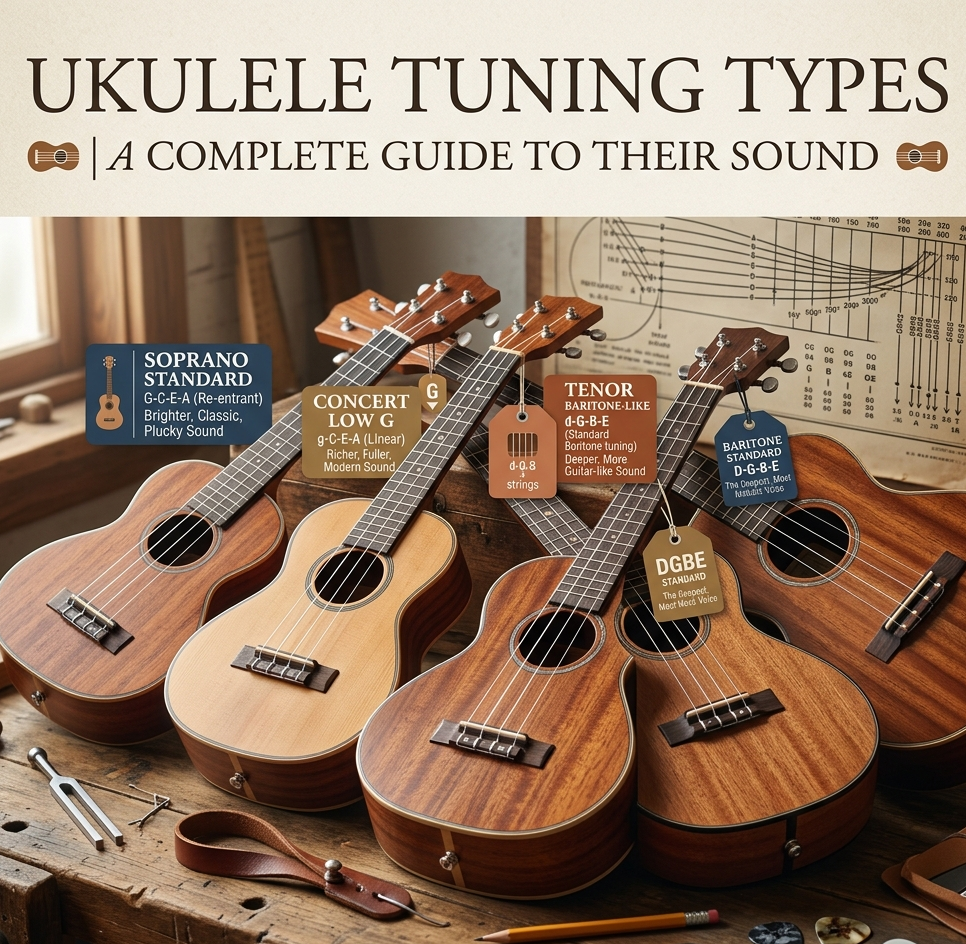
Ukulele Tuning Types | A Complete Guide to Their Sound
The ukulele may appear simple at first glance, yet its sound can change dramatically depending on the tuning type being used. A small shift in pitch is enough to produce a brighter tone, a deeper resonance, or an entirely different musical mood. For this reason, ukulele tuning types are far more than technical adjustments—they play a major role in shaping the instrument’s overall personality and sound.
At the same time, tuning choices are also connected to the size of the instrument, vocal comfort, and performance style. A solo fingerstyle player may prefer one tuning, whereas a singer accompanying simple chords may choose another. This flexibility is one of the reasons the ukulele continues to attract musicians of every age and background.
In this complete guide, we will explore the most popular ukulele tuning types, understand how each one sounds, and learn where they are commonly used. Whether you are a beginner trying to tune your first instrument or an experienced player looking to experiment with new tones, understanding these tuning styles will help you unlock the full musical potential of the ukulele.

Why Ukulele Tuning Types Matter
Before exploring the different tuning types, it is important to understand why tuning has such a strong influence on sound. Every tuning changes the relationship between the strings, and that relationship affects chord voicings, resonance, brightness, and overall musical feel.
Unlike many instruments, the ukulele often uses reentrant tuning, where the strings are not arranged strictly from low to high pitch. This unique setup gives the instrument its characteristic sparkle and bounce. As a result, even simple chords sound lively and rhythmic.
On the other hand, changing to a linear tuning arrangement can create a warmer and fuller sound. Some players prefer this because it allows smoother transitions between notes and enhances fingerstyle playing. Therefore, tuning is not only about pitch accuracy—it also influences expression, technique, and musical identity.
Another important factor is vocal range. Singers frequently adjust tuning to make songs more comfortable to perform. Instead of struggling with difficult keys, players can shift the tuning to better suit their voice while still using familiar chord shapes.
Because of all these reasons, learning different tuning types can greatly expand your musical versatility.

Standard Ukulele Tuning Types (GCEA)
The most common ukulele tuning is GCEA, often called “C tuning.” This setup is widely used on soprano, concert, and tenor ukuleles, making it the standard starting point for most players.
In this tuning, the strings are arranged as:
- G
- C
- E
- A
What makes this tuning especially interesting is the high G string. Although it is the fourth string, it is tuned higher than the C string beside it. This creates the famous reentrant sound that gives the ukulele its bright and cheerful tone.
Because of its balanced character, GCEA tuning works well for many musical styles. Pop songs, Hawaiian music, folk melodies, and beginner chord progressions all sound natural in this setup. In addition, instructional books, tutorials, and online chord charts are primarily designed around standard tuning, which makes learning easier for new players.
Another reason this tuning remains popular is its clarity. Chords sound clean and vibrant without becoming overly heavy. Even simple strumming patterns can feel energetic and rhythmic.
At the same time, advanced musicians appreciate how this tuning supports fingerpicking. The high G string introduces unique melodic possibilities that are difficult to replicate on other stringed instruments.
Overall, GCEA tuning represents the classic ukulele sound most listeners instantly recognize.

Low G Tuning
While standard tuning uses a high G string, Low G tuning replaces it with a lower octave G note. The remaining strings stay the same:
- G
- C
- E
- A
Although this change seems small, the sound difference is substantial. Low G tuning creates a deeper, fuller, and more guitar-like tone. Instead of the traditional “jump” in pitch between strings, the notes progress more naturally from low to high.
As a result, melodies become smoother and fingerstyle arrangements gain additional depth. Many solo performers prefer Low G because it allows bass notes and accompaniment patterns to blend more effectively.
Furthermore, this tuning is excellent for contemporary music styles. Jazz, acoustic pop, cinematic arrangements, and instrumental covers often benefit from the richer tonal range. The added bass response also makes the ukulele sound more mature and dynamic.
However, some players miss the iconic sparkle of the high G setup. Since the reentrant character disappears, the instrument can lose a bit of its traditional charm. For that reason, choosing between High G and Low G often comes down to personal preference and musical goals.
Still, musicians who enjoy expressive fingerpicking and layered arrangements frequently find Low G tuning incredibly rewarding.

D Tuning (ADF#B)
Before GCEA became the global standard, many traditional ukuleles were commonly tuned to ADF#B, also known as D tuning. This tuning follows the same interval structure as standard tuning but raises every note higher.
The strings are tuned to:
- A
- D
- F#
- B
Because the pitches are higher, the ukulele produces a brighter and slightly tighter sound. Vintage Hawaiian recordings often feature this tuning, which gives the instrument a lively and energetic quality.
Another interesting aspect of D tuning is its projection. The higher pitch can make the ukulele sound louder and more penetrating, especially on soprano models. Therefore, some performers prefer it in group settings or acoustic ensembles where extra clarity is needed.
At the same time, the increased string tension can feel different under the fingers. Some players enjoy the firmer response, while others prefer the softer touch of GCEA tuning.
Transitioning from standard tuning to D tuning is usually straightforward because the chord shapes remain identical. However, the overall pitch changes, meaning songs will sound higher unless adjusted accordingly.
For musicians interested in traditional ukulele history, D tuning offers a fascinating glimpse into the instrument’s earlier tonal identity.

Baritone Ukulele Tuning Types (DGBE)
The baritone ukulele stands apart from smaller ukulele sizes because it uses an entirely different tuning system. Instead of GCEA, the baritone is most commonly tuned to:
- D
- G
- B
- E
This setup matches the top four strings of a guitar. Consequently, guitar players often find the baritone ukulele easier to adapt to.
Tonally, the baritone produces a warmer, deeper, and more mellow sound than soprano or concert ukuleles. The instrument loses some of the traditional brightness associated with the ukulele, yet it gains a smooth and rich character that works beautifully for ballads, jazz, and acoustic accompaniment.
Because of its fuller tone, the baritone ukulele is especially appealing to singers. Chords provide a supportive harmonic foundation without sounding overly sharp or percussive.
In addition, fingerstyle arrangements can feel more spacious and expressive due to the lower pitch range. Players who want a relaxed and resonant sound often gravitate toward this tuning.
Even though the baritone differs from the classic ukulele voice, it remains an important part of the ukulele family and continues to grow in popularity among modern musicians.

Alternate Ukulele Tuning Types and Slack Key Styles
Beyond standard tuning systems, many musicians explore alternate tunings to create unique sounds and musical textures. Some players draw inspiration from Hawaiian slack key traditions, while others use these tunings for fingerstyle playing and creative songwriting.
Alternate tunings can completely change chord voicings and harmonic depth. Certain setups create open chords that produce rich and atmospheric tones even with simple strumming patterns.
Many musicians use open tunings for slide playing, ambient music, and experimental compositions. These tunings also inspire fresh melodic ideas by making familiar chord shapes sound entirely different.
However, alternate tunings often require patience and practice because standard chord charts may no longer work. As players rely more on their ears and musical understanding, they gradually develop a more creative and expressive playing style.

High G vs Low G Ukulele Tuning Types
One of the most discussed topics in the ukulele world is the debate between High G and Low G tuning. Although both use GCEA notes, the octave placement of the G string changes the instrument’s entire personality.
High G tuning delivers the classic ukulele sparkle. The sound feels light, playful, and rhythmic, making it ideal for traditional strumming styles and Hawaiian-inspired music.
Low G tuning, in contrast, introduces greater depth and continuity. Melodies flow more naturally because the strings follow a linear pitch order. This makes fingerstyle arrangements and solo instrumentals sound fuller and more sophisticated.
Interestingly, neither tuning is objectively better. Instead, each serves a different musical purpose. Players focused on traditional island rhythms may prefer High G, while those exploring modern instrumental arrangements may lean toward Low G.
Some musicians even keep multiple ukuleles with different tunings so they can switch depending on the song or performance setting.
Ultimately, the best tuning is the one that complements your musical style and inspires you to play more creatively.

How to Choose the Right Ukulele Tuning
Several personal factors influence the choice of ukulele tuning, including musical taste, skill level, and playing goals.
Beginners usually choose standard GCEA tuning because it sounds familiar and makes learning easier with widely available resources. As players gain confidence, many switch to Low G tuning to create smoother melodies and richer fingerstyle arrangements. Singers often prefer baritone tuning because it produces a deeper and warmer accompaniment.
Musical style also affects tuning choices. High G tuning adds brightness to traditional Hawaiian music, while Low G and baritone tunings suit jazz, acoustic pop, and modern instrumental pieces.
Comfort matters as well. Some tunings feel tighter on the strings, whereas others offer a softer playing experience. By trying different tuning styles, musicians can discover the sound and feel that match their playing style best.

Final Thoughts on Ukulele Tuning Types
Ukulele tuning is much more than a technical requirement—it is a powerful tool that shapes the instrument’s voice, mood, and musical possibilities. From the bright charm of standard GCEA tuning to the warm depth of Low G and baritone setups, each tuning offers a distinct character.
As musicians experiment with different tuning types, they often discover new playing styles, fresh songwriting ideas, and deeper emotional expression. What may begin as a simple adjustment of strings can eventually transform the entire musical experience and inspire greater creativity.
Most importantly, there is no single “correct” tuning for every player. The beauty of the ukulele lies in its adaptability. Whether someone enjoys traditional Hawaiian rhythms, modern fingerstyle arrangements, or relaxed acoustic accompaniment, there is always a tuning style that complements their musical personality.
Exploring these tuning variations not only improves technical understanding but also strengthens a musician’s connection with the instrument itself. At The Mystic Keys, students exploring Ukulele Lessons Online are often encouraged to experiment with different tuning styles to better understand tone, expression, and versatility in ukulele playing.
For more information and exciting resources about learning music, visit our website at The Mystic Keys. For more music content and exciting offers follow us on
Facebook, Instagram, YouTube, LinkedIn, Twitter, Pinterest, and Threads.