How to Identify and Sing Different Ragas
Learning how to identify and sing different ragas is an important part of developing a strong foundation in Indian classical music. A raga is much more than a collection of notes; its identity comes from characteristic phrases, note movements, emphasis, ornamentation, and melodic expression. When students learn to identify and sing different ragas, they develop stronger pitch awareness, listening skills, musical memory, and vocal control.
For a beginner, different ragas can initially sound similar. Several ragas may use overlapping swaras, but their melodic treatment can be completely different. Understanding these subtle differences is what makes raga training both challenging and rewarding.
The reason is simple: a raga is much more than a collection of notes.
The way notes are approached, emphasized, connected, repeated, and ornamented gives every raga its distinctive identity. Learning to identify and sing different ragas therefore requires both theoretical understanding and extensive listening.
How to Identify and Sing Different Ragas Through Swaras
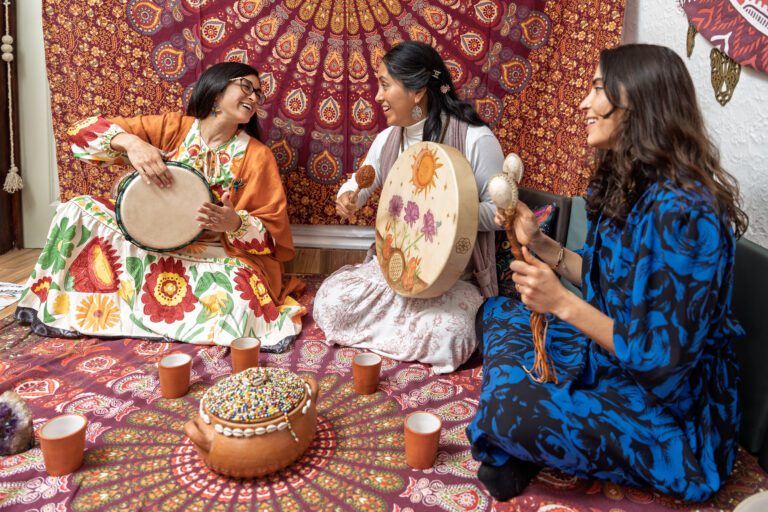
Before attempting to identify and sing different ragas, singers should develop a strong understanding of swaras. Sa provides the tonal reference, while the other swaras create different melodic relationships around it.
Practice singing individual swaras and simple patterns while returning frequently to Sa. This helps your ear become familiar with pitch relationships and prepares you to recognize the melodic characteristics of different ragas.
Identify Ragas by Their Note Relationships
Do not listen only for individual notes. When you identify and sing different ragas, pay attention to how the notes move toward and away from one another.
Ask yourself:
- Which note does the phrase begin with?
- Which note does it move toward?
- Where does the melody rest?
- Which swaras receive emphasis?
- Does the phrase rise directly or use a particular movement?
These details are often more useful than simply memorizing the scale.
Identify and Sing Different Ragas Through Characteristic Phrases
Characteristic phrases are among the strongest clues when learning to recognize a raga. Instead of memorizing only its arohana and avarohana, learn the phrases that give the raga its distinctive personality.
Practice Short Raga Phrases
Choose two or three important phrases and sing them slowly. Repeat them until the movement feels natural.
Then try singing them without listening to the recording.
As you become familiar with these phrases, you will find it easier to identify and sing different ragas because your ear begins to recognize their characteristic melodic language.
Listen to Different Ragas Carefully Identify and Sing Different Ragas

Active listening is essential if you want to identify and sing different ragas confidently.
Listen to experienced singers and instrumentalists and pay attention to how they approach important swaras, create melodic tension, and return to resting notes.
Compare Similar Ragas
One of the best ways to identify and sing different ragas is to compare ragas that share similar swaras.
Listen to them one after another and look for:
- Different characteristic phrases
- Different note emphasis
- Different melodic directions
- Different ornamentation
- Different resting points
Repeated comparison gradually makes subtle differences easier to hear.
Practice How to Sing Different Ragas With a Tanpura
A tanpura provides a continuous tonal foundation and helps singers hear their relationship with Sa.
Begin by establishing Sa clearly. Then practice the important swaras and characteristic phrases of the raga.
Sing Raga Phrases Slowly
When learning to identify and sing different ragas, avoid rushing through phrases.
Slow singing allows you to hear the movement between notes and reproduce ornamentation more accurately. Gradually increase your fluency as the raga becomes familiar.
Learn Ornamentation to Identify and Sing Different Ragas

The movement between notes can be just as important as the notes themselves. Meend, gamaka, and other forms of ornamentation can strongly influence how a raga sounds.
Use Raga-Specific Ornamentation
Do not add an ornament simply because it sounds attractive. Different ragas have different approaches to melodic movement.
Learning these details correctly is essential when you want to identify and sing different ragas authentically.
Learn Nyas Swaras
A nyas swara is a note on which a melodic phrase can rest or settle.
Identify Where Phrases Resolve
Listen for notes that feel particularly stable at the end of phrases.
Try singing short phrases and ending on different swaras.
Notice how some endings feel complete while others feel unfinished.
This exercise develops your understanding of the raga’s internal sense of movement and resolution.
Understand the Importance of Ornamentation

Raga singing is not simply about singing straight notes.
Ornamentation and the movement between notes can be essential to a raga’s identity.
Learn Meend and Other Note Movements
In Hindustani music, meend involves a glide between notes. Other forms of ornamentation also contribute to melodic expression.
Carnatic music has its own highly developed approach to gamakas and other forms of melodic ornamentation.
The exact treatment depends on the raga and musical tradition.
Don’t Add Ornaments Randomly
An ornament that sounds appropriate in one raga may not be appropriate in another.
Learn how characteristic phrases are sung within the specific raga you are studying rather than adding ornaments simply because they sound impressive.
Compare Similar Ragas Identify and Sing Different Ragas
Comparing similar ragas is one of the best ways to sharpen your listening skills.
Identify What Makes Them Different
Choose two ragas with overlapping swaras and listen to them carefully.
Ask:
- Which phrases are unique?
- Which swaras receive more emphasis?
- How are important notes approached?
- Where does the melody rest?
- What type of ornamentation is used?
The differences may initially seem very subtle, but repeated comparison trains your ear to recognize them.
Practice Singing With a Tanpura

A tanpura provides a continuous tonal foundation that helps singers maintain awareness of the relationship between their voice and the tonic.
Return to Sa Frequently
Begin your practice by establishing Sa.
Sing important swaras slowly.
Return to Sa.
Then practice the characteristic phrases of the raga.
This develops pitch stability while strengthening your awareness of the raga’s tonal framework.
Develop Your Ear Through Call-and-Response
Call-and-response practice is highly effective for raga learning.
Sing What You Hear
Listen to a short phrase.
Pause.
Try to reproduce it with your voice.
Then listen to the original again and compare.
Repeat until your version closely follows the melodic movement.
This develops the connection between hearing and singing, which is essential for raga-based music.
Learn One Raga at a Time Identify and Sing Different Ragas
Trying to learn many ragas simultaneously can become overwhelming.
Build Depth Before Quantity
Spend enough time with one raga to become familiar with:
- Its swaras
- Arohana and avarohana
- Characteristic phrases
- Important notes
- Resting points
- Ornamentation
- Typical melodic movements
- Different performances
Once the raga feels familiar, introduce another and begin comparing them.
Understand the Raga's Musical Character
Many ragas are associated with particular moods, times, or expressive qualities depending on the musical tradition.
Don’t Reduce a Raga to an Emotion
It can be useful to think about the mood of a raga, but avoid reducing it to labels such as “happy,” “sad,” or “peaceful.”
Its character comes from its complete melodic language.
The emotional quality emerges through the combination of notes, movements, ornamentation, rhythm, and expression.
Develop a Daily Raga Practice Routine

You do not need several hours every day to begin developing your raga awareness.
A focused routine can be highly effective.
A Simple Practice Structure
5 minutes: Establish Sa and practice basic swaras.
10 minutes: Practice characteristic phrases.
10 minutes: Sing along with a recording.
5 minutes: Listen to an excerpt and identify its phrases.
As your skills develop, you can gradually increase the complexity and duration.
Develop Your Ear to Identify and Sing Different Ragas
Raga identification is fundamentally an ear-training skill.
Listen to short excerpts without looking at the title. Try to determine the raga based on its phrases, swaras, note movements, and overall character.
Learn From Incorrect Identification
If you identify a raga incorrectly, find out what caused the confusion.
Perhaps the two ragas share several swaras. Maybe you missed a characteristic phrase.
Every mistake gives you another opportunity to improve your ability to identify and sing different ragas.
Conclusion
Learning to identify and sing different ragas takes time, attentive listening, and consistent vocal practice. Memorizing scales provides a useful starting point, but true raga recognition comes from understanding characteristic phrases, important swaras, melodic movement, resting points, and ornamentation.
Start with one raga at a time. Listen to several performances, practice with a tanpura, sing characteristic phrases slowly, and compare similar ragas carefully. With regular practice, your ear will gradually become more sensitive to the subtle details that distinguish one raga from another.
At The Mystic Keys, personalized Carnatic Vocals Lessons Online help students develop swara awareness, raga understanding, pitch control, voice technique, ear training, and musical expression. With individual guidance from experienced teachers, learners can build a strong foundation and develop greater confidence in identifying and singing different ragas.
For more information and exciting resources about learning music, visit our website at The Mystic Keys. For more music content and exciting offers follow us on
Facebook, Instagram, YouTube, LinkedIn, Twitter, Pinterest, and Threads.