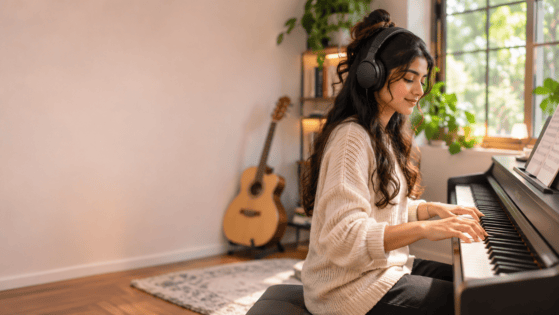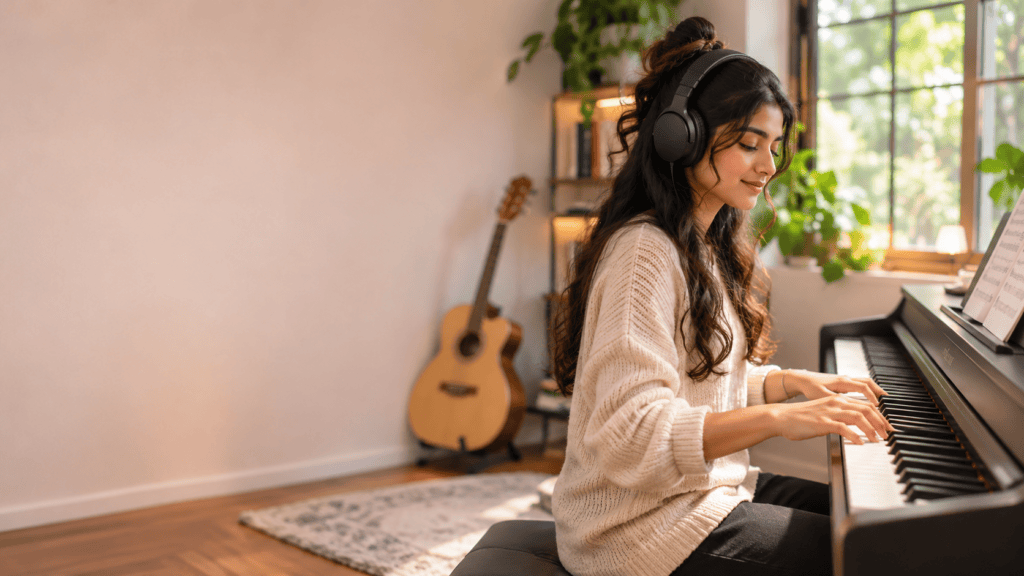
How to Practice Piano Without Disturbing Others 8 Practical Tips
Learning piano is exciting, but finding ways to practice piano without disturbing others can sometimes be challenging when family members, neighbours or roommates need a quiet environment. Whether you live in an apartment, share a room or prefer practising late in the evening, finding ways to practise without creating too much noise is important.
The good news is that you do not always need to play loudly to improve your piano skills. With the right techniques, equipment and practice habits, you can develop your musical abilities while respecting the people around you.
In this guide, we will explore eight practical ways to practise piano quietly, helping you maintain a consistent practice routine in a peaceful environment.
1. Use a Digital Piano with Headphones
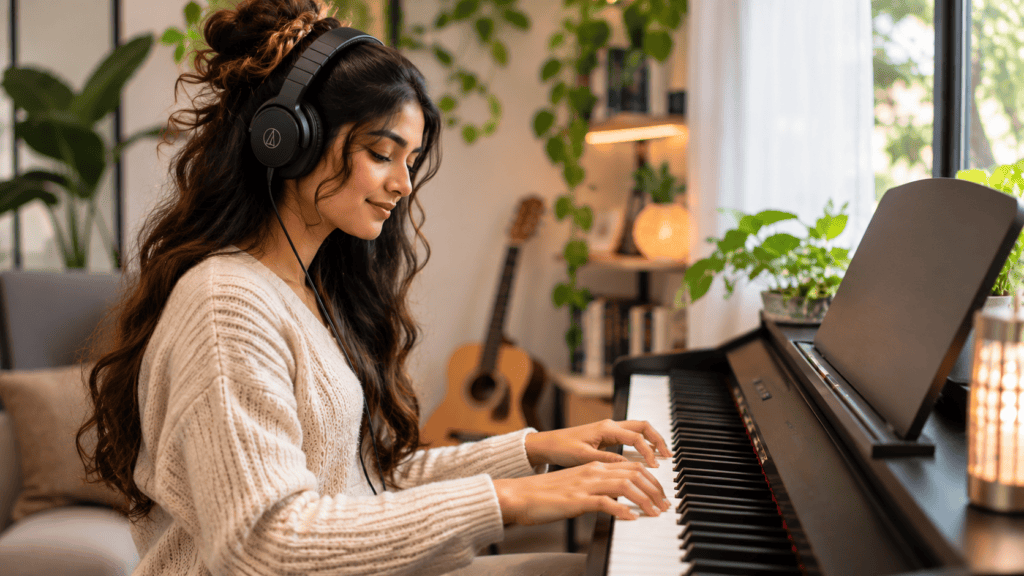
One of the easiest ways to practise piano quietly is by using a digital piano with headphones.
Unlike traditional acoustic pianos, digital pianos allow you to control the volume or completely silence the built-in speakers. You can connect headphones and listen to every note clearly without disturbing anyone nearby.
Some benefits include:
Private practice at any time of the day.
Better concentration on individual notes.
Clear listening to mistakes and timing.
The ability to practise quietly in shared spaces.
Choose comfortable, good-quality headphones that allow you to hear the instrument clearly without needing excessive volume.
2. Practise on a Keyboard with Volume Control
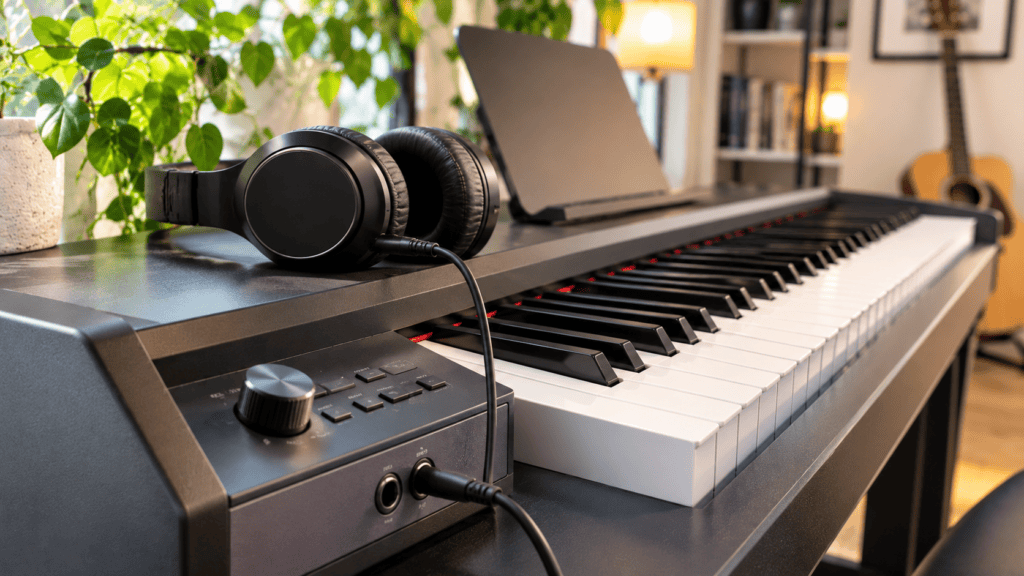
If you do not own a digital piano, an electronic keyboard can also be a practical option.
Most modern keyboards offer adjustable volume settings and headphone connections. This makes them suitable for students who need a quieter practice environment.
Before purchasing a keyboard, check whether it includes:
A headphone output.
Adjustable speaker volume.
Touch-sensitive keys.
A suitable number of keys for your learning level.
For beginners, a keyboard can provide a convenient starting point for developing basic piano techniques.
3. Practise Finger Exercises Without Sound

You do not need to produce sound every time you practise piano. Finger exercises can help develop coordination, flexibility and muscle memory.
Try these silent practice activities:
Place your fingers on the keys and practise finger movements without pressing them fully.
Practise five-finger patterns using gentle movements.
Work on finger independence by lifting one finger at a time.
These exercises help you become more comfortable with the keyboard while keeping noise to a minimum.
However, remember that silent exercises should complement actual piano playing rather than replace it completely.
4. Use a Piano Practice Mute or Quiet Practice Equipment
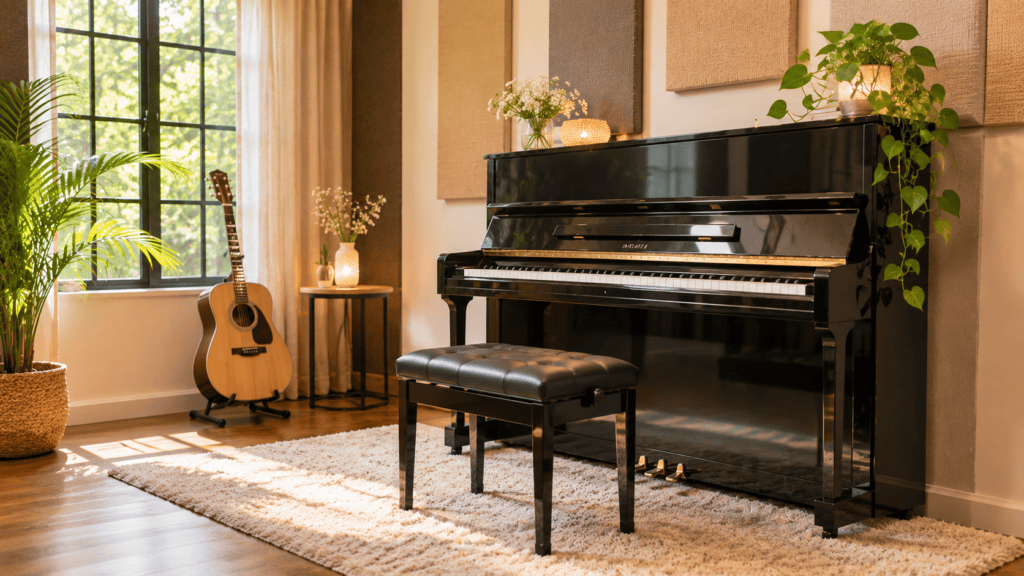
For acoustic piano owners, reducing the instrument’s sound can be more challenging.
Some acoustic pianos include a practice mute mechanism, which reduces the volume by placing a felt strip between the hammers and strings.
If your piano does not have this feature, consult a qualified piano technician about suitable options.
You can also consider:
Placing a suitable rug underneath the piano to reduce floor vibrations.
Positioning the piano away from shared walls.
Using appropriate sound-absorbing materials in the practice room.
Closing doors and windows during practice.
Avoid placing objects inside the piano or modifying its internal mechanism yourself, as this could damage the instrument.
5. Focus on Music Theory and Sheet Reading
Piano practice is not limited to playing notes. Understanding music theory is equally important for developing strong musical skills.
When you cannot play loudly, use that time to improve your theoretical knowledge.
Some useful activities include:
Learning musical notes and their positions.
Studying rhythm and time signatures.
Reading sheet music.
Identifying chords and chord progressions.
You can also listen to piano recordings and follow the sheet music to understand how written notes translate into actual performances.
These activities make your regular playing sessions more productive.
6. Choose the Right Time for Piano Practice
Being considerate about practice timings can make a big difference when sharing your living space.
Try to establish a regular practice schedule that works for both you and the people around you.
For example:
Practise during daytime or early evening when possible.
Avoid playing loudly early in the morning or late at night.
Discuss suitable practice timings with family members or roommates.
Use headphones when you need to practise outside your usual schedule.
Consistency is more important than practising at inconvenient hours. Even a short, focused session can contribute to steady improvement.
7. Follow a Structured and Focused Practice Routine
A well-planned practice session helps you make progress without spending unnecessary time playing the same sections repeatedly.
Instead of practising randomly, divide your session into smaller activities.
Here is an example of a 30-minute piano practice routine:
| Practice Activity | Duration |
|---|---|
| Finger exercises and warm-up | 5 minutes |
| Scales and technical exercises | 5 minutes |
| Reading sheet music | 5 minutes |
| Learning a new musical section | 10 minutes |
| Reviewing previously learned pieces | 5 minutes |
You can adjust this routine according to your learning level and goals.
A focused practice session helps you identify mistakes, improve difficult sections and develop confidence more efficiently.
8. Learn with an Online Piano Teacher
Practising independently is useful, but professional guidance can make your learning more effective.
An experienced piano teacher can help you understand proper finger techniques, hand positioning, rhythm, posture and musical expression.
At The Mystic Keys, students can learn piano through live online one-to-one lessons designed around their individual learning needs.
Students benefit from:
Personalised piano lessons for different skill levels.
Live online classes with experienced teachers.
Lesson recordings for reviewing and practising later.
Structured learning following the Trinity College London syllabus.
Individual guidance and support to improve practice habits.
With expert guidance and flexible online learning, students can discover effective ways to practice piano without disturbing others while continuing to develop their musical skills from the comfort of home.
Conclusion: Make Piano Practice Comfortable for Everyone
Learning piano should be an enjoyable experience, and sharing your home with others should not prevent you from improving your musical abilities.
By using headphones, choosing suitable equipment, practising finger exercises, studying music theory and following a structured routine, you can practice piano without disturbing others.
Remember that effective piano practice is not about how loudly or how long you play. It is about consistency, concentration and using the right techniques.
With proper guidance and regular practice, you can continue developing your piano skills while maintaining a peaceful environment at home.
Ready to improve your piano skills?
Join The Mystic Keys and explore our online piano lessons, designed for beginners and advanced learners. Our personalised live one-to-one classes follow a structured learning approach, helping students develop proper piano techniques, improve their musical understanding and build confidence. With experienced teachers, flexible scheduling and recorded lessons for revision, you can learn piano comfortably from home.
Visit The Mystic Keys and enrol in our online piano lessons to start developing your musical skills with expert guidance.
For more information and exciting resources about learning music, visit our website at The Mystic Keys. For more music content and exciting offers follow us on
Facebook, Instagram, YouTube, LinkedIn, Twitter, Pinterest, and Threads.