

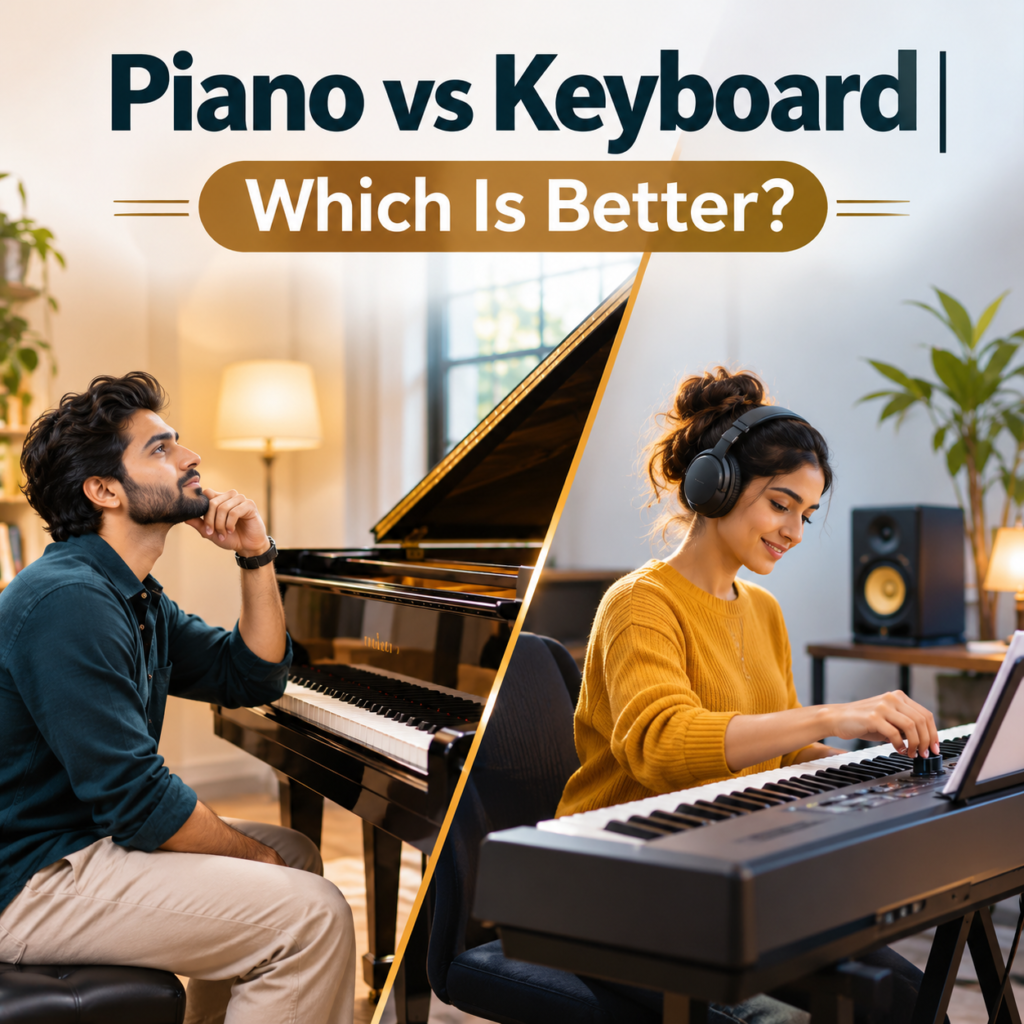
Piano vs Keyboard | Which Is Better?
Piano and Keyboard | Which Is Better?
Choosing between a piano and a keyboard is one of the first decisions aspiring musicians face. Although both instruments have similar black-and-white keys and allow players to create beautiful music, they differ in sound, playing experience, features, and overall functionality.
For beginners, parents choosing an instrument for their children, or adults exploring music, understanding these differences can make the decision easier. So, when it comes to piano vs keyboard, which one is better? Let’s explore their key differences and find out which instrument suits your musical goals.
Understanding the Difference Between a Piano and a Keyboard
A traditional acoustic piano produces sound through hammers striking strings inside the instrument. This creates its distinctive natural tone, rich resonance, and expressive depth.
A keyboard, on the other hand, produces sound electronically and often offers multiple instrument sounds, built-in rhythms, and recording features. Digital pianos combine electronic technology with a playing experience designed to resemble an acoustic piano.
While both instruments share similar layouts, their construction and capabilities make them suitable for different musical preferences.
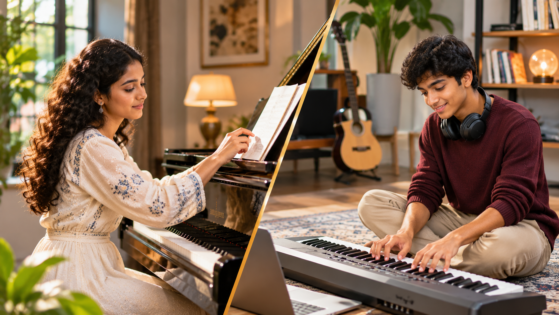
Sound Quality | Natural vs Digital
One of the biggest differences lies in sound production. An acoustic piano offers rich, natural tones with expressive variations depending on how firmly or softly the keys are played. This makes it particularly suitable for classical compositions, jazz, and expressive solo performances.
Keyboards provide greater sound variety, allowing musicians to switch between piano, guitar, strings, organs, and synthesizers. Many models also include rhythms and accompaniment features, making them useful for contemporary music and creative experimentation.
Therefore, a piano stands out for its natural sound, while a keyboard offers greater versatility.
Keys and Playing Experience
The feel of the keys plays an important role in developing proper technique. Acoustic pianos feature weighted keys that provide resistance when pressed, helping learners develop finger strength, control, and dynamic sensitivity.
Keyboards vary considerably. Some have lightweight keys, while advanced models offer touch-sensitive or fully weighted keys that replicate the feel of an acoustic piano.
For learners interested in classical piano or formal examinations, weighted keys are generally recommended. However, beginners exploring music casually may find a basic keyboard sufficient for getting started.
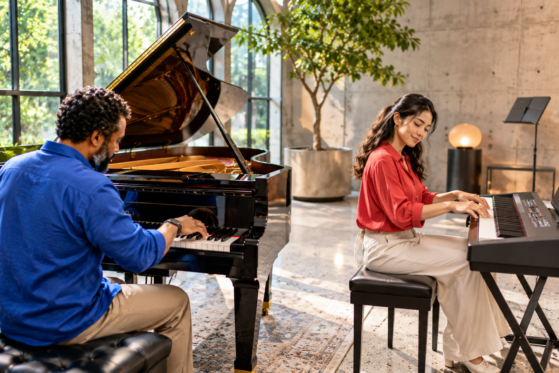
Learning Piano vs Keyboard | Which Is Easier?
Both instruments teach essential musical skills, including notes, scales, chords, rhythm, and music theory. A keyboard may feel easier initially because its keys can be lighter and its additional features make practice more interactive.
However, learning piano involves developing hand coordination, finger control, sight-reading, posture, and musical expression. These skills require regular practice and structured guidance.
Ultimately, neither instrument is inherently easier to master. Progress depends on the learner’s dedication, practice routine, and quality of instruction.
Musical Styles and Creative Possibilities
Pianos are widely used in classical music, jazz, film scores, contemporary compositions, and instrumental performances. Their expressive range makes them suitable for both beginners and advanced musicians.
Keyboards are popular in pop, rock, electronic music, and worship music. Their multiple instrument sounds and accompaniment features allow musicians to experiment with different arrangements and musical styles.
If your goal is to develop traditional piano skills, a piano is an excellent choice. However, if you enjoy exploring different sounds and creating contemporary music, a keyboard offers more flexibility.

Cost and Maintenance
Budget is another important consideration when selecting an instrument. Acoustic pianos generally require a higher initial investment and regular tuning and maintenance.
Keyboards are usually more affordable and require minimal maintenance. They are available in different price ranges, making them accessible to beginners and families.
Digital pianos offer a practical middle ground, combining realistic piano sounds and weighted keys with the convenience of electronic instruments.
Space and Portability
Acoustic pianos are large and heavy, requiring dedicated space and professional assistance when moving them. This may not be convenient for smaller homes or apartments.
Keyboards are generally lightweight, compact, and portable. Many models also support headphone connectivity, allowing learners to practise without disturbing others.
Digital pianos are available in compact designs, offering a balance between convenience and an authentic piano-playing experience.

Which Is Better for Children and Adults?
Both children and adults can learn either instrument successfully. For children beginning their musical journey, a keyboard can make learning enjoyable through its interactive features and variety of sounds. However, a digital piano with weighted keys is a better option for those interested in structured piano training.
Adults learning music for personal enjoyment may appreciate the flexibility of keyboards, while those interested in classical compositions or formal certifications may prefer a piano.
Regardless of age, consistent practice and proper guidance are essential for developing musical skills.
Can You Learn Piano on a Keyboard?
Yes! Beginners can learn essential piano skills on a keyboard, including scales, chords, music theory, and basic compositions. These foundational skills can later be transferred to an acoustic or digital piano.
However, not every keyboard provides the same playing experience. If you intend to pursue piano seriously, consider an 88-key model with touch sensitivity and fully weighted keys.
Choosing the right keyboard from the beginning can make the transition to an acoustic piano much easier.
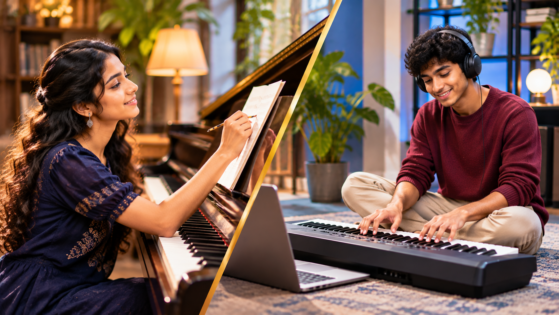
Piano vs Keyboard | Which One Should You Choose?
The right instrument depends on your interests, budget, and long-term musical goals.
An acoustic or digital piano is ideal for learners interested in classical music, graded examinations, and developing advanced piano techniques. A keyboard is a practical choice for those seeking affordability, portability, and opportunities to explore different musical styles.
For learners looking for a balance between convenience and authentic piano technique, a digital piano with weighted keys is an excellent alternative.
Learn Piano or Keyboard with The Mystic Keys
Choosing the right instrument is only the beginning. Developing proper technique, understanding music theory, and following a structured learning approach are equally important.
At The Mystic Keys, learners can experience personalised, one-on-one online music lessons with qualified mentors. Whether you are beginning with piano fundamentals, exploring keyboard techniques, or preparing for Trinity College London and ABRSM examinations, individual guidance can help you progress with confidence.
With flexible online learning, students can receive expert instruction and personalised feedback from anywhere in the world.

Final Thoughts
So, piano vs keyboard: which is better? Both instruments offer wonderful opportunities to explore music and develop your abilities. A piano provides natural sound and expressive depth, while a keyboard offers versatility, affordability, and convenience.
The best choice is the one that matches your musical interests and encourages you to keep learning. With regular practice and the right guidance, either instrument can become the beginning of a rewarding musical journey.
At The Mystic Keys, our personalised Piano Lessons Online help learners of all ages develop their musical skills with expert guidance, structured lessons, and individual attention.
For more information and exciting resources about learning music, visit our website at The Mystic Keys. For more music content and exciting offers follow us on
Facebook, Instagram, YouTube, LinkedIn, Twitter, Pinterest, and Threads.