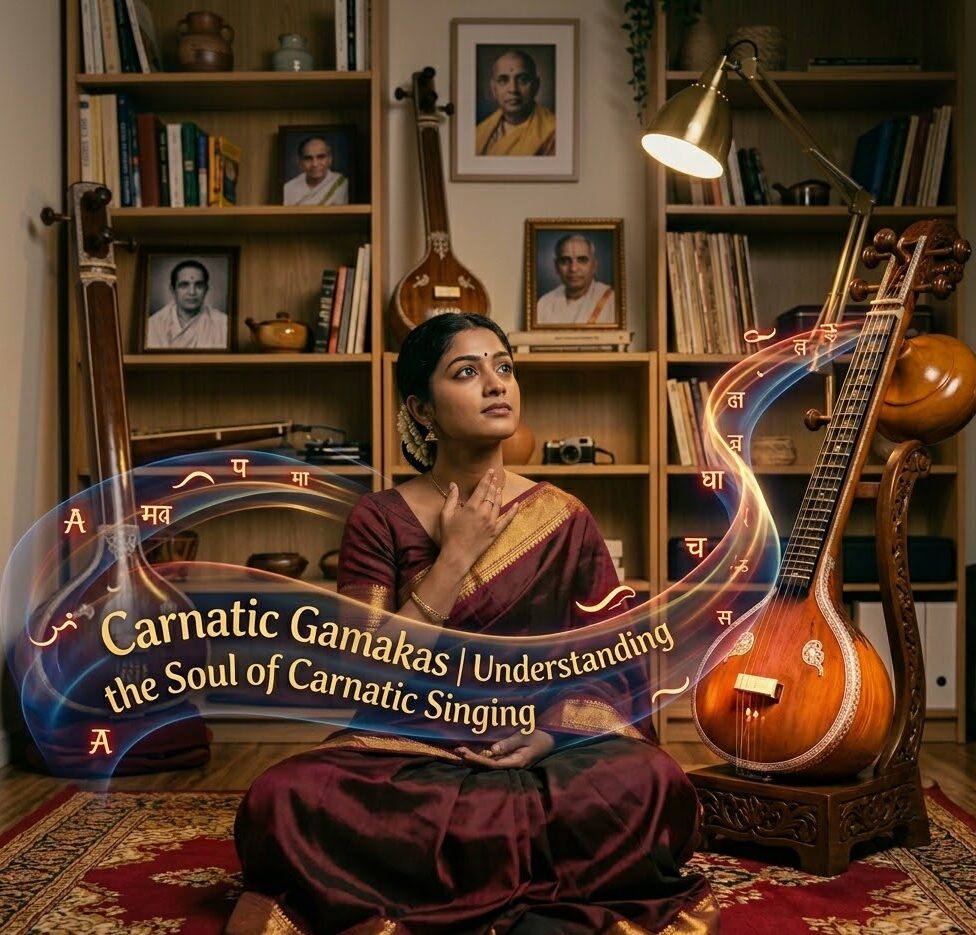
Carnatic Gamakas | Understanding the Soul of Carnatic Singing
Carnatic music captivates listeners with its rich melodic beauty, intricate rhythmic structures, and profound emotional depth. Many elements shape its uniqueness, but gamakas play the most significant role in defining its character. These delicate and expressive embellishments transform simple notes into living, breathing musical expressions. Without gamakas, Carnatic music loses much of its personality, emotional intensity, and distinctive identity.
Beginners often find gamakas mysterious and difficult to grasp. As they listen closely, they notice that singers rarely render notes in a plain or static manner. Instead, singers make each swara move, bend, oscillate, glide, or flow into another note. These movements do not merely decorate the melody; they create the very foundation of Carnatic music.
Anyone who wishes to appreciate Carnatic singing fully must understand gamakas. They do not simply embellish a raga. Rather, they give a raga its voice and expressive power. Through gamakas, every phrase comes alive, and performers communicate emotions with remarkable subtlety and depth.
What Are Carnatic Gamakas?
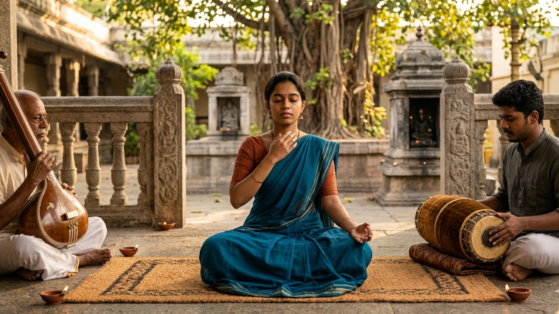
The term “gamaka” broadly refers to the ornamentation or modulation applied to a musical note. In Carnatic music, however, the concept extends far beyond simple decoration. A gamaka is an integral movement associated with a note or a sequence of notes, giving them a specific shape and emotional quality.
Unlike many musical traditions where notes may be rendered as fixed pitches, Carnatic music treats notes as dynamic entities. A swara often exists in motion rather than in stillness. Consequently, the beauty of a raga emerges not only from the notes it contains but also from the manner in which those notes are approached, sustained, and connected.
Consider a painter working with colors. The beauty of a painting lies not only in the colors themselves but also in the way they blend and transition into one another. Similarly, gamakas create the subtle shades and textures that bring musical phrases to life.
As a result, two ragas may share similar notes yet sound entirely different because of the gamakas used in their rendition. These characteristic movements become essential markers of a raga’s identity.
The Historical Significance of Gamakas
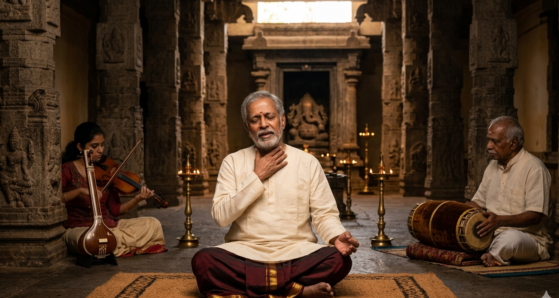
The concept of gamakas has deep roots in Indian classical music. Ancient treatises on music contain references to various forms of note ornamentation, highlighting their importance in musical expression. Over centuries, musicians refined these techniques, developing highly sophisticated systems of melodic movement.
As Carnatic music evolved, gamakas became increasingly central to its aesthetic framework. Composers and performers recognized that emotional expression could be greatly enhanced through nuanced note treatment. Gradually, the tradition established precise conventions regarding how specific ragas should be rendered.
Many legendary composers, including saint-composers of the Carnatic Trinity, created compositions that naturally incorporated characteristic gamakas. Their works continue to serve as invaluable guides for students seeking to understand authentic raga expression.
Today, the oral tradition remains one of the primary means through which gamakas are transmitted. Although notation can indicate basic melodic structures, the finer details of gamaka execution often require direct learning from a guru.
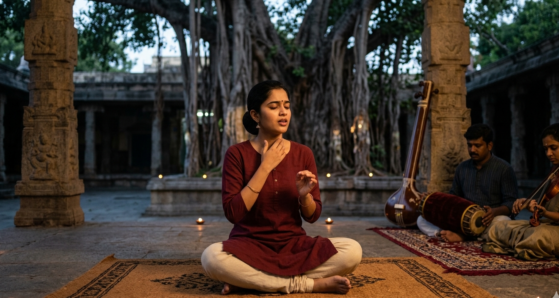
Why Gamakas Are Essential in Carnatic Music
A common misconception among beginners is that gamakas are optional embellishments added after mastering the notes. In reality, the notes and gamakas are inseparable in Carnatic music.
Every raga possesses a unique melodic personality. This personality emerges not simply from its scale but from the characteristic ways in which its notes move. When gamakas are removed, many ragas lose their defining features and may become difficult to distinguish from one another.
For instance, certain ragas derive much of their emotional appeal from gentle oscillations, while others depend on graceful slides or subtle inflections. A plain rendition of the notes may technically be correct, yet it often fails to capture the essence of the raga.
Moreover, gamakas serve as powerful tools for emotional communication. Joy, devotion, longing, serenity, compassion, and grandeur can all be expressed through carefully executed note movements. Through these nuances, singers create a direct emotional connection with listeners.
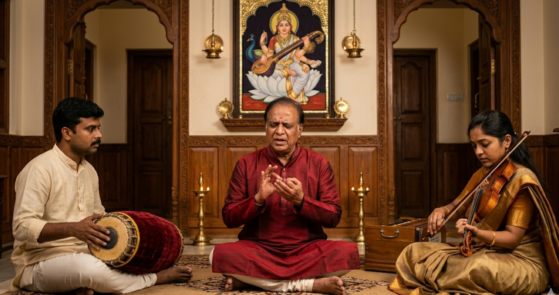
Different Types of Carnatic Gamakas
Carnatic music employs numerous types of gamakas, each creating a distinct musical effect. Although scholars classify these ornamentations in different ways across various texts, musicians apply them through specific note movements that shape and define raga expression.
Among the most common gamakas, oscillation plays a vital role in melodic interpretation. In this technique, singers move a note gently or vigorously around its central pitch, creating a vibrant and expressive sound. Many major ragas rely on such oscillations to establish their unique character and emotional appeal.
Singers also use glides extensively in Carnatic music. Through these smooth transitions, they connect one note to another without abrupt breaks, creating a continuous and graceful flow. This movement adds elegance to musical phrases and enhances the overall melodic experience.
Some gamakas require singers to briefly touch neighboring notes before returning to the primary swara. Others encourage performers to incorporate rapid turns or subtle inflections that enrich musical phrases with complexity and beauty. To execute these techniques effectively, singers must combine technical precision with musical sensitivity and artistic maturity.
Since every raga demands its own characteristic gamakas, students need to learn these movements within the context of the raga itself rather than treating them as isolated vocal techniques.
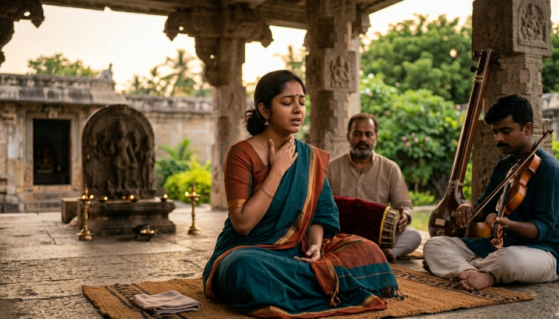
Carnatic Gamakas and Raga Identity
Carnatic music derives much of its richness from the intricate relationship between gamakas and ragas. Rather than functioning as a simple collection of ascending and descending notes, a raga establishes a complete melodic framework with its own personality, mood, and grammatical structure.
Gamakas shape that personality and bring the raga to life. Even when two ragas share similar note structures, musicians use distinct gamakas to create entirely different melodic identities.
Improvisation reveals this relationship most clearly. Skilled performers employ precise gamakas to preserve a raga’s identity while exploring creative possibilities. As they build each phrase, they ensure that it reflects the raga’s unique character. At the same time, gamakas guide their creativity and help them maintain a balance between artistic freedom and tradition.
Experienced listeners often recognize ragas through their characteristic note movements rather than through individual notes alone. By identifying these signature phrases and melodic contours, they gain a deeper appreciation of the crucial role gamakas play in defining and preserving raga identity.
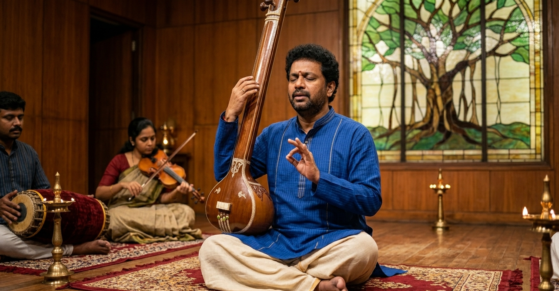
The Challenge of Learning Carnatic Gamakas
Mastering gamakas ranks among the most demanding aspects of Carnatic vocal training. Unlike simple note production, singers must develop precise control over pitch, breath, voice modulation, and timing to execute gamakas effectively.
At the beginning of their training, many students struggle to replicate the subtle movements their teachers demonstrate. They improve their skills through patient effort, attentive listening, and consistent practice. Over time, they train their ears to detect finer pitch variations and gradually refine their execution.
Written notation presents another challenge because it fails to capture the full complexity of gamakas. Although musicians use notation to outline the basic framework of a composition, students learn the finer nuances by listening carefully, observing experienced performers, and imitating their techniques.
Students can accelerate their progress by regularly listening to accomplished musicians. As they observe how experienced performers use gamakas in different contexts, they deepen their understanding of raga aesthetics, vocal expression, and musical artistry.
The Role of Gamakas in Manodharma
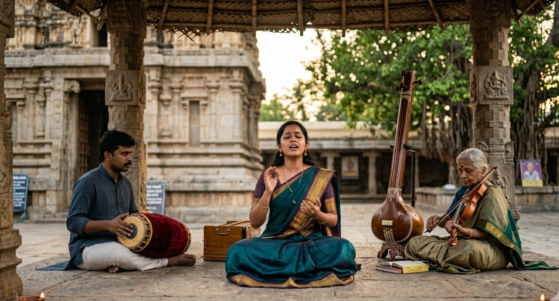
Manodharma, or creative improvisation, occupies a central place in Carnatic music. During alapana, neraval, and swara kalpana, musicians draw upon their understanding of raga grammar to create spontaneous musical ideas.
Throughout this creative process, gamakas serve as essential building blocks. Artists do not simply select notes at random. Instead, they craft phrases that preserve and reflect the unique character of the raga.
Appropriate gamaka usage gives each improvisational phrase authenticity and depth. While musicians can explore limitless creative possibilities, they must shape every musical idea within the raga’s established framework. Therefore, artists must master gamakas before they can engage in meaningful and effective improvisation.
Audiences admire great performers not only for their creativity but also for the elegance and precision with which they use gamakas. By balancing artistic freedom with musical discipline, these musicians embody the highest ideals of Carnatic artistry.
Emotional Expression Through Carnatic Gamakas
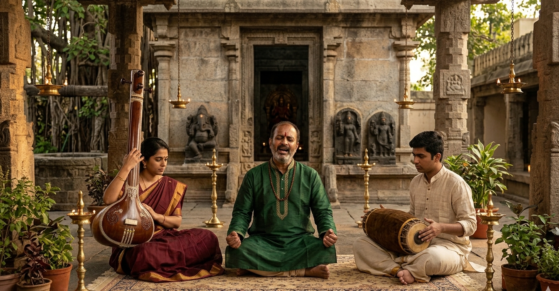
Music communicates emotions that words often cannot capture. In Carnatic singing, gamakas carry those emotions and give melodies their expressive depth.
Singers use gentle oscillations to convey tenderness and devotion. They employ sweeping glides to express yearning and longing. Some gamakas add excitement and energy to a phrase, while others create a sense of peace and contemplation.
Musicians shape the emotional impact of a composition through their command of gamakas, often matching or even surpassing the expressive power of the lyrics. Through subtle variations in pitch, movement, and note treatment, they transform familiar compositions into powerful musical experiences.
As listeners develop a deeper understanding of these nuances, they appreciate the remarkable emotional richness that gamakas bring to Carnatic music.
Conclusion
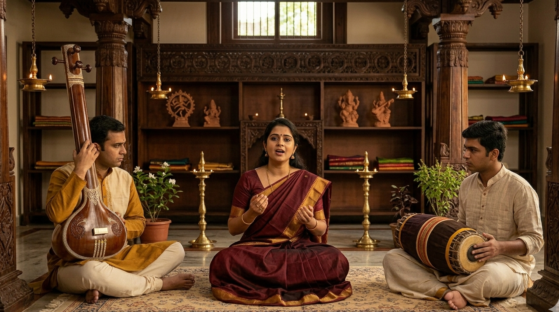
Musicians and scholars often describe gamakas as the soul of Carnatic music, and rightly so. They bring notes to life, shape the identity of ragas, and convey deep emotions with remarkable nuance. Rather than serving as mere decorative elements, gamakas create the very foundation of melodic expression in the Carnatic tradition.
When listeners understand gamakas, they gain a deeper appreciation of Carnatic singing. These intricate note movements showcase the artistry, discipline, and sensitivity that define this classical form. Through every great performance, singers use gamakas to transform simple notes into compelling and emotionally powerful musical experiences.
Students spend years mastering gamakas, embracing both the challenges and rewards of the journey. At the same time, listeners who recognize these subtle nuances enrich their understanding of Carnatic music. Those looking to deepen their understanding of these essential techniques can explore Carnatic Vocal Lessons Online at The Mystic Keys, where structured training helps students develop both technical precision and expressive artistry.
Ultimately, gamakas allow a raga to reveal its true voice, connect directly with the heart, and preserve the timeless legacy of the Carnatic tradition.
For more information and exciting resources about learning music, visit our website at The Mystic Keys. For more music content and exciting offers follow us on
Facebook, Instagram, YouTube, LinkedIn, Twitter, Pinterest, and Threads.