The Difference Between Playing Notes and Telling a Story on Piano
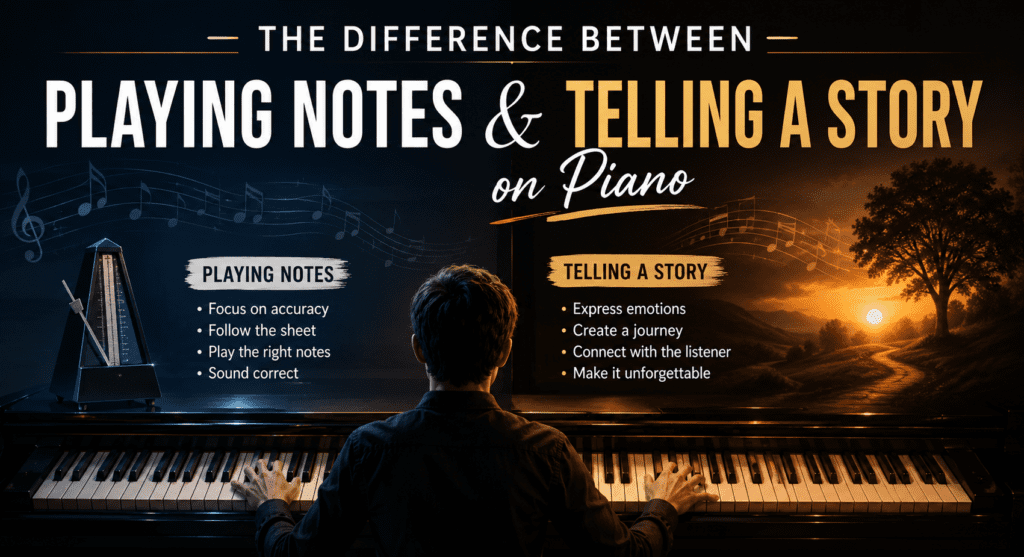
Every piano student begins by learning notes, rhythms, scales, and finger techniques. These technical skills are essential because they provide the foundation for musical development. However, there comes a point in every pianist’s journey when simply hitting the correct keys is no longer enough. Understanding the difference between playing notes and telling a story on piano is what separates a technically competent pianist from a truly expressive musician.
Many beginners focus entirely on accuracy. They strive to play the right notes at the right time and avoid mistakes. While accuracy is important, music is ultimately a form of communication. Great pianists do more than reproduce written notes—they use those notes to create emotions, paint images, and connect with listeners.
At The Mystic Keys, students are encouraged to develop both technical skill and musical expression. In this blog, we explore the difference between playing notes and telling a story on piano, and why storytelling is the key to memorable performances.
Understanding Playing Notes and Telling a Story on Piano
Playing notes involves performing what is written on the page.
Telling a story involves:
Communicating emotions
Creating musical imagery
Connecting with listeners
Giving meaning to every phrase
The notes remain the same, but the experience becomes completely different.
What It Means to Simply Play Notes
When students first learn a piece, they focus on:
Correct notes
Proper rhythm
Finger placement
Tempo accuracy
This stage is important because technical control is necessary before expression can develop.
However, technical accuracy alone does not guarantee a moving performance.
What It Means to Tell a Story Through Piano
Storytelling in music means using the piano to express ideas and emotions.
A storyteller on the piano thinks about:
Mood
Character
Emotion
Musical direction
Instead of asking, “Am I playing the correct notes?” they ask, “What am I trying to say?”
Why Playing Notes and Telling a Story on Piano Are Different Skills
Many students assume expression will happen automatically.
Dynamics are one of the most powerful storytelling tools.
Musical Phrasing Creates Meaning
Just as speech is divided into sentences, music is divided into phrases.
Good phrasing helps:
Shape musical ideas
Create natural flow
Guide listeners through the piece
Without phrasing, music can sound mechanical and lifeless.
The Importance of Tempo Flexibility
Great storytellers understand that not every moment should feel identical.
Small tempo variations can:
Highlight important moments
Build anticipation
Create emotional impact
Thoughtful tempo control makes performances feel more human and expressive.
Why Beginners Focus Only on Accuracy
Many students spend most of their practice time:
Correcting mistakes
Memorizing notes
Improving speed
As a result, expression often becomes an afterthought.
This is one reason why playing notes and telling a story on piano can feel very different.
Listening Like an Artist
To develop storytelling skills, students should actively listen to professional pianists.
Pay attention to:
Dynamic contrast
Emotional expression
Phrase shaping
Timing choices
Listening develops musical imagination.
Visualizing a Story While Playing
Many musicians create mental images while performing.
For example:
A peaceful landscape
A joyful celebration
A personal memory
A dramatic journey
Visualization helps transform notes into meaningful expression.
Connecting with the Audience
Storytelling creates a connection between performer and listener.
Audiences often remember:
Emotional moments
Beautiful phrasing
Expressive interpretations
They rarely remember technical perfection alone.
The Power of Silence
Not every moment in music is about sound.
Strategic pauses create:
Suspense
Reflection
Emotional depth
Silence can be just as expressive as the notes themselves.
Why Storytelling Matters More Than Perfection
Many legendary performances are remembered not because they were flawless, but because they were meaningful.
Listeners connect with:
Emotion
Authenticity
Expression
A performance that tells a story often leaves a lasting impression long after the final note.
Conclusion
Understanding the difference between playing notes and telling a story on piano is one of the most important steps in musical growth. While technical accuracy provides the foundation, expression brings music to life. Dynamics, phrasing, tempo, emotion, and imagination all contribute to transforming a simple performance into a memorable experience.
At The Mystic Keys, students are encouraged to develop both technique and artistry, helping them become confident musicians who can communicate through music. After all, great piano playing is not just about pressing the right keys—it is about sharing a story that listeners can feel and remember.
If you want to develop expressive piano skills and grow as a complete musician, explore Piano Lessons Online and discover how expert guidance can help you bring your music to life.
For more information and exciting resources about learning music, visit our website at The Mystic Keys. For more music content and exciting offers follow us on
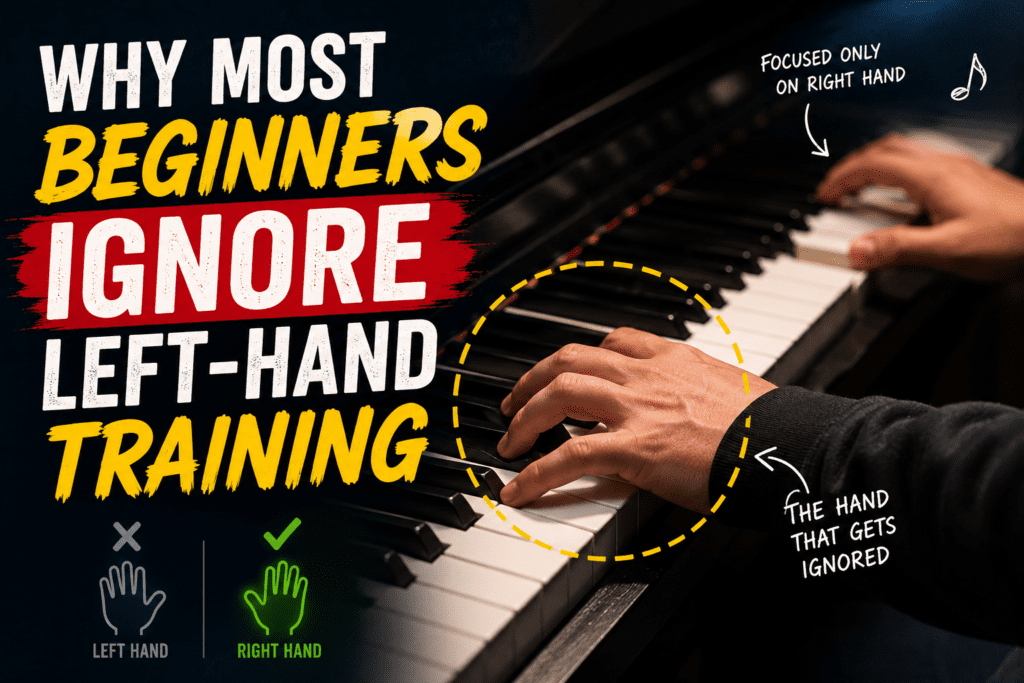
Why Most Beginners Ignore Left-Hand Training on Piano
One of the most common mistakes new piano students make is focusing almost entirely on their right hand while neglecting the left. In fact, many beginners ignore left-hand training without even realizing it. Since melodies are often played with the right hand, students naturally give more attention to it, believing that the left hand only provides simple accompaniment.
However, this habit can slow musical progress significantly. Piano playing requires both hands to work together with equal coordination, timing, and control. A weak left hand can affect rhythm, balance, finger independence, and overall performance quality. Developing both hands from the beginning creates a stronger musical foundation and makes learning advanced pieces much easier later.
At The Mystic Keys, piano instructors help students build balanced hand development from the earliest stages of learning. In this blog, we explore why beginners often neglect left-hand practice and how proper training can dramatically improve piano skills.
Why Beginners Ignore Left-Hand Training
There are several reasons why many students focus more on the right hand.
Common reasons include:
The melody is usually played in the right hand
The left hand feels less comfortable
Progress seems slower
Students find left-hand exercises repetitive
Unfortunately, avoiding left-hand practice creates long-term limitations.
The Role of the Left Hand in Piano Playing
The left hand does much more than simply support the melody.
Its responsibilities often include:
Providing harmony
Creating rhythm
Establishing bass lines
Supporting musical structure
Without a strong left hand, performances can sound incomplete and unbalanced.
How Beginners Ignore Left-Hand Training During Practice
Many students unknowingly spend most of their practice time on:
Right-hand melodies
Fast passages
Lead sections
Meanwhile, the left hand receives minimal attention.
This imbalance becomes more noticeable as songs become more challenging.
Why Left-Hand Development Matters
Balanced hand development improves:
Coordination
Timing
Finger strength
Musical independence
Strong left-hand technique allows students to perform more confidently and accurately.
Building Finger Independence
One of the greatest benefits of left-hand training is improved finger independence.
Regular exercises help:
Strengthen weaker fingers
Improve hand control
Develop equal movement across both hands
This skill becomes essential for intermediate and advanced piano pieces.
Improving Rhythm Through Left-Hand Training
The left hand often serves as the rhythmic foundation of a song.
When students strengthen their left hand, they develop:
Better timing
Stronger rhythmic awareness
Improved consistency
A stable rhythm supports the entire performance.
How Left-Hand Practice Enhances Coordination
Piano playing requires both hands to perform different tasks simultaneously.
Consistent left-hand exercises improve:
Hand synchronization
Mental processing
Physical coordination
These skills help students handle more complex music with confidence.
Common Signs of Weak Left-Hand Development
Students who neglect left-hand training often experience:
Uneven volume between hands
Poor rhythm control
Difficulty playing hands together
Slower progress on advanced pieces
Recognizing these signs early helps prevent future challenges.
Simple Exercises to Strengthen the Left Hand
Students can improve left-hand control through focused exercises.
Examples include:
Left-Hand Scales
Practice scales using only the left hand.
Benefits include:
Finger strength
Accuracy
Consistent movement
Five-Finger Patterns
These exercises develop finger independence and coordination.
Arpeggio Practice
Arpeggios improve hand flexibility and movement across the keyboard.
Practicing Hands Separately
One effective strategy is practicing each hand independently.
Benefits include:
Better understanding of each part
Improved confidence
Stronger muscle memory
This method allows students to focus fully on left-hand development before combining both hands.
Why Left-Hand Training Improves Musical Balance
Good piano playing requires balance between melody and accompaniment.
Strong left-hand technique helps:
Maintain dynamic control
Support the melody effectively
Create richer performances
Balanced playing sounds more professional and expressive.
How Beginners Ignore Left-Hand Training in Popular Songs
Many modern songs feature simple right-hand melodies that attract student attention.
Consistent and focused practice helps correct these habits.
How Structured Lessons Prevent Hand Imbalance
A structured curriculum ensures that both hands develop together.
Professional instruction provides:
Balanced exercises
Progressive skill development
Technique correction
Personalized feedback
At The Mystic Keys, students receive guided training that strengthens both hands equally from the beginning.
Long-Term Benefits of Strong Left-Hand Technique
Students who prioritize left-hand training often experience:
Better coordination
Greater musical confidence
Faster learning progress
Stronger overall technique
These advantages become increasingly important as students advance.
Why Teachers Emphasize Left-Hand Training
Experienced piano teachers understand that technical balance is essential.
This is why instructors regularly include:
Scales
Arpeggios
Coordination exercises
Left-hand-focused practice routines
These activities build a complete musical foundation.
Conclusion
Many students unintentionally ignore left-hand training, focusing primarily on melodies played with the right hand. While this approach may feel easier initially, it can limit musical growth and create technical weaknesses later. The left hand plays a crucial role in rhythm, harmony, coordination, and overall performance quality.
By dedicating time to left-hand exercises, scales, and balanced practice routines, students can develop stronger technique and greater musical confidence. At The Mystic Keys, learners are guided through structured lessons that ensure both hands develop together, creating a solid foundation for long-term success.
If you want to improve your piano skills with expert guidance and effective training methods, explore Piano Lessons Online and experience a structured approach to musical growth.
For more information and exciting resources about learning music, visit our website at The Mystic Keys. For more music content and exciting offers follow us on
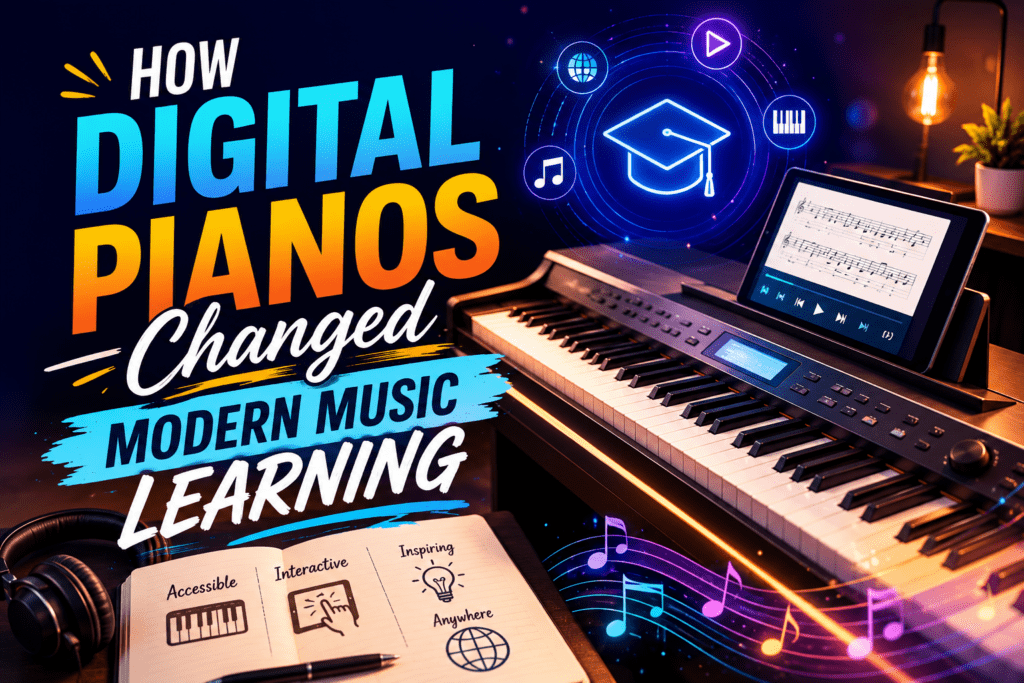
The way students learn music has transformed dramatically over the past few decades. One of the biggest contributors to this change has been the rise of digital pianos. The fact that digital pianos changed modern music learning is evident in classrooms, homes, online lessons, and music studios around the world. What was once limited to expensive acoustic instruments and in-person lessons has now become accessible to learners of all ages and skill levels.
Digital pianos combine traditional piano-playing experiences with modern technology, creating new opportunities for learning, practice, and musical development. Features such as built-in learning tools, headphone connectivity, recording functions, and online integration have made music education more convenient and engaging than ever before.
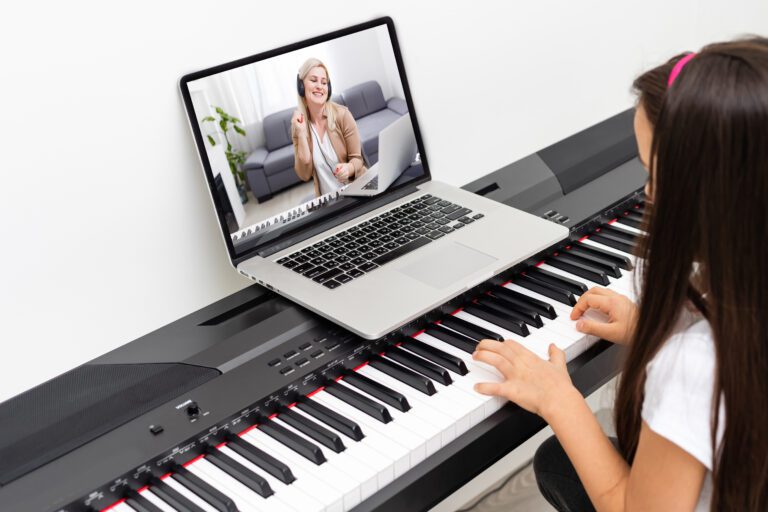
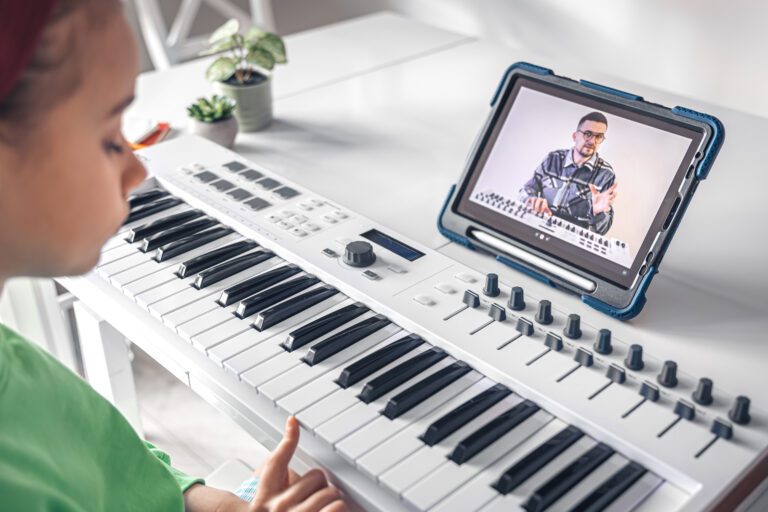
At The Mystic Keys, digital pianos have played an important role in helping students learn effectively through online music lessons. In this blog, we explore how digital pianos revolutionized music education and why they continue to shape the future of learning.
How Digital Pianos Changed Modern Music Learning
The introduction of digital pianos removed many barriers that once prevented students from learning music.
Start learning without owning a large acoustic piano
This flexibility makes music education more available than ever before.
Making Piano Learning More Affordable
Traditional acoustic pianos often require:
Significant financial investment
Regular maintenance
Professional tuning
Digital pianos provide an affordable alternative while still offering realistic playing experiences.
This has encouraged more families to introduce music into their homes.
Supporting Online Music Education
Online music learning has grown rapidly in recent years.
Digital pianos support virtual lessons through:
USB and MIDI connectivity
High-quality sound output
Easy integration with learning software
Recording and playback features
These tools help teachers provide effective instruction regardless of location.
Interactive Learning Features
Modern digital pianos often include built-in educational tools.
Examples include:
Metronomes
Lesson modes
Rhythm accompaniments
Practice exercises
These features encourage independent learning and improve student engagement.
The Role of Headphone Practice
One challenge of traditional pianos is volume control.
Digital pianos solve this problem by allowing:
Silent practice
Late-night practice sessions
Focused listening
Students can practice more frequently without disturbing others.
How Digital Pianos Improved Practice Efficiency
Effective practice is essential for progress.
Digital pianos help students:
Track tempo accurately
Record performances
Identify mistakes
Monitor improvement over time
These features create a more productive learning environment.
Encouraging Consistent Practice Habits
Convenience often leads to consistency.
Because digital pianos are:
Easy to use
Low maintenance
Ready to play instantly
students are more likely to practice regularly.
Consistent practice remains one of the most important factors in musical success.
Better Integration with Technology
Technology has become an important part of music education.
Digital pianos connect with:
Mobile apps
Learning platforms
Music notation software
Recording programs
This integration expands learning opportunities and supports modern teaching methods.
Helping Beginners Learn Faster
Many beginner-friendly features simplify the learning process.
Examples include:
Key lighting systems
Interactive lessons
Adjustable sensitivity settings
Built-in tutorials
These tools make learning more approachable for new students.
How Digital Pianos Changed Modern Music Learning for Children
Children often benefit from interactive learning experiences.
Digital pianos provide:
Engaging sounds
Learning games
Immediate feedback
Fun practice tools
These elements help maintain motivation and interest.
Supporting Adult Learners
Adult students often have limited time for practice.
Digital pianos accommodate busy schedules through:
Flexible practice times
Compact designs
Convenient setup
This flexibility makes it easier for adults to pursue musical goals.
Realistic Playing Experiences
Modern digital pianos have improved significantly.
Many now offer:
Weighted keys
Touch-sensitive action
High-quality sound samples
Authentic piano feel
These features help students develop proper technique.
Environmental and Maintenance Advantages
Unlike acoustic pianos, digital pianos do not require:
Regular tuning
Humidity control
Extensive maintenance
This makes ownership simpler and more cost-effective.
Preparing Students for Modern Music Production
Music creation has become increasingly digital.
Digital pianos help students explore:
MIDI technology
Music production software
Home recording
Composition tools
These skills are valuable in today’s music industry.
Challenges of Digital Pianos
While digital pianos offer many benefits, students should also consider:
Differences from acoustic resonance
Dependence on electronics
Variations in key quality
Choosing a high-quality instrument is important for long-term development.
Why Teachers Embrace Digital Piano Technology
Music educators increasingly use digital pianos because they:
Enhance lesson delivery
Support remote learning
Improve student engagement
Provide useful practice tools
Technology has become a valuable partner in music education.
How The Mystic Keys Uses Modern Learning Technology
At The Mystic Keys, technology is combined with expert instruction to create effective learning experiences.
Students benefit from:
Live one-on-one lessons
Personalized learning plans
Interactive practice methods
Global access to professional instructors
Digital pianos help make this modern learning approach possible.
The Future of Digital Piano Learning
As technology continues to evolve, digital pianos are likely to become even more advanced.
Future developments may include:
Artificial intelligence learning assistance
Enhanced interactive lessons
Improved virtual collaboration
More realistic sound modeling
The future of music education is closely connected to technological innovation.
Conclusion
There is no doubt that digital pianos changed modern music learning by making music education more accessible, affordable, interactive, and flexible. From supporting online lessons to providing powerful practice tools, digital pianos have transformed how students develop their musical skills.
While traditional acoustic pianos continue to hold an important place in music, digital pianos have expanded opportunities for learners around the world. At The Mystic Keys, students benefit from the best of both worlds—expert instruction combined with modern learning technology that supports steady growth and long-term success.
If you are ready to begin your musical journey, explore Piano Lessons Online and discover how modern technology can help you learn with confidence and convenience.
For more information and exciting resources about learning music, visit our website at The Mystic Keys. For more music content and exciting offers follow us on
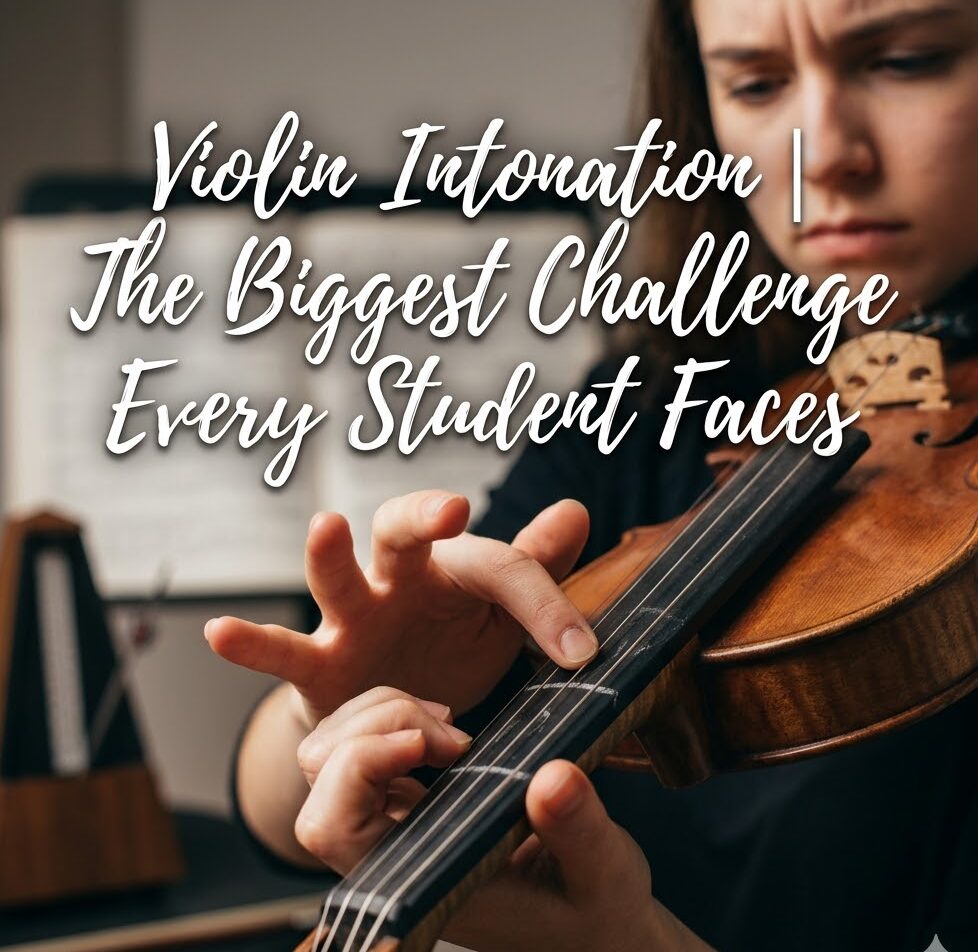
Violin Intonation | The Biggest Challenge Every Student Faces
Learning the violin is often described as a beautiful journey filled with expression, discipline, and artistry. Yet, every violin student eventually encounters one obstacle that seems to follow them through every stage of their development: intonation. While mastering bow control, rhythm, and posture certainly requires dedication, playing consistently in tune remains one of the most demanding aspects of violin playing.
Unlike many other instruments that provide visual guides for pitch, the violin demands remarkable precision from the player. Every note must be placed accurately by ear and muscle memory alone. As a result, intonation becomes an ongoing challenge that beginners struggle to understand and advanced players continue to refine throughout their musical lives.
Understanding why intonation is so difficult—and how it can be improved—helps students approach their practice more effectively and develop greater confidence in their playing.
What Is Violin Intonation?
Intonation measures how accurately a violinist plays a note’s pitch. In simple terms, it determines whether a note sounds in tune, sharp, or flat. Because the violin does not have frets like a guitar, players cannot rely on fixed markers to guide finger placement. Even a slight shift in finger position can change the pitch noticeably.
This unique feature makes the violin both expressive and challenging. Violinists can shape pitch, vibrato, and tone with remarkable freedom, but they must also place every finger with precision. Throughout a piece, they need to monitor pitch constantly to maintain a beautiful and consistent sound.
Many beginners find this aspect of violin playing difficult at first. Students often place their fingers where they think the note should be, only to hear a pitch that sounds slightly off. As a result, developing strong intonation becomes one of the first major milestones in learning the instrument. At The Mystic Keys, our Violin Lessons Online help students strengthen both their listening skills and finger accuracy, creating a solid foundation for confident and expressive playing.
Why Intonation Is More Difficult on the Violin Than Other Instruments
Many musical instruments provide visual or mechanical assistance that helps players locate notes. Piano keys, for example, produce the correct pitch whenever they are pressed. Fretted instruments offer physical divisions that guide finger placement.
The violin, however, relies entirely on the player’s precision. Finger placement must be exact, and adjustments often happen instinctively in fractions of a second. Furthermore, the distances between notes become progressively smaller as the hand moves higher up the fingerboard. What feels like a minor error in finger position can create a noticeable pitch problem.
Another factor that complicates intonation is the continuous movement required while playing. Students must shift positions, cross strings, and coordinate both hands simultaneously. While focusing on bowing technique or rhythm, it is easy for pitch accuracy to suffer. Therefore, intonation often becomes a balancing act between multiple technical demands.
The Ear Plays a Bigger Role Than the Fingers
Many students assume that intonation problems originate solely from incorrect finger placement. In reality, the ears are often the true source of the issue.
Before a musician can play a note accurately, they must first be able to hear and recognize the correct pitch internally. If the ear cannot identify when a note is out of tune, the fingers have no reliable guidance. This explains why some students repeatedly make the same intonation mistakes despite receiving corrections from their teacher.
Developing pitch awareness takes time. The process involves actively listening, comparing notes, and training the brain to recognize subtle differences in pitch. Over time, students begin to notice when notes sound unstable or clash with accompanying tones. As their listening skills improve, finger placement naturally becomes more accurate.
Because of this relationship between hearing and playing, successful intonation training focuses as much on listening as it does on finger technique.
Building Muscle Memory for Better Violin Intonation
One of the most frustrating aspects of violin intonation is inconsistency. A student may play a passage perfectly one day and struggle with the same section the next. This experience is completely normal because accurate intonation depends heavily on muscle memory.
Each note requires the hand and fingers to learn precise physical distances on the fingerboard. Repetition gradually teaches the body where notes belong without conscious calculation. Nevertheless, building reliable muscle memory requires patience and thousands of correct repetitions.
During the early stages of learning, students often adjust their fingers constantly as they search for the correct pitch. Although this process may seem slow, it is an essential part of developing accuracy. Eventually, the hand begins to recognize note locations more automatically, allowing the player to focus on musical expression rather than simply finding the right pitches.
Consistency emerges gradually, not suddenly. Therefore, students should view occasional intonation mistakes as part of the learning process rather than evidence of failure.
Common Tension Issues That Affect Violin Intonation
Physical tension is another common contributor to pitch problems. When students feel nervous or attempt to force their fingers into position, the hand often becomes stiff. This stiffness restricts natural movement and makes precise finger placement more difficult.
Excessive pressure from the thumb, a rigid wrist, or tight shoulders can all interfere with intonation. Moreover, tension tends to increase during challenging passages, causing students to lose accuracy exactly when they need it most.
A relaxed setup allows the fingers to move freely and respond quickly to pitch adjustments. Teachers frequently emphasize posture and hand position because technical freedom directly influences intonation quality. As players become more comfortable holding the instrument, they often notice significant improvements in pitch control.
For this reason, improving intonation is not always about practicing harder; sometimes it is about learning to play with greater ease and relaxation.
The Importance of Slow Practice
In a world that often celebrates speed and progress, many students rush through practice sessions hoping to master difficult pieces quickly. Unfortunately, this approach can reinforce poor intonation habits.
Slow practice provides the opportunity to hear every note clearly and make deliberate corrections. When students reduce the tempo, they gain enough time to evaluate pitch accuracy before moving to the next note. This careful approach strengthens both listening skills and muscle memory.
Professional violinists frequently rely on slow practice even after years of experience. Rather than viewing it as a beginner’s tool, they understand it as one of the most effective methods for maintaining technical precision. Through slow, attentive repetition, accurate intonation gradually becomes automatic.
Although the process may feel tedious at times, it lays the foundation for confident and expressive performance at faster tempos.
Why Intonation Never Stops Evolving
Many students believe there will be a moment when they finally “fix” their intonation forever. In reality, intonation remains a lifelong area of refinement.
As musicians advance, they encounter new positions, more complex repertoire, and increasingly sophisticated musical contexts. Playing in an orchestra, chamber ensemble, or duet introduces additional challenges because pitch must be adjusted to blend with other musicians. What sounds perfectly in tune in one situation may require subtle modifications in another.
Professional violinists continue training their ears and refining pitch accuracy throughout their careers. Rather than viewing this as discouraging, students should recognize it as part of the instrument’s beauty. The violin offers endless opportunities for growth, and intonation is one of the skills that continues to deepen with experience.
Overcoming Common Violin Intonation Struggles
Few aspects of violin playing test a student’s patience more than intonation. There are moments when notes seem impossible to place correctly, and progress may appear frustratingly slow. Yet these challenges are shared by virtually every violinist, from beginners taking their first lessons to seasoned performers on international stages.
The key is to approach intonation as a gradual journey rather than a problem that needs an immediate solution. Careful listening, consistent practice, relaxed technique, and patience all contribute to long-term improvement. Each correction strengthens the connection between the ear, the mind, and the fingers.
Over time, what once felt impossible begins to feel natural. Notes become more secure, confidence grows, and the violin starts to sing with greater clarity and beauty.
Conclusion
Intonation is often considered the greatest challenge in violin playing because it demands the cooperation of technical skill, trained listening, concentration, and muscle memory. Unlike many other musical obstacles, it cannot be mastered through shortcuts or quick fixes. Instead, it develops gradually through thoughtful practice and continuous refinement.
Although the journey can be demanding, it is also incredibly rewarding. Every improvement in intonation brings greater confidence, richer tone, and more expressive musical performances. For violin students, mastering pitch is not simply about playing the correct notes—it is about developing the sensitivity and control that transform technique into true artistry.
At The Mystic Keys, our Violin Lessons Online are designed to help students strengthen their listening skills, refine finger placement, and build the confidence needed to play beautifully in tune. With consistent guidance and dedicated practice, overcoming intonation challenges becomes an achievable and rewarding part of every violinist’s musical journey.
For more information and exciting resources about learning music, visit our website at The Mystic Keys. For more music content and exciting offers follow us on
Carnatic Gamakas | Understanding the Soul of Carnatic Singing
Carnatic music captivates listeners with its rich melodic beauty, intricate rhythmic structures, and profound emotional depth. Many elements shape its uniqueness, but gamakas play the most significant role in defining its character. These delicate and expressive embellishments transform simple notes into living, breathing musical expressions. Without gamakas, Carnatic music loses much of its personality, emotional intensity, and distinctive identity.
Beginners often find gamakas mysterious and difficult to grasp. As they listen closely, they notice that singers rarely render notes in a plain or static manner. Instead, singers make each swara move, bend, oscillate, glide, or flow into another note. These movements do not merely decorate the melody; they create the very foundation of Carnatic music.
Anyone who wishes to appreciate Carnatic singing fully must understand gamakas. They do not simply embellish a raga. Rather, they give a raga its voice and expressive power. Through gamakas, every phrase comes alive, and performers communicate emotions with remarkable subtlety and depth.
What Are Carnatic Gamakas?
The term “gamaka” broadly refers to the ornamentation or modulation applied to a musical note. In Carnatic music, however, the concept extends far beyond simple decoration. A gamaka is an integral movement associated with a note or a sequence of notes, giving them a specific shape and emotional quality.
Unlike many musical traditions where notes may be rendered as fixed pitches, Carnatic music treats notes as dynamic entities. A swara often exists in motion rather than in stillness. Consequently, the beauty of a raga emerges not only from the notes it contains but also from the manner in which those notes are approached, sustained, and connected.
Consider a painter working with colors. The beauty of a painting lies not only in the colors themselves but also in the way they blend and transition into one another. Similarly, gamakas create the subtle shades and textures that bring musical phrases to life.
As a result, two ragas may share similar notes yet sound entirely different because of the gamakas used in their rendition. These characteristic movements become essential markers of a raga’s identity.
The Historical Significance of Gamakas
The concept of gamakas has deep roots in Indian classical music. Ancient treatises on music contain references to various forms of note ornamentation, highlighting their importance in musical expression. Over centuries, musicians refined these techniques, developing highly sophisticated systems of melodic movement.
As Carnatic music evolved, gamakas became increasingly central to its aesthetic framework. Composers and performers recognized that emotional expression could be greatly enhanced through nuanced note treatment. Gradually, the tradition established precise conventions regarding how specific ragas should be rendered.
Many legendary composers, including saint-composers of the Carnatic Trinity, created compositions that naturally incorporated characteristic gamakas. Their works continue to serve as invaluable guides for students seeking to understand authentic raga expression.
Today, the oral tradition remains one of the primary means through which gamakas are transmitted. Although notation can indicate basic melodic structures, the finer details of gamaka execution often require direct learning from a guru.
Why Gamakas Are Essential in Carnatic Music
A common misconception among beginners is that gamakas are optional embellishments added after mastering the notes. In reality, the notes and gamakas are inseparable in Carnatic music.
Every raga possesses a unique melodic personality. This personality emerges not simply from its scale but from the characteristic ways in which its notes move. When gamakas are removed, many ragas lose their defining features and may become difficult to distinguish from one another.
For instance, certain ragas derive much of their emotional appeal from gentle oscillations, while others depend on graceful slides or subtle inflections. A plain rendition of the notes may technically be correct, yet it often fails to capture the essence of the raga.
Moreover, gamakas serve as powerful tools for emotional communication. Joy, devotion, longing, serenity, compassion, and grandeur can all be expressed through carefully executed note movements. Through these nuances, singers create a direct emotional connection with listeners.
Different Types of Carnatic Gamakas
Carnatic music employs numerous types of gamakas, each creating a distinct musical effect. Although scholars classify these ornamentations in different ways across various texts, musicians apply them through specific note movements that shape and define raga expression.
Among the most common gamakas, oscillation plays a vital role in melodic interpretation. In this technique, singers move a note gently or vigorously around its central pitch, creating a vibrant and expressive sound. Many major ragas rely on such oscillations to establish their unique character and emotional appeal.
Singers also use glides extensively in Carnatic music. Through these smooth transitions, they connect one note to another without abrupt breaks, creating a continuous and graceful flow. This movement adds elegance to musical phrases and enhances the overall melodic experience.
Some gamakas require singers to briefly touch neighboring notes before returning to the primary swara. Others encourage performers to incorporate rapid turns or subtle inflections that enrich musical phrases with complexity and beauty. To execute these techniques effectively, singers must combine technical precision with musical sensitivity and artistic maturity.
Since every raga demands its own characteristic gamakas, students need to learn these movements within the context of the raga itself rather than treating them as isolated vocal techniques.
Carnatic Gamakas and Raga Identity
Carnatic music derives much of its richness from the intricate relationship between gamakas and ragas. Rather than functioning as a simple collection of ascending and descending notes, a raga establishes a complete melodic framework with its own personality, mood, and grammatical structure.
Gamakas shape that personality and bring the raga to life. Even when two ragas share similar note structures, musicians use distinct gamakas to create entirely different melodic identities.
Improvisation reveals this relationship most clearly. Skilled performers employ precise gamakas to preserve a raga’s identity while exploring creative possibilities. As they build each phrase, they ensure that it reflects the raga’s unique character. At the same time, gamakas guide their creativity and help them maintain a balance between artistic freedom and tradition.
Experienced listeners often recognize ragas through their characteristic note movements rather than through individual notes alone. By identifying these signature phrases and melodic contours, they gain a deeper appreciation of the crucial role gamakas play in defining and preserving raga identity.
The Challenge of Learning Carnatic Gamakas
Mastering gamakas ranks among the most demanding aspects of Carnatic vocal training. Unlike simple note production, singers must develop precise control over pitch, breath, voice modulation, and timing to execute gamakas effectively.
At the beginning of their training, many students struggle to replicate the subtle movements their teachers demonstrate. They improve their skills through patient effort, attentive listening, and consistent practice. Over time, they train their ears to detect finer pitch variations and gradually refine their execution.
Written notation presents another challenge because it fails to capture the full complexity of gamakas. Although musicians use notation to outline the basic framework of a composition, students learn the finer nuances by listening carefully, observing experienced performers, and imitating their techniques.
Students can accelerate their progress by regularly listening to accomplished musicians. As they observe how experienced performers use gamakas in different contexts, they deepen their understanding of raga aesthetics, vocal expression, and musical artistry.
The Role of Gamakas in Manodharma
Manodharma, or creative improvisation, occupies a central place in Carnatic music. During alapana, neraval, and swara kalpana, musicians draw upon their understanding of raga grammar to create spontaneous musical ideas.
Throughout this creative process, gamakas serve as essential building blocks. Artists do not simply select notes at random. Instead, they craft phrases that preserve and reflect the unique character of the raga.
Appropriate gamaka usage gives each improvisational phrase authenticity and depth. While musicians can explore limitless creative possibilities, they must shape every musical idea within the raga’s established framework. Therefore, artists must master gamakas before they can engage in meaningful and effective improvisation.
Audiences admire great performers not only for their creativity but also for the elegance and precision with which they use gamakas. By balancing artistic freedom with musical discipline, these musicians embody the highest ideals of Carnatic artistry.
Emotional Expression Through Carnatic Gamakas
Music communicates emotions that words often cannot capture. In Carnatic singing, gamakas carry those emotions and give melodies their expressive depth.
Singers use gentle oscillations to convey tenderness and devotion. They employ sweeping glides to express yearning and longing. Some gamakas add excitement and energy to a phrase, while others create a sense of peace and contemplation.
Musicians shape the emotional impact of a composition through their command of gamakas, often matching or even surpassing the expressive power of the lyrics. Through subtle variations in pitch, movement, and note treatment, they transform familiar compositions into powerful musical experiences.
As listeners develop a deeper understanding of these nuances, they appreciate the remarkable emotional richness that gamakas bring to Carnatic music.
Conclusion
Musicians and scholars often describe gamakas as the soul of Carnatic music, and rightly so. They bring notes to life, shape the identity of ragas, and convey deep emotions with remarkable nuance. Rather than serving as mere decorative elements, gamakas create the very foundation of melodic expression in the Carnatic tradition.
When listeners understand gamakas, they gain a deeper appreciation of Carnatic singing. These intricate note movements showcase the artistry, discipline, and sensitivity that define this classical form. Through every great performance, singers use gamakas to transform simple notes into compelling and emotionally powerful musical experiences.
Students spend years mastering gamakas, embracing both the challenges and rewards of the journey. At the same time, listeners who recognize these subtle nuances enrich their understanding of Carnatic music. Those looking to deepen their understanding of these essential techniques can explore Carnatic Vocal Lessons Online at The Mystic Keys, where structured training helps students develop both technical precision and expressive artistry.
Ultimately, gamakas allow a raga to reveal its true voice, connect directly with the heart, and preserve the timeless legacy of the Carnatic tradition.
For more information and exciting resources about learning music, visit our website at The Mystic Keys. For more music content and exciting offers follow us on