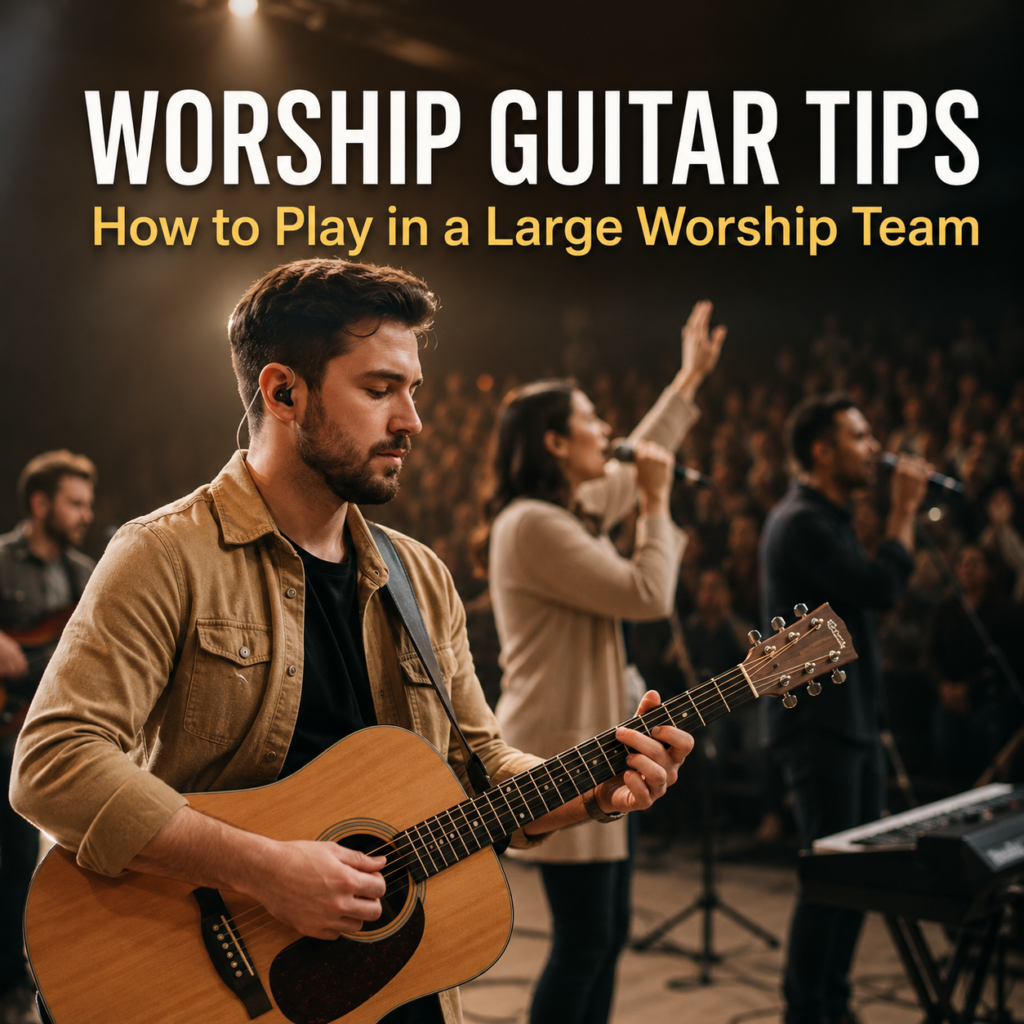
Worship Guitar Tips | How to Play in a Large Worship Team
Worship Guitar Tips | How to Play in a Large Worship Team
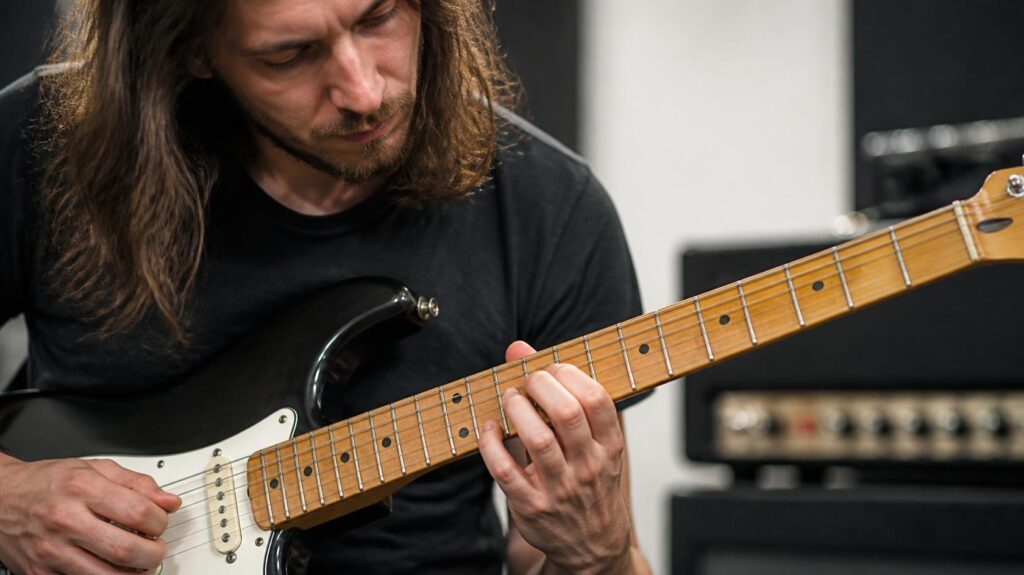
Playing guitar in a worship team is very different from playing guitar by yourself. In a solo setting, you may focus on melody, rhythm, fills, and tone all at once. However, when you are part of a large worship team, your role becomes much bigger than simply playing the right chords. These worship guitar tips can help you understand how to find your place in the arrangement, work with other musicians, and create a sound that supports the worship experience rather than overpowering it.
A large worship team may include multiple guitars, keyboards, drums, bass, vocals, and other instruments. Because so many sounds are happening at the same time, every guitarist needs to understand how to contribute without overcrowding the arrangement.
The goal is not to play more. The goal is to play what the song needs.
With the right approach, your guitar can add movement, atmosphere, energy, and emotion while still leaving enough space for the other musicians and, most importantly, the worshippers.
Understand Your Role in the Team
Before you play a single note, understand what your guitar is supposed to do.
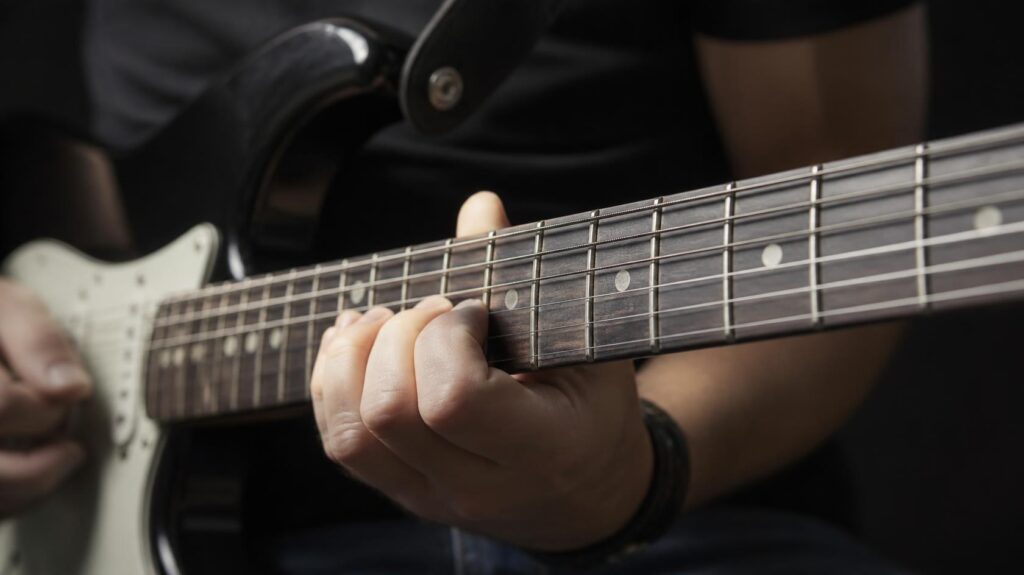
In a large worship team, you may be playing rhythm guitar, acoustic guitar, electric guitar, or a combination of different textures. Your role can also change throughout the song. A simple rhythm pattern may work beautifully during the verse, while a more open and energetic approach can support the chorus.
Instead of trying to fill every musical gap, listen to the overall arrangement. If the piano is already providing a strong rhythmic pattern, your guitar might work better with a simple texture. On the other hand, if the arrangement becomes quieter, your guitar may have more room to add gentle movement.
This mindset makes a huge difference: you are part of the arrangement, not the entire arrangement.
Worship Guitar Tips | Listen Before You Play
One of the most valuable skills for a worship guitarist is active listening.
While playing, pay attention to what the other musicians are doing. Listen to the bass line, notice the drummer’s groove, hear where the keyboard is sitting, and follow the lead vocalist. Doing this helps you identify which musical spaces are already occupied.
For example, if the keyboard is playing a wide pad and the electric guitar is already using sustained chords, another layer of sustained chords may make the sound feel crowded. Instead, you could use shorter rhythmic patterns or leave more space between phrases.
Listening also helps you respond naturally to changes in the song. When the worship leader builds intensity, you can gradually increase your dynamics. When the music becomes intimate, you can simplify your playing.
Good worship guitarists don’t just hear their guitar. They hear the whole room.

Keep Your Chord Playing Simple
Simple does not mean boring.
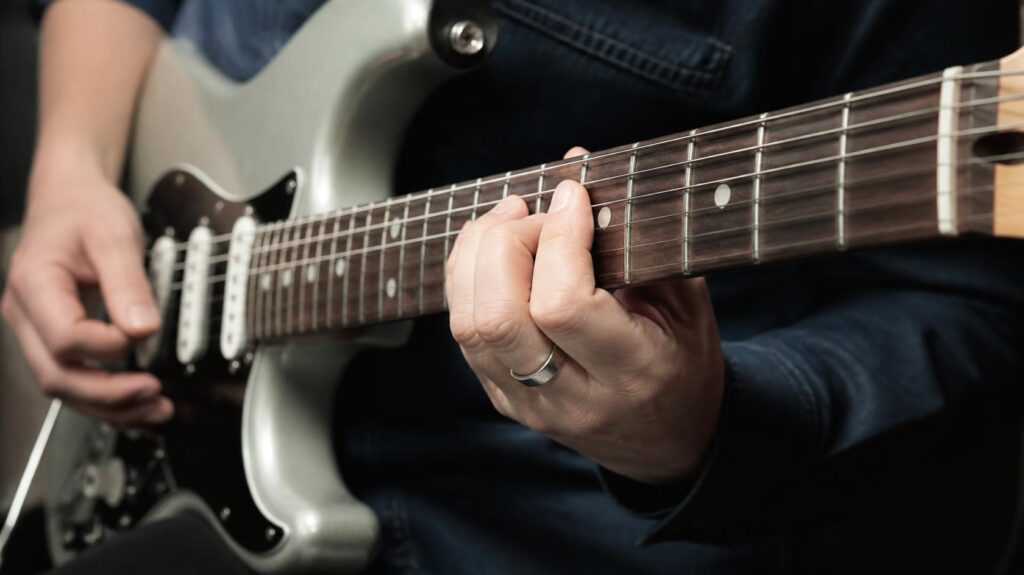
In a large worship arrangement, basic chord shapes can sound powerful when they are played with the right rhythm, dynamics, and timing. You don’t always need complicated voicings or impressive chord changes to make your guitar sound musical.
Try to avoid playing every chord with the same intensity. A verse might need soft, controlled strumming, while the chorus can open up with stronger rhythmic movement. Even a familiar progression can feel completely different when your dynamics change.
Additionally, be careful with low-frequency chord shapes when a bass player is present. Open and full-sounding chords can sometimes compete with the bass, especially when several instruments are occupying the lower register.
A cleaner approach often makes the entire worship team sound bigger.

Use Space as Part of Your Playing
One of the most underrated worship guitar techniques is knowing when not to play.
Silence creates contrast. When your guitar stops for a moment, the next chord or musical phrase can feel much more meaningful. Constant strumming, on the other hand, can make an arrangement feel flat because there is little room for dynamics.
Try playing a short phrase and then leaving a little space. Allow the vocals to breathe. Let the drums create the groove. Give the congregation room to focus on the lyrics.
This is especially important during prayerful or reflective sections. A few carefully placed notes can sometimes create more atmosphere than continuous playing.

Worship Guitar Tips | Choose the Right Guitar Tone
Your tone should support the song rather than compete with it.
In a large worship team, an overly bright, distorted, or heavily processed guitar can quickly become distracting. A clean or lightly driven tone may work better when the arrangement already contains many layers.
For electric guitar, effects such as delay and reverb can create width and atmosphere. However, moderation is important. Too much reverb can make your playing sound distant and unclear, while excessive delay can interfere with the rhythm.
Before adding another effect, ask yourself whether the sound actually needs it. Sometimes adjusting your volume, pickup selection, playing dynamics, or EQ can make a bigger difference.
The best tone is not necessarily the most impressive tone. It is the tone that fits the song.

Avoid Fighting with the Keyboard
This is particularly important in modern worship music.
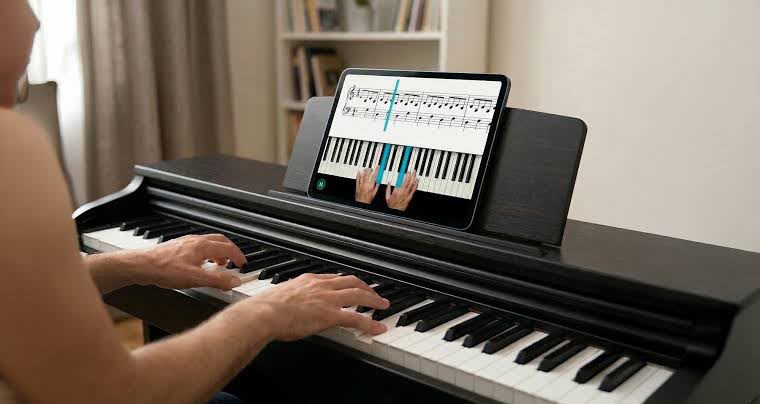
Keyboards and pianos can occupy a large amount of sonic space. If your guitar plays the same chords in the same register with a similar rhythm, the two instruments may compete instead of complementing each other.
One simple solution is to change your register or rhythm. If the piano is playing full chords, try higher guitar voicings. Alternatively, use partial chords, melodic fragments, or atmospheric notes.
You can also choose moments where the guitar disappears completely. When the keyboard becomes the main texture, stepping back allows it to shine.
Then, when the arrangement opens up, your guitar can return with greater impact.

Worship Guitar Tips | Follow the Song Dynamics
Worship music often moves through different emotional stages. A song may begin quietly, gradually build during the pre-chorus, become powerful in the chorus, and then return to a softer section.
Your guitar should follow that journey.
During an intro, you might use a simple melodic line or gentle picking pattern. As the verse begins, keep your playing controlled. When the chorus arrives, increase the energy without immediately playing at maximum volume.
Likewise, a bridge may require a gradual build rather than an instant explosion of sound. Pay attention to the worship leader and the musical director so you can respond to changes together.

Learn to Play with a Click and Backing Tracks
If your worship team uses a click track, loops, pads, or backing tracks, staying in time becomes even more important.
Practice with a metronome regularly so that your internal sense of timing becomes stronger. Then, when you play with a click, you won’t feel like you are constantly chasing the beat.
It also helps to practice songs using the same arrangement that your team will use during worship. Learn where the intro ends, when the drums enter, where the guitar drops out, and how the transitions happen.
The more familiar you are with the arrangement, the less you have to think about what comes next during the service.

Coordinate with the Other Guitarists
When two or more guitarists are playing, communication becomes essential.
If both guitarists use identical chord shapes, rhythms, and tones, the guitars can easily blend into an undefined wall of sound. Instead, give each guitarist a different role.
One guitarist might provide rhythmic strumming while another plays higher voicings or atmospheric lines. An acoustic guitar can provide consistent rhythmic movement, while an electric guitar adds texture and melodic elements.
Before the service, discuss the arrangement if possible. Decide who handles particular parts and identify sections where one guitarist should simplify or stop playing.
A few minutes of communication can prevent a lot of musical confusion on stage.

Worship Guitar Tips | Practice Transitions, Not Just Chords
Many guitarists spend hours practicing chord changes but don’t spend enough time practicing transitions between sections.
In worship, transitions are extremely important.
Practice moving from the intro into the verse, verse into chorus, chorus into bridge, and bridge back into the final chorus. Pay attention to what your guitar should do during those moments.
Sometimes the most effective transition is a gradual build. At other times, stopping completely for a beat or two can create a powerful moment before the next section begins.
When you practice the entire arrangement rather than isolated sections, you become much more prepared for live worship.

Watch the Worship Leader and Musical Director
Your eyes are another important musical tool.
Don’t spend the entire service looking down at your guitar. Watch the worship leader for cues, especially during spontaneous moments, repeated choruses, extended bridges, or unexpected changes.
The musical director may also signal when to build, drop out, repeat a section, or end the song.
Even when you know the song perfectly, live worship can change from the original arrangement. Staying visually connected with the team helps you respond instead of simply following what you practiced.
Worship Guitar Tips | Don’t Overplay During Worship
It can be tempting to demonstrate everything you have learned, especially when you are comfortable with the guitar.
However, worship is not a guitar performance.
Fast runs, complicated chord substitutions, excessive fills, and constant improvisation may technically sound impressive, but they can distract from the message of the song.
Instead, choose your moments carefully. If there is a musical space for a guitar fill, play something meaningful. If the vocalist is singing an important lyric, consider leaving space.
Your musical maturity becomes visible when you know when to play, how much to play, and when to step back.

Worship Guitar Tips | Practice Playing Less
This may sound unusual, but deliberately practice simplified versions of your worship songs.
Take a song you normally play with lots of strumming and try playing only on selected beats. Then experiment with partial chords or gentle picking. You may discover that the song still works—and sometimes sounds even better.
Practice playing along with recordings while intentionally leaving sections empty. Listen to what happens when your guitar disappears.
Over time, you’ll develop a stronger sense of musical restraint, which is one of the most valuable skills in a large worship team.

Prepare Your Gear Before the Service
Good preparation allows you to focus on worship instead of technical problems.
Check your strings, cables, tuner, pedals, batteries, power supply, and instrument levels before the service. If you use a pedalboard, make sure your presets or settings are ready for the songs you will play.
It’s also helpful to know the signal chain and understand what to do if something stops working.
A well-prepared guitarist doesn’t need to spend the service worrying about whether the next pedal will turn on.

Learn the Songs Beyond the Chords
Knowing the chord progression is only the beginning.
Learn the structure, lyrics, dynamics, instrumental sections, stops, builds, and transitions. Understanding the message of the song can also influence how you play it.
When you know why a particular section becomes quiet or why the chorus suddenly becomes powerful, your playing can respond to the meaning rather than simply following the chord chart.
This creates a more natural connection between your musicianship and worship.

Build Your Ear Alongside Your Technique
Technical ability is valuable, but your ears are just as important.
Spend time listening to worship recordings and identifying what different guitarists are doing. Try to recognize rhythm patterns, chord voicings, effects, melodic phrases, and moments of silence.
Then experiment with those ideas on your own instrument.
Eventually, you’ll become less dependent on chord sheets because you will begin to hear where the music is going. That ability is especially useful when arrangements change or when the worship leader introduces an unexpected repeat.

Worship Guitar Tips | The Goal Is to Serve the Song
Playing guitar in a large worship team is ultimately about serving the song, the team, and the worship environment. Whether you’re developing your skills through The Mystic Keys or exploring Guitar Lessons Online, the focus should always be on becoming a thoughtful and well-rounded musician.
You don’t have to be the loudest instrument, nor do you need to play the most complicated parts. Instead, focus on being dependable, musical, sensitive, and responsive to what is happening around you.
Listen carefully, keep your playing intentional, and respect the space occupied by other instruments. Allow your guitar to support the worship rather than dominate it.
Most importantly, remember that great worship guitar playing is not measured by how many notes you play. It is measured by how well those notes serve the moment.
When every musician understands this, a large worship team can sound incredibly powerful—not because everyone is playing more, but because everyone is playing together.
For more information and exciting resources about learning music, visit our website at The Mystic Keys. For more music content and exciting offers follow us on
Facebook, Instagram, YouTube, LinkedIn, Twitter, Pinterest, and Threads.