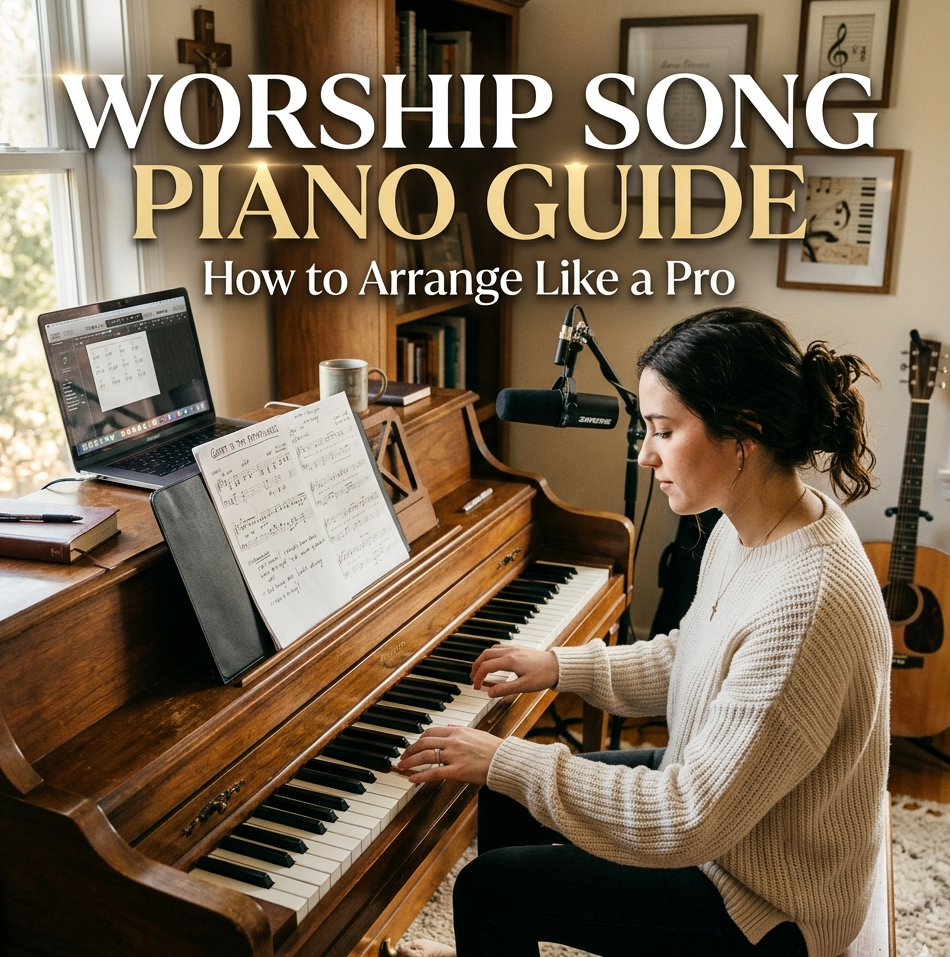
Worship Song Piano Guide | How to Arrange Like a Pro
Worship song carry a unique power. They are not just built on melody and harmony; they create an atmosphere that encourages connection, reflection, and participation. When you sit at the piano in a worship setting, your role extends far beyond simply playing the “right notes.” Your playing becomes a guide, shaping the emotional dynamics of the song, supporting the voices around you, and helping the congregation connect more deeply with the moment.
Arranging worship songs on piano like a professional doesn’t require flashy technique or complex theory. Instead, it calls for intentional choices, musical sensitivity, and a clear understanding of how each element serves the bigger picture. Let’s walk through how you can elevate your arrangements with confidence and purpose.
Understanding the Heart of Worship Music
Before diving into chords or patterns, it’s essential to grasp what makes worship music distinct. Unlike performance-driven genres, worship prioritizes participation over perfection. The goal is not to impress but to support.
Because of that, simplicity often carries more impact than complexity. A well-placed chord, a gentle swell, or a thoughtful pause can speak louder than an intricate run. Your arrangement should feel like it’s breathing with the room—responsive, flexible, and alive.
As you approach any song, ask yourself what the message is and how your playing can reinforce it. This mindset shifts your focus from “how do I play this?” to “how can I serve this moment?”

Building a Strong Harmonic Foundation
Everything starts with chords. Still, playing basic triads exactly as written can sometimes feel flat or predictable. The key is not to abandon simplicity, but to enrich it.
One effective approach is to explore chord inversions. Instead of jumping across the keyboard, inversions allow smoother transitions and create a more connected sound. This subtle change alone can transform a basic progression into something far more expressive.
Adding color tones—like suspended chords, add9s, or gentle extensions—can also deepen the emotional quality without overwhelming the arrangement. However, restraint matters. Overloading chords with too many notes can clutter the sound, especially in a live worship setting.
Focus on clarity first, then add richness where it truly enhances the moment.

Creating Movement Within a Worship Song Arrangement
A common challenge for pianists is finding the balance between too little and too much. Playing block chords throughout an entire song can feel static, yet constant movement can become distracting.
Instead, think in layers. Your left hand can provide a steady foundation, often with simple root notes or octaves. Meanwhile, the right hand can introduce motion through broken chords, gentle arpeggios, or repeating patterns.
What makes this approach effective is its consistency. When a pattern is established, it creates a sense of flow that listeners can settle into. At the same time, small variations keep it from becoming monotonous.
Rather than filling every space, allow moments of stillness. Silence, when used intentionally, adds weight and meaning to what follows.

Using Dynamics to Shape a Worship Song
If there’s one element that separates an average arrangement from a professional one, it’s dynamics. Volume and intensity should never remain constant throughout a worship song.
Verses often benefit from a softer, more intimate touch. This creates space for lyrics to shine and invites reflection. As the song progresses into the chorus, a gradual build can lift the energy and encourage participation.
Transitions play a crucial role here. Instead of abrupt changes, aim for smooth crescendos or decrescendos that feel natural. Even a slight increase in touch or layering can make a section feel bigger without becoming overwhelming.
Think of dynamics as storytelling. Each section should feel like it’s leading somewhere, not just repeating what came before.

Supporting the Vocal, Not Competing With It
In worship settings, the voice carries the message. Your piano arrangement should support that message, not compete with it.
This means leaving space where needed. If the melody is active, your playing can simplify. If the vocal line rests, you can gently fill the gap. The relationship between piano and voice should feel like a conversation rather than a competition.
Pay attention to the range as well. Avoid crowding the same register as the singer, especially in the midrange where most vocals sit. Spreading your voicing across the keyboard creates clarity and prevents muddiness.
When done right, listeners may not even notice the piano consciously—but they will feel its presence.

Transitioning Smoothly Through a Worship Song
Professional arrangements rarely feel segmented. Instead, they flow seamlessly from one part to another.
One way to achieve this is by using passing chords or short fills that lead into the next section. These don’t have to be elaborate; even a simple melodic line can act as a bridge.
Another technique involves sustaining certain notes or chords through transitions. This creates continuity and avoids abrupt breaks in the musical texture.
The goal is to make each shift feel intentional. When transitions are smooth, the entire song feels more cohesive and engaging.

Developing Your Personal Approach to Worship Song Arrangements
While it’s helpful to learn from recordings and other musicians, true growth comes from developing your own voice.
Experiment with different patterns, voicings, and dynamics. Notice what resonates with you and what fits naturally under your fingers. Over time, these preferences will shape your unique style.
At the same time, stay adaptable. Different songs, settings, and teams may call for different approaches. A skilled worship pianist knows when to step forward and when to pull back.
Consistency in practice combined with openness in performance leads to lasting improvement.

Practicing Worship Song Arrangements Effectively
Improvement doesn’t come from repetition alone—it comes from intentional practice. Instead of playing songs from start to finish every time, isolate specific elements.
Work on smooth chord transitions. Focus on dynamic control. Experiment with left-hand patterns while keeping the right hand simple. Each small improvement adds up.
Recording yourself can also be incredibly valuable. Listening back reveals details that might go unnoticed in the moment, helping you refine your approach.
Progress may feel gradual, but with consistent effort, your arrangements will become more natural and expressive.
Final Thoughts
Arranging worship songs on piano like a pro is not about adding unnecessary complexity; it is about bringing clarity, intention, and sensitivity into every note you play. When your focus remains on serving the song and the moment, your playing becomes more impactful and meaningful.
Each chord, every pause, and all your dynamic choices shape the worship experience in powerful ways. Over time, these small but intentional decisions build a style that feels polished, authentic, and deeply connected to the heart of worship.
For those looking to strengthen their skills and grow with structured guidance, The Mystic Keys offers specialized worship piano and singing lessons online, designed to help musicians develop confidence in arranging, leading, and performing worship music effectively.
Keep exploring, keep refining, and stay connected to the purpose behind the music. That connection is what transforms simple playing into meaningful worship and turns a musician into a true worship leader.
For more information and exciting resources about learning music, visit our website at The Mystic Keys. For more music content and exciting offers follow us on
Facebook, Instagram, YouTube, LinkedIn, Twitter, Pinterest, and Threads.