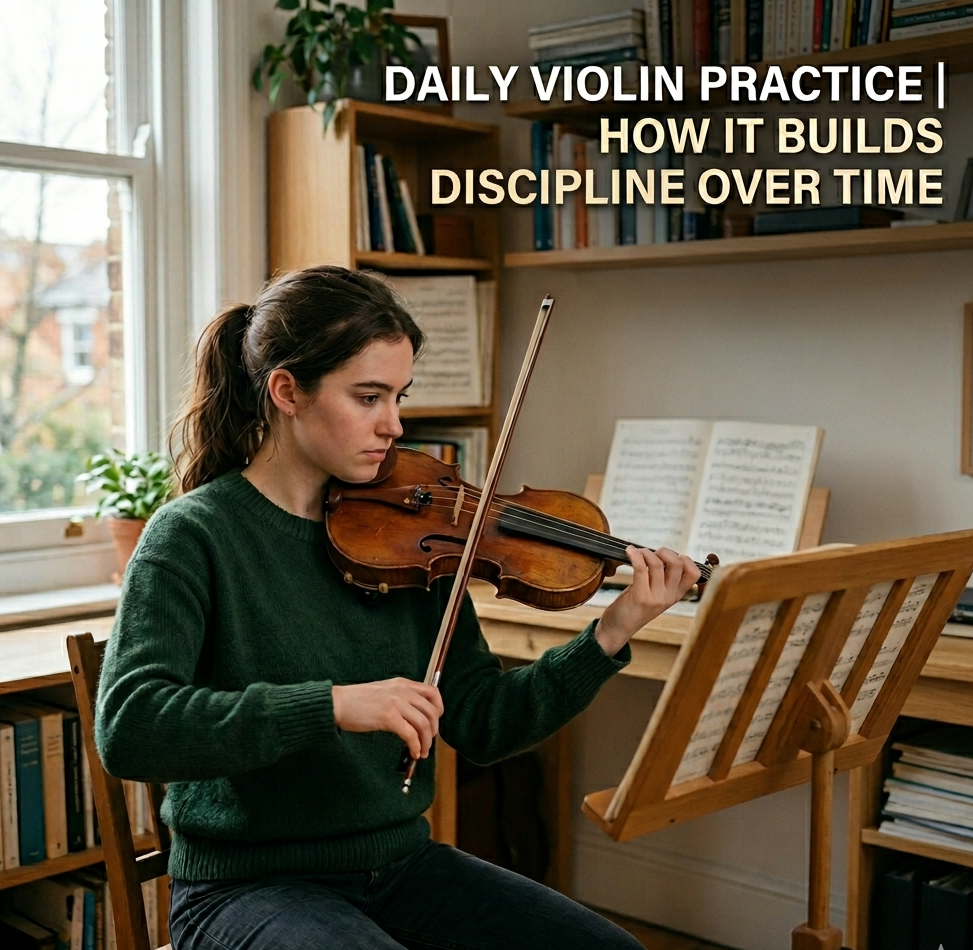
Daily Violin Practice | How It Builds Discipline Over Time
There is something deceptively simple about daily violin practice. Picking up the violin each day does not require grand declarations or an audience, yet this small, repeated act begins to shape a person in ways that reach far beyond music. At first, daily violin practice may feel like an obligation—something to check off a list or fit into a busy routine. Over time, however, the ritual itself begins to carry meaning. What once felt like effort slowly turns into commitment, and consistency starts to replace motivation. It is in that gradual shift that discipline quietly takes root and begins to grow.
In the early stages, enthusiasm often carries the learner forward. New sounds, unfamiliar techniques, and the excitement of progress create momentum. Still, enthusiasm is rarely steady. Some days feel inspired, while others feel heavy. Daily practice teaches an important lesson here: progress does not depend on how you feel in the moment. Instead, it grows from the decision to show up anyway.
Daily Violin Practice Turns Effort into Habit
What begins as effort gradually transforms into habit. At first, sitting down with the violin may require conscious planning. You might negotiate with yourself, delay the session, or feel tempted to skip altogether. Yet, when practice becomes a daily occurrence, resistance begins to fade. The act of playing integrates into your routine, much like brushing your teeth or having a meal.
This transition is subtle but powerful. Discipline is often misunderstood as strict control or force. In reality, it is closer to alignment—where actions and intentions begin to move together naturally. Daily violin practice creates that alignment. The more consistently you engage, the less you rely on willpower, and the more you depend on structure.
Learning Patience Through Slow Progress
The violin is not an instrument that rewards haste. Progress can feel slow, especially in the beginning, when even producing a clear tone requires effort. Because of this, daily practice becomes a lesson in patience. Improvement does not arrive overnight, and shortcuts rarely work. Instead, growth reveals itself in small, almost unnoticeable increments.
At times, this can be frustrating. Repeating the same passage, adjusting finger placement, or correcting bowing techniques may seem tedious. However, this repetition is where discipline deepens. You begin to accept that mastery is built through persistence rather than quick wins. Over time, patience becomes less of a struggle and more of a mindset.
Daily Violin Practice Strengthens Focus
Modern life constantly pulls attention in multiple directions. Notifications, responsibilities, and endless streams of information make it difficult to concentrate deeply. Daily violin practice offers a counterbalance. When you play, your focus narrows. You listen closely, adjust carefully, and remain present with each note.
This sustained attention is not easy at first. The mind wanders, distractions creep in, and focus breaks. Yet, through regular practice, concentration strengthens. You learn to return your attention to the music again and again. That ability—to refocus without frustration—is a core element of discipline that carries into other areas of life.
Embracing Imperfection and Growth
Mistakes are unavoidable when learning the violin. Notes may sound off, rhythm may falter, and technique may feel awkward. Initially, these imperfections can feel discouraging. Still, daily practice changes how you perceive them. Errors become part of the process rather than signs of failure.
As this perspective shifts, resilience begins to grow. Instead of avoiding difficulty, you start engaging with it. Each mistake offers information, guiding you toward improvement. Discipline, in this sense, is not about perfection. It is about persistence—continuing despite flaws and learning through them.
Daily Violin Practice Creates Structure and Routine
Discipline thrives on structure, and daily practice naturally creates one. Setting aside a specific time for the violin establishes a rhythm in your day. That rhythm provides stability, especially when other aspects of life feel unpredictable.
Routine does not have to be rigid. Some days may allow for longer sessions, while others may only permit a few focused minutes. What matters is the continuity. Even brief practice sessions reinforce the habit, keeping the connection alive. Over time, this consistency becomes more valuable than occasional bursts of intense effort.
Carrying Discipline Beyond the Instrument
The discipline developed through daily violin practice does not remain confined to music. It begins to influence how you approach other challenges. Tasks that once felt overwhelming may become more manageable. Goals that seemed distant may feel achievable through steady effort.
This transfer happens because the underlying skill is the same: the ability to commit, persist, and improve gradually. Whether applied to studies, work, or personal growth, the habits formed through practice continue to support progress.
When Motivation Fades, Discipline Remains
There will be days when motivation disappears completely. On such days, the idea of practicing may feel unappealing or even exhausting. This is where discipline reveals its true value. Instead of relying on fleeting feelings, you rely on commitment.
Interestingly, those are often the most important days to practice. Not because you will achieve extraordinary results, but because you reinforce the habit itself. Each time you show up despite resistance, discipline becomes stronger and more reliable.
Daily Violin Practice Creates Long-Term Growth
Daily violin practice is not just about learning an instrument. It becomes a long-term relationship with growth. The journey is ongoing, with new challenges and discoveries at every stage. There is no final point where discipline is complete. Instead, it continues to evolve alongside your skills.
As time passes, the benefits extend beyond technique. You develop patience, focus, resilience, and a deeper understanding of effort. These qualities shape not only your musicianship but also your approach to life.
Daily Violin Practice Builds Discipline for Life
In the end, the true power of daily violin practice lies in its consistency. It does not require dramatic breakthroughs or instant perfection; instead, it builds discipline gradually, one session at a time. Through repetition, patience, and persistence, the habit of showing up every day transforms effort into routine and intention into action. With time, the process becomes less about forcing yourself to practice and more about embracing the journey of steady growth.
What makes this journey even more meaningful is having the right guidance along the way. Platforms likeThe Mystic Keys make violin lessons online more accessible and structured, helping learners stay consistent while improving their skills. In many ways, what starts as a simple daily practice with the violin becomes much more than musical training—it becomes a foundation for discipline, focus, and personal growth that lasts a lifetime.
For more information and exciting resources about learning music, visit our website at The Mystic Keys. For more music content and exciting offers follow us on
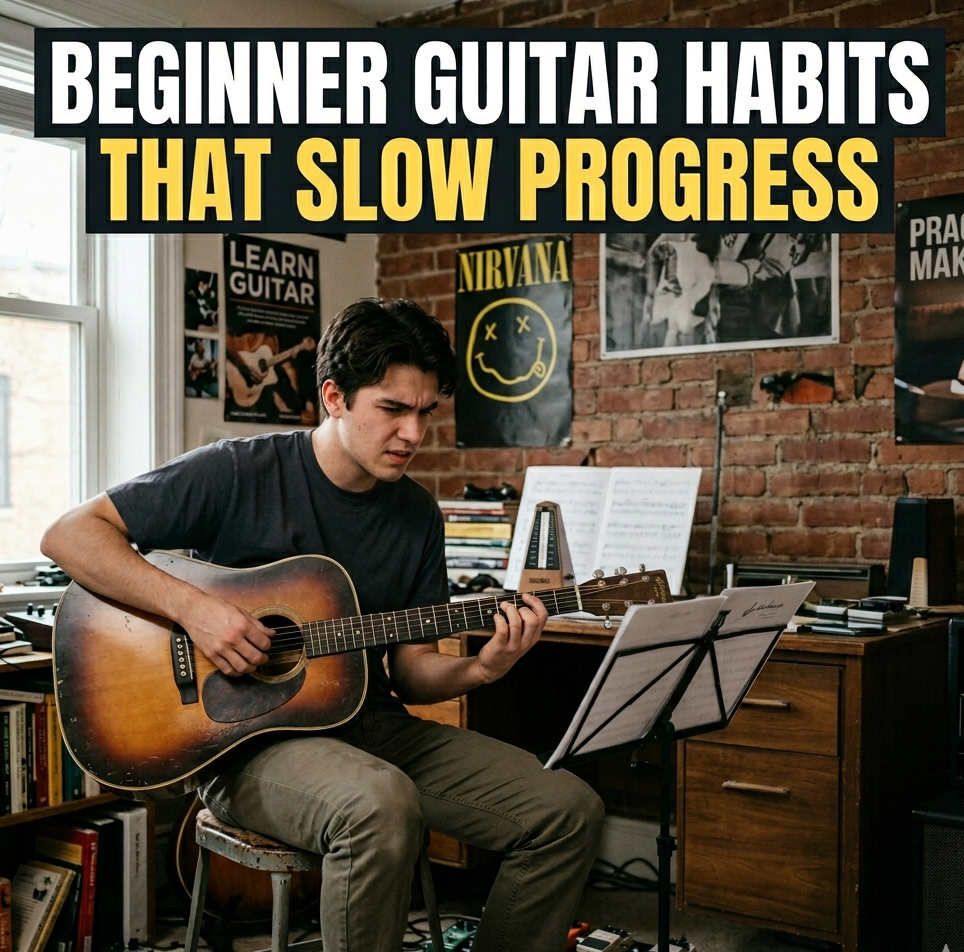
Learning guitar is exciting at the start—the first chord, the first song, the feeling that something magical is happening under your fingers. But as the journey continues, many players begin to notice their progress slowing down. What once felt exciting can turn frustrating when improvement seems harder to achieve, and motivation starts to fade. In many cases, the problem isn’t a lack of talent or practice time—it’s the Beginner Guitar Habits that quietly shape the learning process. These habits often seem harmless in the beginning, but over time they can create roadblocks that make growth slower and more difficult than it needs to be.
Small, unnoticed patterns in how you practice and think about the instrument can quietly hold you back. Once you recognize them, though, progress can pick up surprisingly fast. Let’s walk through some common beginner habits that slow guitar growth, and more importantly, how to shift them.
Practicing Without Clear Direction
At first, simply picking up the guitar feels productive. You strum a few chords, try a riff, maybe revisit a song you like. It feels like practice—but without a clear goal, improvement tends to scatter in all directions.
When practice lacks structure, your brain doesn’t know what to focus on. One day it’s chords, the next it’s random scales, and then maybe a song you almost remember. Because of that inconsistency, nothing gets refined deeply enough to stick.
A more effective approach is to give each session a purpose. That doesn’t mean turning practice into something rigid or boring—it just means knowing what you’re trying to improve today. Even a simple intention like “clean chord transitions” or “steady rhythm” can transform a casual session into meaningful progress.
Over time, direction builds momentum. Without it, you stay busy but don’t move forward.
Beginner Guitar Habits | Rushing Past Mistakes
Many beginners fall into the trap of playing through mistakes as if they don’t matter. A chord buzzes, timing slips, or a note is missed—but instead of stopping, they keep going.
While this might feel like maintaining flow, it actually trains the brain to accept errors as normal. Repetition is powerful, and unfortunately, it doesn’t distinguish between correct and incorrect playing.
Slowing down can feel uncomfortable at first. It exposes flaws you’d rather ignore. Still, that discomfort is exactly where improvement lives. When you pause, isolate the issue, and fix it—even if it takes multiple attempts—you’re building accuracy and control.
Progress accelerates not when you play more, but when you play better.
Beginner Guitar Habits | Avoiding the Metronome
Timing is one of the most overlooked aspects of beginner guitar playing. Without a steady rhythm, even the right notes can sound off. Many learners avoid using a metronome because it feels restrictive or frustrating.
At first, playing along with a click can seem like it highlights everything going wrong. That’s precisely why it’s so valuable. It reveals inconsistencies that would otherwise go unnoticed.
Gradually, working with a metronome builds internal timing. Your playing becomes tighter, more confident, and far more musical. Instead of guessing the rhythm, you start owning it.
Once that sense of timing develops, everything else—chords, riffs, even improvisation—improves naturally.
Sticking Only to Comfortable Material
It’s tempting to keep playing what you already know. Familiar chords and songs feel good, and there’s a sense of accomplishment in playing them smoothly. However, staying in that comfort zone limits growth.
Improvement requires challenge. When you avoid difficult transitions, unfamiliar rhythms, or new techniques, your skill set remains narrow.
That doesn’t mean you should constantly struggle through things far beyond your level. The key lies in balance—mixing comfortable material with small, manageable challenges.
Each new difficulty you face and overcome expands your abilities. Over time, what once felt impossible becomes second nature.
Beginner Guitar Habits | Practicing Too Fast, Too Soon
Speed can be exciting. Playing a song at full tempo feels like a milestone, so beginners often push themselves to reach that speed quickly. Unfortunately, this usually leads to sloppy playing.
When speed comes before accuracy, mistakes multiply. Fingers tense up, timing slips, and clarity disappears. Worse still, those mistakes become ingrained through repetition.
Slowing things down might feel like stepping backward, but it’s actually the fastest path forward. At a slower tempo, you can focus on precision, clean transitions, and controlled movement.
As accuracy improves, speed follows naturally. What once felt rushed becomes effortless.
Over time, poor technique creates limitations. It can lead to unnecessary tension, slower movement, and even discomfort or injury.
Good technique, on the other hand, makes playing easier. Fingers move efficiently, chords sound cleaner, and endurance improves. It might take a bit more attention early on, but the long-term benefits are undeniable.
Think of technique as the foundation. Without it, everything built on top becomes unstable.
Beginner Guitar Habits | Expecting Quick Results
In the age of instant gratification, it’s easy to expect rapid progress. When improvement doesn’t happen as quickly as hoped, frustration sets in.
Learning guitar is a gradual process. Some days will feel productive, while others might feel like nothing is improving at all. That inconsistency is completely normal.
Patience plays a huge role here. Progress often happens in small, almost invisible steps that only become noticeable over time.
Instead of chasing immediate results, focusing on consistency makes a difference. Regular, mindful practice—even in short sessions—builds skills that last.
Comparing Yourself to Others
With endless performances and tutorials online, comparison is almost unavoidable. Seeing others play effortlessly can make your own progress feel slow.
However, every guitarist’s journey is different. Some have years of prior musical experience, while others may simply be at a different stage.
Constant comparison shifts your focus away from your own growth. It turns learning into a race, rather than a personal process.
A more helpful perspective is to measure progress against your past self. If you’re playing cleaner, smoother, or more confidently than before, you’re moving in the right direction.
Final Thoughts
Improvement on the guitar rarely depends on how much time you spend practicing alone. More often, real growth comes from how effectively you use that time and the habits you build along the way. The good news is that habits can be changed, refined, and improved with awareness and consistency.
With the right guidance, even small adjustments in your practice routine can make a huge difference in how quickly and confidently you progress. That’s where structured learning and expert support become valuable. Platforms like The Mystic Keys, offering Guitar Lessons Online, can help beginners build strong foundations, avoid common mistakes, and develop better practice habits from the very beginning.
Progress on the guitar may not always feel fast, but with the right approach, it becomes steady and meaningful. And over time, that steady progress leads to something far more rewarding than quick results—true confidence, skill, and real musical mastery.
For more information and exciting resources about learning music, visit our website at The Mystic Keys. For more music content and exciting offers follow us on
Worship Song Piano Guide | How to Arrange Like a Pro
Worship song carry a unique power. They are not just built on melody and harmony; they create an atmosphere that encourages connection, reflection, and participation. When you sit at the piano in a worship setting, your role extends far beyond simply playing the “right notes.” Your playing becomes a guide, shaping the emotional dynamics of the song, supporting the voices around you, and helping the congregation connect more deeply with the moment.
Arranging worship songs on piano like a professional doesn’t require flashy technique or complex theory. Instead, it calls for intentional choices, musical sensitivity, and a clear understanding of how each element serves the bigger picture. Let’s walk through how you can elevate your arrangements with confidence and purpose.
Understanding the Heart of Worship Music
Before diving into chords or patterns, it’s essential to grasp what makes worship music distinct. Unlike performance-driven genres, worship prioritizes participation over perfection. The goal is not to impress but to support.
Because of that, simplicity often carries more impact than complexity. A well-placed chord, a gentle swell, or a thoughtful pause can speak louder than an intricate run. Your arrangement should feel like it’s breathing with the room—responsive, flexible, and alive.
As you approach any song, ask yourself what the message is and how your playing can reinforce it. This mindset shifts your focus from “how do I play this?” to “how can I serve this moment?”
Building a Strong Harmonic Foundation
Everything starts with chords. Still, playing basic triads exactly as written can sometimes feel flat or predictable. The key is not to abandon simplicity, but to enrich it.
One effective approach is to explore chord inversions. Instead of jumping across the keyboard, inversions allow smoother transitions and create a more connected sound. This subtle change alone can transform a basic progression into something far more expressive.
Adding color tones—like suspended chords, add9s, or gentle extensions—can also deepen the emotional quality without overwhelming the arrangement. However, restraint matters. Overloading chords with too many notes can clutter the sound, especially in a live worship setting.
Focus on clarity first, then add richness where it truly enhances the moment.
Creating Movement Within a Worship Song Arrangement
A common challenge for pianists is finding the balance between too little and too much. Playing block chords throughout an entire song can feel static, yet constant movement can become distracting.
Instead, think in layers. Your left hand can provide a steady foundation, often with simple root notes or octaves. Meanwhile, the right hand can introduce motion through broken chords, gentle arpeggios, or repeating patterns.
What makes this approach effective is its consistency. When a pattern is established, it creates a sense of flow that listeners can settle into. At the same time, small variations keep it from becoming monotonous.
Rather than filling every space, allow moments of stillness. Silence, when used intentionally, adds weight and meaning to what follows.
Using Dynamics to Shape a Worship Song
If there’s one element that separates an average arrangement from a professional one, it’s dynamics. Volume and intensity should never remain constant throughout a worship song.
Verses often benefit from a softer, more intimate touch. This creates space for lyrics to shine and invites reflection. As the song progresses into the chorus, a gradual build can lift the energy and encourage participation.
Transitions play a crucial role here. Instead of abrupt changes, aim for smooth crescendos or decrescendos that feel natural. Even a slight increase in touch or layering can make a section feel bigger without becoming overwhelming.
Think of dynamics as storytelling. Each section should feel like it’s leading somewhere, not just repeating what came before.
Supporting the Vocal, Not Competing With It
In worship settings, the voice carries the message. Your piano arrangement should support that message, not compete with it.
This means leaving space where needed. If the melody is active, your playing can simplify. If the vocal line rests, you can gently fill the gap. The relationship between piano and voice should feel like a conversation rather than a competition.
Pay attention to the range as well. Avoid crowding the same register as the singer, especially in the midrange where most vocals sit. Spreading your voicing across the keyboard creates clarity and prevents muddiness.
When done right, listeners may not even notice the piano consciously—but they will feel its presence.
Transitioning Smoothly Through a Worship Song
Professional arrangements rarely feel segmented. Instead, they flow seamlessly from one part to another.
One way to achieve this is by using passing chords or short fills that lead into the next section. These don’t have to be elaborate; even a simple melodic line can act as a bridge.
Another technique involves sustaining certain notes or chords through transitions. This creates continuity and avoids abrupt breaks in the musical texture.
The goal is to make each shift feel intentional. When transitions are smooth, the entire song feels more cohesive and engaging.
Developing Your Personal Approach to Worship Song Arrangements
While it’s helpful to learn from recordings and other musicians, true growth comes from developing your own voice.
Experiment with different patterns, voicings, and dynamics. Notice what resonates with you and what fits naturally under your fingers. Over time, these preferences will shape your unique style.
At the same time, stay adaptable. Different songs, settings, and teams may call for different approaches. A skilled worship pianist knows when to step forward and when to pull back.
Consistency in practice combined with openness in performance leads to lasting improvement.
Practicing Worship Song Arrangements Effectively
Improvement doesn’t come from repetition alone—it comes from intentional practice. Instead of playing songs from start to finish every time, isolate specific elements.
Work on smooth chord transitions. Focus on dynamic control. Experiment with left-hand patterns while keeping the right hand simple. Each small improvement adds up.
Recording yourself can also be incredibly valuable. Listening back reveals details that might go unnoticed in the moment, helping you refine your approach.
Progress may feel gradual, but with consistent effort, your arrangements will become more natural and expressive.
Final Thoughts
Arranging worship songs on piano like a pro is not about adding unnecessary complexity; it is about bringing clarity, intention, and sensitivity into every note you play. When your focus remains on serving the song and the moment, your playing becomes more impactful and meaningful.
Each chord, every pause, and all your dynamic choices shape the worship experience in powerful ways. Over time, these small but intentional decisions build a style that feels polished, authentic, and deeply connected to the heart of worship.
For those looking to strengthen their skills and grow with structured guidance,The Mystic Keys offers specialized worship piano and singing lessons online, designed to help musicians develop confidence in arranging, leading, and performing worship music effectively.
Keep exploring, keep refining, and stay connected to the purpose behind the music. That connection is what transforms simple playing into meaningful worship and turns a musician into a true worship leader.
For more information and exciting resources about learning music, visit our website at The Mystic Keys. For more music content and exciting offers follow us on