Virtual Choir vs Live Choir: What Are the Key Differences?
Introduction
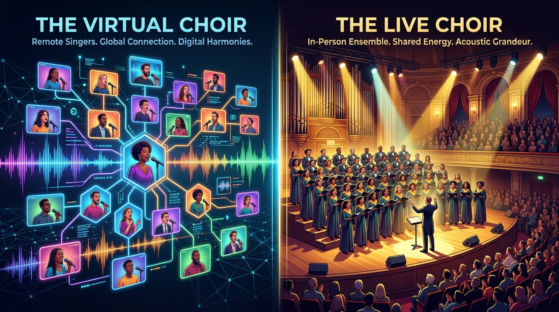
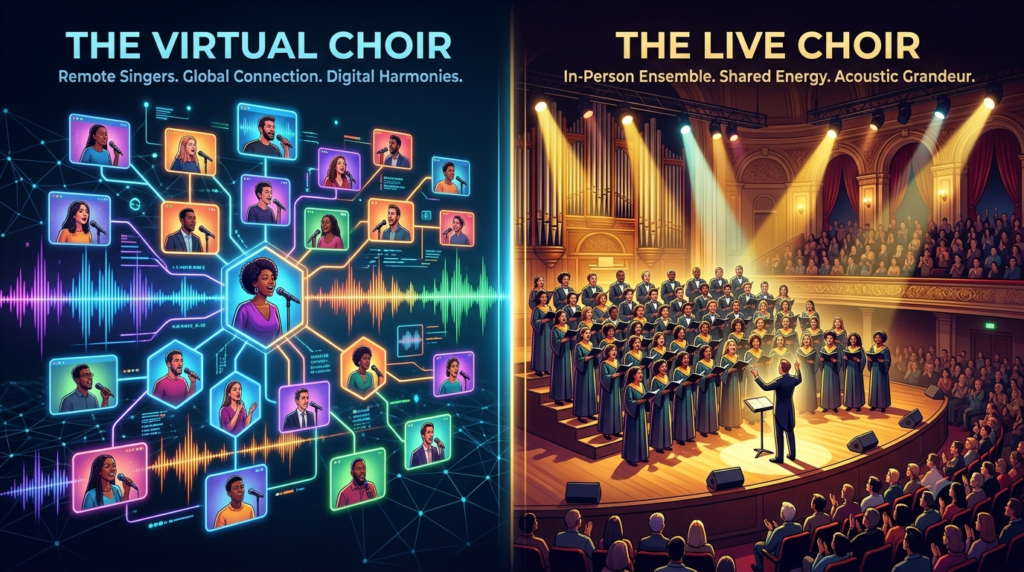
Understanding the difference between a virtual choir vs live choir can help singers, choir directors, music teachers, and worship teams choose the right format for their performances. Both approaches bring people together through music, but they differ in how singers rehearse, perform, collaborate, and connect with their audience.
A live choir performs together in the same physical space, allowing singers to hear one another and respond to a conductor in real time. A virtual choir brings singers together remotely, often through individual video or audio recordings that are combined into one performance. While live choirs emphasize in-person collaboration, virtual choirs offer flexibility and allow singers from different locations to participate.
In this guide, we will explore the key differences between virtual choir vs live choir performances, including sound quality, rehearsal methods, technology, costs, audience engagement, and the situations where each format works best.
What Is a Virtual Choir?
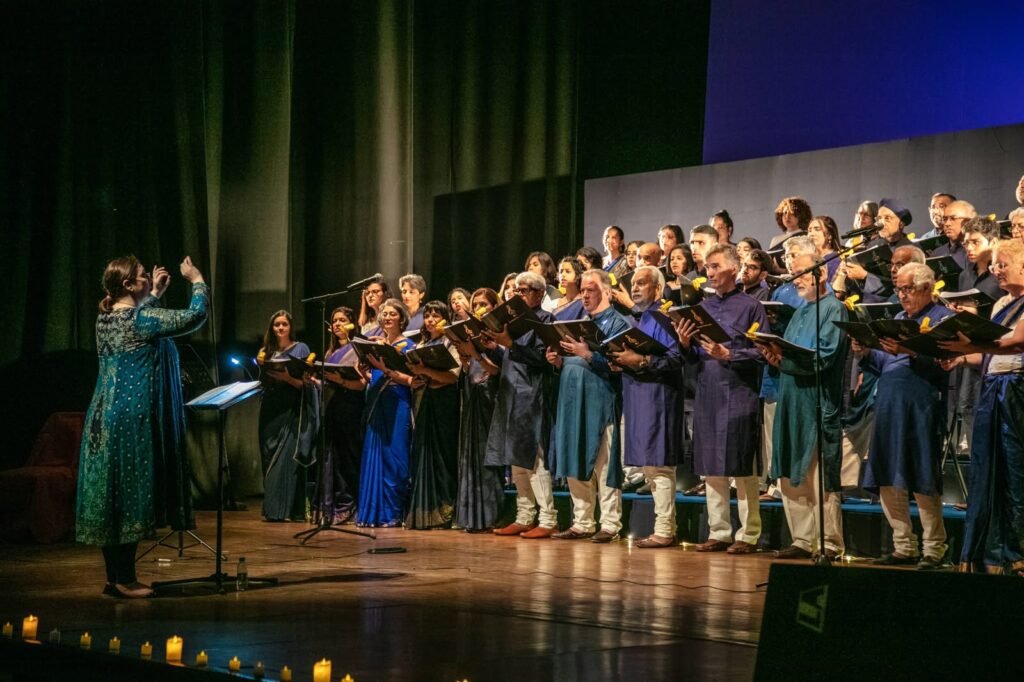
A virtual choir is a group of singers who perform a musical piece from different locations. Instead of gathering in one room, each singer typically records their part individually using a phone, microphone, or computer. The recordings are then synchronized, edited, and combined into a finished audio or video performance.
Virtual choirs became especially popular when in-person gatherings were difficult, but they continue to provide opportunities for remote collaboration and creative music-making.
How Does a Virtual Choir Work?
A virtual choir performance usually follows these steps:
Song selection: The choir director chooses a suitable song and arranges the vocal parts.
Practice materials: Singers receive sheet music, reference recordings, or practice tracks.
Individual rehearsals: Each singer learns their part independently, sometimes with online guidance.
Recording: Singers record their vocals while following a reference track and timing instructions.
Editing and synchronization: Audio and video recordings are aligned and mixed.
Final performance: The recordings are presented as a combined choir video or audio production.
This format allows singers to contribute without travelling to a shared rehearsal venue. However, successful virtual choir projects require clear instructions, careful preparation, and technical editing.
What Is a Live Choir?
A live choir consists of singers who perform together in the same physical location. They may rehearse in a school, church, concert hall, community centre, or music studio before performing for an audience.
Live choirs rely on real-time communication, shared musical direction, and the ability to listen and respond to other singers. The conductor can adjust tempo, dynamics, phrasing, and balance while the performance is happening.
How Does a Live Choir Work?
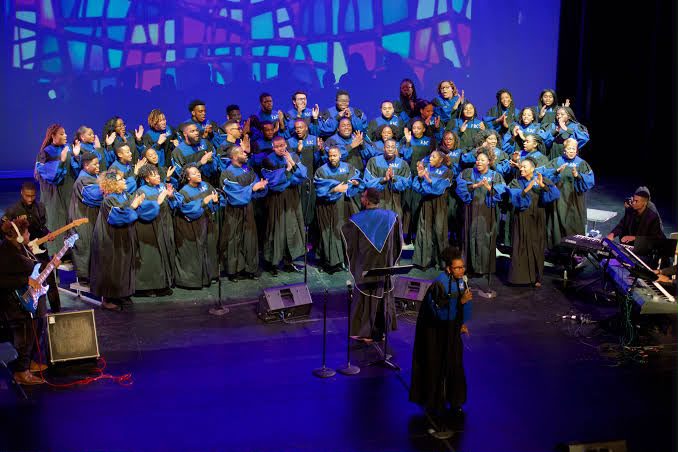
A typical live choir process includes:
Selecting songs and assigning vocal parts.
Conducting group rehearsals.
Practising harmonies, timing, and pronunciation.
Balancing the volume of different vocal sections.
Rehearsing entrances, endings, and transitions.
Performing together for an audience.
Because singers can hear one another directly, they can adjust their voices in response to the group. This makes live choir singing particularly valuable for developing ensemble awareness and musical communication.
Virtual Choir vs Live Choir: The Main Differences
The biggest difference between a virtual choir vs live choir is how singers collaborate. Virtual choirs rely on recordings and technology, while live choirs depend on real-time interaction.
| Feature | Virtual Choir | Live Choir |
|---|---|---|
| Performance location | Singers participate from different locations | Singers gather in one place |
| Rehearsals | Often individual or online | Usually in-person group rehearsals |
| Musical coordination | Managed through reference tracks and editing | Developed through listening and conducting |
| Timing | Recordings are synchronized during editing | Singers maintain timing together in real time |
| Technology | Recording equipment and editing software are often needed | Basic rehearsal spaces may be sufficient |
| Flexibility | Often easier for singers with different schedules | Requires coordinating attendance and location |
| Audience experience | Commonly viewed online or through recorded media | Often experienced in person |
| Travel | Usually minimal for singers | Travel may be required |
| Immediate feedback | Depends on online instruction and review | Available during rehearsals and performances |
| Social interaction | Mostly remote or online | Direct face-to-face interaction |
Neither format is automatically better. The right choice depends on the choir’s goals, the singers’ circumstances, the available resources, and the intended audience.
Virtual Choir vs Live Choir: Differences in Sound Quality
Sound quality is an important consideration when comparing virtual choir vs live choir performances. Both formats can produce excellent results, but they achieve them in different ways.
Sound Quality in a Virtual Choir
Virtual choir recordings can be edited carefully to create a polished final performance. A sound editor can adjust vocal levels, reduce some unwanted noise, synchronize recordings, and balance individual singers.
However, the final quality depends on several factors:
Microphone quality and recording conditions.
The singer’s distance from the microphone.
Background noise and room acoustics.
Accurate pitch and timing.
Consistent recording instructions.
The quality of the final audio mix.
A virtual choir may sound highly polished, but editing cannot completely replace accurate singing, expressive phrasing, or strong musical preparation.
Sound Quality in a Live Choir
Live choirs create a shared sound through the combination of individual voices in the same space. Singers can adjust their volume, vowel shapes, pitch, and phrasing by listening to one another.
The performance is also influenced by room acoustics, the choir’s balance, microphone placement, and sound reinforcement when needed.
Unlike a recorded performance, a live choir cannot usually correct mistakes after they occur. This makes preparation, concentration, and ensemble coordination especially important.
Virtual Choir vs Live Choir: Rehearsal and Practice Methods
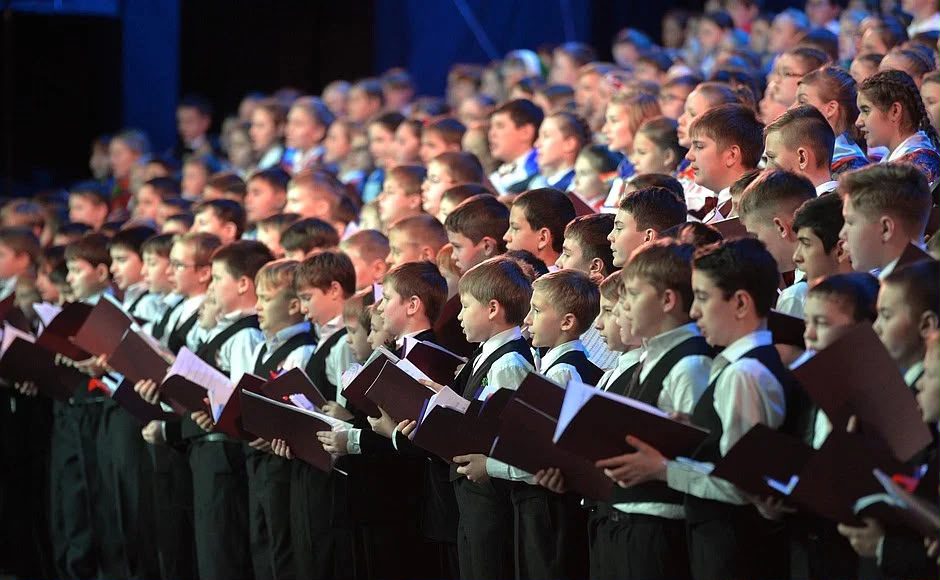
Rehearsal is another major difference between virtual choir vs live choir performances.
Virtual Choir Rehearsals
Virtual choir members may practise their vocal parts independently using recordings, sheet music, or digital resources. Online sessions can also help the director explain difficult sections and provide feedback.
This approach is useful for singers who live far apart or cannot attend regular rehearsals. However, singers must develop the discipline to practise independently and follow timing instructions accurately.
A virtual choir director can improve preparation by providing:
Separate practice tracks for each vocal part.
Clear instructions about tempo and entrances.
Reference videos demonstrating the song.
Recording guidelines.
Feedback on submitted recordings.
Live Choir Rehearsals
Live rehearsals allow singers to work on the music as a group. The conductor can identify problems immediately and help the choir improve its blend, balance, timing, and expression.
Singers also learn to follow visual cues, breathe together, listen across different vocal sections, and respond to changes in dynamics.
For beginners, these shared experiences can make it easier to understand how their individual parts fit into a larger musical arrangement.
Virtual Choir vs Live Choir: Teamwork and Connection
Choir singing is not only about singing the correct notes. It also involves trust, communication, listening, and working towards a common goal.
Teamwork in a Virtual Choir
Virtual choirs connect singers who may live in different cities or countries. Participants can contribute to the same musical project despite geographical distance.
This can create a sense of belonging and provide opportunities for people who might otherwise be unable to join a local choir. Singers also learn to take responsibility for their own preparation.
However, remote singers may have fewer opportunities for spontaneous interaction. Directors may need to organise online meetings and provide regular feedback to help participants feel connected.
Teamwork in a Live Choir
Live choirs encourage direct communication and shared musical awareness. Singers can see the conductor’s gestures, hear other vocal parts, and adjust their performance immediately.
Rehearsing together also helps members build relationships and develop a shared sense of responsibility. These interactions can be especially beneficial for children, students, worship teams, and community choirs.
The two formats can both support teamwork, but live choirs generally provide more immediate face-to-face interaction.
Virtual Choir vs Live Choir: Costs and Equipment
Budget can influence whether a choir chooses a virtual or live performance.
Costs of a Virtual Choir
Virtual choir projects may reduce expenses related to travel, venue hire, and physical rehearsal spaces. However, they can introduce other costs, including:
Microphones, headphones, or recording devices.
Audio and video editing software.
Technical support.
Online storage or file-sharing tools.
Time spent editing and synchronizing recordings.
A simple project can be completed with basic equipment, but larger productions may require professional audio mixing and video editing.
Costs of a Live Choir
Live choirs may need to budget for rehearsal spaces, performance venues, transportation, sheet music, sound equipment, and event arrangements.
Some community or school choirs can keep expenses low by using existing facilities. Larger concerts may require additional lighting, microphones, sound engineers, and stage management.
The more affordable format depends on the size of the choir, the resources already available, and the complexity of the performance.
Virtual Choir vs Live Choir: Audience Engagement
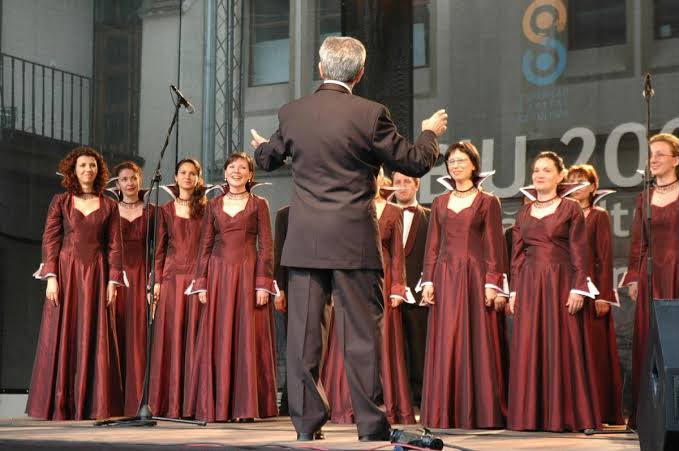
Audience experience is another important factor when choosing between virtual choir vs live choir performances.
Audience Engagement in a Virtual Choir
Virtual choir performances can reach viewers through video platforms, websites, online events, and social media. People can watch from almost anywhere, and recordings can be shared long after the performance is complete.
Creative video layouts may also show singers in different locations, creating a visual representation of collaboration across distance.
However, recorded performances do not offer the same immediate interaction as a concert. Singers cannot directly respond to the audience’s reactions while recording individual parts.
Audience Engagement in a Live Choir
Live performances allow audiences to experience the choir’s sound in the same space. Viewers can observe the singers’ expressions, follow the conductor’s movements, and respond through applause or other reactions.
The atmosphere of a live performance can make concerts, worship services, competitions, and community events particularly memorable.
Live performances can also be streamed or recorded, allowing choirs to combine an in-person event with online access.
Virtual Choir vs Live Choir for Young Singers
Both virtual and live choir experiences can help young singers develop their musical abilities, but the best choice depends on their needs and learning environment.
Benefits of Virtual Choirs for Young Singers
Virtual choir projects can help children practise independently, learn their vocal parts, and become comfortable recording their voices. They may also allow students from different locations to participate in a shared project.
Younger singers may need additional support from a teacher or parent to follow practice tracks, record clearly, and stay motivated.
Benefits of Live Choirs for Young Singers
Live choir rehearsals allow children to learn by listening to others and following a conductor. They can practise singing in time, matching vowel sounds, controlling dynamics, and blending their voices with a group.
The social side of live singing can also encourage confidence and cooperation.
For beginners who need regular feedback, a live choir or a combination of live lessons and virtual projects can provide a helpful learning experience.
Virtual Choir vs Live Choir for Church and Worship Music
Choirs play an important role in many worship settings, and both virtual and live formats offer useful possibilities.
Virtual Choirs for Worship
A virtual choir can bring singers from different churches, regions, or countries together for a special worship video. It can be useful for online services, seasonal celebrations, and collaborative music projects.
Because singers record separately, the director needs to provide clear reference tracks and guidance on tempo, pronunciation, and expression.
Live Choirs for Worship
A live worship choir can respond to the congregation, follow the worship leader, and adjust dynamics as the service develops. Singers can also coordinate with instrumentalists in real time.
This makes live choirs especially useful when the music needs to respond naturally to the atmosphere of a worship service.
For churches that want both personal connection and broader reach, recording a live choir performance and sharing it online can offer a practical combination.
Can Virtual and Live Choirs Be Combined?
Yes. A hybrid approach can bring together the strengths of both formats.
For example, a choir could rehearse together in person, record a live performance, and share it online. Alternatively, a director could use online practice resources between in-person rehearsals to help singers prepare more effectively.
A hybrid choir project might include:
Online distribution of sheet music and practice tracks.
Group rehearsals for blend, balance, and musical expression.
A live performance for an in-person audience.
A recording or livestream for remote viewers.
Follow-up feedback to help singers improve.
This approach can expand access while preserving opportunities for direct musical interaction.
How to Choose Between a Virtual Choir and a Live Choir
When deciding between virtual choir vs live choir, consider your main goal rather than assuming one format is always superior.
Choose a virtual choir if:
Singers live in different locations.
Travel or venue access is difficult.
You want to create a recorded online performance.
Participants need greater scheduling flexibility.
You want to reach a geographically broad audience.
Choose a live choir if:
Real-time musical interaction is a priority.
Singers need immediate guidance from a conductor.
You want to build in-person group relationships.
The performance is intended for a concert, competition, or worship service.
Singers need regular practice blending their voices together.
If your choir has several goals, consider combining online preparation with in-person rehearsals and performances.
How The Mystic Keys Helps Singers Develop Their Musical Skills
At The Mystic Keys, we believe that musical growth involves more than learning notes. Singers benefit from developing listening skills, rhythm, confidence, and an understanding of how their voices contribute to a musical ensemble.
Through structured music learning and guided practice, students can work towards improving their vocal technique, musical expression, and performance confidence. These skills are useful whether they participate in a live choir, prepare for a virtual choir project, or sing as part of a worship team.
Students can also benefit from learning how to practise consistently, follow musical direction, and prepare songs with greater accuracy and expression.
Explore the music learning opportunities at The Mystic Keys to continue developing your musical journey.
Conclusion: Virtual Choir vs Live Choir
The comparison between virtual choir vs live choir shows that both formats have distinct strengths. Virtual choirs offer flexibility, remote collaboration, and opportunities to share recorded performances with a wide audience. Live choirs provide real-time musical communication, direct feedback, and the shared experience of singing together in one place.
The best option depends on your singers, goals, resources, and performance setting. For some groups, virtual singing is the most practical choice. For others, the connection and spontaneity of live performance are essential. A hybrid approach can also provide the benefits of both.
Ultimately, what matters most is helping singers prepare well, listen carefully, work together, and communicate the music with confidence.
For more information and exciting resources about learning music, visit our website at The Mystic Keys. For more music content and exciting offers follow us on
Facebook, Instagram, YouTube, LinkedIn, Twitter, Pinterest, and Threads,