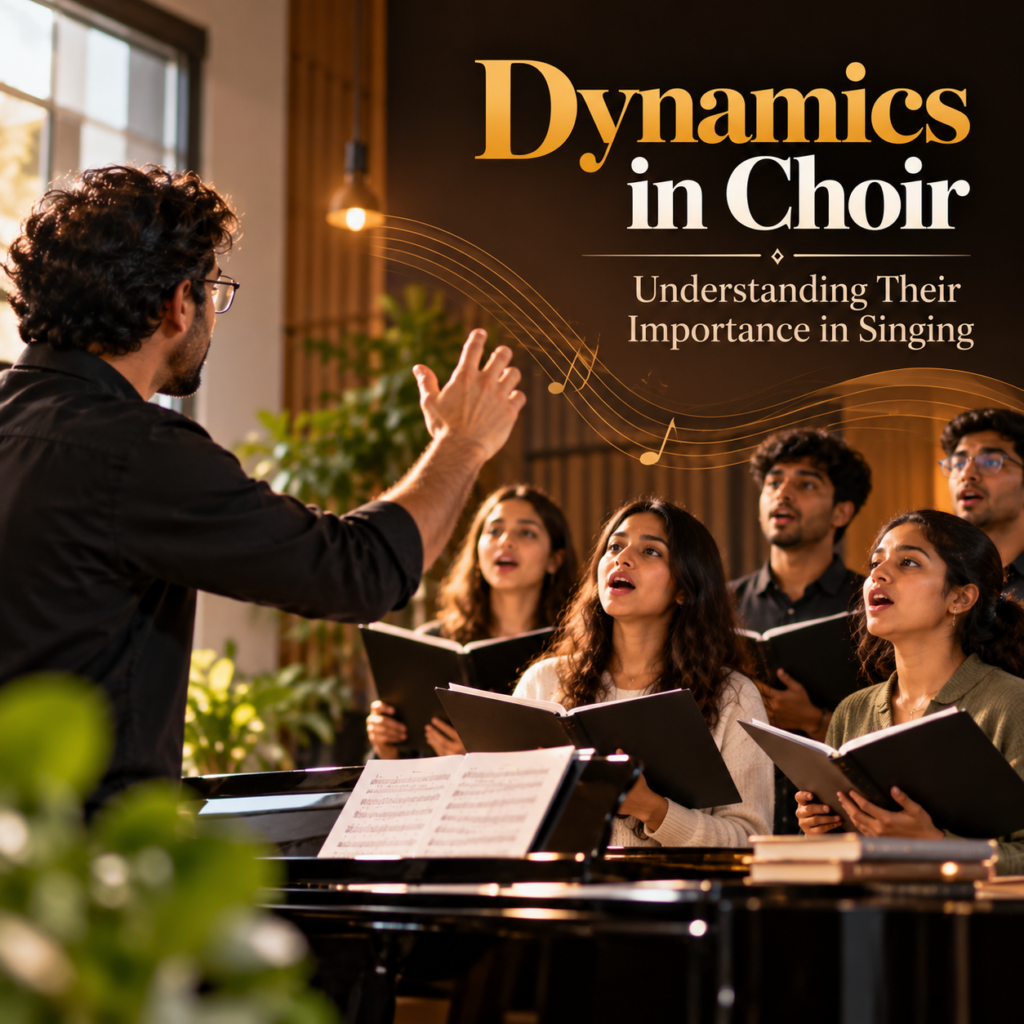
Dynamics in Choir | Understanding Their Importance in Singing
A choir is more than a group of singers performing together. It is a musical ensemble where voices blend to communicate emotions and bring melodies to life. While harmony, rhythm, and pitch are essential, dynamics in choir play an equally important role in creating an expressive performance.
Dynamics refer to variations in musical volume and intensity. They help choirs highlight lyrics, build excitement, express emotions, and create contrast. Understanding dynamics allows singers to move beyond accurate notes and deliver performances that connect with listeners.
What Are Dynamics in Choral Singing?
Dynamics indicate how softly or loudly a musical passage should be performed. In a choir, singers must adjust their volume together to maintain balance and create a unified sound.
Common dynamic markings include pianissimo (pp) for very soft singing, piano (p) for soft, mezzo piano (mp) for moderately soft, mezzo forte (mf) for moderately loud, forte (f) for loud, and fortissimo (ff) for very loud singing.
Composers also use crescendo to indicate a gradual increase in volume and diminuendo or decrescendo for a gradual decrease. These changes help shape musical phrases and guide listeners through different emotional moments.
Why Are Dynamics Important in Choir Singing?
Dynamics give music its expressive character. When a choir sings at the same volume throughout a song, the performance may sound monotonous. Variations in intensity create contrast and make different sections more engaging.
For example, a soft opening followed by a gradual crescendo can build anticipation before a powerful chorus. Similarly, a gentle ending can leave listeners with a feeling of calmness or reflection.
These changes also help singers understand the structure of a composition. By responding to dynamic markings, choir members create a musical journey that keeps the audience interested.
Different Types of Dynamics Used in Choirs
Soft dynamics, such as piano and pianissimo, create gentle and intimate moods. Singers must maintain clear tones and steady breath support while reducing their volume.
Moderate dynamics, including mezzo piano and mezzo forte, help maintain balance between voice sections. They allow the melody to remain clear without overpowering the accompanying harmonies.
Loud dynamics, such as forte and fortissimo, bring energy and dramatic intensity to a performance. However, singers must maintain vocal control rather than force their voices.
Gradual changes are equally important. A crescendo builds intensity, while a diminuendo gently reduces it, helping the choir create smooth transitions and expressive musical phrases.
How Dynamics Improve Vocal Expression
Dynamics help singers communicate the emotions behind a song. Changes in volume can express sadness, excitement, hope, tenderness, or determination, making the lyrics more meaningful.
For instance, a soft passage may communicate vulnerability, while a gradual increase in intensity can express growing confidence. These variations allow the audience to connect more deeply with the music.
However, emotional expression does not always require louder singing. A quiet, controlled passage can be equally powerful when performed with sensitivity and clear diction. Understanding the mood of a composition helps singers choose the right approach.
The Role of Dynamics in Vocal Balance and Harmony
A choir typically includes sopranos, altos, tenors, and basses, each contributing a different musical element. Dynamics help these sections maintain balance and ensure that important melodies remain audible.
When the sopranos carry the melody, the other sections may need to sing slightly softer to support the tune. If the melody shifts to the basses or altos, the balance must change accordingly.
Without proper dynamic control, one section may overpower the others, weakening the harmony. By listening carefully and adjusting their volume, singers create a balanced sound in which every voice contributes effectively.
Understanding the Conductor’s Role in Shaping Dynamics
The conductor guides the choir in interpreting and performing dynamic changes. Through hand gestures, facial expressions, and body movements, the conductor communicates when singers should increase or reduce their volume.
These visual cues help the entire ensemble respond together. A conductor may also guide singers in shaping a crescendo toward a particular lyric or softening a phrase without losing vocal support.
Regular rehearsals help singers understand these signals and anticipate changes. This coordination allows the choir to perform with greater unity, confidence, and musical expression.
Common Challenges in Maintaining Choir Dynamics
Maintaining consistent dynamics can be challenging, especially when singers have different levels of experience. During loud passages, some may strain their voices, affecting tone quality and pitch accuracy.
Soft passages can be equally difficult. Singers may lose vocal support or reduce their volume so much that the words become unclear. Maintaining a steady tone at low volume requires careful breath control.
Differences in interpretation can also cause uneven crescendos and diminuendos. Regular rehearsals, attentive listening, and clear conducting help singers overcome these challenges and achieve a more consistent sound.
Practical Ways to Improve Dynamics During Choir Rehearsals
Improving dynamics begins with understanding the musical score. Singers should identify dynamic markings and recognize where the music requires changes in intensity.
Breathing exercises and sustained-note practice help develop the control needed for soft singing, powerful passages, and gradual transitions. Singers should focus on maintaining vocal quality at every dynamic level.
Listening exercises are equally useful. By paying attention to other voice sections, singers learn when to bring their parts forward and when to blend into the background. Recording rehearsals can also reveal areas where balance or dynamic contrast needs improvement.
Practising short phrases at different volumes further strengthens control. With consistent effort, singers become more comfortable performing dynamic changes naturally and accurately.
How Dynamics Differ Across Musical Genres
Different musical genres use dynamics in distinct ways. In classical choral music, composers often use detailed dynamic markings and gradual transitions to create dramatic development.
Gospel and contemporary worship music may build from gentle openings to powerful choruses, supporting the emotional and spiritual message. Pop arrangements frequently use contrasting verses and choruses to make songs more engaging.
Folk and traditional music may use subtler variations to preserve the natural character of the melody. Understanding the style of each composition helps choirs apply dynamics appropriately rather than following the same approach for every song.
The Connection Between Dynamics and Choir Competitions
Dynamics contribute significantly to an engaging and polished choir performance. In competitions, thoughtful dynamic control can demonstrate musical understanding, coordination, and expressive ability.
A well-prepared choir uses contrasts to highlight important musical moments while maintaining balance and vocal clarity. Smooth transitions between soft and loud passages also demonstrate effective teamwork and rehearsal.
Practising dynamics alongside pitch, rhythm, diction, and harmony helps singers deliver more convincing performances. The goal is not simply to sing louder or softer, but to communicate the music with control and intention.
Conclusion
Dynamics transform choral singing by adding emotion, contrast, and depth to a performance. They help singers communicate lyrics effectively, maintain vocal balance, and create a meaningful musical experience for listeners.
Developing dynamic control requires breath management, attentive listening, and coordination with the conductor. With regular practice, singers can perform more confidently and expressively.
At The Mystic Keys, students can develop their musical expression through personalized online music lessons, including Worship Piano & Singing Lessons Online. By strengthening vocal techniques, musical awareness, and dynamic control, aspiring singers can enhance their ability to deliver expressive and engaging performances.
For more information and exciting resources about learning music, visit our website at The Mystic Keys. For more music content and exciting offers follow us on
Virtual Choir vs Live Choir: What Are the Key Differences?
Introduction
Understanding the difference between a virtual choir vs live choir can help singers, choir directors, music teachers, and worship teams choose the right format for their performances. Both approaches bring people together through music, but they differ in how singers rehearse, perform, collaborate, and connect with their audience.
A live choir performs together in the same physical space, allowing singers to hear one another and respond to a conductor in real time. A virtual choir brings singers together remotely, often through individual video or audio recordings that are combined into one performance. While live choirs emphasize in-person collaboration, virtual choirs offer flexibility and allow singers from different locations to participate.
In this guide, we will explore the key differences between virtual choir vs live choir performances, including sound quality, rehearsal methods, technology, costs, audience engagement, and the situations where each format works best.
What Is a Virtual Choir?
A virtual choir is a group of singers who perform a musical piece from different locations. Instead of gathering in one room, each singer typically records their part individually using a phone, microphone, or computer. The recordings are then synchronized, edited, and combined into a finished audio or video performance.
Virtual choirs became especially popular when in-person gatherings were difficult, but they continue to provide opportunities for remote collaboration and creative music-making.
How Does a Virtual Choir Work?
A virtual choir performance usually follows these steps:
Song selection: The choir director chooses a suitable song and arranges the vocal parts.
Practice materials: Singers receive sheet music, reference recordings, or practice tracks.
Individual rehearsals: Each singer learns their part independently, sometimes with online guidance.
Recording: Singers record their vocals while following a reference track and timing instructions.
Editing and synchronization: Audio and video recordings are aligned and mixed.
Final performance: The recordings are presented as a combined choir video or audio production.
This format allows singers to contribute without travelling to a shared rehearsal venue. However, successful virtual choir projects require clear instructions, careful preparation, and technical editing.
What Is a Live Choir?
A live choir consists of singers who perform together in the same physical location. They may rehearse in a school, church, concert hall, community centre, or music studio before performing for an audience.
Live choirs rely on real-time communication, shared musical direction, and the ability to listen and respond to other singers. The conductor can adjust tempo, dynamics, phrasing, and balance while the performance is happening.
How Does a Live Choir Work?
A typical live choir process includes:
Selecting songs and assigning vocal parts.
Conducting group rehearsals.
Practising harmonies, timing, and pronunciation.
Balancing the volume of different vocal sections.
Rehearsing entrances, endings, and transitions.
Performing together for an audience.
Because singers can hear one another directly, they can adjust their voices in response to the group. This makes live choir singing particularly valuable for developing ensemble awareness and musical communication.
Virtual Choir vs Live Choir: The Main Differences
The biggest difference between a virtual choir vs live choir is how singers collaborate. Virtual choirs rely on recordings and technology, while live choirs depend on real-time interaction.
Feature
Virtual Choir
Live Choir
Performance location
Singers participate from different locations
Singers gather in one place
Rehearsals
Often individual or online
Usually in-person group rehearsals
Musical coordination
Managed through reference tracks and editing
Developed through listening and conducting
Timing
Recordings are synchronized during editing
Singers maintain timing together in real time
Technology
Recording equipment and editing software are often needed
Basic rehearsal spaces may be sufficient
Flexibility
Often easier for singers with different schedules
Requires coordinating attendance and location
Audience experience
Commonly viewed online or through recorded media
Often experienced in person
Travel
Usually minimal for singers
Travel may be required
Immediate feedback
Depends on online instruction and review
Available during rehearsals and performances
Social interaction
Mostly remote or online
Direct face-to-face interaction
Neither format is automatically better. The right choice depends on the choir’s goals, the singers’ circumstances, the available resources, and the intended audience.
Virtual Choir vs Live Choir: Differences in Sound Quality
Sound quality is an important consideration when comparing virtual choir vs live choir performances. Both formats can produce excellent results, but they achieve them in different ways.
Sound Quality in a Virtual Choir
Virtual choir recordings can be edited carefully to create a polished final performance. A sound editor can adjust vocal levels, reduce some unwanted noise, synchronize recordings, and balance individual singers.
However, the final quality depends on several factors:
Microphone quality and recording conditions.
The singer’s distance from the microphone.
Background noise and room acoustics.
Accurate pitch and timing.
Consistent recording instructions.
The quality of the final audio mix.
A virtual choir may sound highly polished, but editing cannot completely replace accurate singing, expressive phrasing, or strong musical preparation.
Sound Quality in a Live Choir
Live choirs create a shared sound through the combination of individual voices in the same space. Singers can adjust their volume, vowel shapes, pitch, and phrasing by listening to one another.
The performance is also influenced by room acoustics, the choir’s balance, microphone placement, and sound reinforcement when needed.
Unlike a recorded performance, a live choir cannot usually correct mistakes after they occur. This makes preparation, concentration, and ensemble coordination especially important.
Virtual Choir vs Live Choir: Rehearsal and Practice Methods
Rehearsal is another major difference between virtual choir vs live choir performances.
Virtual Choir Rehearsals
Virtual choir members may practise their vocal parts independently using recordings, sheet music, or digital resources. Online sessions can also help the director explain difficult sections and provide feedback.
This approach is useful for singers who live far apart or cannot attend regular rehearsals. However, singers must develop the discipline to practise independently and follow timing instructions accurately.
A virtual choir director can improve preparation by providing:
Separate practice tracks for each vocal part.
Clear instructions about tempo and entrances.
Reference videos demonstrating the song.
Recording guidelines.
Feedback on submitted recordings.
Live Choir Rehearsals
Live rehearsals allow singers to work on the music as a group. The conductor can identify problems immediately and help the choir improve its blend, balance, timing, and expression.
Singers also learn to follow visual cues, breathe together, listen across different vocal sections, and respond to changes in dynamics.
For beginners, these shared experiences can make it easier to understand how their individual parts fit into a larger musical arrangement.
Virtual Choir vs Live Choir: Teamwork and Connection
Choir singing is not only about singing the correct notes. It also involves trust, communication, listening, and working towards a common goal.
Teamwork in a Virtual Choir
Virtual choirs connect singers who may live in different cities or countries. Participants can contribute to the same musical project despite geographical distance.
This can create a sense of belonging and provide opportunities for people who might otherwise be unable to join a local choir. Singers also learn to take responsibility for their own preparation.
However, remote singers may have fewer opportunities for spontaneous interaction. Directors may need to organise online meetings and provide regular feedback to help participants feel connected.
Teamwork in a Live Choir
Live choirs encourage direct communication and shared musical awareness. Singers can see the conductor’s gestures, hear other vocal parts, and adjust their performance immediately.
Rehearsing together also helps members build relationships and develop a shared sense of responsibility. These interactions can be especially beneficial for children, students, worship teams, and community choirs.
The two formats can both support teamwork, but live choirs generally provide more immediate face-to-face interaction.
Virtual Choir vs Live Choir: Costs and Equipment
Budget can influence whether a choir chooses a virtual or live performance.
Costs of a Virtual Choir
Virtual choir projects may reduce expenses related to travel, venue hire, and physical rehearsal spaces. However, they can introduce other costs, including:
Microphones, headphones, or recording devices.
Audio and video editing software.
Technical support.
Online storage or file-sharing tools.
Time spent editing and synchronizing recordings.
A simple project can be completed with basic equipment, but larger productions may require professional audio mixing and video editing.
Costs of a Live Choir
Live choirs may need to budget for rehearsal spaces, performance venues, transportation, sheet music, sound equipment, and event arrangements.
Some community or school choirs can keep expenses low by using existing facilities. Larger concerts may require additional lighting, microphones, sound engineers, and stage management.
The more affordable format depends on the size of the choir, the resources already available, and the complexity of the performance.
Virtual Choir vs Live Choir: Audience Engagement
Audience experience is another important factor when choosing between virtual choir vs live choir performances.
Audience Engagement in a Virtual Choir
Virtual choir performances can reach viewers through video platforms, websites, online events, and social media. People can watch from almost anywhere, and recordings can be shared long after the performance is complete.
Creative video layouts may also show singers in different locations, creating a visual representation of collaboration across distance.
However, recorded performances do not offer the same immediate interaction as a concert. Singers cannot directly respond to the audience’s reactions while recording individual parts.
Audience Engagement in a Live Choir
Live performances allow audiences to experience the choir’s sound in the same space. Viewers can observe the singers’ expressions, follow the conductor’s movements, and respond through applause or other reactions.
The atmosphere of a live performance can make concerts, worship services, competitions, and community events particularly memorable.
Live performances can also be streamed or recorded, allowing choirs to combine an in-person event with online access.
Virtual Choir vs Live Choir for Young Singers
Both virtual and live choir experiences can help young singers develop their musical abilities, but the best choice depends on their needs and learning environment.
Benefits of Virtual Choirs for Young Singers
Virtual choir projects can help children practise independently, learn their vocal parts, and become comfortable recording their voices. They may also allow students from different locations to participate in a shared project.
Younger singers may need additional support from a teacher or parent to follow practice tracks, record clearly, and stay motivated.
Benefits of Live Choirs for Young Singers
Live choir rehearsals allow children to learn by listening to others and following a conductor. They can practise singing in time, matching vowel sounds, controlling dynamics, and blending their voices with a group.
The social side of live singing can also encourage confidence and cooperation.
For beginners who need regular feedback, a live choir or a combination of live lessons and virtual projects can provide a helpful learning experience.
Virtual Choir vs Live Choir for Church and Worship Music
Choirs play an important role in many worship settings, and both virtual and live formats offer useful possibilities.
Virtual Choirs for Worship
A virtual choir can bring singers from different churches, regions, or countries together for a special worship video. It can be useful for online services, seasonal celebrations, and collaborative music projects.
Because singers record separately, the director needs to provide clear reference tracks and guidance on tempo, pronunciation, and expression.
Live Choirs for Worship
A live worship choir can respond to the congregation, follow the worship leader, and adjust dynamics as the service develops. Singers can also coordinate with instrumentalists in real time.
This makes live choirs especially useful when the music needs to respond naturally to the atmosphere of a worship service.
For churches that want both personal connection and broader reach, recording a live choir performance and sharing it online can offer a practical combination.
Can Virtual and Live Choirs Be Combined?
Yes. A hybrid approach can bring together the strengths of both formats.
For example, a choir could rehearse together in person, record a live performance, and share it online. Alternatively, a director could use online practice resources between in-person rehearsals to help singers prepare more effectively.
A hybrid choir project might include:
Online distribution of sheet music and practice tracks.
Group rehearsals for blend, balance, and musical expression.
A live performance for an in-person audience.
A recording or livestream for remote viewers.
Follow-up feedback to help singers improve.
This approach can expand access while preserving opportunities for direct musical interaction.
How to Choose Between a Virtual Choir and a Live Choir
When deciding between virtual choir vs live choir, consider your main goal rather than assuming one format is always superior.
Choose a virtual choir if:
Singers live in different locations.
Travel or venue access is difficult.
You want to create a recorded online performance.
Participants need greater scheduling flexibility.
You want to reach a geographically broad audience.
Choose a live choir if:
Real-time musical interaction is a priority.
Singers need immediate guidance from a conductor.
You want to build in-person group relationships.
The performance is intended for a concert, competition, or worship service.
Singers need regular practice blending their voices together.
If your choir has several goals, consider combining online preparation with in-person rehearsals and performances.
How The Mystic Keys Helps Singers Develop Their Musical Skills
At The Mystic Keys, we believe that musical growth involves more than learning notes. Singers benefit from developing listening skills, rhythm, confidence, and an understanding of how their voices contribute to a musical ensemble.
Through structured music learning and guided practice, students can work towards improving their vocal technique, musical expression, and performance confidence. These skills are useful whether they participate in a live choir, prepare for a virtual choir project, or sing as part of a worship team.
Students can also benefit from learning how to practise consistently, follow musical direction, and prepare songs with greater accuracy and expression.
Explore the music learning opportunities at The Mystic Keys to continue developing your musical journey.
Conclusion: Virtual Choir vs Live Choir
The comparison between virtual choir vs live choir shows that both formats have distinct strengths. Virtual choirs offer flexibility, remote collaboration, and opportunities to share recorded performances with a wide audience. Live choirs provide real-time musical communication, direct feedback, and the shared experience of singing together in one place.
The best option depends on your singers, goals, resources, and performance setting. For some groups, virtual singing is the most practical choice. For others, the connection and spontaneity of live performance are essential. A hybrid approach can also provide the benefits of both.
Ultimately, what matters most is helping singers prepare well, listen carefully, work together, and communicate the music with confidence.
For more information and exciting resources about learning music, visit our website at The Mystic Keys. For more music content and exciting offers follow us on
Guitar Lessons for Beginners and Kids: A Complete Guide to Getting Started
Introduction
Learning guitar can be an exciting and rewarding experience for children and beginners of all ages. With the right guidance, guitar lessons for beginners and kids can help students develop musical skills, improve concentration, build confidence, and discover a lifelong passion for music. Whether your child wants to play their favorite songs or you are starting your own musical journey, learning guitar step by step makes the process easier and more enjoyable.
At The Mystic Keys, students can explore guitar playing through structured lessons, practical exercises, and personalized guidance designed to support their musical growth.
Why Guitar Lessons for Beginners and Kids Are Important
Starting with structured guitar lessons for beginners and kids helps students build a strong foundation before moving on to more challenging techniques. Instead of struggling to learn everything at once, students gradually develop the skills needed to play comfortably and confidently.
Better coordination: Playing guitar requires both hands to work together.
Creative expression: Students can express their feelings through music.
Increased confidence: Learning a new song gives students a sense of achievement.
Patience and discipline: Regular practice teaches consistency and perseverance.
For children, guitar lessons can also provide a fun way to explore creativity while developing useful learning habits.
Guitar Lessons for Beginners and Kids: Choosing the Right Guitar
Choosing a suitable instrument is one of the first steps in learning guitar. The right guitar should feel comfortable to hold and easy to play.
Acoustic Guitar
An acoustic guitar produces sound naturally without requiring an amplifier. It is a popular choice for beginners who want to learn basic chords, strumming patterns, folk songs, and pop music.
Classical Guitar
Classical guitars usually have nylon strings, which can feel softer on the fingers. They can be a comfortable option for young learners who are beginning to develop finger strength.
Electric Guitar
Electric guitars are suitable for students interested in rock, blues, pop, and other modern styles. They usually require an amplifier or another sound system to produce their full sound.
What Size Guitar Should Kids Use?
Children need a guitar that matches their height, arm length, and hand size. Smaller guitars, including 1/2-size and 3/4-size models, may be more comfortable for younger students. An appropriately sized instrument can make practice easier and help children develop good playing habits.
What Students Learn in Guitar Lessons for Beginners and Kids
Effective guitar lessons for beginners and kids introduce musical skills in a logical order. Students do not need to master everything immediately. The goal is to make steady progress while enjoying the learning process.
1. Understanding the Parts of the Guitar
Students begin by learning the names and functions of the strings, frets, tuning pegs, neck, body, and bridge. Understanding the instrument makes it easier to follow instructions during lessons.
2. Learning How to Hold the Guitar
Correct posture helps students play comfortably and reduces unnecessary tension. Beginners learn how to sit or stand with the guitar, position their hands, and hold the instrument securely.
3. Learning Basic Chords
Chords allow students to accompany songs and create simple musical patterns. Beginners often start with accessible chords such as Em, Am, C, G, and D, depending on their comfort and lesson plan.
4. Practicing Strumming Patterns
Strumming introduces students to rhythm and musical timing. They can begin with simple downstrokes before progressing to alternating downstrokes and upstrokes.
5. Playing Simple Melodies
Learning short melodies helps students develop finger placement, note recognition, and coordination. Familiar tunes can make lessons more engaging, especially for children.
6. Understanding Rhythm and Timing
Students learn to keep a steady beat, count musical patterns, and play along with a metronome or backing track when appropriate.
How Guitar Lessons for Beginners and Kids Can Make Learning Fun
Children often learn best when lessons include variety, encouragement, and achievable goals. A positive learning environment can help them stay motivated without feeling overwhelmed.
Here are some ways to make guitar learning enjoyable:
Learn familiar songs: Simple songs give students a reason to practice.
Use musical games: String-identification and rhythm games can reinforce basic concepts.
Set small goals: Learning one chord or a short melody at a time makes progress easier to notice.
Celebrate achievements: Recognizing improvements encourages students to keep going.
Explore different genres: Students can discover whether they enjoy pop, rock, folk, worship, or classical music.
The aim is to balance structured learning with opportunities for creativity and fun.
Guitar Lessons for Beginners and Kids: Daily Practice Tips
Consistent practice is more valuable than occasional, lengthy sessions. Beginners should start with manageable practice periods and increase them as their skills and attention span develop.
5 minutes: Practice a strumming pattern or melody.
5 minutes: Play a familiar song or review what was learned.
For younger children, even 5–10 minutes of focused practice may be a useful starting point. Older beginners may be comfortable practicing for 15–20 minutes or longer. The ideal duration depends on age, interest, and individual progress.
Parents can help by creating a regular practice time and encouraging children without putting excessive pressure on them.
Common Challenges in Guitar Lessons for Beginners and Kids
Every new guitarist experiences challenges. Understanding them can help students approach learning with patience.
Sore Fingertips
Pressing strings can feel uncomfortable at first. Short practice sessions, proper technique, and suitable string tension can help beginners adjust gradually. Persistent pain should not be ignored.
Difficulty Changing Chords
Moving between chords requires coordination and repetition. Students can practice switching between two chords slowly before trying a complete song.
Struggling to Keep Rhythm
Beginners may focus so much on finger placement that they lose the beat. Counting aloud, clapping rhythms, and using a slow metronome can help.
Lack of Motivation
Progress may feel slow when students compare themselves with experienced musicians. Learning achievable songs and tracking small improvements can make the journey more rewarding.
With patient guidance and regular practice, these challenges often become easier to manage.
Are Online Guitar Lessons for Beginners and Kids Effective?
Online lessons can be a convenient option for families who prefer learning from home. Students can attend lessons without commuting and may have more flexibility when arranging their schedules.
Well-organized online guitar lessons can include:
Live instruction and demonstrations
Feedback on posture and finger placement
Guided chord and rhythm exercises
Song-based learning
Practice goals between lessons
For younger children, parental support can be helpful, particularly when setting up the instrument, arranging the learning space, and establishing a consistent routine. The teaching format should suit the child’s age, attention span, and learning needs.
How to Choose the Right Guitar Teacher
The right teacher can make a significant difference in a student’s learning experience. When choosing guitar lessons for beginners and kids, consider the following factors:
Teaching experience: Look for a teacher who can explain basic concepts clearly.
Age-appropriate instruction: Younger learners may benefit from shorter activities and more interactive lessons.
Structured learning: Lessons should build skills gradually rather than introduce too much at once.
Personalized feedback: Students need guidance on technique, rhythm, and areas for improvement.
Musical interests: A teacher who considers a student’s preferred songs and genres can help maintain motivation.
Progress tracking: Clear goals make it easier to understand how the student is improving.
A supportive teacher should encourage questions, correct mistakes constructively, and help students develop independence over time.
How The Mystic Keys Helps With Guitar Lessons for Beginners and Kids
At The Mystic Keys, we believe that learning guitar should be structured, engaging, and suited to each student’s goals. Our online music lessons aim to help learners build their skills step by step while developing confidence and a deeper appreciation for music.
Students can work toward goals such as:
Understanding guitar fundamentals and correct playing posture
Learning chords, strumming patterns, and melodies
Improving rhythm and coordination
Exploring different musical styles
Building consistent practice habits
Developing their abilities with guidance from a teacher
Whether a student is picking up a guitar for the first time or looking to strengthen existing skills, a supportive learning approach can help make the journey more enjoyable.
Guitar lessons for beginners and kids can open the door to creativity, confidence, and lifelong musical enjoyment. By choosing a comfortable guitar, learning fundamental techniques, practicing consistently, and receiving supportive instruction, students can gradually develop the skills needed to play their favorite songs.
The most important thing is to start at a comfortable pace, celebrate progress, and enjoy the process of making music. With patience and the right learning approach, beginners and young guitarists can build a strong foundation and continue growing as musicians.
For more information and exciting resources about learning music, visit our website at The Mystic Keys. For more music content and exciting offers follow us on
International Choir Competitions | How Singers Gain Confidence?
Music brings people together, and choir singing makes this connection even more powerful. Every singer contributes to a shared musical experience, learning to work as a team while expressing emotions through music. International choir competitions take this experience further by offering opportunities to perform, learn, and grow.
Beyond awards and recognition, these competitions help singers overcome nervousness, explore different musical styles, and develop confidence. Through regular rehearsals, live performances, and interactions with international musicians, performers gradually learn to trust their abilities and embrace new challenges.
International Choir Competitions | Stepping Outside the Comfort Zone
Confidence often begins when singers try something unfamiliar. Performing before a local audience may feel comfortable, but an international choir competition introduces new venues, unfamiliar audiences, and different musical expectations.
Although these experiences can initially feel intimidating, they encourage singers to trust their preparation and move beyond their comfort zones. Each rehearsal and performance helps them become more comfortable with new situations.
As singers recognise their progress, they also become more willing to take on other challenges. This confidence can benefit them during auditions, public speaking, and everyday interactions.
Building Self-Belief Through Preparation
Successful choir performances require consistent practice, vocal training, and teamwork. International competitions encourage singers to refine their techniques, improve their timing, and understand how their individual parts contribute to the overall performance.
Regular rehearsals gradually reduce uncertainty. As singers become familiar with their music, they can focus more on expression and less on worrying about every note. This preparation creates a strong foundation for confidence.
Moreover, learning from mistakes teaches performers patience and persistence. Each improvement reminds them that progress comes through effort, helping them trust their abilities when they finally step onto the stage.
Overcoming Stage Fear Through Live Performances
Stage fright is common, even among experienced singers. Performing before judges and unfamiliar audiences can create nervousness, especially when months of preparation lead to a single performance.
However, international choir competitions allow singers to become familiar with these emotions. By concentrating on the music, following the conductor, and listening to fellow performers, they gradually learn to manage their anxiety.
Singing as part of a group also provides reassurance because the responsibility is shared. With experience, performers become better at handling nervousness and directing their energy towards musical expression.
International Choir Competitions | Learning from International Choirs
International choir competitions bring together ensembles with different musical traditions, vocal styles, and performance techniques. Listening to these choirs helps participants understand how music can be interpreted in diverse and creative ways.
Observing other performers also encourages singers to recognise their own strengths. Instead of viewing talented ensembles as competition alone, they can treat them as sources of inspiration and learning.
Furthermore, exposure to different approaches to harmony, phrasing, and dynamics can improve musical understanding. Singers often return to their rehearsals with fresh ideas and greater confidence in their artistic choices.
International Choir Competitions | Strengthening Teamwork and Trust
A choir depends on cooperation, careful listening, and a shared commitment to the music. Every member must maintain their part while blending with others to create a balanced performance.
Preparing for an international competition encourages singers to support one another through challenging rehearsals and demanding musical passages. These shared experiences can strengthen friendships and build trust within the ensemble.
When performers feel supported by their teammates, they are more comfortable expressing themselves and taking musical risks. A strong sense of belonging helps individuals develop confidence while appreciating the importance of collective effort.
Gaining Confidence Through Constructive Feedback
International choir competitions can provide valuable feedback from adjudicators, conductors, and fellow musicians. Their observations may highlight areas such as intonation, rhythm, diction, vocal balance, and musical expression.
Although criticism can sometimes feel uncomfortable, constructive feedback helps singers identify specific areas for improvement. Recognising their strengths also encourages them to appreciate the progress they have already made.
Even when a choir does not achieve its desired result, the experience remains valuable. Singers learn to accept feedback, improve their skills, and approach future performances with greater resilience.
Developing Resilience by Overcoming Mistakes
Even well-prepared choirs can experience unexpected difficulties during live performances. A missed entrance or an incorrect note may cause temporary uncertainty, but learning to recover calmly is an important part of musical growth.
Competitions teach singers to remain focused, follow the conductor, and continue performing despite minor mistakes. This ability to recover helps prevent one difficult moment from affecting the entire performance.
Over time, performers also learn that an imperfect performance does not define their talent. Instead, confidence comes from the willingness to learn, adapt, and try again.
Exploring Different Cultures and Musical Traditions
International competitions offer opportunities to interact with singers from different countries and cultural backgrounds. Through shared performances and conversations, participants gain a broader understanding of music and its many forms of expression.
Listening to unfamiliar repertoire can inspire singers to explore new styles and appreciate different interpretations. At the same time, seeing other choirs celebrate their cultural identities encourages performers to value their own musical traditions.
These interactions also develop communication skills and open-mindedness. By connecting with people through music, singers become more comfortable expressing themselves and engaging with unfamiliar environments.
International Choir Competitions | Setting Goals and Celebrating Progress
Setting clear goals helps singers approach international competitions with purpose. Some choirs may focus on improving vocal harmony, while others may aim to perform a challenging composition with greater confidence.
Breaking larger objectives into smaller milestones makes progress easier to recognise. Learning a difficult section, improving breath control, or performing without interruptions can all become meaningful achievements.
Celebrating these improvements encourages singers to remain motivated. Even without winning an award, they can appreciate the skills they have developed and the progress they have made throughout the preparation process.
International Choir Competitions | Applying Confidence Beyond Music
The confidence gained through international choir competitions can benefit singers in many areas of life. Performing under pressure may help them feel more prepared for presentations, interviews, and public speaking.
Similarly, rehearsing consistently develops discipline and time management, while working with fellow musicians strengthens communication and teamwork. Adapting to unfamiliar venues and meeting international participants can also improve flexibility and independence.
Most importantly, singers learn that confidence does not mean being perfect or never feeling nervous. It means trusting their preparation, accepting challenges, and remaining willing to learn.
How Choir Directors Can Encourage Confidence
Choir directors play an important role in preparing singers for international competitions. Along with improving vocal techniques, they can create a supportive environment where performers feel comfortable learning and expressing themselves.
Mock performances, regular feedback, and focused rehearsals help singers become familiar with competition conditions. Encouragement and constructive guidance also allow them to address weaknesses without losing motivation.
Setting realistic goals is equally important. When directors emphasise musical growth, teamwork, and learning alongside competition results, singers can approach performances with greater enthusiasm and less pressure.
Conclusion | International Choir Competitions Help Singers Find Their Voice
International choir competitions offer much more than an opportunity to showcase musical talent. They help singers overcome stage fear, strengthen teamwork, improve their skills, and gain confidence through meaningful experiences.
With consistent preparation and the support of fellow performers, singers gradually learn to trust their abilities and embrace new challenges. Even mistakes and disappointing results can become valuable opportunities for growth. The Mystic Keys supports musical development through personalised online music education, including Worship Piano & Singing Lessons Online, helping learners strengthen their musical skills and express themselves with greater confidence.
Ultimately, confidence develops through practice, courage, and a willingness to improve. By participating in international choir competitions and continuing their musical journey, singers discover not only the power of singing together but also the confidence to express themselves both on stage and beyond.
For more information and exciting resources about learning music, visit our website at The Mystic Keys. For more music content and exciting offers follow us on