

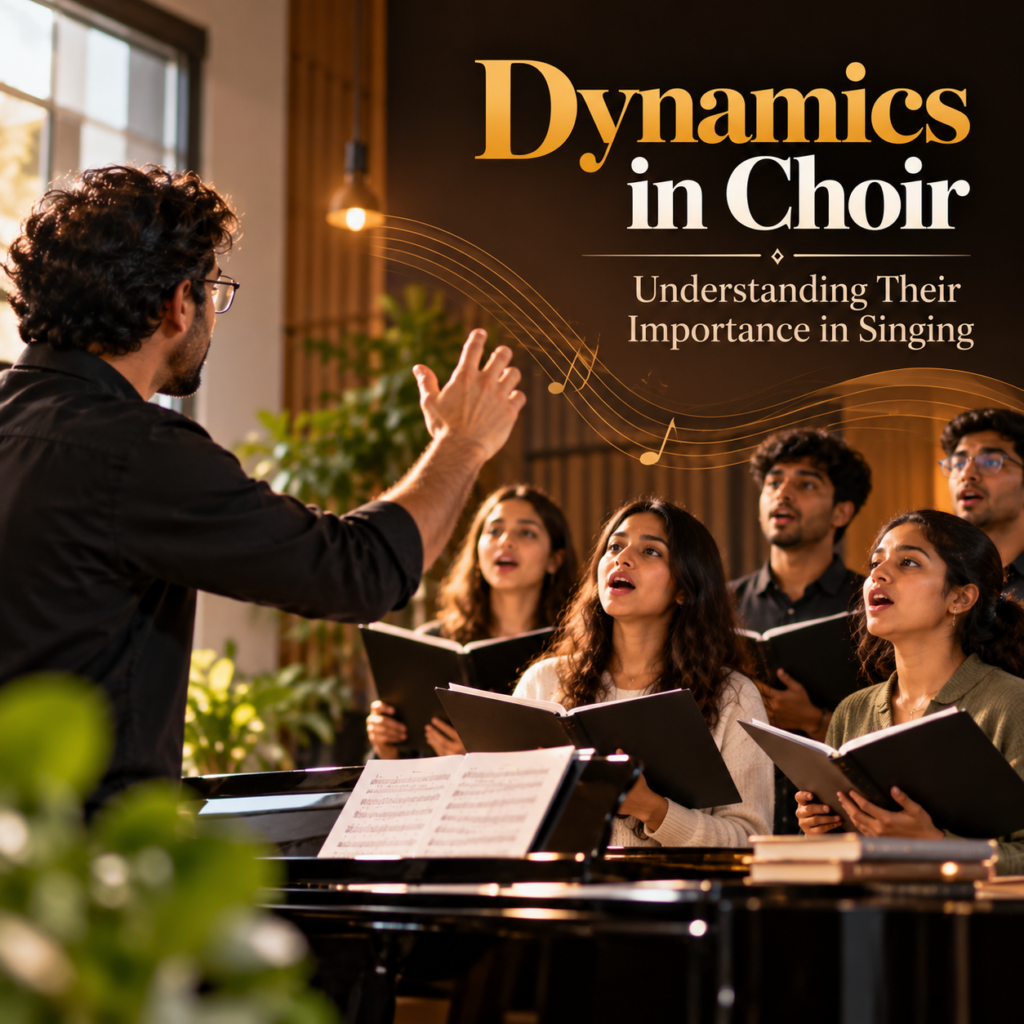
Dynamics in Choir | Understanding Their Importance in Singing
A choir is more than a group of singers performing together. It is a musical ensemble where voices blend to communicate emotions and bring melodies to life. While harmony, rhythm, and pitch are essential, dynamics in choir play an equally important role in creating an expressive performance.
Dynamics refer to variations in musical volume and intensity. They help choirs highlight lyrics, build excitement, express emotions, and create contrast. Understanding dynamics allows singers to move beyond accurate notes and deliver performances that connect with listeners.

What Are Dynamics in Choral Singing?
Dynamics indicate how softly or loudly a musical passage should be performed. In a choir, singers must adjust their volume together to maintain balance and create a unified sound.
Common dynamic markings include pianissimo (pp) for very soft singing, piano (p) for soft, mezzo piano (mp) for moderately soft, mezzo forte (mf) for moderately loud, forte (f) for loud, and fortissimo (ff) for very loud singing.
Composers also use crescendo to indicate a gradual increase in volume and diminuendo or decrescendo for a gradual decrease. These changes help shape musical phrases and guide listeners through different emotional moments.
Why Are Dynamics Important in Choir Singing?
Dynamics give music its expressive character. When a choir sings at the same volume throughout a song, the performance may sound monotonous. Variations in intensity create contrast and make different sections more engaging.
For example, a soft opening followed by a gradual crescendo can build anticipation before a powerful chorus. Similarly, a gentle ending can leave listeners with a feeling of calmness or reflection.
These changes also help singers understand the structure of a composition. By responding to dynamic markings, choir members create a musical journey that keeps the audience interested.

Different Types of Dynamics Used in Choirs
Soft dynamics, such as piano and pianissimo, create gentle and intimate moods. Singers must maintain clear tones and steady breath support while reducing their volume.
Moderate dynamics, including mezzo piano and mezzo forte, help maintain balance between voice sections. They allow the melody to remain clear without overpowering the accompanying harmonies.
Loud dynamics, such as forte and fortissimo, bring energy and dramatic intensity to a performance. However, singers must maintain vocal control rather than force their voices.
Gradual changes are equally important. A crescendo builds intensity, while a diminuendo gently reduces it, helping the choir create smooth transitions and expressive musical phrases.
How Dynamics Improve Vocal Expression
Dynamics help singers communicate the emotions behind a song. Changes in volume can express sadness, excitement, hope, tenderness, or determination, making the lyrics more meaningful.
For instance, a soft passage may communicate vulnerability, while a gradual increase in intensity can express growing confidence. These variations allow the audience to connect more deeply with the music.
However, emotional expression does not always require louder singing. A quiet, controlled passage can be equally powerful when performed with sensitivity and clear diction. Understanding the mood of a composition helps singers choose the right approach.

The Role of Dynamics in Vocal Balance and Harmony
A choir typically includes sopranos, altos, tenors, and basses, each contributing a different musical element. Dynamics help these sections maintain balance and ensure that important melodies remain audible.
When the sopranos carry the melody, the other sections may need to sing slightly softer to support the tune. If the melody shifts to the basses or altos, the balance must change accordingly.
Without proper dynamic control, one section may overpower the others, weakening the harmony. By listening carefully and adjusting their volume, singers create a balanced sound in which every voice contributes effectively.
Understanding the Conductor’s Role in Shaping Dynamics
The conductor guides the choir in interpreting and performing dynamic changes. Through hand gestures, facial expressions, and body movements, the conductor communicates when singers should increase or reduce their volume.
These visual cues help the entire ensemble respond together. A conductor may also guide singers in shaping a crescendo toward a particular lyric or softening a phrase without losing vocal support.
Regular rehearsals help singers understand these signals and anticipate changes. This coordination allows the choir to perform with greater unity, confidence, and musical expression.

Common Challenges in Maintaining Choir Dynamics
Maintaining consistent dynamics can be challenging, especially when singers have different levels of experience. During loud passages, some may strain their voices, affecting tone quality and pitch accuracy.
Soft passages can be equally difficult. Singers may lose vocal support or reduce their volume so much that the words become unclear. Maintaining a steady tone at low volume requires careful breath control.
Differences in interpretation can also cause uneven crescendos and diminuendos. Regular rehearsals, attentive listening, and clear conducting help singers overcome these challenges and achieve a more consistent sound.
Practical Ways to Improve Dynamics During Choir Rehearsals
Improving dynamics begins with understanding the musical score. Singers should identify dynamic markings and recognize where the music requires changes in intensity.
Breathing exercises and sustained-note practice help develop the control needed for soft singing, powerful passages, and gradual transitions. Singers should focus on maintaining vocal quality at every dynamic level.
Listening exercises are equally useful. By paying attention to other voice sections, singers learn when to bring their parts forward and when to blend into the background. Recording rehearsals can also reveal areas where balance or dynamic contrast needs improvement.
Practising short phrases at different volumes further strengthens control. With consistent effort, singers become more comfortable performing dynamic changes naturally and accurately.

How Dynamics Differ Across Musical Genres
Different musical genres use dynamics in distinct ways. In classical choral music, composers often use detailed dynamic markings and gradual transitions to create dramatic development.
Gospel and contemporary worship music may build from gentle openings to powerful choruses, supporting the emotional and spiritual message. Pop arrangements frequently use contrasting verses and choruses to make songs more engaging.
Folk and traditional music may use subtler variations to preserve the natural character of the melody. Understanding the style of each composition helps choirs apply dynamics appropriately rather than following the same approach for every song.
The Connection Between Dynamics and Choir Competitions
Dynamics contribute significantly to an engaging and polished choir performance. In competitions, thoughtful dynamic control can demonstrate musical understanding, coordination, and expressive ability.
A well-prepared choir uses contrasts to highlight important musical moments while maintaining balance and vocal clarity. Smooth transitions between soft and loud passages also demonstrate effective teamwork and rehearsal.
Practising dynamics alongside pitch, rhythm, diction, and harmony helps singers deliver more convincing performances. The goal is not simply to sing louder or softer, but to communicate the music with control and intention.

Conclusion
Dynamics transform choral singing by adding emotion, contrast, and depth to a performance. They help singers communicate lyrics effectively, maintain vocal balance, and create a meaningful musical experience for listeners.
Developing dynamic control requires breath management, attentive listening, and coordination with the conductor. With regular practice, singers can perform more confidently and expressively.
At The Mystic Keys, students can develop their musical expression through personalized online music lessons, including Worship Piano & Singing Lessons Online. By strengthening vocal techniques, musical awareness, and dynamic control, aspiring singers can enhance their ability to deliver expressive and engaging performances.
For more information and exciting resources about learning music, visit our website at The Mystic Keys. For more music content and exciting offers follow us on
Facebook, Instagram, YouTube, LinkedIn, Twitter, Pinterest, and Threads,