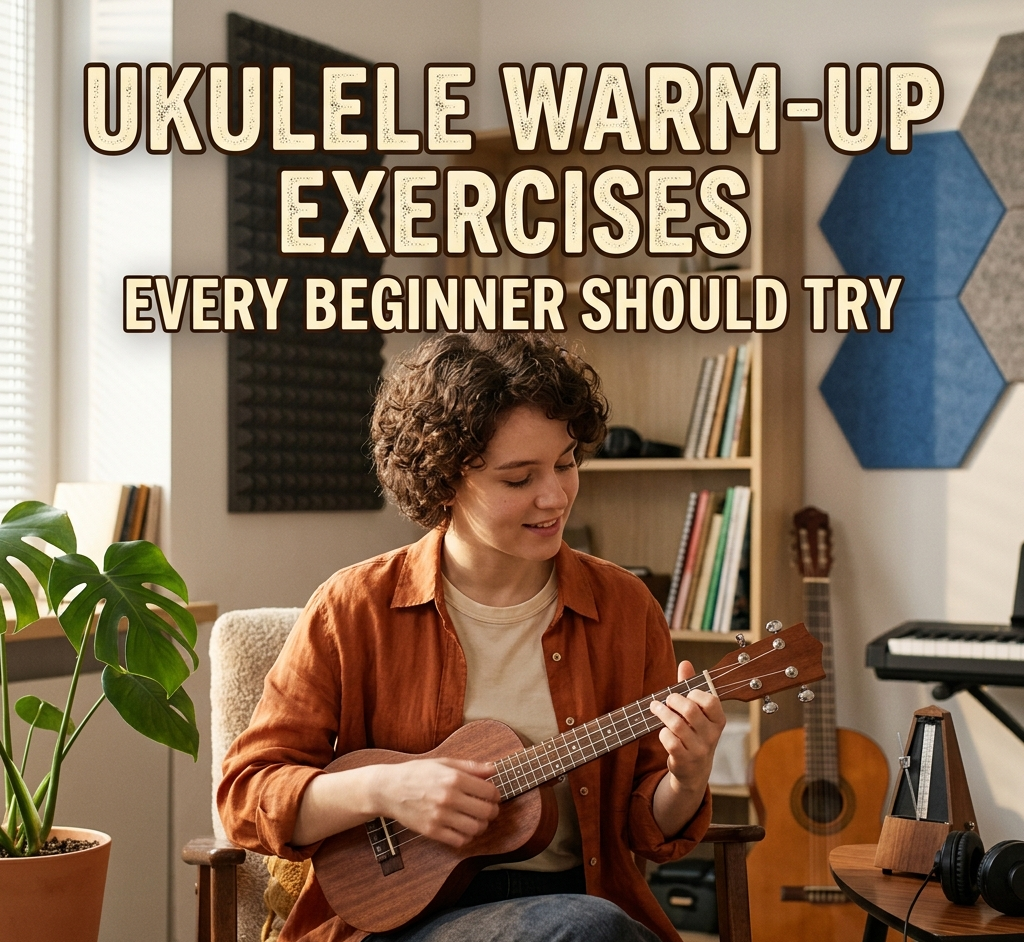
Ukulele Warm-Up Exercises Every Beginner Should Try
Starting your ukulele journey feels exciting in the beginning, but it can also feel a little stiff when your fingers don’t move the way you expect. That’s exactly where Ukulele Warm-Up Exercises become the quiet bridge between “just holding the instrument” and “actually making music comfortably.” When done regularly, these Ukulele Warm-Up Exercises improve control, reduce strain, and help you sound cleaner even before you learn advanced songs.
What makes warm-ups especially useful is that they don’t demand perfection. Instead, they gently train your hands, ears, and timing so that playing starts feeling natural rather than forced.
Why Ukulele Warm-Up Exercises Matter More Than You Think
Before diving into techniques, it helps to understand why warm-ups deserve attention. Many beginners skip them because they seem unnecessary or too simple, yet those few minutes often decide how smooth your practice session will feel.
Your fingers are not used to the repetitive stretching required for chords and melodies. Without preparation, they tend to stiffen quickly, which leads to buzzing strings or missed notes. Over time, this can also slow down your progress because your muscle memory doesn’t develop evenly.
Once warm-ups become a habit, you’ll notice something interesting: even difficult songs feel less intimidating because your hands are already “awake” and responsive.
Gentle Finger Activation to Wake Up Your Hands
A good practice session begins with light movement rather than pressure. At this stage, the goal is simply to loosen your fingers and bring awareness to your hand positioning.
Start by resting your fretting hand comfortably on the neck of the ukulele. Slowly open and close your fingers, almost like a soft stretching motion. This helps release stiffness that builds up even when you are not playing.
You can then place each finger lightly on different frets without strumming, just to feel the spacing between notes. The idea is not speed but comfort and familiarity.
After a minute or two, your hand naturally begins to feel more responsive, making everything that follows smoother and more controlled.
Simple Strumming Rhythm Ukulele Warm-Up Exercises
Strumming is where rhythm and coordination meet, and beginners often struggle with consistency. A slow, steady warm-up can make a big difference here.
Begin with a basic downstroke pattern on open strings. Keep the motion relaxed from the wrist rather than the elbow. Once that feels steady, introduce an upstroke and maintain an even rhythm.
What matters most is timing, not speed. Try counting softly in your head—1, 2, 3, 4—while strumming evenly. This helps your internal clock align with your hand movement.
As your confidence grows, you can slightly vary the pressure and feel how different dynamics change the sound. Over time, this builds control without overwhelming your fingers.
Finger Dexterity Practice for Smooth Movement
Dexterity exercises help your fingers move independently, which is essential for clean chord changes and melodies. One of the simplest ways to practice this is by placing fingers on different frets in a step-by-step pattern.
Move one finger at a time along a single string, pressing lightly and releasing slowly. After a short while, shift to another string and repeat the process. This trains coordination between your brain and fingertips.
To make it more musical, you can turn it into a slow ascending and descending pattern. The goal is to avoid tension while keeping each note clear.
Gradually, you’ll notice that your fingers stop “searching” for frets and begin landing more confidently on their own.
Smooth Chord Transition Practice in Ukulele Warm-Up Exercises
Chord changes often feel like the biggest hurdle for beginners, but they become easier when practiced gently instead of rushed.
Choose two simple chords you already know. Transition between them slowly, giving yourself enough time to place each finger correctly. At first, it may feel slow and even a bit repetitive, but that repetition is exactly what builds accuracy.
After a few cycles, try reducing the pause between changes while keeping clarity intact. The idea is not speed alone but smoothness without hesitation.
With consistent practice, your fingers begin to remember shapes rather than thinking through them every time.
Ear Activation Through Simple Listening and Playing
Training your ear is just as important as training your fingers. Even a short warm-up can include listening-based awareness.
Play a single string and listen carefully to its tone. Try adjusting your finger pressure slightly and notice how the sound changes. This helps you understand control beyond just movement.
You can also try repeating simple patterns by ear, even if they are not perfect at first. Over time, your ability to recognize pitch and rhythm improves naturally, making learning new songs much easier.
A Balanced 10-Minute Ukulele Warm-Up Exercises Routine
A structured warm-up doesn’t need to be long to be effective. In fact, consistency matters more than duration.
You might begin with gentle finger activation for a couple of minutes, followed by slow strumming practice. After that, a short dexterity exercise and chord transitions can complete the session. The final minute can be used for relaxed playing—just enjoying the sound without pressure.
This flow ensures that every part of your hand and ear gets attention without feeling overwhelming.
Common Mistakes Beginners Should Avoid
Many learners unintentionally slow their progress by rushing through warm-ups or skipping them entirely. Another common issue is applying too much pressure on the strings, which creates unnecessary tension and discomfort.
It also helps to avoid speed-focused practice in the beginning. Fast playing might feel impressive, but it often hides small mistakes that later become harder to correct.
Instead, a calm and steady approach builds a stronger foundation and prevents frustration in the long run.
Bringing It All Together |Ukulele Warm-Up Exercises
Warm-ups may feel simple, but they quietly shape your entire ukulele journey. When your hands are relaxed, your timing improves naturally, and your confidence grows without forcing it.
Over time, these small exercises stop feeling like a routine and start becoming part of your musical mindset. That’s when playing the ukulele shifts from effort to enjoyment, and every session feels a little more expressive than the last—something often emphasized in learning spaces like The Mystic Keys and their Ukulele Lessons Online, where consistent practice habits are seen as the real foundation of musical growth.
For more information and exciting resources about learning music, visit our website at The Mystic Keys. For more music content and exciting offers follow us on