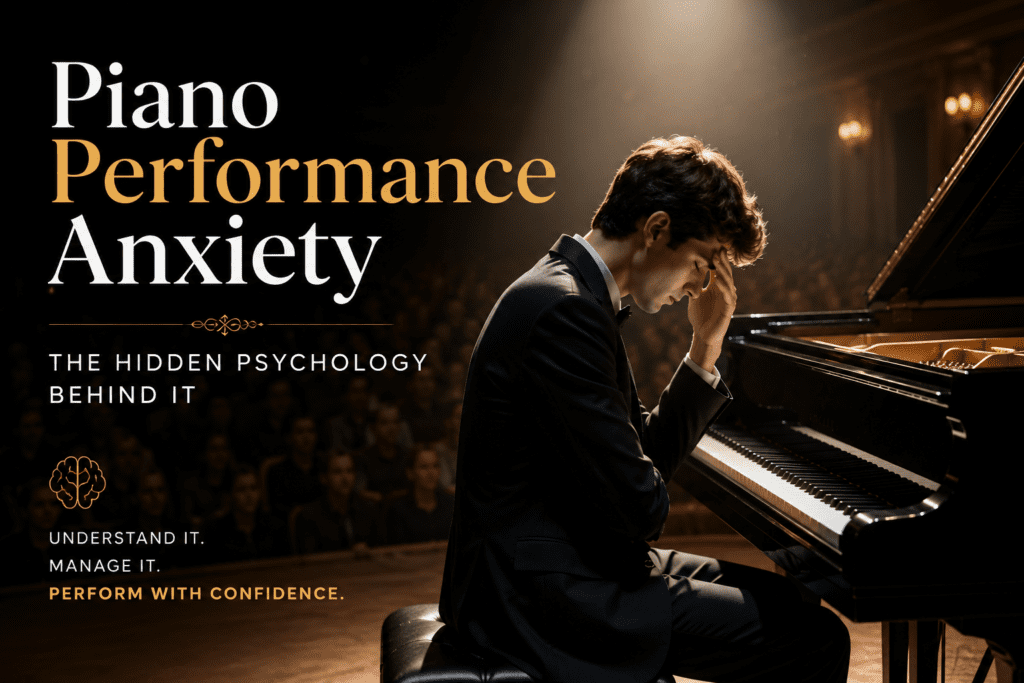
The Hidden Psychology Behind Piano Performance Anxiety
Have you ever played a piano piece perfectly during practice, only to make unexpected mistakes when performing in front of others? If so, you’re not alone. Piano Performance Anxiety affects musicians of all ages and skill levels, from beginners to professional concert pianists.
While many people think performance anxiety is simply about nervousness, the reality is much deeper. Understanding the psychology behind these feelings can help pianists gain confidence, improve their performances, and enjoy playing music more fully.
What Is Piano Performance Anxiety?
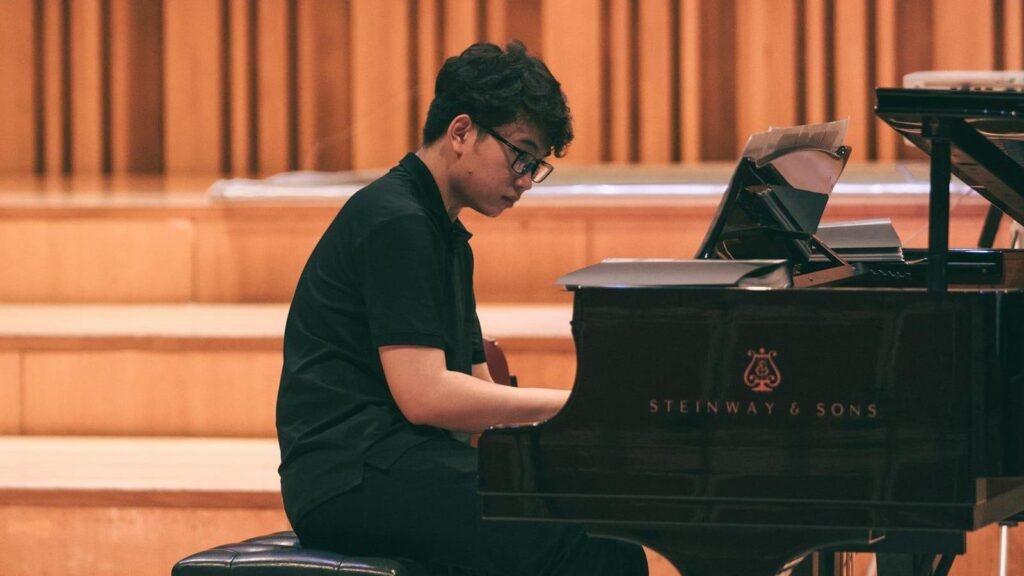
Piano Performance Anxiety is the fear, stress, or nervousness that occurs before or during a piano performance. It can happen during recitals, examinations, competitions, church services, or even when playing in front of family and friends.
Common symptoms include:
- Sweaty hands
- Increased heart rate
- Shaking fingers
- Difficulty concentrating
- Memory slips
- Negative self-talk
These reactions are completely normal and are part of the body’s natural response to perceived pressure.
Why Does the Brain React This Way?
When pianists step onto a stage, the brain may interpret the situation as a threat rather than an opportunity. This activates the body’s “fight-or-flight” response.
The brain releases stress hormones such as adrenaline, causing physical changes designed to help us respond to danger. While this response was useful for survival in ancient times, it can make piano playing more difficult by affecting finger control, focus, and memory.
In other words, the brain is trying to protect you—even when there’s no actual danger.
The Fear of Making Mistakes
One of the biggest causes of Piano Performance Anxiety is the fear of making mistakes.
Many pianists place enormous pressure on themselves to perform perfectly. They worry about:
- Missing notes
- Forgetting sections
- Being judged by others
- Disappointing teachers or parents
- Looking unprepared
The more attention musicians give to these fears, the stronger their anxiety often becomes.
The truth is that audiences usually notice musical expression far more than minor mistakes.
Perfectionism and Its Impact
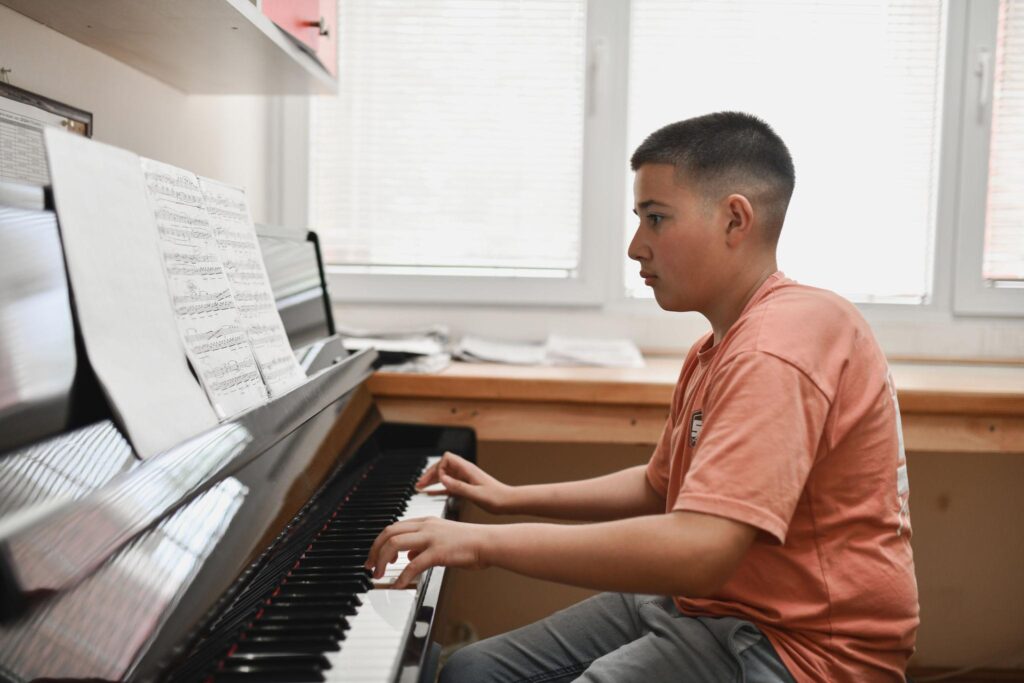
Perfectionism can be both a strength and a challenge for pianists.
A desire to improve can motivate consistent practice, but unrealistic expectations often create unnecessary stress. When musicians believe every note must be flawless, even small errors can feel like failures.
Successful performers understand that music is about communication, emotion, and artistry—not perfection.
Learning to accept occasional mistakes can significantly reduce performance anxiety.
How Self-Talk Influences Performance
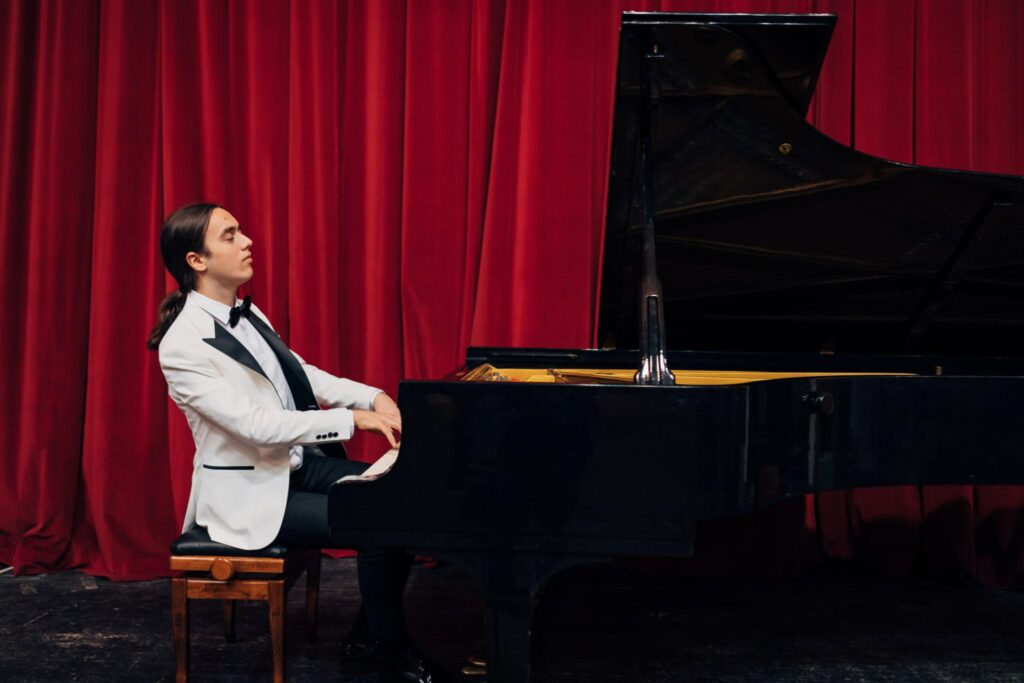
The conversations we have with ourselves play a major role in confidence levels.
Negative thoughts such as:
- “I’m going to mess up.”
- “Everyone is judging me.”
- “I’m not good enough.”
can increase anxiety before a performance.
Instead, replacing these thoughts with positive and realistic statements can improve focus:
- “I am prepared.”
- “I know this piece well.”
- “I can recover from mistakes.”
- “I am here to share music.”
Positive self-talk helps train the brain to view performances as opportunities rather than threats.
The Role of Practice in Reducing Anxiety
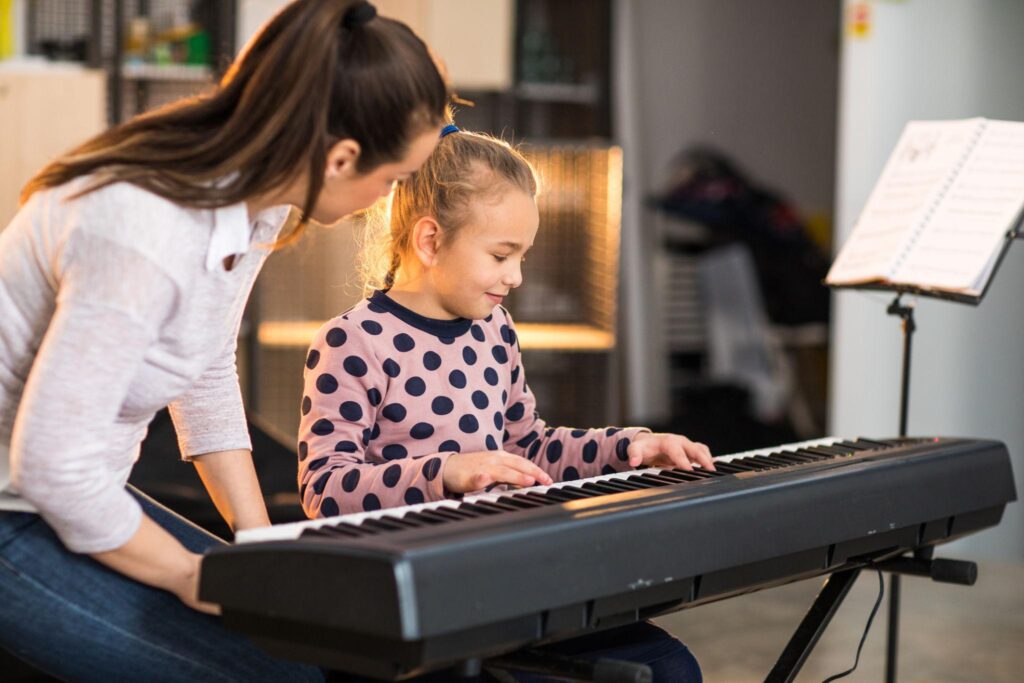
Many cases of Piano Performance Anxiety are linked to how musicians practice.
Practicing only in a comfortable environment can create a false sense of security. When the performance setting changes, anxiety may increase.
To prepare more effectively:
Perform During Practice
Play for family members, friends, or classmates whenever possible.
Simulate Performance Conditions
Practice walking to the piano, sitting down, and performing the piece from start to finish without stopping.
Record Yourself
Recording practice sessions helps pianists become more comfortable being observed and evaluated.
Rather than obsessing over every note, focus on the story and emotion behind the music.
These strategies help make public performances feel more familiar and manageable.
Why Experience Matters
Confidence grows through experience.
Many students assume nervousness means they are not ready. In reality, even professional musicians experience performance anxiety. The difference is that experienced performers learn how to manage it.
Every recital, concert, and performance teaches valuable lessons about handling pressure and building resilience.
The goal is not to eliminate nervousness completely but to learn how to perform successfully despite it.
Practical Tips for Managing Piano Performance Anxiety
If you struggle with Piano Performance Anxiety, try these practical techniques:
Practice Deep Breathing
Slow, controlled breathing helps calm the nervous system before performing.
Visualize Success
Imagine yourself playing confidently and enjoying the performance.
Prepare Thoroughly
Confidence often comes from knowing you have practiced consistently and effectively.
Accept Imperfection
Remember that music is a human art form. Small mistakes do not define your performance.
Focus on the Music
Shift your attention away from yourself and toward the message you want to communicate through the music.
The hidden psychology behind Piano Performance Anxiety reveals that nervousness is not a sign of weakness or lack of talent. It is a natural response created by the brain when facing pressure and uncertainty.
By understanding the causes of performance anxiety, developing healthier thought patterns, and practicing under realistic conditions, pianists can transform fear into confidence.
Every great performer has experienced nerves. What sets them apart is their ability to continue sharing their music despite those feelings. With patience, preparation, and experience, you can do the same and turn every performance into an opportunity for growth and musical expression.
Intersted in learning music with us? Register now
For more information and exciting resources about learning music, visit our website at The Mystic Keys. For more music content and exciting offers follow us on
Facebook, Instagram, YouTube, LinkedIn, Twitter, Pinterest, and Threads.