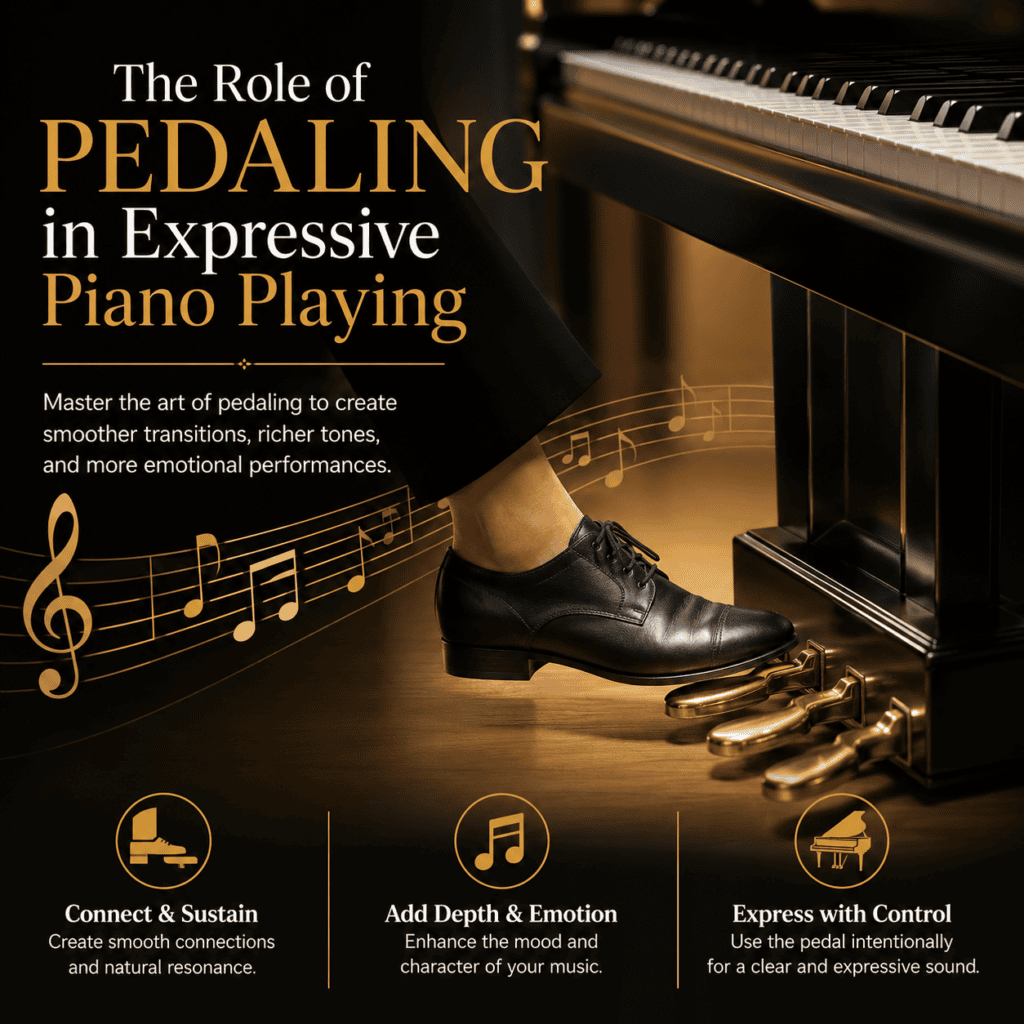
The Role of Pedaling in Expressive Piano Playing
The Role of Pedaling in Expressive Piano Playing is one of the most important aspects of creating expressive and musical piano performances. While the notes, rhythm, and dynamics form the foundation of a piece, the pedals help connect sounds, add depth, and shape the emotional character of the music. Learning how and when to use the pedals can transform a technically correct performance into one that feels polished and expressive.
1. Understanding the Role of Pedaling in Expressive Piano Playing
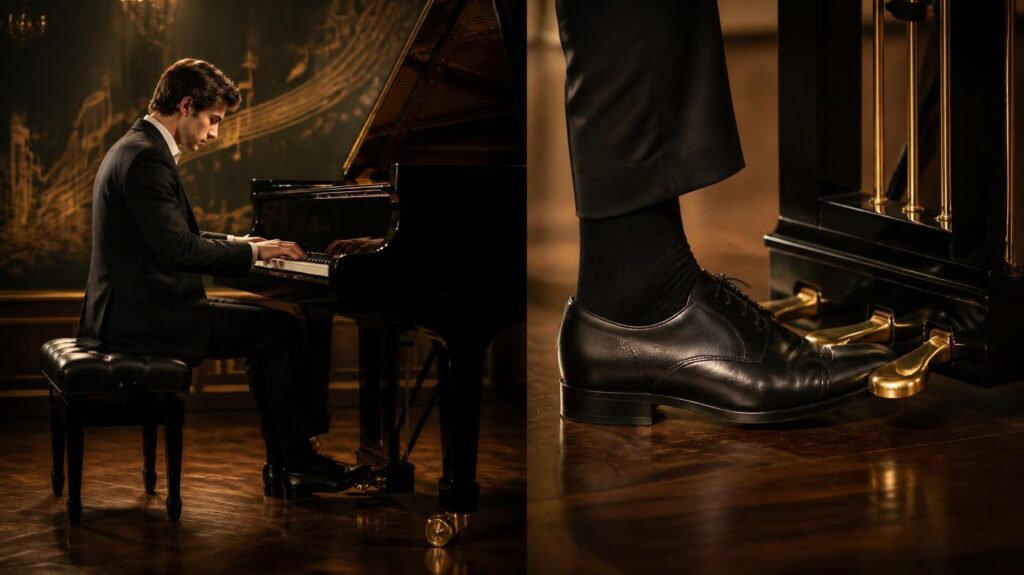
Most modern pianos have three pedals: the sustain pedal, soft pedal, and sostenuto pedal. Each serves a different musical purpose.
The sustain pedal, usually the right pedal, is the most commonly used. It allows notes to continue sounding after the keys are released. The soft pedal changes the tone and reduces the volume, while the sostenuto pedal allows selected notes to sustain while other notes are played normally.
For most beginners, learning to control the sustain pedal is the first and most important step toward expressive pedaling.
2. How the Sustain Pedal Enhances Expressive Piano Playing

Without the sustain pedal, notes can sometimes sound short and disconnected, particularly when playing chords or melodies that require a smooth transition.
Using the sustain pedal allows one sound to flow naturally into another. This is especially useful for:
- Connecting chords smoothly
- Supporting long melodic phrases
- Creating a fuller sound
- Adding resonance to slow music
- Enhancing emotional expression
However, holding the pedal down continuously can make the music sound blurred. Effective pedaling requires knowing when to release and change the pedal.
3. The Role of Pedaling in Connecting Piano Chords

One of the most useful techniques is pedal changing, sometimes called syncopated or legato pedaling. The basic idea is to press the pedal after playing a chord and then quickly release and re-press it when changing to the next chord.
This technique allows the previous chord to connect smoothly to the next one while preventing unwanted harmony from building up.
A simple practice method is:
- Play a chord.
- Press the sustain pedal.
- Play the next chord.
- Immediately release the pedal.
- Press it again.
- Continue the pattern with each chord change.
With practice, this movement becomes natural and helps create a clean, connected sound.
4. Using Pedaling to Shape Musical Phrases

Pedaling should not only be used to connect notes. It can also help shape a musical phrase.
For example, a pianist might use more pedal during a broad, emotional phrase and less pedal during a delicate or clearly articulated section. The pedal can therefore work together with dynamics, articulation, and tempo to create contrast.
Think of pedaling as part of musical phrasing rather than an automatic movement of the foot.
5. Avoiding Excessive Pedaling
One of the most common mistakes among developing pianists is using too much pedal. Although the sustain pedal can make the piano sound richer, excessive use can cause different notes and chords to blend together.
Common signs of over-pedaling include:
- Chords sounding muddy
- Bass notes becoming unclear
- Fast passages losing definition
- Harmonies blending unnecessarily
- The melody becoming difficult to hear
A good rule is to listen carefully to the sound rather than simply following a fixed pedal pattern. If the music sounds unclear, try releasing the pedal earlier or using shallower pedal movements.
6. Pedaling in Different Musical Styles
Pedaling techniques can vary depending on the style and character of the music.
Classical music often requires careful pedal changes to preserve clarity and respect the phrasing of the composition. Romantic repertoire may use the sustain pedal more extensively to create warmth and resonance.
Jazz and contemporary piano can involve different approaches, depending on the arrangement and desired sound. Pop ballads may benefit from sustained chords and a smooth harmonic connection, while rhythmic pieces often require cleaner pedal control.
Understanding the musical style helps a pianist decide how much resonance is appropriate.
7. Developing Better Pedal Control
Good pedaling requires coordination between the hands, ears, and feet. Beginners should avoid trying to learn complicated pedal patterns immediately.
Start with simple exercises. Play slow chord progressions and change the pedal with each chord. Listen carefully to the transition between harmonies. Gradually increase the tempo while maintaining a clean sound.
It is also helpful to practice passages without the pedal first. Once the notes, rhythm, fingering, and phrasing are comfortable, introduce the pedal and listen to how it changes the character of the music.
Recording your practice can be particularly useful because it allows you to hear whether the pedal is creating clarity or unnecessary resonance.
8. Pedaling as a Tool for Musical Expression
The most effective pianists do not use the pedal simply because a passage is difficult to connect. They use it deliberately to communicate musical ideas.
Pedaling can help create intimacy, warmth, drama, contrast, and resonance. It can make a melody sing over accompanying chords and give a performance a greater sense of space.
Ultimately, expressive pedaling comes from listening. Your foot should respond to the music rather than follow a mechanical pattern.
Pedaling plays a vital role in expressive piano playing. When used thoughtfully, it can connect phrases, enrich harmonies, support melodies, and enhance the emotional impact of a performance.
The goal is not to use as much pedal as possible, but to use the right amount at the right moment. With regular practice, careful listening, and guidance from a skilled teacher, pianists can develop the pedal control needed to make their performances clearer, richer, and more expressive.
For students looking to develop stronger piano technique and musical expression, structured piano lessons online can provide valuable guidance on pedaling, phrasing, dynamics, and performance skills.
Intersted in learning music with us? Register now
For more information and exciting resources about learning music, visit our website at The Mystic Keys. For more music content and exciting offers follow us on
Facebook, Instagram, YouTube, LinkedIn, Twitter, Pinterest, and Threads.