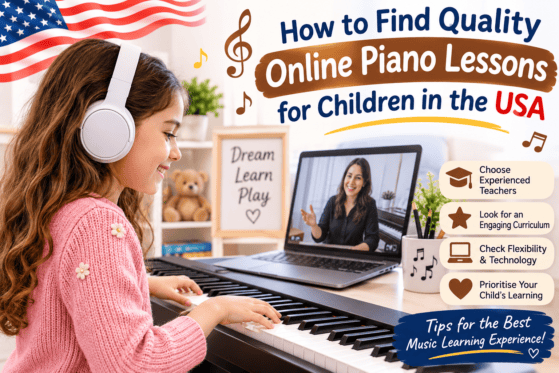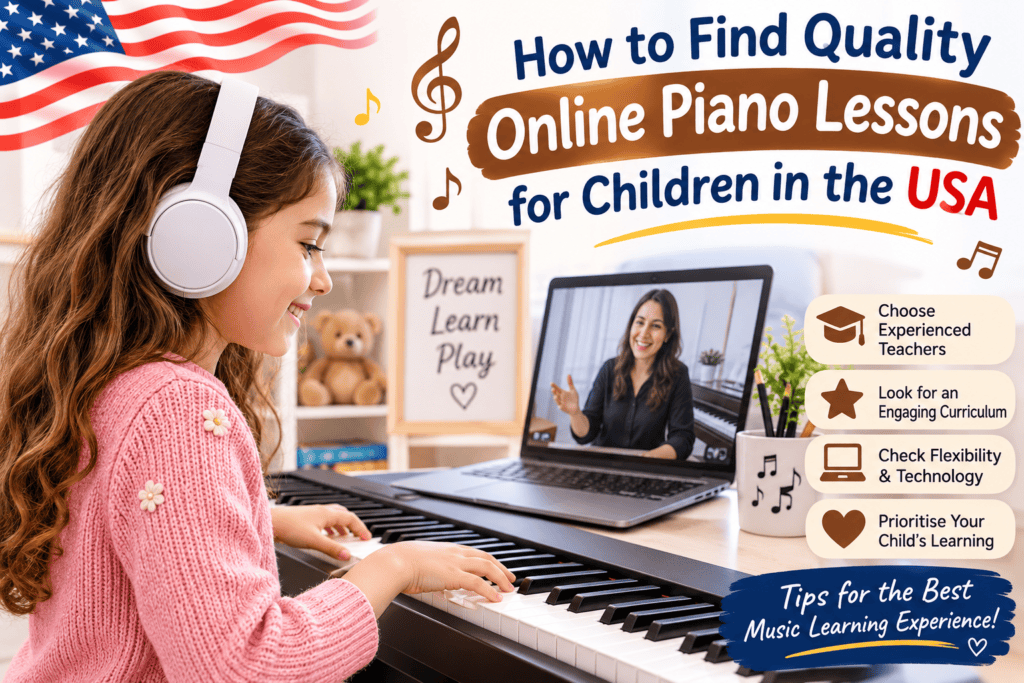
How to Find Quality Online Piano Lessons for Children in the USA
Introduction
Learning to play the piano can be a rewarding experience for children. It introduces them to music, encourages creativity, and helps them develop skills such as concentration, coordination, and patience. However, finding the right teacher and learning environment is essential for making the experience enjoyable and productive. With the growing availability of virtual education, online piano lessons for children have become a convenient option for families across the USA.
Parents can now explore music education from home without travelling to a physical music school. However, not every online piano programme offers the same teaching quality, lesson structure, or level of individual attention.
Choosing the right programme involves looking beyond convenience. Parents should consider the teacher’s experience, teaching approach, lesson structure, flexibility, and ability to connect with young learners.
Here are some important factors to consider when finding quality online piano lessons for children in the USA.

Why Choose Online Piano Lessons for Children in the USA?
Online learning has made music education more accessible to families with different schedules and learning preferences. Children can receive piano instruction from home while parents manage school activities, extracurricular commitments, and family routines.
One of the biggest advantages of online piano lessons for children is the flexibility they can offer. Families can explore teachers and programmes beyond their immediate neighbourhood instead of being limited to nearby music schools.
Some important benefits include:
Convenience: Children can attend lessons from home without travelling.
Flexible scheduling: Lesson timings can be coordinated around school and family commitments.
Individual attention: Private online lessons can provide personalised instruction.
Wider teacher options: Parents can explore instructors from different locations.
Comfortable learning environment: Children can practise in a familiar space with their own instruments.
Online lessons can be particularly helpful for families who want to introduce music education without adding unnecessary travel to their weekly routine.
1. Look for Experienced Piano Teachers Who Understand Children
The teacher is one of the most important factors when choosing online piano lessons for children. Teaching young beginners requires more than advanced piano-playing skills. A good teacher should understand how children learn, communicate clearly, and make lessons engaging.
Children may need additional encouragement when learning unfamiliar concepts such as musical notation, finger positioning, rhythm, and hand coordination.
Before selecting a teacher, parents should consider:
Their musical education and teaching experience.
Experience working with children and beginners.
Ability to explain musical concepts in simple language.
Patience and communication skills.
Approach to encouraging students and providing feedback.
It is also useful to ask whether the teacher has experience teaching the child’s preferred musical styles.
A supportive teacher can make a significant difference in helping children develop confidence and enjoy their musical journey.
2. Check Whether the Piano Lessons Follow a Structured Curriculum
A quality piano programme should have a clear learning structure rather than relying entirely on teaching random songs.
Children need to develop fundamental skills before moving towards more challenging musical pieces. A structured curriculum helps ensure that they build their abilities gradually.
When evaluating online piano lessons for children, check whether the programme covers important areas such as:
Piano fundamentals: Understanding the keyboard, identifying notes, and developing correct finger positioning.
Music theory: Learning basic notation, rhythm, musical symbols, and time signatures.
Technique: Developing hand coordination, finger independence, and playing control.
Song learning: Practising age-appropriate pieces that make lessons enjoyable.
Musical expression: Exploring dynamics, tempo, phrasing, and different musical moods.
A balanced curriculum should combine technical development with opportunities to play music children enjoy.
3. Choose Piano Lessons That Match Your Child’s Age and Skill Level
Every child develops musical skills at a different pace. A teaching approach that works well for an older beginner may not be suitable for a younger child.
Parents should look for online piano lessons for children that can be adapted to their child’s age, attention span, and previous musical experience.
For younger beginners, lessons may focus on:
Recognising piano keys.
Exploring high and low sounds.
Learning simple rhythms.
Developing basic finger movements.
Playing short melodies.
Older beginners may be ready to explore:
Reading musical notation.
Basic scales and chords.
Hand coordination.
More developed musical pieces.
Introductory music theory.
Children who already have piano experience may benefit from lessons that focus on improving technique, musical interpretation, sight-reading, and repertoire.
The most suitable programme is one that provides an appropriate level of challenge without making the child feel overwhelmed.

4. Look for Interactive and Engaging Online Piano Lessons
Keeping children interested is an important part of successful music education. Long explanations and repetitive exercises may make lessons feel difficult, especially for younger students.
Good online piano lessons should include activities that encourage participation and active learning.
Teachers can make lessons more engaging through:
Short, achievable practice activities.
Familiar songs and melodies.
Interactive demonstrations.
Listening and musical recognition exercises.
Positive feedback and encouragement.
For example, a teacher might introduce note recognition through a simple keyboard activity before asking the child to play a short melody.
A combination of explanation, demonstration, practice, and encouragement can make virtual lessons more enjoyable.
5. Check the Technology and Equipment Requirements
A suitable learning setup is essential for effective online piano lessons.
Before enrolling, parents should understand what equipment and technology the programme requires.
Most children will need:
A piano or digital keyboard.
A computer, tablet, or suitable device.
A stable internet connection.
A working camera and microphone.
A comfortable and quiet practice space.
A device with a larger screen can make it easier for children to see the teacher’s demonstrations and follow instructions.
Camera placement is also important. Ideally, the teacher should be able to see the child’s hands and keyboard clearly. This allows them to observe finger positioning and provide more useful feedback.
Parents should also check whether the teacher uses any additional learning materials, such as digital sheet music, practice recordings, or lesson notes.
6. Find Online Piano Lessons That Offer Personalised Attention
Children do not all learn at the same speed. Some may quickly understand musical notation, while others may need additional time to develop finger coordination or rhythm.
This is why personalised instruction can be valuable.
When choosing online piano lessons for children, parents should check whether the teacher adapts lessons according to the student’s progress.
Personalised lessons can help teachers:
Adjust the difficulty of exercises.
Recommend suitable songs.
Provide individual feedback.
Set achievable learning goals.
Private one-to-one lessons may be particularly useful for beginners who need regular guidance. Group lessons can also provide valuable opportunities for musical interaction, depending on the child’s preferences and learning needs.
7. Compare Lesson Duration, Frequency, and Scheduling Flexibility
A child’s school schedule can be demanding, particularly when they participate in sports, academic activities, and other hobbies.
Therefore, parents should consider whether the lesson schedule is realistic for their family.
Younger beginners may benefit from shorter, focused lessons, while older or more experienced students may be comfortable with longer sessions.
Before choosing a programme, consider:
How long each lesson lasts.
How frequently lessons take place.
Whether weekday and weekend timings are available.
Whether missed lessons can be rescheduled.
Whether lesson timings can be adjusted during school holidays.
Families in the USA may also need to consider time zones when selecting teachers who are based in other countries.
A flexible programme can help children maintain regular music education without making their weekly routine unnecessarily stressful.
8. Read Reviews and Ask for a Trial Lesson
Before committing to a long-term programme, parents should take time to understand the experiences of other families.
Reviews can provide useful information about teaching quality, communication, lesson organisation, and student progress.
When researching online piano lessons for children, look for feedback that discusses:
The teacher’s ability to work with young learners.
Whether lessons are organised and engaging.
How progress is communicated to parents.
The quality of individual instruction.
Whether children enjoy attending lessons.
A trial lesson can be particularly helpful because it allows parents and children to experience the teaching approach before making a decision.
During the trial, observe whether the teacher communicates clearly, encourages participation, and adapts explanations to the child’s understanding.
The child’s comfort and interest should also be considered. A positive first experience can help parents decide whether the programme is suitable.
9. Understand the Pricing and What Is Included
The cost of online piano lessons can vary depending on the teacher’s experience, lesson duration, programme structure, and level of individual instruction.
Parents should compare the overall value rather than choosing a programme based only on its price.
Before enrolling, check whether the fee includes:
Live one-to-one instruction.
Digital learning resources.
Practice materials or sheet music.
Progress feedback.
Lesson recordings, if offered.
Rescheduling options.
Additional learning support.
It is also important to understand the payment schedule, cancellation policy, and any additional charges.
A transparent fee structure helps families make informed decisions and avoid unexpected expenses.
10. Make Sure the Programme Encourages Regular Practice at Home
Attending lessons is only one part of learning the piano. Children also need opportunities to practise what they learn between sessions.
However, practice should be manageable and appropriate for the child’s age and ability.
Quality online piano lessons for children should include clear guidance about what students should practise after each session.
For example, a beginner might follow a simple practice routine:
Five minutes identifying piano keys.
Five minutes practising finger exercises.
Ten minutes working on a familiar melody.
A few minutes revising the previous lesson.
The duration can be adjusted according to the child’s attention span and teacher’s recommendations.
Parents can support this routine by providing a comfortable practice space, encouraging consistency, and recognising small achievements.
The goal is to help children develop independence and enjoy the process of learning music.
11. Check Whether the Lessons Encourage Creativity and Musical Expression
Learning piano should not be limited to memorising notes and repeating exercises. Children should also have opportunities to explore music creatively.
A good teacher introduces students to different musical styles and encourages them to develop their own musical interests.
Depending on their age and ability, children can explore:
Classical piano pieces.
Popular songs and film music.
Basic improvisation.
Simple chord progressions.
Musical storytelling.
Introductory composition activities.
These experiences help children understand that piano playing is not only about technical accuracy. It is also about expressing ideas and emotions through music.
A programme that balances technique with creativity can help children remain interested as their skills develop.
12. Understand How Parents Can Support Online Piano Learning
Parents do not need to be professional musicians to support their children’s piano education. Their involvement can help children remain motivated and develop positive learning habits.
Here are some practical ways parents can help:
Provide a suitable instrument: Ensure the child has access to a piano or keyboard that meets the teacher’s recommendations.
Create a quiet practice space: Choose an area where children can concentrate without unnecessary distractions.
Encourage regular practice: Help establish a manageable routine without turning music into a stressful responsibility.
Show interest in their progress: Listen to newly learned songs and encourage children to share their achievements.
Communicate with the teacher: Discuss challenges, progress, and any changes in the child’s learning needs.
Celebrate small milestones: Recognise improvements in technique, confidence, and consistency.
A supportive home environment can make online music education more enjoyable and rewarding.
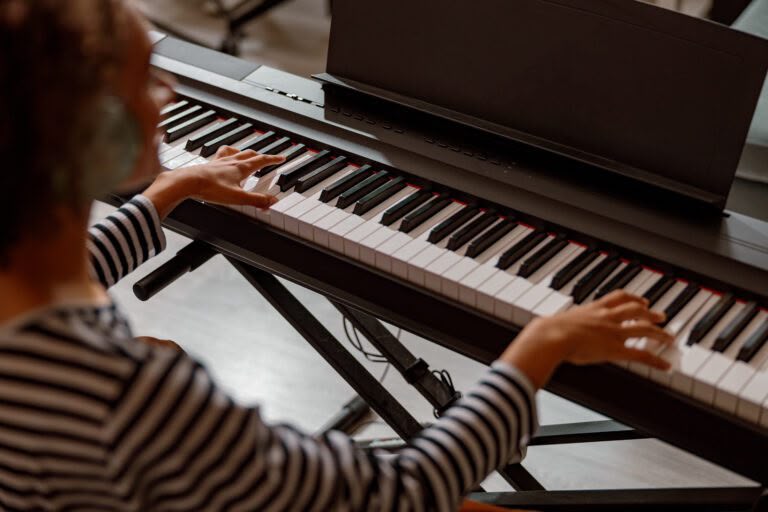
How The Mystic Keys Provides Online Piano Lessons for Children in the USA
Finding the right music teacher can help children build a strong foundation and develop a lasting interest in music.
At The Mystic Keys, children can explore piano and keyboard lessons through structured online instruction guided by internationally certified teachers.
Lessons are designed to help students develop essential musical skills, including keyboard familiarity, finger technique, rhythm, music reading, and expressive playing.
With individual guidance and a supportive learning environment, students can work towards musical goals at a pace suited to their abilities.
For families in the USA, online lessons offer the convenience of learning from home while coordinating classes around school schedules and other commitments.
Whether a child is a complete beginner or has some previous piano experience, The Mystic Keys aims to make music learning accessible, engaging, and rewarding.
Conclusion
Finding quality online piano lessons for children in the USA involves looking beyond convenience and comparing the teacher’s experience, curriculum, teaching approach, flexibility, and learning environment. The right programme should combine structured musical development with encouragement, creativity, and personalised guidance. With a supportive teacher and consistent practice, children can build piano skills, grow in confidence, and develop a lifelong appreciation for music.
For more information and exciting resources about learning music, visit our website at The Mystic Keys. For more music content and exciting offers follow us on
Facebook, Instagram, YouTube, LinkedIn, Twitter, Pinterest, and Threads,