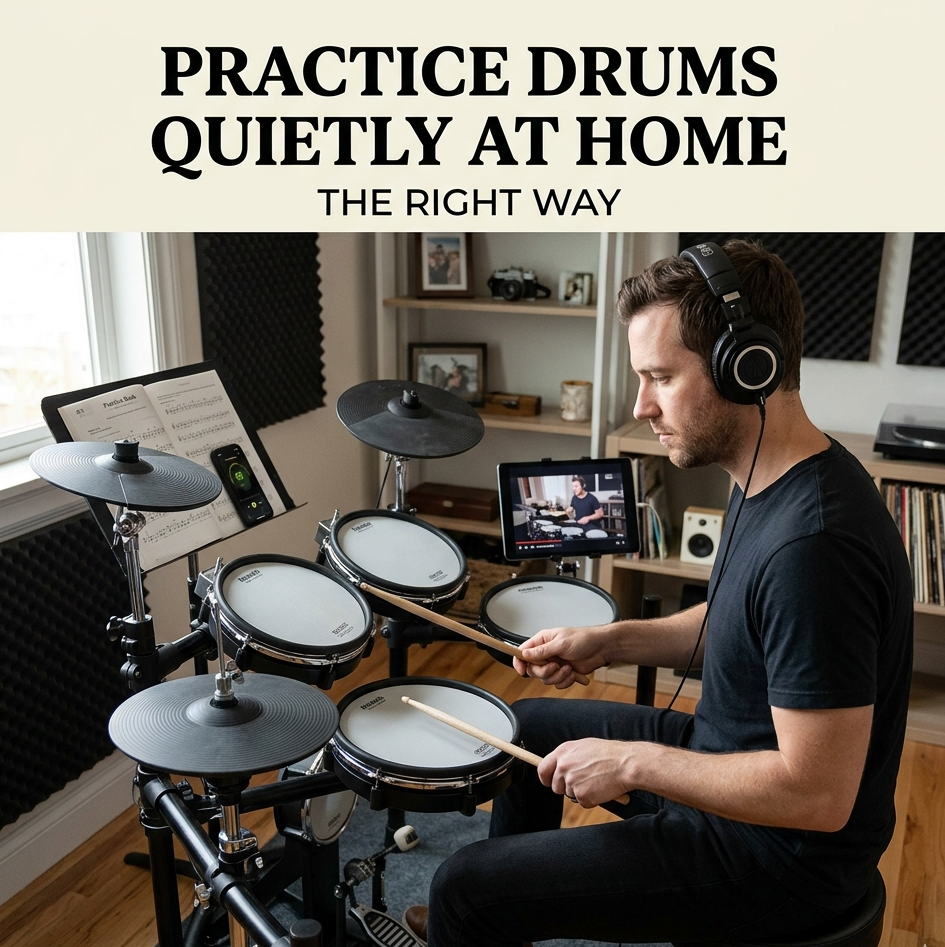
Practice Drums Quietly at Home the Right Way
Practicing drums at home can feel challenging when noise becomes a concern. Many learners worry about disturbing family members, neighbors, or even affecting their own concentration while trying to improve technique. Choosing to practice drums quietly does not mean progress will slow down or become less effective. When approached the right way, quieter sessions can actually sharpen control, strengthen timing, and develop musical awareness more deeply than loud playing ever could.
With the right approach, your home practice sessions can become structured, productive, and peaceful—without sacrificing progress or enjoyment. Let’s explore how to make quiet drum practice both smart and satisfying.
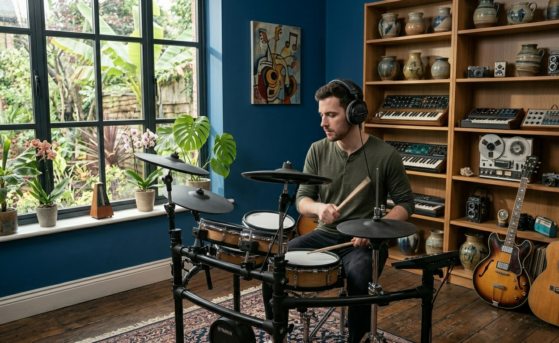
Why It Is Important to Practice Drums Quietly at Home
Before adjusting equipment or technique, it helps to understand why quiet practice is valuable in the first place.
Noise restrictions are common in apartments, shared homes, and residential neighborhoods. Respecting those limits keeps relationships comfortable and avoids interruptions in your routine. More importantly, softer playing encourages better stick control and improves sensitivity in your hands.
A drummer who can play softly with clarity usually develops stronger timing and cleaner strokes. Volume control becomes easier later on, whether performing live or rehearsing with a band. Instead of treating quiet practice as a compromise, think of it as a powerful training method that builds precision from the ground up.
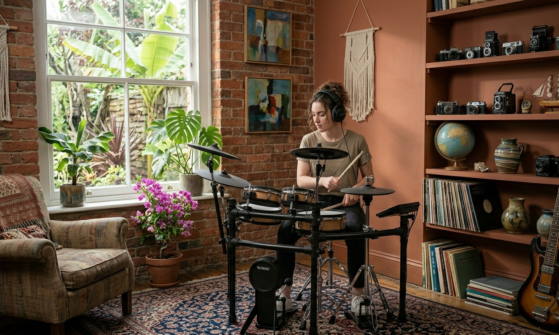
Choosing the Right Setup to Practice Drums Quietly at Home
A thoughtful setup makes the biggest difference when trying to reduce sound levels. Even small adjustments can transform the experience for both the player and the people nearby.
Practice pads are often the simplest and most effective solution. They produce minimal noise while helping strengthen wrist technique and rebound control. Many students discover that consistent pad practice improves their accuracy faster than playing only on a full drum kit.
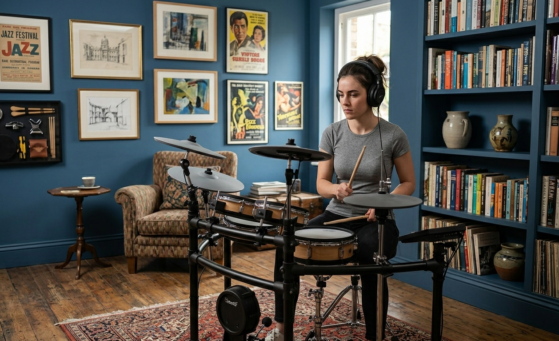
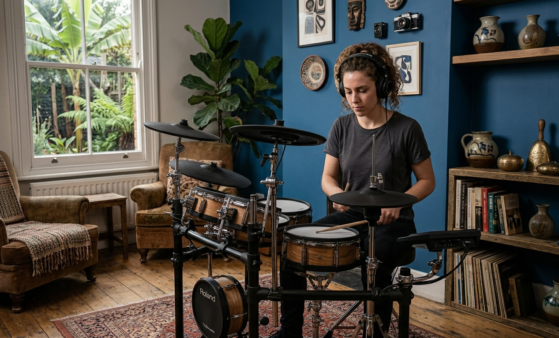
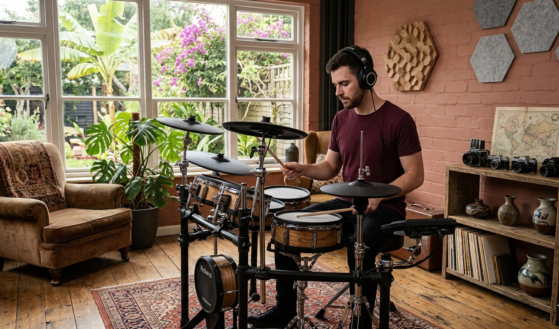
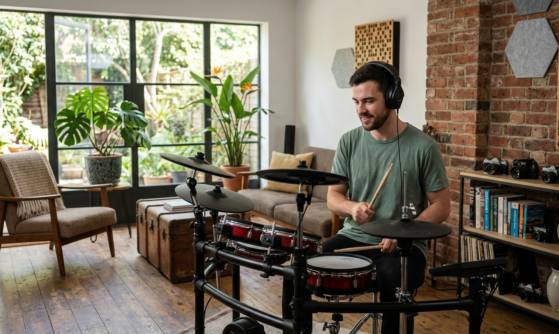
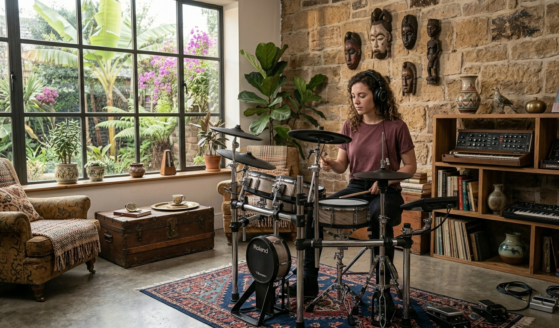
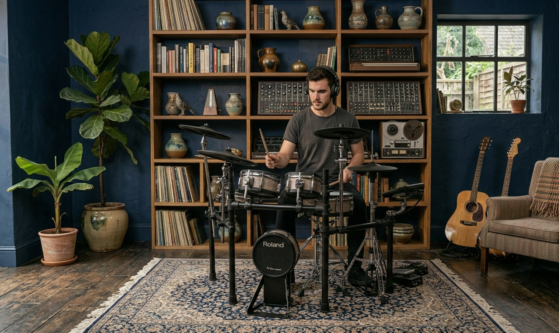
Electronic drum kits offer another excellent alternative. These kits allow you to practice with headphones while maintaining the feel of a real setup. Since volume stays contained, longer sessions become possible without worrying about disturbance.
Mesh drum heads can also reduce acoustic drum volume significantly. When installed on a traditional kit, they create a quieter surface that still responds naturally to stick movement. Combining mesh heads with low-volume cymbals creates a balanced and practical silent practice environment.
Each option supports different needs, yet all of them help maintain consistent progress without unnecessary noise.
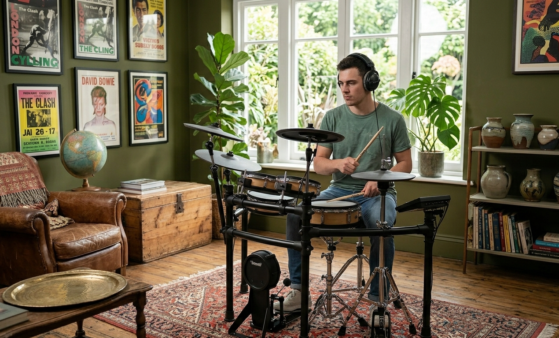
Improving Technique Through Low-Volume Playing
Quiet practice is not only about reducing sound. It is also about refining movement.
Soft strokes demand better stick control. Hands must stay relaxed while producing clear articulation, which strengthens muscle memory over time. As a result, dynamic range improves naturally.
Timing becomes easier to monitor during softer sessions as well. Loud playing sometimes hides small rhythm mistakes, whereas gentle playing reveals them immediately. That awareness allows quicker correction and more confident performance later.
Consistency develops faster when each stroke receives attention. Instead of focusing only on speed or power, the drummer begins to notice tone, balance, and spacing between notes. Those details create musical maturity that audiences can hear instantly.
Smart Tools That Help You Practice Drums Quietly at Home
Quiet environments benefit greatly from structured practice tools. These tools support rhythm awareness and maintain motivation during independent sessions.
A metronome remains one of the most valuable companions for any drummer. Practicing softly with steady timing strengthens internal rhythm and keeps progress measurable. Over time, tempo stability becomes second nature.
Headphones also help maintain concentration. Listening to backing tracks or guided exercises allows drummers to stay engaged without increasing external noise. Practice becomes immersive rather than repetitive.
Recording short sessions occasionally can reveal improvement patterns. Listening back highlights strengths and areas needing attention, making each session more purposeful and efficient.
Together, these tools create a focused practice atmosphere that supports steady growth.
Creating a Practice Routine That Works at Home
Consistency matters more than volume when building skill.
Short daily sessions often produce better results than occasional long rehearsals. Even fifteen to twenty minutes of structured quiet practice can strengthen coordination when done regularly. Over time, those minutes accumulate into noticeable improvement.
Warm-up exercises help prepare the wrists and fingers gently before moving into rhythm patterns. Once the hands feel comfortable, practicing grooves slowly allows technique to stay clean and controlled.
Ending each session with something enjoyable keeps motivation high. Playing along with a favorite track at a controlled volume creates a positive connection between discipline and creativity.
A balanced routine turns quiet practice into something you look forward to rather than something you simply manage.
Reducing Sound Further Without Losing Feel
Sometimes additional steps are needed to keep practice truly neighbor-friendly. Fortunately, several simple adjustments can help.
Practicing on carpets instead of hard flooring reduces vibration traveling through walls and floors. Positioning the kit away from shared walls also limits sound transmission.
Rubber isolation pads placed under stands and pedals absorb impact noise effectively. These small additions often make a noticeable difference in apartment settings.
Closing doors and windows during sessions keeps sound contained within the room. Even minor environmental adjustments can significantly improve the overall experience for everyone nearby.
When combined with quiet practice equipment, these changes create a comfortable and respectful learning environment.
Staying Motivated While You Practice Drums Quietly at Home
Practicing at lower volume sometimes feels less exciting at first. However, motivation returns quickly once progress becomes visible.
Setting small weekly goals helps maintain direction. Achieving those targets creates confidence and encourages consistency. Over time, each completed goal builds momentum.
Tracking improvement through recordings or simple practice notes can be surprisingly encouraging. Seeing steady development reminds you that quiet sessions are working.
Most importantly, celebrating small improvements keeps the journey enjoyable. Even subtle changes in timing or control deserve recognition because they shape long-term success.
Building Confidence for Full-Volume Playing Later
Quiet practice prepares drummers for stronger performance situations.
Control developed during low-volume sessions makes transitions to louder playing smoother and more reliable. Hands stay relaxed, strokes remain balanced, and timing feels stable even at higher intensity levels.
Confidence grows naturally when technique feels dependable. Instead of struggling with control, attention shifts toward musical expression and creativity.
Eventually, the discipline learned through quiet practice becomes one of the drummer’s greatest strengths.
Final Thoughts
Practicing drums quietly at home is not a limitation—it is an opportunity. With the right setup, thoughtful routines, and supportive tools, silent or low-volume sessions can become some of the most productive moments in your musical journey.
Consistency, awareness, and patience transform these sessions into powerful learning experiences. Over time, the skills developed in a quiet environment carry confidently into rehearsals, performances, and collaborations.
When guided properly, quiet practice becomes even more effective. At The Mystic Keys, structured Drums Lessons Online help students learn the right techniques for low-volume practice, improve timing and stick control, and build confidence step by step from home. With expert guidance and personalized support, learners can progress steadily while practicing comfortably in their own space.
When approached the right way, quiet practice does more than reduce noise. It builds control, confidence, and musical maturity that lasts for years—and sets the foundation for becoming a confident, expressive drummer.
For more information and exciting resources about learning music, visit our website at The Mystic Keys. For more music content and exciting offers follow us on
Facebook, Instagram, YouTube, LinkedIn, Twitter, Pinterest, and Threads.