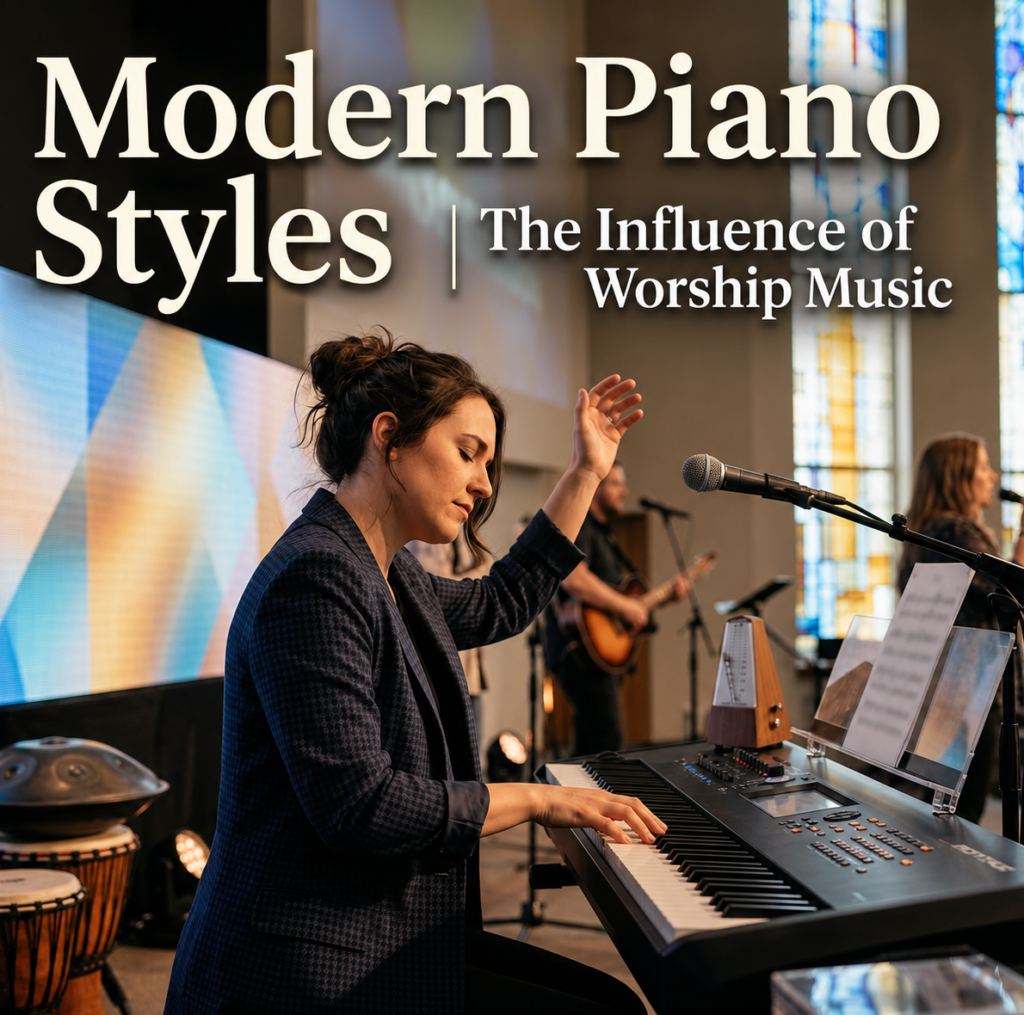
Modern Piano Styles | The Influence of Worship Music
Music has always evolved alongside culture, emotions, and personal expression. Among the many influences that have shaped modern piano styles, worship music has emerged as one of the most significant. Once associated mainly with traditional hymns and church services, it has evolved into a contemporary style featuring heartfelt melodies, rich harmonies, and expressive piano techniques. Today, its influence extends far beyond places of worship, inspiring pianists, composers, songwriters, and learners around the world.
Modern worship music has redefined how the piano is used in contemporary performances. Rather than serving as only an accompanying instrument, the piano has become a powerful storytelling tool capable of creating emotion, building atmosphere, and leading audiences through meaningful musical experiences. Consequently, many aspiring pianists are now drawn to worship-inspired playing because of its emotional depth, simplicity, and versatility.
Whether you are a beginner exploring contemporary piano styles or an experienced musician looking to expand your musical vocabulary, understanding the influence of worship music can significantly enrich your playing. Throughout this article, we will explore how worship music has shaped modern piano techniques, songwriting, improvisation, performance styles, and the overall learning experience.
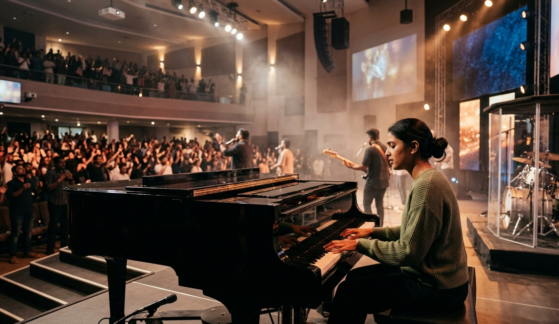
Understanding Modern Worship Piano
Modern worship piano differs considerably from traditional classical piano performance. Although both require solid technical skills, their primary goals are often quite different. Classical music typically focuses on accurately interpreting written compositions, whereas worship piano places greater emphasis on creating an atmosphere that supports singing and emotional connection.
Unlike heavily ornamented performances, worship piano often embraces simplicity. Gentle chord progressions, spacious voicings, flowing rhythms, and carefully chosen dynamics allow every note to contribute meaningfully without overwhelming the listener. As a result, pianists learn to appreciate the value of restraint rather than complexity.
Another defining characteristic is flexibility. Instead of relying entirely on written sheet music, worship pianists frequently adapt songs based on the needs of the moment. This approach encourages active listening, musical awareness, and creative decision-making during performances.
Moreover, modern worship music has incorporated influences from pop, rock, folk, ambient, and cinematic music. Because of this fusion, worship piano has become appealing even to musicians who do not primarily perform in religious settings.
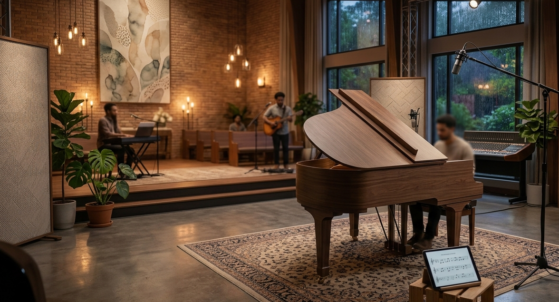
The Evolution of Modern Piano Styles and Worship Music
Over the past few decades, worship music has undergone remarkable transformation. Traditional hymns with structured harmonies have gradually evolved into contemporary worship songs featuring modern production, emotional lyrics, and accessible chord progressions.
This evolution has naturally influenced piano playing as well. Earlier worship pianists often focused on supporting congregational singing with straightforward accompaniment. In contrast, today’s pianists frequently create lush musical landscapes using layered chords, arpeggios, rhythmic patterns, and expressive fills.
At the same time, technological advancements have expanded creative possibilities. Digital pianos, synthesizers, and virtual instruments have enabled musicians to blend acoustic piano with atmospheric pads, strings, and ambient textures. Consequently, modern worship performances often feature rich soundscapes that enhance the emotional impact of the music.
Furthermore, online tutorials, live recordings, and educational platforms have made worship piano techniques accessible to learners worldwide. Students can now observe professional musicians, study performance styles, and practice contemporary arrangements regardless of their location.
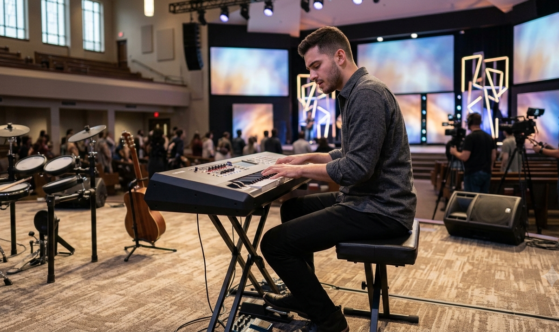
Emotional Expression in Modern Piano Styles
Perhaps the most defining feature of worship piano is its emphasis on emotional expression. Rather than showcasing technical brilliance alone, worship music encourages musicians to communicate sincerity, peace, hope, joy, and reflection through every performance.
Dynamics play a particularly important role in achieving this goal. Soft passages create moments of intimacy, while gradual crescendos build anticipation and emotional intensity. Instead of maintaining a constant volume throughout a piece, worship pianists shape phrases with careful attention to emotional flow.
Equally important is the use of silence. Strategic pauses between phrases often create as much impact as the notes themselves. These moments allow listeners to absorb the music while giving singers room to express the lyrics naturally.
Expressive pedaling further enhances the overall atmosphere. Smooth transitions between chords, sustained harmonies, and resonant melodies contribute to the signature sound associated with contemporary worship music.
As pianists develop greater emotional awareness, they begin to understand that effective performances depend not only on technical accuracy but also on thoughtful musical interpretation.
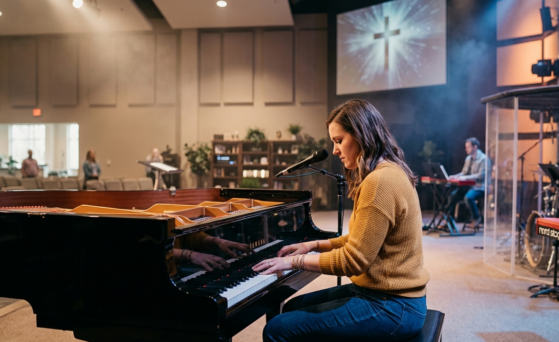
Chord Progressions That Shape Modern Piano Styles
One reason worship music has become so popular among piano learners is its approachable harmonic structure. Many songs rely on familiar chord progressions that are both easy to learn and emotionally engaging.
Progressions such as I–V–vi–IV appear frequently because they create a strong sense of familiarity while supporting memorable melodies. Although these progressions may seem simple, skilled pianists use creative voicings, inversions, and rhythmic variations to make them sound fresh and expressive.
Instead of repeating identical chord shapes, worship musicians often experiment with open voicings that spread notes across multiple octaves. This technique produces a fuller, warmer sound without adding unnecessary complexity.
Additionally, suspended chords, add9 chords, and major seventh chords frequently appear in worship arrangements. These harmonic colors introduce richness and emotional depth while maintaining a sense of openness that characterizes the genre.
Learning these chord variations allows pianists to accompany singers more effectively while also creating beautiful solo arrangements.
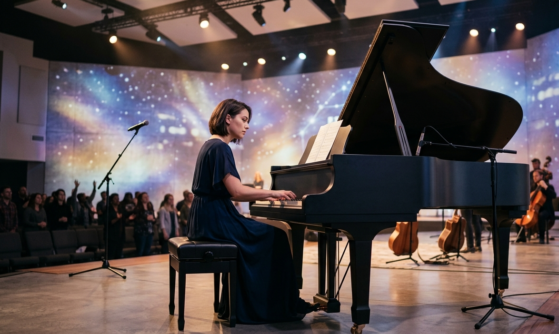
Contemporary Piano Techniques Inspired by Worship Music
Modern worship piano incorporates several distinctive techniques that have become increasingly common across many contemporary genres. One of the most recognizable is broken chord accompaniment, where notes are played individually instead of simultaneously. This flowing style creates movement while supporting the melody without becoming distracting.
Arpeggios are equally important. Instead of simply holding chords, pianists often use repeating arpeggiated patterns to maintain musical energy throughout slower songs. These patterns add elegance while preserving the calm atmosphere typical of worship music.
Layering also plays a significant role. The left hand generally establishes a stable harmonic foundation using bass notes or octaves, whereas the right hand introduces melodic fills, rhythmic textures, or higher chord voicings. Together, these elements produce a rich and balanced arrangement.
Rhythmic variation contributes further interest. Rather than maintaining identical accompaniment patterns, worship pianists subtly modify rhythms as songs progress. These gradual changes help sustain listener engagement while supporting the emotional journey of the performance.
Because these techniques are highly adaptable, they have found their way into pop ballads, film scores, acoustic performances, and contemporary songwriting.
Improvisation in Modern Piano Styles
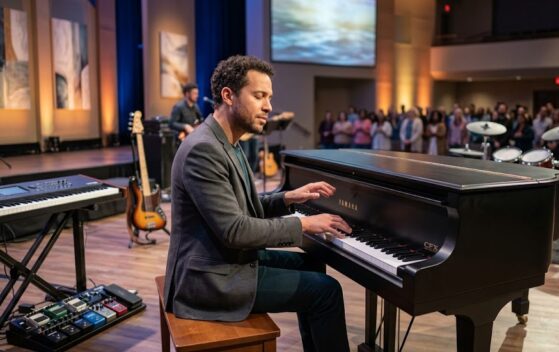
Improvisation has become one of the defining characteristics of modern worship piano. Unlike strictly written performances, worship musicians are often expected to adapt spontaneously during rehearsals and live services.
This flexibility encourages pianists to develop strong listening skills alongside theoretical knowledge. Instead of memorizing every note, they learn to recognize chord progressions, anticipate musical transitions, and respond naturally to singers or fellow instrumentalists.
Improvisation also strengthens creativity. Simple melodic ideas can evolve into expressive introductions, instrumental interludes, or reflective endings. Over time, musicians become increasingly comfortable creating original musical moments while remaining faithful to the song’s emotional message.
Another benefit involves confidence. Since improvisation removes the fear of making every performance identical, pianists gradually become more relaxed and expressive. Consequently, each performance feels fresh while maintaining its musical integrity.
Worship Music’s Influence on Songwriting
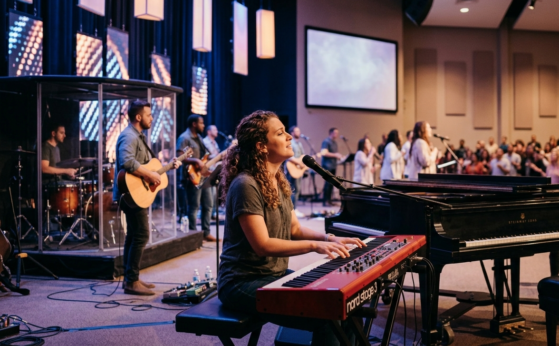
The influence of worship piano extends beyond performance into the creative process of songwriting itself. Many contemporary songwriters borrow harmonic structures, melodic phrasing, and dynamic development from worship music because these elements naturally create emotional resonance.
Rather than relying on complicated arrangements, successful worship-inspired songs often begin with a simple piano progression that supports meaningful lyrics. This minimalist approach allows the message to remain the primary focus.
Gradual musical development is another defining feature. Songs typically begin softly before building toward fuller arrangements that create emotional release. This progression has become increasingly common in pop, inspirational, and cinematic music.
Melodies are usually designed to be memorable and singable. Instead of emphasizing technical difficulty, they prioritize emotional accessibility, making them appealing to diverse audiences.
As a result, worship music has influenced composers across numerous musical styles.
Learning Modern Piano Styles Through Worship Music
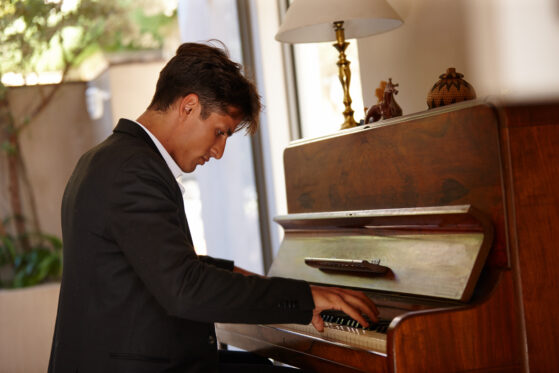
For many beginners, worship music provides an excellent introduction to modern piano playing. The chord progressions are approachable, the rhythms are manageable, and the emphasis on expression encourages musical confidence from an early stage.
Students often discover that learning chords enables them to play multiple songs much more quickly than relying exclusively on traditional notation. This practical approach keeps learners motivated because they experience meaningful progress in a relatively short period.
Meanwhile, intermediate players benefit from exploring inversions, advanced voicings, improvisation, and accompaniment techniques. These skills gradually expand their musical versatility while strengthening their understanding of harmony.
Advanced pianists also find opportunities for growth. Sophisticated arrangements, spontaneous improvisation, expressive dynamics, and collaborative performance all present rewarding musical challenges.
Regardless of experience level, worship-inspired learning develops both technical ability and artistic sensitivity.
Why Worship Piano Appeals Beyond Religious Settings
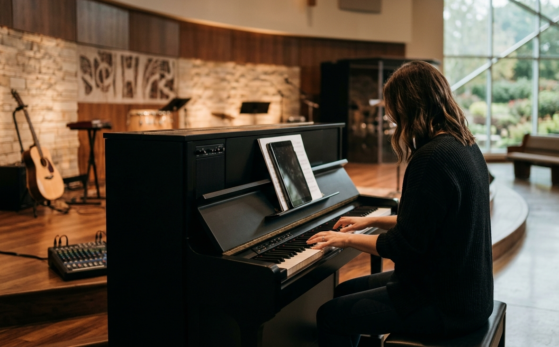
Although worship music has spiritual origins, its musical influence extends well beyond church environments. Many instrumental pianists perform worship-inspired compositions simply because of their emotional beauty and calming atmosphere.
Film composers frequently incorporate similar harmonic progressions and spacious piano textures when creating reflective scenes. Likewise, meditation music, relaxation playlists, and inspirational performances often feature techniques closely associated with worship piano.
Music educators have also recognized its educational value. Since worship songs balance simplicity with expressive potential, they provide excellent teaching material for developing rhythm, harmony, listening skills, and improvisation.
Furthermore, audiences increasingly appreciate authentic emotional performances regardless of genre. Worship piano’s focus on sincerity aligns naturally with this growing preference for meaningful musical experiences.
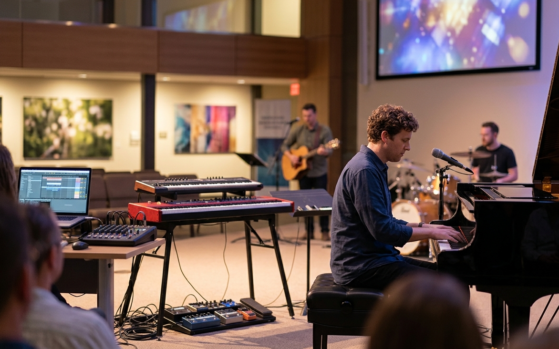
Developing Your Own Worship-Inspired Piano Style
Every pianist eventually develops a unique musical voice. Studying worship music provides valuable tools, but personal interpretation remains equally important.
Listening carefully to experienced worship pianists can reveal subtle techniques involving phrasing, dynamics, timing, and chord voicings. Nevertheless, imitation should eventually give way to individual creativity.
Regular experimentation also plays an essential role. Trying different inversions, varying accompaniment patterns, and exploring new rhythmic ideas gradually builds confidence while expanding musical expression.
Consistent practice with a metronome strengthens timing, whereas playing alongside recordings improves listening skills. Recording personal performances further helps identify areas for refinement while highlighting artistic progress over time.
Most importantly, expressive playing grows through intentional musical choices rather than technical complexity alone. A thoughtfully played simple progression often creates a greater emotional impact than an overly complicated arrangement.
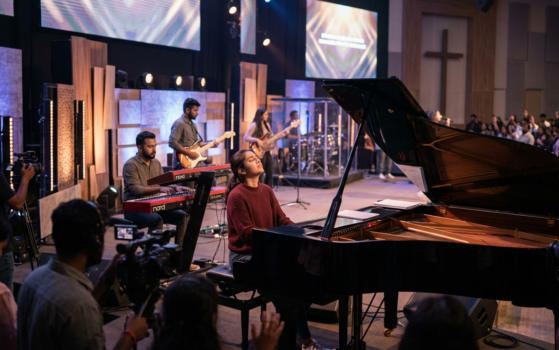
The Lasting Impact of Worship Music on Modern Piano
The influence of worship music on modern piano continues to grow across genres, cultures, and musical communities. Its emphasis on expressive playing, accessible harmony, creative improvisation, and emotional authenticity has reshaped the way countless musicians approach the instrument.
As contemporary music continues to evolve, worship-inspired piano techniques remain highly relevant because they balance simplicity with depth. Pianists who study this style often become more versatile performers, more thoughtful accompanists, and more confident improvisers. For those looking to develop these skills, Worship Piano & Singing Lessons Online provide a practical and inspiring way to build both musical confidence and expressive ability.
Ultimately, worship music reminds musicians that great piano playing is about far more than technical perfection. Emotion, connection, creativity, and purposeful expression give every performance lasting meaning. Whether performed in a concert hall, recording studio, classroom, or personal practice space, this style continues to inspire musicians to create music that resonates deeply with listeners around the world. At The Mystic Keys, students are encouraged to explore these modern techniques while developing a strong musical foundation that supports both artistic growth and heartfelt performance.
For more information and exciting resources about learning music, visit our website at The Mystic Keys. For more music content and exciting offers follow us on
Facebook, Instagram, YouTube, LinkedIn, Twitter, Pinterest, and Threads.