How to Keep Children Motivated During Piano Lessons
Learning the piano can be an exciting experience for children. They get to explore sounds, learn songs, develop new skills, and eventually create music on their own. However, keeping a Children Motivated During Piano Lessons can sometimes be challenging. A child may be enthusiastic when lessons begin but lose interest when practice becomes difficult or when progress feels slower than expected. Understanding how motivation works can help parents and teachers create a learning environment where children remain curious, encouraged, and excited about playing.
Children do not always approach music with the same goals as adults. An adult may be motivated by a long-term goal such as completing an examination, performing on stage, or mastering advanced repertoire. A child may simply want to learn a favorite song, play something for a parent, or experiment with the piano. These smaller sources of enjoyment are important. When children associate piano lessons with achievement, creativity, and enjoyment rather than constant pressure, they are more likely to develop a positive relationship with music.
Why Children Lose Motivation During Piano Lessons
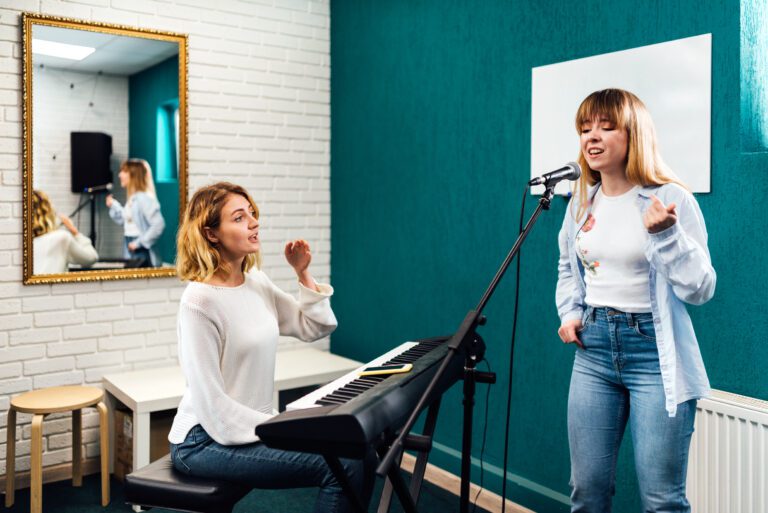
A child losing interest does not necessarily mean they dislike the piano. Children Motivated During Piano Lessons, Motivation can decrease for many reasons. The music may be too difficult, practice may feel repetitive, or the child may not understand why they are learning a particular exercise. Sometimes children simply need a change in routine.
Difficulty Can Become Discouraging
When a piece is far beyond a child’s current ability, every practice session can feel like a struggle. Repeated mistakes may make the child believe that they are not good at piano.
Choosing music at an appropriate level can make a significant difference. Children should experience challenges, but those challenges should be achievable with effort.
Repetition Can Feel Boring
Repetition is necessary for developing musical skills, but children may not always understand its purpose.
Instead of asking a child to repeat the same passage endlessly, teachers can turn repetition into a small challenge. They might count successful attempts, change the tempo, add a rhythm variation, or turn the exercise into a musical game.
This keeps practice purposeful without making it feel monotonous.
Help Children Set Small Goals
Large musical goals can seem overwhelming to young learners.
Instead of focusing only on mastering an entire piece, break the process into smaller achievements.
A child might aim to learn four measures, play a rhythm correctly, memorize a short phrase, or perform one section without stopping.
Small Wins Build Motivation
Every completed goal gives children a sense of achievement.
These small successes show them that their effort is producing results.
Over time, several small achievements become a much larger accomplishment, and the child begins to understand that improvement happens through consistent effort.
Let Children Choose Some of Their Music
One of the easiest ways to increase motivation is to give children some control over what they learn.
A structured curriculum is important, but children should also have opportunities to choose songs they genuinely enjoy.
Connect Lessons to Their Interests
If a child loves movie music, introduce suitable arrangements from films.
If they enjoy popular songs, find beginner-friendly versions.
If they like games or cartoons, explore music connected to those interests.
The music does not have to replace technical exercises or foundational repertoire. Instead, it can provide something exciting for the child to look forward to.
Make Piano Lessons Interactive
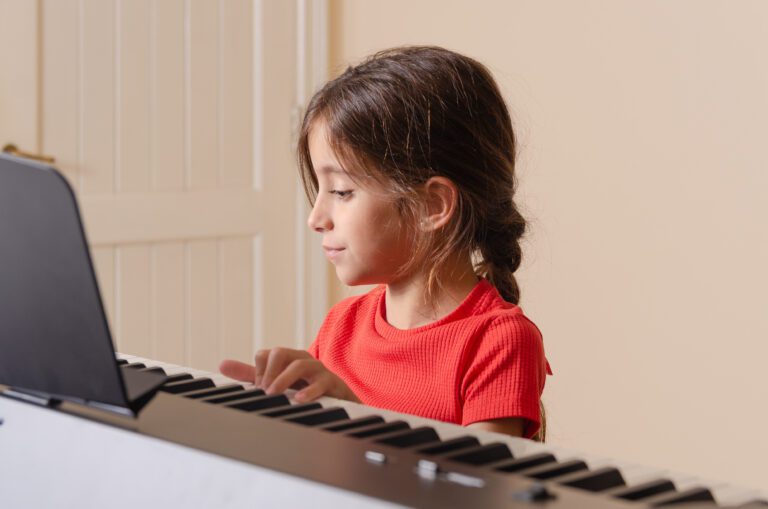
Children generally respond well when lessons involve active participation rather than simply listening to instructions.
A teacher can incorporate rhythm games, ear-training activities, musical puzzles, improvisation, movement, and creative challenges.
Turn Learning Into Discovery
Instead of always telling children what to do, ask questions.
“What do you think this melody will sound like?”
“Can you find the highest note?”
“Can you make this section sound mysterious?”
“Can you create a rhythm for me to copy?“
These questions encourage children to think like musicians rather than simply follow instructions.
Use Praise Carefully and Meaningfully
Encouragement is essential, but praise is most useful when it focuses on specific effort or improvement to keep Children Motivated During Piano Lessons
Instead of simply saying, “You’re amazing,” identify what the child actually did well.
“You kept the rhythm steady.”
“That chord change was much smoother today.”
“You remembered the entire phrase without looking.”
Praise Progress, Not Just Talent
Constantly telling a child that they are naturally talented can unintentionally make mistakes feel threatening.
If children believe that being “talented” is the reason they succeed, they may become discouraged when something becomes difficult.
Praise effort, patience, focus, and improvement.
This helps children understand that musical ability develops through learning and practice.
Keep Practice Sessions Manageable
Children may struggle to concentrate for long periods, particularly when they are beginners.
A short, focused practice session can be much more effective than forcing a child to sit at the piano for an extended period.
Create a Simple Practice Routine
A practice session might include a few minutes of warm-up, a technical exercise, work on a current piece, and a favorite song.
The exact duration should depend on the child’s age, ability, attention span, and learning goals.
The important thing is to make practice achievable.
Create a Positive Practice Environment
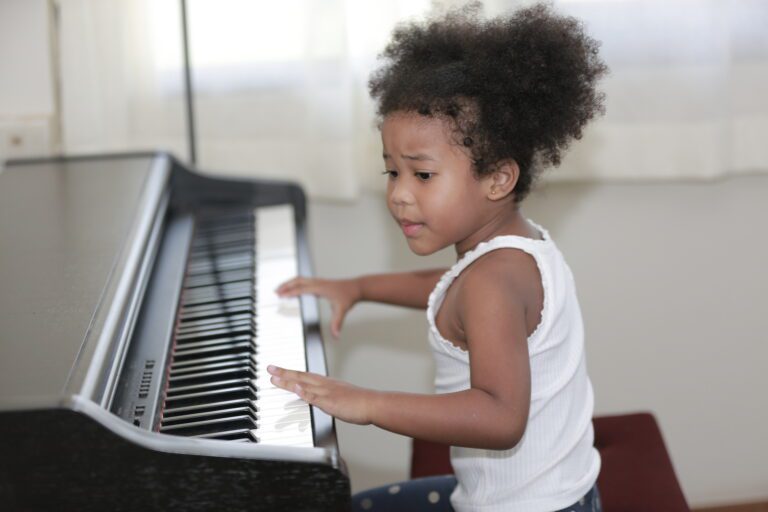
The environment surrounding practice can influence motivation.
If every practice session involves criticism, arguments, or pressure, the piano can quickly become associated with negative emotions.
Encourage Without Constantly Correcting
Parents can support children by creating a regular practice opportunity and celebrating progress.
They do not necessarily need to correct every mistake.
If a teacher is providing technical instruction, parents can focus on encouragement and consistency rather than becoming another instructor at home.
Allow Children to Make Mistakes
Mistakes are unavoidable when learning music.
A child who is afraid of playing the wrong note may become hesitant and stop experimenting.
Mistakes Are Part of Musical Growth
Encourage children to continue after small mistakes.
They can learn that a wrong note does not ruin an entire performance.
This develops resilience and helps them become more comfortable playing in front of others.
Over time, children learn that mistakes are information rather than evidence that they cannot play.
Introduce Performance Gradually
Performing can be a powerful source of motivation, but too much pressure can have the opposite effect.
A child does not need to begin with a large recital.
Start With Comfortable Performances
A child might first play for a parent, then a sibling, a teacher, or a small group of friends.
As confidence develops, larger performances can become more comfortable.
The purpose should be to celebrate what the child has learned rather than create fear around mistakes.
Use Technology as a Learning Tool

Technology can sometimes make practice more engaging when used thoughtfully.
Children can record themselves, listen back to their playing, explore rhythm exercises, or use interactive learning resources.
Let Children Hear Their Progress
Recording a piece at the beginning of the month and again several weeks later can help children hear improvement that they may not notice from day to day.
This creates a tangible sense of progress.
It can also encourage children to take greater ownership of their learning.
Encourage Creativity at the Piano
Not every moment at the piano needs to involve reading from a book.
Children can benefit from opportunities to improvise and experiment.
Ask them to create a short melody using a few notes.
Let them invent a rhythm.
Ask them to play something that sounds happy, calm, dramatic, or mysterious.
Creativity Makes the Instrument Personal
When children create their own music, the piano becomes more than a place where they reproduce instructions.
It becomes a tool for self-expression.
This can strengthen their emotional connection to music and make them more interested in continuing to learn.
Connect Practice to Real Musical Experiences
Children are often more motivated when they understand how their practice connects to something meaningful.
A technical exercise may seem boring by itself, but it becomes more interesting when the child realizes that it helps them play a favorite song.
Explain Why They Are Learning Something
Teachers can briefly explain the purpose behind an exercise.
For example, a scale may help develop finger coordination.
A rhythm exercise may help the child stay steady when playing with other musicians.
Chord practice may make it easier to accompany a singer.
Understanding the purpose gives practice greater meaning.
Avoid Turning Every Lesson Into a Test
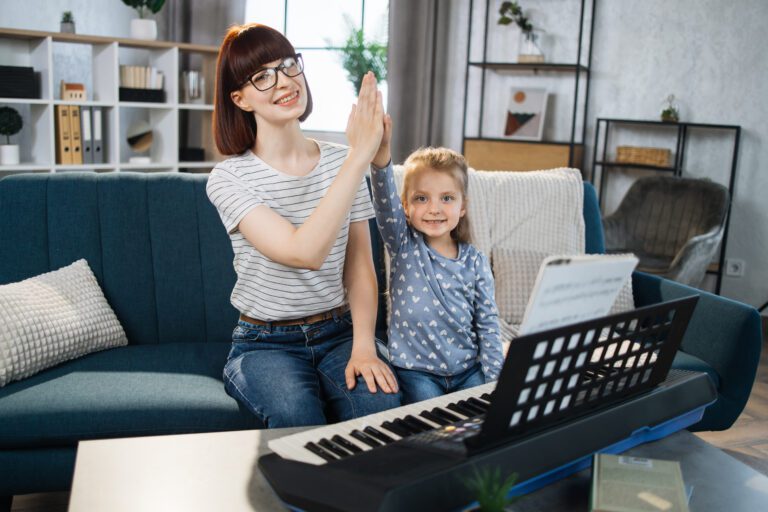
Children need opportunities to learn without feeling that every mistake is being judged.
If every lesson feels like an examination, anxiety can replace curiosity.
Give Children Room to Explore
A lesson can include structured learning and free exploration.
After working on technique or repertoire, allow the child to experiment with sounds, rhythms, or melodies.
This balance helps maintain both discipline and enjoyment.
Keep Expectations Age-Appropriate
Children develop at different rates.
Their attention span, coordination, reading ability, and ability to practice independently can vary considerably.
Don’t Compare Children
Comparing one child with another can quickly damage motivation.
One student may learn songs quickly while another develops excellent rhythm.
Another child may have strong musical memory but need more time with reading.
Every learner has different strengths.
The goal should be individual progress rather than competition.
Help Children Become Independent Musicians
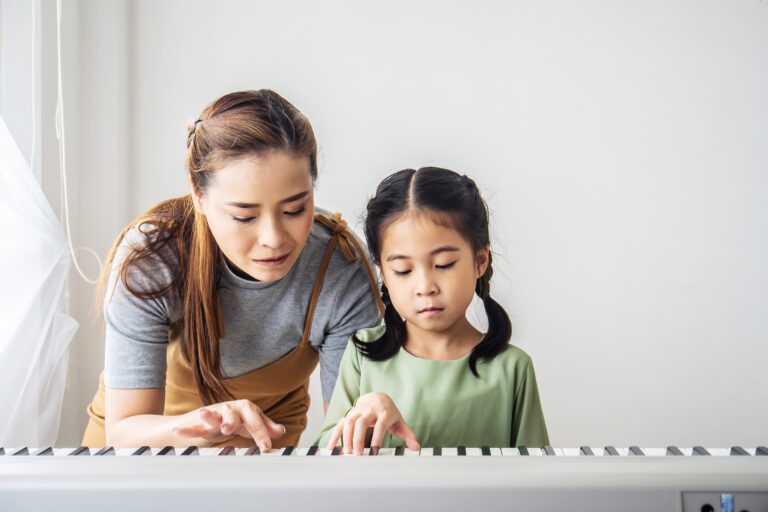
As children become more experienced, they should gradually learn how to practice without constant adult supervision.
A teacher can show them how to identify difficult passages, choose appropriate tempos, and organize their practice.
Teach Them How to Solve Problems
Instead of immediately fixing every problem for a child, ask questions.
“What happened there?”
“Which hand is causing the difficulty?”
“What would make that transition easier?”
These questions encourage children to develop problem-solving skills Children Motivated During Piano Lessons
Conclusion
Keeping children motivated during piano lessons requires more than simply reminding them to practice. Children need achievable challenges, meaningful encouragement, opportunities to make choices, creative activities, and music that connects with their interests. They also need to understand that mistakes and difficult moments are normal parts of learning.
Parents and teachers play an important role in creating this environment. By focusing on progress rather than perfection, keeping practice manageable, celebrating small achievements, and gradually encouraging independence, adults can help children develop confidence without turning music into a source of pressure.
Most importantly, children should have opportunities to enjoy making music. A favorite song, a creative improvisation, a successful performance, or simply mastering a difficult passage can provide the motivation to keep going. When children associate piano learning with curiosity, achievement, and enjoyment, they are much more likely to continue developing their musical skills over time.
At The Mystic Keys, our personalized Piano Lessons Online provide children with structured, engaging instruction designed around their individual learning pace, interests, and musical goals. With guidance from experienced teachers, children can develop piano technique, rhythm, music reading, creativity, and confidence while building a positive and lasting relationship with music.
For more information and exciting resources about learning music, visit our website at The Mystic Keys. For more music content and exciting offers follow us on
Facebook, Instagram, YouTube, LinkedIn, Twitter, Pinterest, and Threads.