
Guitar Lessons | Acoustic or Electric? Find Your Perfect Match
Learning the guitar is an exciting journey that opens the door to creativity, self-expression, and a lifelong love for music. Guitar lessons provide the guidance and foundation beginners need to build confidence from the very first chord. One of the first questions every new learner asks is, “Should I start with an acoustic guitar or an electric guitar?” While both instruments share the same musical foundation, they offer different playing experiences, sounds, and learning paths.
Many aspiring guitarists delay their first lesson because they worry about making the wrong choice. Fortunately, there is no universally “better” option. The right guitar depends on your musical interests, personal goals, lifestyle, and the kind of sound that inspires you the most.
Whether you dream of playing soulful acoustic melodies around a campfire or performing energetic rock solos on stage, understanding the strengths of each instrument will help you begin your musical journey with confidence. This guide explores the differences between acoustic and electric guitars, helping you discover which one is the perfect match for your guitar lessons.

Why Your First Guitar Choice Matters
Choosing your first guitar is more than selecting an instrument—it’s about creating an enjoyable learning experience. When beginners feel connected to the instrument they practice on, they are generally more motivated to stay consistent. Regular practice leads to faster improvement, greater confidence, and a stronger passion for music.
At the same time, many learners worry that choosing the “wrong” guitar will make learning more difficult. In reality, both acoustic and electric guitars teach the same fundamental skills. Chords, scales, rhythm, timing, and music theory apply to both. The differences mainly lie in the feel, sound, and playing style.
Instead of focusing on which guitar is easier or harder, think about which instrument will encourage you to pick it up every day. Motivation often plays a much bigger role in success than the type of guitar you own.

Understanding Acoustic Guitar Lessons | What to Expect
An acoustic guitar produces sound naturally through its hollow wooden body. Since it does not require an amplifier, you can simply pick it up and start playing anywhere. This simplicity makes it a popular choice for beginners and casual musicians alike.
Acoustic guitars are known for their warm, rich, and natural tone. They are commonly used in folk, country, singer-songwriter music, pop, worship music, and soft rock. Even without additional equipment, an acoustic guitar delivers a full sound that works beautifully for solo performances and vocal accompaniment.
Because acoustic guitars typically use heavier strings and slightly higher string action, beginners may initially find them more challenging to press down. However, this early challenge often helps develop stronger finger muscles and improves overall technique over time.
As your confidence grows, the skills learned on an acoustic guitar transfer easily to many other types of guitars.

Understanding the Electric Guitar
Unlike an acoustic guitar, an electric guitar relies on electronic pickups to produce sound. It needs to be connected to an amplifier or audio interface, allowing players to explore a wide range of tones and effects.
Electric guitars are famous for their versatility. From clean jazz sounds to heavy metal distortion, they can adapt to almost any musical genre. Rock, blues, metal, pop, indie, funk, and contemporary worship music frequently feature electric guitars because of their expressive capabilities.
One reason many beginners enjoy electric guitars is the lighter string tension. Since the strings require less finger pressure, learning chords and scales often feels more comfortable during the initial stages. The slimmer neck found on many electric guitars also makes it easier for some students to move between notes.
Additionally, modern amplifiers and digital effects allow players to experiment with countless sounds, making practice sessions both engaging and inspiring.

Guitar Lessons | Natural Warmth or Endless Variety?
Perhaps the biggest difference between acoustic and electric guitars is their sound.
An acoustic guitar produces an organic tone that resonates naturally through its wooden body. Every note feels warm, full, and expressive without requiring any external equipment. This characteristic makes acoustic guitars ideal for intimate performances, songwriting, and accompanying singers.
Meanwhile, an electric guitar offers incredible flexibility. By adjusting amplifier settings or using effects pedals, one instrument can produce hundreds of unique sounds. Clean tones, crunchy rhythm parts, soaring lead solos, ambient textures, and heavy distortion all become possible with just a few adjustments.
Consequently, your preferred music style should play an important role in your decision. If you love mellow melodies and unplugged performances, an acoustic guitar may be the perfect fit. On the other hand, if powerful solos and energetic performances excite you, an electric guitar will likely keep you inspired.

Which Guitar Is Easier for Beginners?
This question comes up in almost every beginner’s guitar lesson.
The answer, however, depends on what “easy” means to you.
Electric guitars usually feel easier on the fingers because of their lighter strings and lower action. Beginners often experience less finger discomfort while learning basic chords. As a result, longer practice sessions can feel more enjoyable during the early weeks.
Acoustic guitars, by comparison, require a little more finger strength. Although this may seem challenging at first, many teachers believe it helps build solid hand strength and improves overall playing technique. Once your fingers become stronger, transitioning to other guitars becomes much easier.
Despite these physical differences, learning the fundamentals takes dedication regardless of the instrument. Patience, regular practice, and quality instruction matter far more than choosing acoustic or electric.

Choosing Guitar Lessons Based on the Music You Love
One of the simplest ways to choose your first guitar is to look at your favorite artists.
If your playlists include Ed Sheeran, Taylor Swift, John Denver, or acoustic worship music, an acoustic guitar will naturally bring you closer to the sounds you admire.
Conversely, if you’re inspired by bands like Queen, Metallica, Coldplay, Guns N’ Roses, or modern rock artists, an electric guitar may align better with your musical ambitions.
Playing the music you genuinely enjoy creates excitement during practice. Rather than forcing yourself through exercises, you’ll feel motivated to learn the songs that first inspired you to pick up the guitar.

Budget Considerations Before Starting Guitar Lessons
Cost is another factor worth considering, especially for beginners.
An acoustic guitar setup is relatively straightforward. Since the instrument produces sound on its own, your primary investment is the guitar itself. This simplicity often makes acoustic guitars an economical starting point.
An electric guitar setup, in contrast, usually includes an amplifier, instrument cable, and sometimes accessories such as headphones or effects pedals. Although beginner bundles are widely available, the overall investment may be slightly higher.
Even so, price should not be the only deciding factor. Buying an instrument that genuinely excites you can provide greater long-term value because you’ll be more likely to continue practicing.
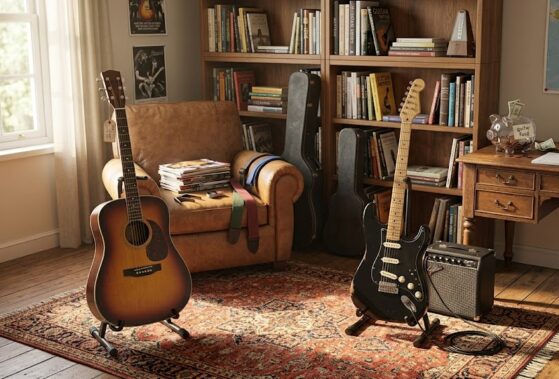
Practice Environment Makes a Difference
Your daily practice routine should also influence your decision.
Acoustic guitars are incredibly convenient. Since no additional equipment is required, you can practice almost anywhere. Whether you’re in your bedroom, living room, or even outdoors, your guitar is always ready to play.
Electric guitars offer a unique advantage for students who live in apartments or shared spaces. By using headphones with an amplifier, you can practice quietly without disturbing family members or neighbors. This flexibility allows many students to practice more frequently.
Therefore, considering where you’ll spend most of your practice time can help determine which instrument better suits your lifestyle.

Can You Switch Guitars After Starting Guitar Lessons?
Absolutely.
Many experienced guitarists eventually learn both acoustic and electric guitars. The techniques you develop on one instrument naturally carry over to the other because the musical foundation remains the same.
After becoming comfortable with chords, rhythm, scales, and finger coordination, adapting to another guitar becomes significantly easier. In fact, many musicians enjoy switching between the two depending on the style of music they are playing.
Because of this flexibility, your first choice does not limit your future as a guitarist. Instead, it simply determines where your musical journey begins.

The Importance of Quality Guitar Lessons
Regardless of which guitar you choose, structured lessons can dramatically improve your progress.
Learning independently through random online videos often leads to confusion because lessons may not follow a logical sequence. Professional instruction, however, provides a clear roadmap that gradually builds technique, musical understanding, and confidence.
An experienced teacher also identifies mistakes before they become habits. Proper posture, hand positioning, rhythm, and finger placement are easier to develop correctly from the beginning than to relearn later.
Furthermore, personalized guidance keeps students motivated by introducing songs and exercises that match their individual skill level and musical interests.

Guitar Lessons | Which Guitar Is Right for You?
There is no single answer that fits everyone.
Choose an acoustic guitar if you appreciate natural sound, enjoy singing while playing, prefer a simple setup, or love genres such as folk, worship, country, and acoustic pop.
An electric guitar may be the better option if you enjoy experimenting with different tones, dream of playing rock or blues solos, appreciate lighter strings, or want greater versatility in your sound.
Ultimately, the best guitar is the one that inspires you to practice consistently. The instrument that makes you excited to play every day will always be the right choice.

Begin Your Guitar Journey with Confidence
Every skilled guitarist started as a beginner who had the same question: Acoustic or electric?
The encouraging news is that both choices can lead to an incredible musical journey. What truly shapes your progress is consistent practice, expert guidance, and a genuine passion for learning.
Instead of worrying about making the perfect decision, focus on choosing the instrument that matches your musical personality and goals. Once you begin taking Guitar Lessons Online, you’ll develop the skills, confidence, and experience needed to explore both acoustic and electric guitars in the future.
At The Mystic Keys, our personalized Guitar Lessons Online are designed to help students of all ages build a strong musical foundation while learning at their own pace. Whether you choose an acoustic or an electric guitar, our experienced instructors will guide you every step of the way, making your learning journey engaging, enjoyable, and rewarding.
Whichever path you choose today, every chord you learn brings you one step closer to becoming the guitarist you’ve always wanted to be.
For more information and exciting resources about learning music, visit our website at The Mystic Keys. For more music content and exciting offers follow us on
Facebook, Instagram, YouTube, LinkedIn, Twitter, Pinterest, and Threads.