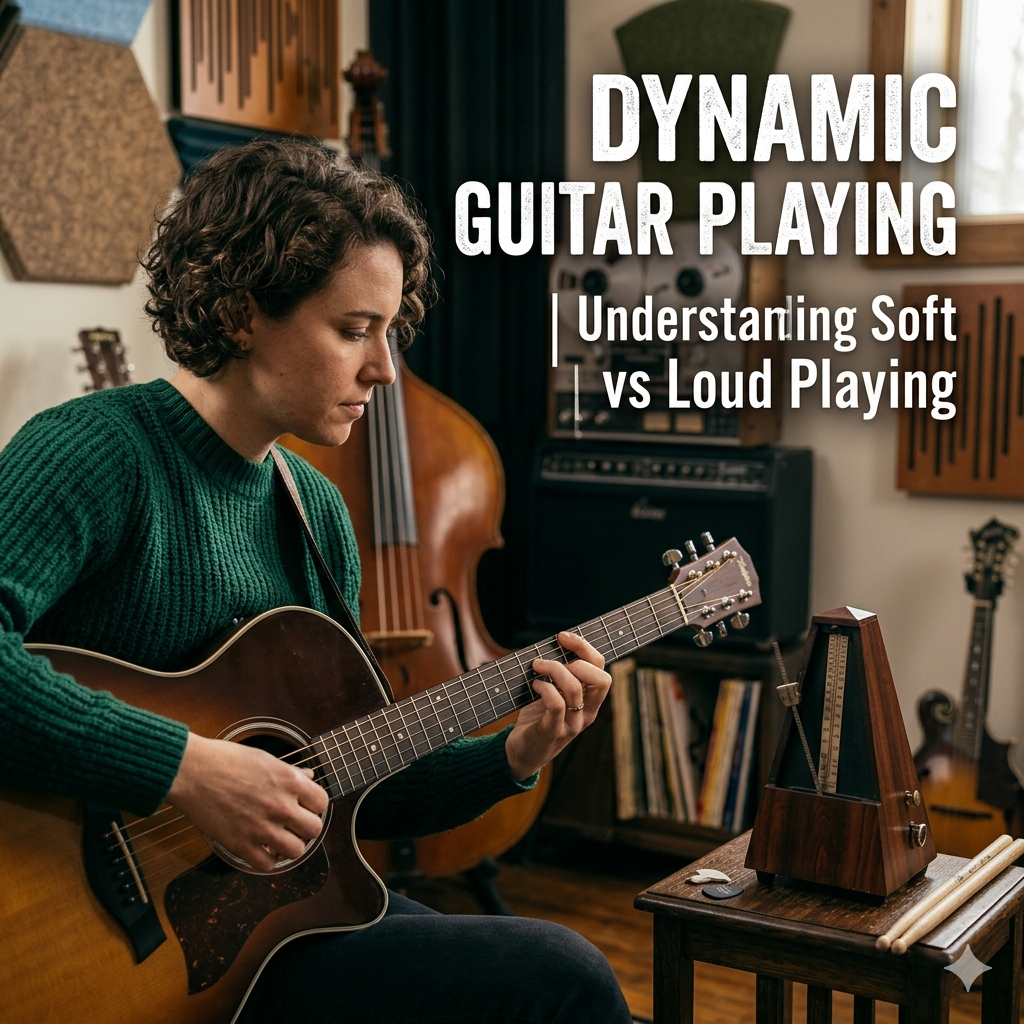
Dynamic Guitar Playing | Understanding Soft vs Loud Playing
Music is not only about playing the correct notes; it is also about how those notes are delivered on a dynamic guitar. Two guitarists can perform the exact same chord progression, yet one performance may feel emotional and expressive while the other sounds flat and mechanical. The difference often comes down to dynamics, where subtle control of softness and loudness shapes the entire musical experience.
Dynamics refer to the variation between soft and loud playing in music. On the guitar, dynamics shape emotion, energy, tension, and storytelling. A gentle fingerpicked melody can create intimacy and calmness, while a powerful strum can fill a room with excitement and intensity. Learning to control these contrasts is what transforms a player from someone who simply plays notes into someone who truly communicates through music.
Understanding soft versus loud playing is essential for every guitarist, regardless of genre or skill level. Whether you enjoy acoustic ballads, blues solos, rock riffs, jazz improvisation, or classical compositions, dynamics bring life and personality to your sound.

What Is Dynamic Guitar Playing?
In simple terms, dynamics describe the volume and intensity of your playing. Musicians use dynamics to create contrast, highlight important musical phrases, and guide listeners through a musical journey.
Soft playing usually produces a warm, delicate, and emotional sound. Loud playing, on the other hand, creates power, excitement, and dramatic impact. The real beauty lies in the ability to move naturally between these extremes.
A song without dynamic variation can quickly become repetitive. Even technically perfect playing may fail to connect emotionally if every note is delivered at the same intensity. Dynamic control allows guitarists to shape phrases in a way that feels human and expressive.
Although dynamics are often associated with volume, they involve much more than simply playing harder or softer. Tone, touch, attack, timing, and emotional intention all contribute to the dynamic character of a performance.

Why Dynamics Matter More Than Most Guitarists Realize
Many beginners focus heavily on speed, chord accuracy, and memorizing songs. While those skills are important, dynamics are what give music depth and emotion. Listeners may not always consciously notice dynamic changes, but they certainly feel them.
Imagine listening to a conversation where every sentence is spoken at the same volume and emotion. It would sound robotic and uninteresting. Music works in a similar way. Dynamic contrast keeps the listener engaged because it mirrors natural emotional expression.
Soft playing can create vulnerability, tenderness, mystery, or suspense. Loud playing often communicates confidence, passion, anger, celebration, or excitement. By learning how to control these emotional shades, guitarists gain the ability to tell stories through sound.
Professional musicians constantly use dynamics to shape performances. A quiet intro can build anticipation before a powerful chorus explodes with energy. A softly played solo can feel deeply emotional, while an aggressive attack may create urgency and intensity. These changes are what make performances memorable.

Understanding Soft Playing in Dynamic Guitar
Soft playing is often underestimated because it appears simple from the outside. In reality, maintaining clarity and control at lower volumes requires great precision and sensitivity.
When playing softly, every small movement becomes more noticeable. The guitarist must focus carefully on touch, timing, and consistency. Instead of forcing sound out of the instrument, soft playing encourages the musician to work with the natural resonance of the guitar.
Fingerstyle guitarists frequently rely on soft dynamics to create intimacy. Gentle plucking allows individual notes to breathe and resonate beautifully. Similarly, acoustic singer-songwriters often use lighter strumming patterns during verses to support the vocals without overpowering them.
Soft dynamics can also improve tonal quality. Playing lightly near the neck often produces a warm and mellow tone, while delicate finger pressure helps notes sound smooth and controlled. Many emotional guitar passages achieve their magic not through complexity, but through softness and restraint.
Another important benefit of soft practice is technical improvement. Quiet playing exposes mistakes that might otherwise be hidden behind loud volume. Uneven picking, unwanted string noise, and poor timing become easier to detect, helping guitarists refine their technique.

The Power and Energy of Loud Dynamic Guitar Playing
Loud playing introduces intensity and excitement into music. It grabs attention immediately and creates a strong emotional response. Rock, metal, funk, and energetic pop styles often rely heavily on powerful dynamic attacks to drive momentum.
However, loud playing does not simply mean hitting the strings as hard as possible. True dynamic power comes from controlled energy rather than uncontrolled force. Skilled guitarists maintain clarity, rhythm, and tonal balance even during aggressive sections.
Strong strumming can make choruses feel massive and uplifting. In lead guitar playing, a harder picking attack can help solos cut through the mix with confidence and authority. Electric guitarists frequently use loud dynamics to create dramatic climaxes during live performances.
At the same time, excessive force can create problems. Overplaying may cause notes to sound harsh, distorted, or uneven. Tension in the hands and arms can also reduce speed and accuracy. Effective loud playing therefore requires relaxation, proper technique, and awareness of tone.
Great guitarists understand that volume is most powerful when used with purpose. A loud section feels impactful partly because it contrasts with quieter moments before it.

How Picking Technique Affects Dynamics
One of the biggest factors influencing guitar dynamics is picking technique. The way the strings are struck directly affects volume, tone, and emotional expression.
A lighter pick attack produces softer and smoother sounds. Gentle picking allows notes to ring naturally without excessive sharpness. In contrast, a stronger attack creates brightness, aggression, and projection.
Pick angle also plays a significant role. Holding the pick at a slight angle often creates a softer and more fluid tone, while a flatter angle can produce a sharper and more pronounced attack. The amount of pick exposed between the fingers further changes the intensity of contact with the strings.
Fingerstyle players experience similar dynamic variations. Plucking with fingertips generates a warm and rounded tone, whereas using fingernails creates more brightness and definition. By adjusting pressure and movement, fingerstyle guitarists can achieve remarkable dynamic nuance.
As musicians develop better picking control, they become capable of shaping phrases more naturally. Certain notes can be emphasized while others remain subtle, creating musical flow and emotional contour.

The Relationship Between Dynamic Guitar and Emotion
Dynamics are deeply connected to emotional storytelling in music. Every change in intensity influences how listeners interpret a performance.
Soft passages often invite listeners inward. They create moments of reflection, tenderness, or anticipation. Many emotional ballads begin quietly because softness captures attention in a personal and intimate way.
Gradually increasing volume can build tension and excitement. This technique creates emotional momentum, leading listeners toward a satisfying climax. Loud dynamics then deliver release and impact, making the musical peak feel rewarding.
Sudden dynamic shifts can also create surprise and drama. A song that unexpectedly moves from soft fingerpicking to explosive strumming instantly changes emotional atmosphere. These contrasts are powerful because they mirror emotional changes found in real life.
Great guitarists do not simply play notes correctly. They shape emotional experiences through dynamic choices. Every phrase carries intention, and dynamics help communicate that intention clearly.

Dynamic Guitar Styles Across Different Genres
Different genres use dynamics in unique ways, although the underlying principles remain similar.
In classical guitar, dynamics are extremely detailed and expressive. Players carefully control finger pressure and attack to create subtle emotional shading throughout a piece. Small volume changes often carry great musical significance.
Blues guitar relies heavily on dynamic phrasing. A softly bent note may sound deeply emotional, while a stronger attack can express pain, tension, or passion. Blues musicians often vary dynamics instinctively to create conversational phrasing.
Rock guitar tends to emphasize dramatic contrasts between quiet verses and powerful choruses. Dynamic shifts help maintain energy and excitement throughout the song.
Jazz guitarists use dynamics to shape improvisation and interaction with other musicians. Soft comping can support a soloist gently, while stronger accents create rhythmic emphasis and drive.
Acoustic pop and singer-songwriter styles frequently combine delicate verses with energetic choruses. This dynamic structure keeps songs emotionally engaging and memorable.

Common Mistakes Guitarists Make With Dynamics
Many guitarists unintentionally play at the same volume all the time. This habit often develops when players focus entirely on technical accuracy without considering expression.
Another common mistake is confusing loudness with emotion. Playing aggressively during every section can reduce musical impact because there is no contrast. Constant intensity eventually feels exhausting rather than exciting.
Some players also struggle with consistency during soft passages. Notes may disappear unevenly, or rhythm may become unstable when playing quietly. Developing control at lower volumes takes patience and careful listening.
Ignoring dynamic markings in songs is another issue. Whether reading sheet music or learning by ear, paying attention to volume changes is essential for capturing the intended emotional feel of the music.
Fortunately, dynamic awareness can improve significantly with focused practice and intentional listening.

Exercises to Improve Guitar Dynamic Control
Developing dynamics requires slow, mindful practice rather than brute repetition. One effective exercise involves playing scales at different volume levels while maintaining consistent tone and timing. Begin softly, gradually increase intensity, and then return smoothly to softer playing.
Chord progressions can also be practiced dynamically. Try starting with delicate strumming during the first repetition and gradually increasing energy with each cycle. This exercise improves control while teaching the hands to respond naturally to changing intensity.
Recording yourself is especially helpful. Listening back often reveals whether dynamic contrasts are noticeable or whether the performance still sounds too uniform.
Another valuable method involves imitating vocal phrasing. Sing a melody naturally and then attempt to recreate the same emotional rise and fall on the guitar. This approach encourages more expressive dynamic playing.
Practicing at extremely low volume is equally beneficial. Quiet practice forces greater control and helps eliminate unnecessary tension.

Learning to Listen Like a Musician
Improving dynamics is not only about physical technique. Careful listening is equally important.
When listening to professional guitarists, pay attention to how they shape phrases. Notice where they play softly, where they build intensity, and how they transition between dynamic levels. These details often define the emotional character of the performance.
Live performances are particularly useful for studying dynamics because the physical energy of the player becomes visible. Watching how experienced musicians control their movements can provide valuable insight into expressive playing.
Listening across different genres also broadens dynamic understanding. Classical guitar may teach subtle control, while rock music demonstrates large-scale energy shifts. Every style offers lessons in emotional expression.
Over time, strong listening habits naturally influence your own playing choices.

The Art of Balance in Guitar Dynamics
The true goal of dynamic playing is balance. Soft and loud sections are not opponents competing against each other. Instead, they work together to create musical movement and emotional contrast.
A completely soft performance may lack excitement, while constant loudness can feel overwhelming. Effective guitar playing blends both extremes in a way that feels natural and expressive.
Dynamic control also reflects musical maturity. Beginners often focus mainly on playing notes correctly, but experienced musicians think about emotional communication. They understand when to hold back, when to build intensity, and when silence itself can become powerful.
Every guitarist has the ability to develop stronger dynamics with practice and awareness. Even simple chord progressions become more engaging when played with thoughtful variation in intensity and touch.

Final Thoughts
Understanding soft versus loud playing is one of the most important steps toward expressive guitar performance. Dynamics give music emotion, shape, movement, and personality. They transform simple notes into meaningful musical conversations.
Soft playing teaches sensitivity, precision, and emotional subtlety. Loud playing brings confidence, excitement, and dramatic impact. The magic happens in the transitions between the two, where music begins to breathe and feel alive.
As you continue your guitar journey, pay closer attention not only to what you play, but also to how you play it. Explore different levels of intensity, experiment with touch and attack, and listen carefully to the emotional effect of every phrase.
Over time, dynamic awareness will make your playing sound richer, more expressive, and far more memorable. At The Mystic Keys, these very principles are woven into structured learning through Guitar Lessons Online, helping learners develop not just technical accuracy but also true musical expression and control over dynamics.
For more information and exciting resources about learning music, visit our website at The Mystic Keys. For more music content and exciting offers follow us on
Facebook, Instagram, YouTube, LinkedIn, Twitter, Pinterest, and Threads.