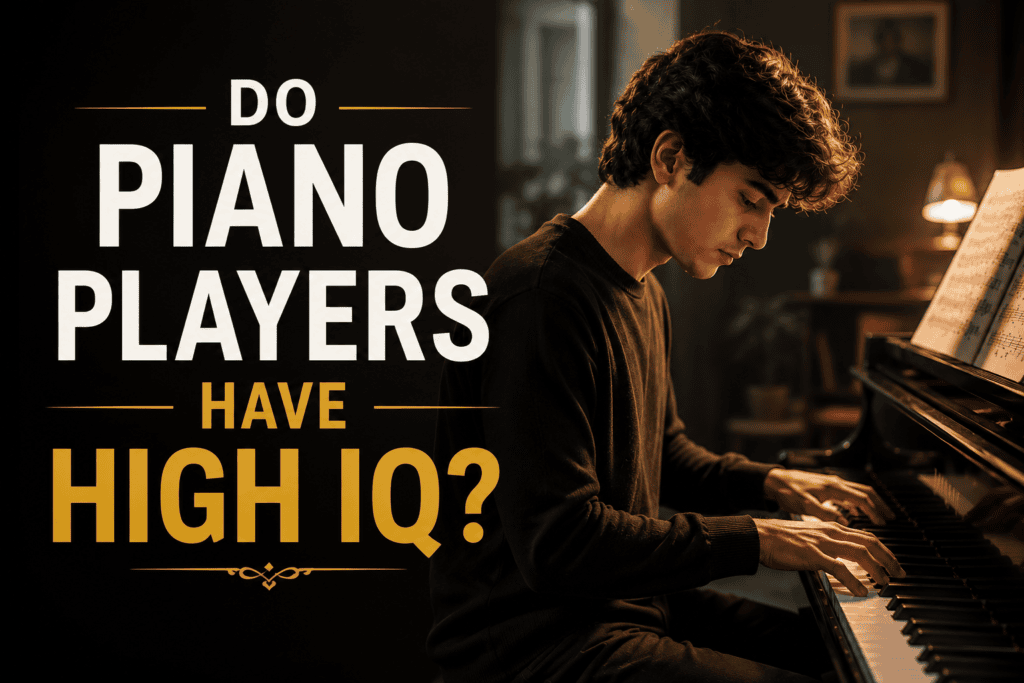
Many people believe that musicians—especially pianists—are naturally more intelligent. But is it really true? Do piano players have high IQ, or does learning piano actually improve intelligence over time?
The answer is more interesting than a simple yes or no. Playing the piano doesn’t automatically mean someone has a high IQ, but it does have a strong impact on brain development, cognitive skills, and learning ability.
At The Mystic Keys, we focus on helping students grow not just musically, but mentally as well.
Do Piano Players Have High IQ Naturally?
Not necessarily.
People are not born with higher IQ just because they play piano. However, those who learn piano often develop skills that are closely linked to intelligence, such as:
Problem-solving
Memory retention
Focus and concentration
Pattern recognition
So while piano players may not start with a higher IQ, they train their brain in ways that can improve cognitive performance.
What Research Says About Piano and IQ
Several studies suggest that learning music—especially piano—can lead to measurable improvements in intelligence.
Research shows that:
Children who learn piano often perform better academically
Music training improves verbal and mathematical skills
Brain activity increases during musical learning
This doesn’t mean piano guarantees a high IQ, but it definitely supports intellectual growth.
How Piano Training Improves Brain Function
When you play the piano, your brain performs multiple tasks at once:
Reading music
Controlling hand movements
Listening to sound
Maintaining rhythm
This full-brain activity strengthens neural connections and improves overall brain efficiency.
Improved Memory and Learning Ability
Piano players develop strong memory skills because they constantly:
Memorize notes and patterns
Recall musical structures
Practice repetition with variation
This enhances both short-term and long-term memory, which is a key component of intelligence.
This ensures students grow intellectually while enjoying music.
👉 Explore more music courses at The Mystic Keys to start your piano journey with the right foundation.
Conclusion
So, do piano players have high IQ? Not automatically—but learning piano can significantly enhance the brain’s capabilities. From better memory to improved focus and creativity, piano training helps develop many aspects of intelligence.
At Mystic Keys, we believe: 👉 “Music doesn’t just make you a better pianist—it makes you a better thinker.”
For more information and exciting resources about learning music, visit our website at The Mystic Keys. For more music content and exciting offers follow us on