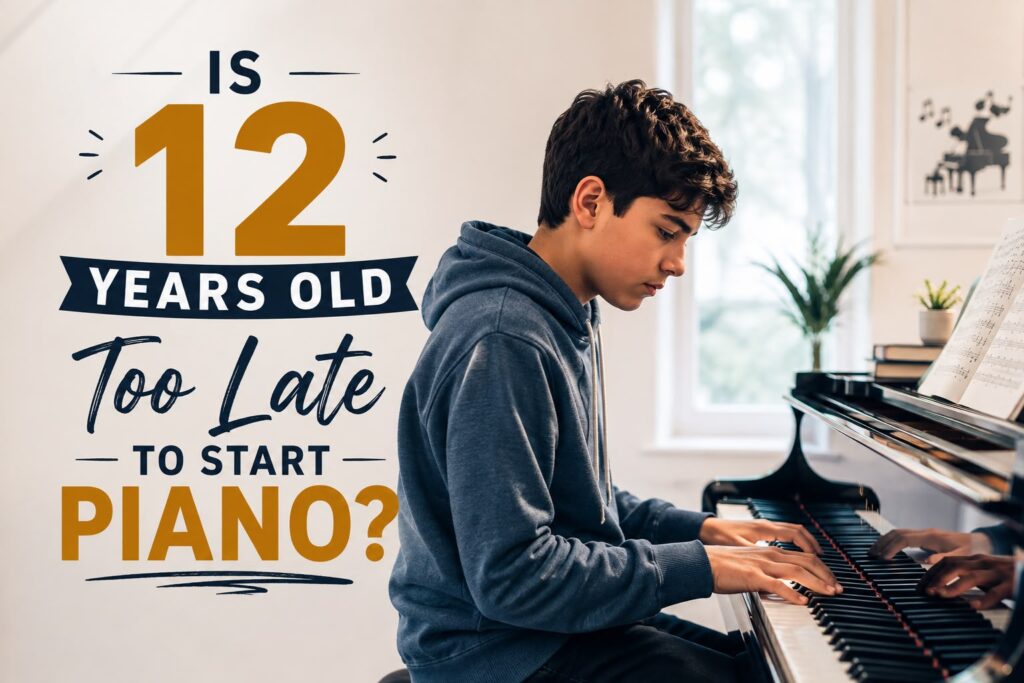
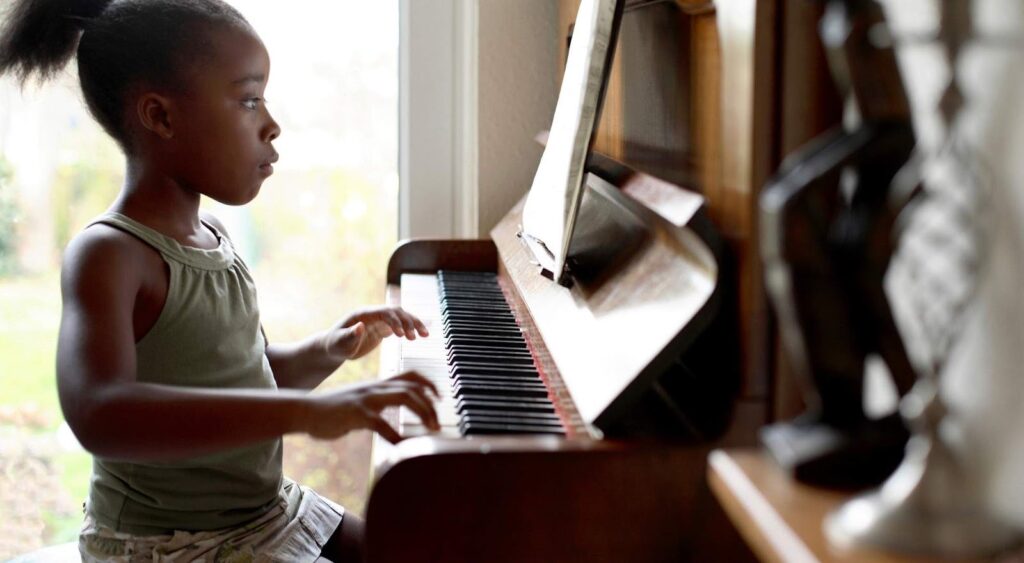
Many parents and students often wonder, is 12 years old too late to start piano? The simple answer is—absolutely not. In fact, starting piano at 12 can be a great advantage because learners at this age have better focus, understanding, and discipline compared to younger beginners.
At The Mystic Keys, we’ve seen many students begin their musical journey at 12 and progress quickly with the right guidance.
Is 12 Years Old Too Late to Start Piano?
No, 12 is actually an excellent age to begin learning piano. At this stage, students are:
More mentally mature
Better at understanding instructions
Capable of focused practice
Able to grasp music theory faster
So instead of being “too late,” it can be the perfect time to start.
Advantages of Starting Piano at 12
When asking is 12 years old too late to start piano, it’s important to look at the benefits:
✅ Better Learning Ability
Students at 12 can understand patterns, rhythm, and structure more easily.
✅ Stronger Focus
They can practice for longer periods without getting distracted.
✅ Faster Progress
Compared to very young children, they often learn songs and techniques more quickly.
Comparing Starting at 12 vs Younger Ages
Many believe starting at 5 or 6 is better, but that’s not always true.
So, starting at 12 is not a disadvantage—it’s just a different learning style.
How Fast Can You Learn Piano at 12?
If you’re wondering is 12 years old too late to start piano, consider this:
With consistent practice:
Basic songs → 1–2 months
Intermediate level → 6–12 months
Advanced skills → 1–3 years
Progress depends more on practice and consistency, not age.
Common Myths About Starting Late
Let’s clear some misconceptions:
❌ “You must start very young to be good” ❌ “Older beginners can’t reach high levels” ❌ “It’s too late to build strong skills”
✔ Reality: Many successful musicians started later and still achieved excellence.
Tips to Start Piano at 12 Successfully
To make the most of your learning:
Practice regularly (20–30 minutes daily)
Focus on fundamentals (scales, finger exercises)
Learn songs you enjoy
Take structured lessons
Stay patient and consistent
How The Mystic Keys Helps Beginners
At The Mystic Keys, we specialize in guiding beginners of all ages:
Personalized learning plans
Step-by-step teaching approach
Focus on both technique and creativity
Supportive and engaging classes
We ensure that starting at 12 becomes a strong foundation for long-term success.
👉 Explore more music courses at The Mystic Keys to start your piano journey with the right foundation.
Conclusion
So, is 12 years old too late to start piano? Definitely not. It’s a great age to begin, with the right balance of maturity and learning ability. With consistent practice and proper guidance, anyone starting at 12 can become a skilled pianist.
At The Mystic Keys, we believe: 👉 “It’s never too late to start—only too early to quit.”
For more information and exciting resources about learning music, visit our website at The Mystic Keys. For more music content and exciting offers follow us on
Many people believe that musicians—especially pianists—are naturally more intelligent. But is it really true? Do piano players have high IQ, or does learning piano actually improve intelligence over time?
The answer is more interesting than a simple yes or no. Playing the piano doesn’t automatically mean someone has a high IQ, but it does have a strong impact on brain development, cognitive skills, and learning ability.
At The Mystic Keys, we focus on helping students grow not just musically, but mentally as well.
Do Piano Players Have High IQ Naturally?
Not necessarily.
People are not born with higher IQ just because they play piano. However, those who learn piano often develop skills that are closely linked to intelligence, such as:
Problem-solving
Memory retention
Focus and concentration
Pattern recognition
So while piano players may not start with a higher IQ, they train their brain in ways that can improve cognitive performance.
What Research Says About Piano and IQ
Several studies suggest that learning music—especially piano—can lead to measurable improvements in intelligence.
Research shows that:
Children who learn piano often perform better academically
Music training improves verbal and mathematical skills
Brain activity increases during musical learning
This doesn’t mean piano guarantees a high IQ, but it definitely supports intellectual growth.
How Piano Training Improves Brain Function
When you play the piano, your brain performs multiple tasks at once:
Reading music
Controlling hand movements
Listening to sound
Maintaining rhythm
This full-brain activity strengthens neural connections and improves overall brain efficiency.
Improved Memory and Learning Ability
Piano players develop strong memory skills because they constantly:
Memorize notes and patterns
Recall musical structures
Practice repetition with variation
This enhances both short-term and long-term memory, which is a key component of intelligence.
This ensures students grow intellectually while enjoying music.
👉 Explore more music courses at The Mystic Keys to start your piano journey with the right foundation.
Conclusion
So, do piano players have high IQ? Not automatically—but learning piano can significantly enhance the brain’s capabilities. From better memory to improved focus and creativity, piano training helps develop many aspects of intelligence.
At Mystic Keys, we believe: 👉 “Music doesn’t just make you a better pianist—it makes you a better thinker.”
For more information and exciting resources about learning music, visit our website at The Mystic Keys. For more music content and exciting offers follow us on