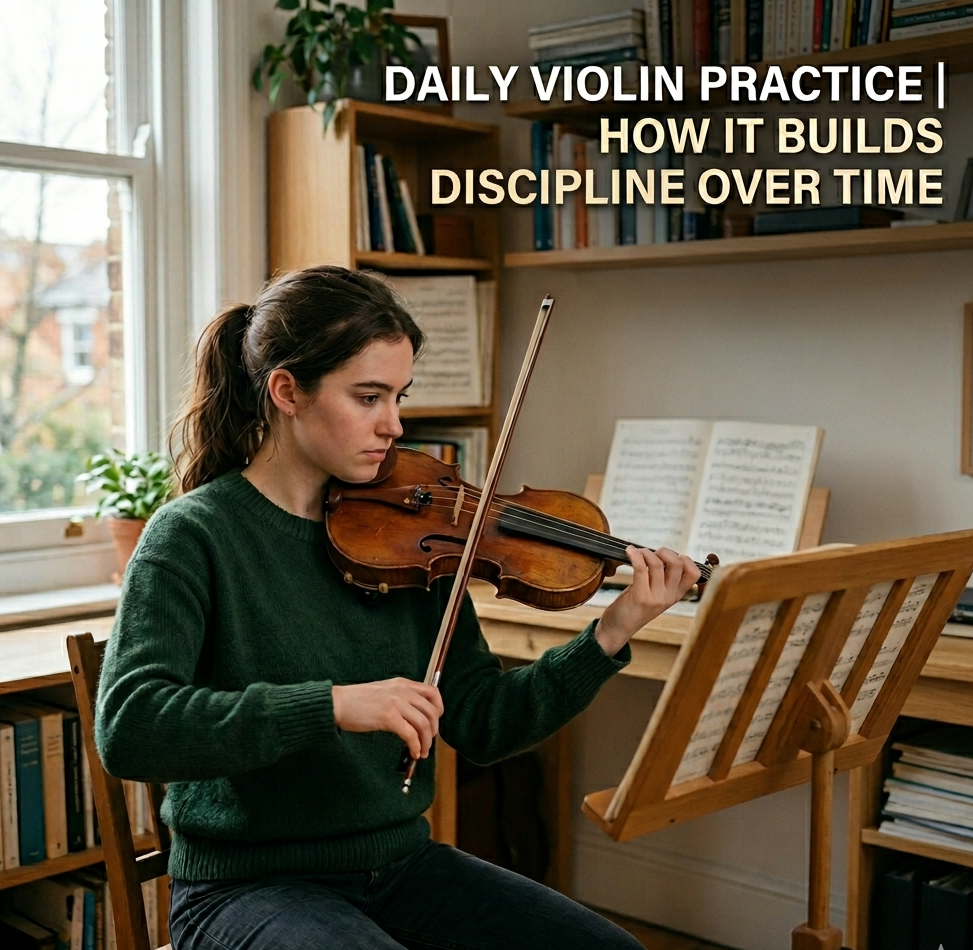
Daily Violin Practice | How It Builds Discipline Over Time
There is something deceptively simple about daily violin practice. Picking up the violin each day does not require grand declarations or an audience, yet this small, repeated act begins to shape a person in ways that reach far beyond music. At first, daily violin practice may feel like an obligation—something to check off a list or fit into a busy routine. Over time, however, the ritual itself begins to carry meaning. What once felt like effort slowly turns into commitment, and consistency starts to replace motivation. It is in that gradual shift that discipline quietly takes root and begins to grow.
In the early stages, enthusiasm often carries the learner forward. New sounds, unfamiliar techniques, and the excitement of progress create momentum. Still, enthusiasm is rarely steady. Some days feel inspired, while others feel heavy. Daily practice teaches an important lesson here: progress does not depend on how you feel in the moment. Instead, it grows from the decision to show up anyway.
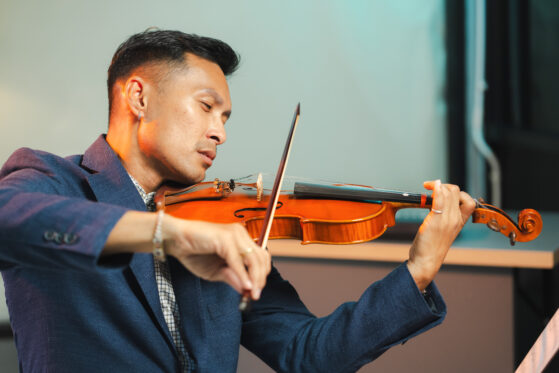
Daily Violin Practice Turns Effort into Habit
What begins as effort gradually transforms into habit. At first, sitting down with the violin may require conscious planning. You might negotiate with yourself, delay the session, or feel tempted to skip altogether. Yet, when practice becomes a daily occurrence, resistance begins to fade. The act of playing integrates into your routine, much like brushing your teeth or having a meal.
This transition is subtle but powerful. Discipline is often misunderstood as strict control or force. In reality, it is closer to alignment—where actions and intentions begin to move together naturally. Daily violin practice creates that alignment. The more consistently you engage, the less you rely on willpower, and the more you depend on structure.

Learning Patience Through Slow Progress
The violin is not an instrument that rewards haste. Progress can feel slow, especially in the beginning, when even producing a clear tone requires effort. Because of this, daily practice becomes a lesson in patience. Improvement does not arrive overnight, and shortcuts rarely work. Instead, growth reveals itself in small, almost unnoticeable increments.
At times, this can be frustrating. Repeating the same passage, adjusting finger placement, or correcting bowing techniques may seem tedious. However, this repetition is where discipline deepens. You begin to accept that mastery is built through persistence rather than quick wins. Over time, patience becomes less of a struggle and more of a mindset.

Daily Violin Practice Strengthens Focus
Modern life constantly pulls attention in multiple directions. Notifications, responsibilities, and endless streams of information make it difficult to concentrate deeply. Daily violin practice offers a counterbalance. When you play, your focus narrows. You listen closely, adjust carefully, and remain present with each note.
This sustained attention is not easy at first. The mind wanders, distractions creep in, and focus breaks. Yet, through regular practice, concentration strengthens. You learn to return your attention to the music again and again. That ability—to refocus without frustration—is a core element of discipline that carries into other areas of life.
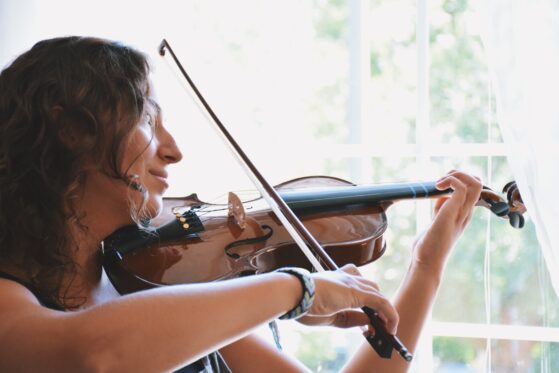
Embracing Imperfection and Growth
Mistakes are unavoidable when learning the violin. Notes may sound off, rhythm may falter, and technique may feel awkward. Initially, these imperfections can feel discouraging. Still, daily practice changes how you perceive them. Errors become part of the process rather than signs of failure.
As this perspective shifts, resilience begins to grow. Instead of avoiding difficulty, you start engaging with it. Each mistake offers information, guiding you toward improvement. Discipline, in this sense, is not about perfection. It is about persistence—continuing despite flaws and learning through them.

Daily Violin Practice Creates Structure and Routine
Discipline thrives on structure, and daily practice naturally creates one. Setting aside a specific time for the violin establishes a rhythm in your day. That rhythm provides stability, especially when other aspects of life feel unpredictable.
Routine does not have to be rigid. Some days may allow for longer sessions, while others may only permit a few focused minutes. What matters is the continuity. Even brief practice sessions reinforce the habit, keeping the connection alive. Over time, this consistency becomes more valuable than occasional bursts of intense effort.

Carrying Discipline Beyond the Instrument
The discipline developed through daily violin practice does not remain confined to music. It begins to influence how you approach other challenges. Tasks that once felt overwhelming may become more manageable. Goals that seemed distant may feel achievable through steady effort.
This transfer happens because the underlying skill is the same: the ability to commit, persist, and improve gradually. Whether applied to studies, work, or personal growth, the habits formed through practice continue to support progress.

When Motivation Fades, Discipline Remains
There will be days when motivation disappears completely. On such days, the idea of practicing may feel unappealing or even exhausting. This is where discipline reveals its true value. Instead of relying on fleeting feelings, you rely on commitment.
Interestingly, those are often the most important days to practice. Not because you will achieve extraordinary results, but because you reinforce the habit itself. Each time you show up despite resistance, discipline becomes stronger and more reliable.
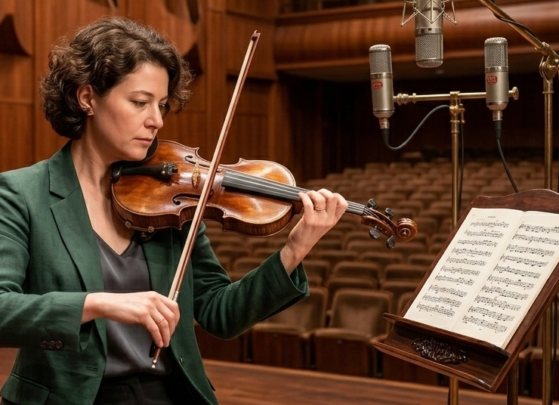
Daily Violin Practice Creates Long-Term Growth
Daily violin practice is not just about learning an instrument. It becomes a long-term relationship with growth. The journey is ongoing, with new challenges and discoveries at every stage. There is no final point where discipline is complete. Instead, it continues to evolve alongside your skills.
As time passes, the benefits extend beyond technique. You develop patience, focus, resilience, and a deeper understanding of effort. These qualities shape not only your musicianship but also your approach to life.

Daily Violin Practice Builds Discipline for Life
In the end, the true power of daily violin practice lies in its consistency. It does not require dramatic breakthroughs or instant perfection; instead, it builds discipline gradually, one session at a time. Through repetition, patience, and persistence, the habit of showing up every day transforms effort into routine and intention into action. With time, the process becomes less about forcing yourself to practice and more about embracing the journey of steady growth.
What makes this journey even more meaningful is having the right guidance along the way. Platforms like The Mystic Keys make violin lessons online more accessible and structured, helping learners stay consistent while improving their skills. In many ways, what starts as a simple daily practice with the violin becomes much more than musical training—it becomes a foundation for discipline, focus, and personal growth that lasts a lifetime.
For more information and exciting resources about learning music, visit our website at The Mystic Keys. For more music content and exciting offers follow us on
Facebook, Instagram, YouTube, LinkedIn, Twitter, Pinterest, and Threads.