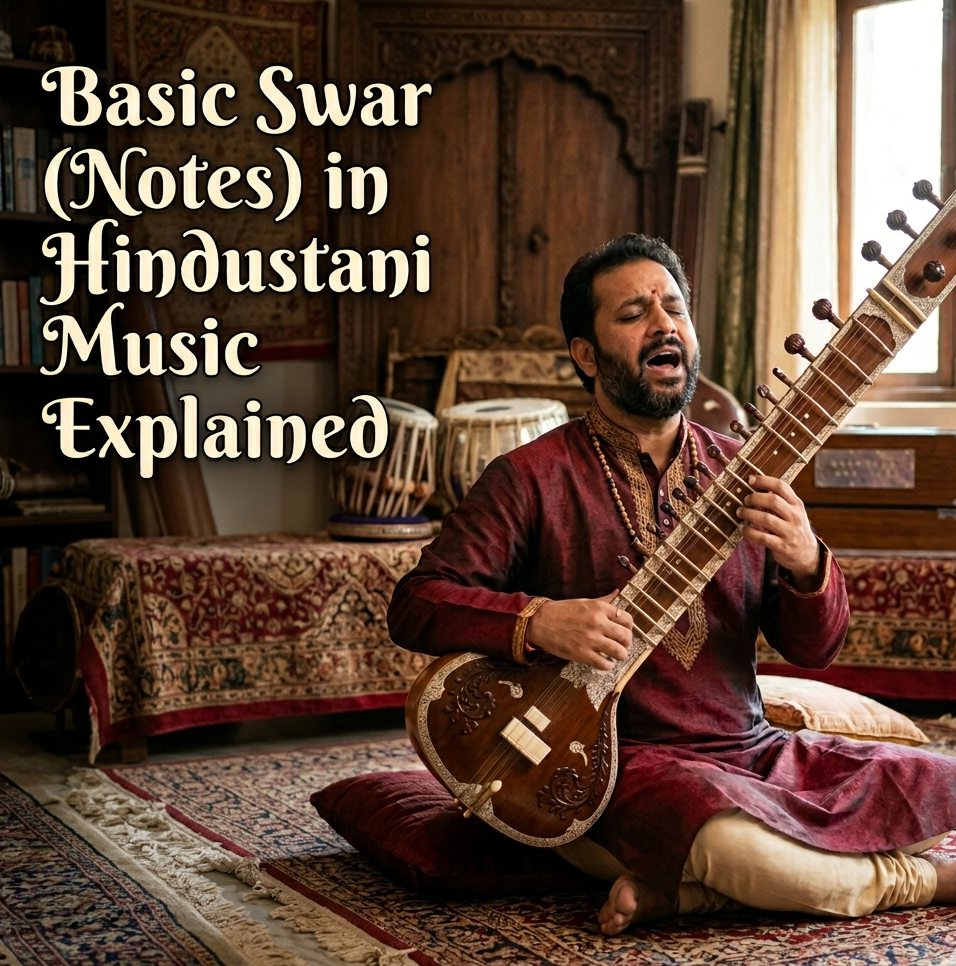
Basic Swar (Notes) in Hindustani Music Explained
Hindustani classical music follows a beautifully structured yet deeply expressive system of sound. At its core, swar forms the foundation of melody and shapes the identity of music. While many musical traditions use notes, Hindustani music treats swars with unique depth, emotion, and flexibility. Moreover, musicians do not simply arrange these notes in sequence; they use them to build ragas, create compositions, and explore improvisation. As a result, swars create movement, emotion, and life within every melody. In addition, the connection between swars allows music to flow naturally and expressively. Therefore, to understand the true beauty of Hindustani music, one must look beyond basic definitions and experience how swars shape its musical language.
What are Basic Swar in Hindustani Music?
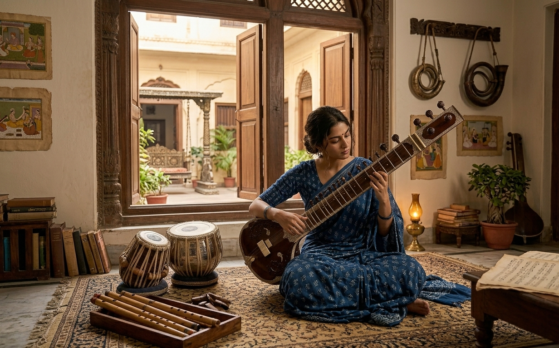
A swar does more than create a pitch; it produces a carefully tuned sound that pleases the ear and carries emotional expression. In Hindustani music, musicians do not treat a swar as a fixed or mechanical frequency. Instead, they use it within a flexible range, allowing subtle shifts and nuances that shape the character of the music.
At first glance, many people compare swars to the notes of Western music. However, that comparison only touches the surface. Hindustani musicians shape swars with fluidity, using context, raga, and personal interpretation to define their expression. Because of this flexibility, a single swar can convey different moods depending on how the musician approaches, sustains, or ornaments it.
The Seven Basic Swar in Hindustani Music
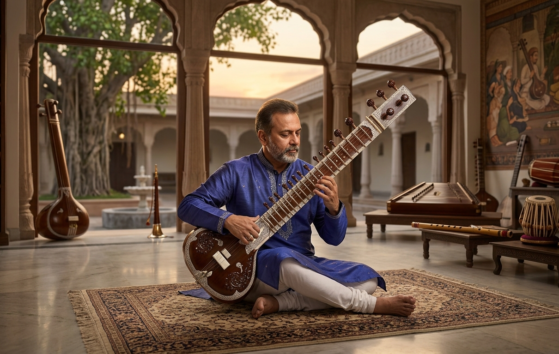
Hindustani music uses seven primary swars as the foundation of its melodic system:
Sa, Re, Ga, Ma, Pa, Dha, Ni
Together, these seven swars create the saptak, or the octave. As musicians move through melodies, these swars repeat cyclically across higher and lower octaves, creating a continuous flow of sound.
Among them, Sa (Shadja) and Pa (Pancham) act as achal swars, which means they hold a constant position and do not shift. In contrast, the remaining swars—Re, Ga, Ma, Dha, and Ni—offer more flexibility and can take altered forms depending on the musical context.
What makes this system especially fascinating is the role of Sa. Instead of following a fixed absolute pitch, musicians choose Sa according to the comfort of the singer or the instrument. Once they establish Sa, they align all the other swars in relation to it, creating a personalized tonal framework that shapes the entire musical experience.
Shuddha, Komal, and Tivra Swars
As students explore Hindustani music more deeply, they begin to understand the importance of variation within swars. Musicians do not always sing or play every note in its basic form. Instead, they often shift certain notes slightly lower or higher to create different emotional textures and musical colors.
Shuddha swars represent the natural or pure form of the notes and establish the standard positions within the scale. However, musicians can alter some swars to expand the expressive range of music. They use komal swars as the softer or flattened versions of notes like Re, Ga, Dha, and Ni. Similarly, they use tivra swar only for Ma, raising it slightly to create a sharper sound.
Through these variations, musicians create a delicate balance between tension and resolution. For example, a komal note often evokes introspection or melancholy, whereas a tivra note adds brightness and intensity. As a result, these subtle changes shape the emotional character of the music and connect deeply to the identity of a raga.
Basic Swar Across Different Saptak (Octaves)
Hindustani music divides swars into three primary octaves, known as saptaks:
Mandra Saptak (lower octave)
Madhya Saptak (middle octave)
Taar Saptak (higher octave)
Each saptak creates a distinct tonal space and adds its own character to the music. The mandra saptak produces deep and grounded notes, often creating a sense of calmness and gravity. Meanwhile, the madhya saptak holds the central range where musicians perform most compositions and develop the melody. In contrast, the taar saptak brings brightness and energy, which musicians often use to intensify emotional expression.
As singers and instrumentalists move between these octaves, they shape the flow of a musical phrase. This movement demands control, sensitivity, and a clear understanding of melodic progression. When musicians handle these transitions skillfully, they create a seamless and expressive journey that makes the music feel expansive and complete.
Understanding the Depth of Basic Swar Through Shruti
While the seven swars create the visible framework of Hindustani music, musicians explore even greater depth through the concept of shruti. These microtonal divisions within a swar allow singers and instrumentalists to create fine variations in pitch and expression. As a result, the music gains a richer and more nuanced character.
Instead of treating a note as a single fixed point, musicians recognize multiple shades within each swar through shruti. This subtle understanding gives Hindustani music its expressive depth and emotional richness. Even a slight shift in intonation can transform the emotional color of a musical phrase and create a completely different impact on the listener.
Musicians develop an understanding of shruti through experience, practice, and careful listening. Written notation cannot fully capture these delicate variations; rather, regular immersion in music helps learners discover them gradually. Over time, this deeper awareness strengthens both musical sensitivity and expression.
Swar and Raga | A Living Relationship
Swars do not exist in isolation; musicians use them within the framework of a raga to give them meaning and expression. Each raga chooses specific swars and arranges them in a unique pattern, shaping not only the notes themselves but also the way performers approach and present them. As a result, swars gain their true identity through their relationship with the raga.
Moreover, the same swar can express different qualities across different ragas. In one raga, a musician may sing it softly and delicately, while in another, they may present it with strength and emphasis. This changing role gives swars depth and transforms them from simple notes into powerful tools of expression.
Therefore, learning swars involves much more than memorizing their names or positions. A student must understand their character, their movement, and the role they play in different musical settings. In this way, swars become a living part of Hindustani music rather than just theoretical notes.
The Importance of Practice and Listening
Mastering the essence of swars demands consistent practice because regular repetition builds familiarity and confidence. When students sing or play swars repeatedly, they strengthen their understanding of sound and placement. Over time, they train their ears to recognize subtle pitch differences and improve their control and accuracy.
At the same time, listening plays an equally important role in this learning process. By listening to skilled performances, students understand how musicians use swars creatively and expressively. Moreover, attentive listening helps them notice subtle nuances, smooth transitions, and emotional depth in music.
Ultimately, students make progress in Hindustani music by balancing practice with listening. While regular practice builds technical strength, careful listening sharpens musical understanding. As students develop both skills together, they deepen their understanding of swars and strengthen their musical foundation.
Conclusion
The concept of swar forms the backbone of Hindustani music, yet it goes far beyond a rigid or mechanical structure. Each note carries flexibility, emotion, and depth, and musicians shape its expression through context and interpretation. Moreover, the journey from the foundational seven swars to the subtle beauty of shruti shows how this musical system blends discipline with creativity.
At first, learners may see swars as a simple scale. However, as they practice and explore further, they discover a vast and expressive musical world. Through consistent training and expert guidance, students build a stronger understanding of swars and their role in shaping ragas, especially through Hindustani Vocal Lessons Online. Platforms like The Mystic Keys help students learn with structured lessons and personalized guidance, making the journey more accessible and effective. Ultimately, with time, patience, and dedication, learners transform basic swars into a powerful language of musical expression.
For more information and exciting resources about learning music, visit our website at The Mystic Keys. For more music content and exciting offers follow us on
Facebook, Instagram, YouTube, LinkedIn, Twitter, Pinterest, and Threads.