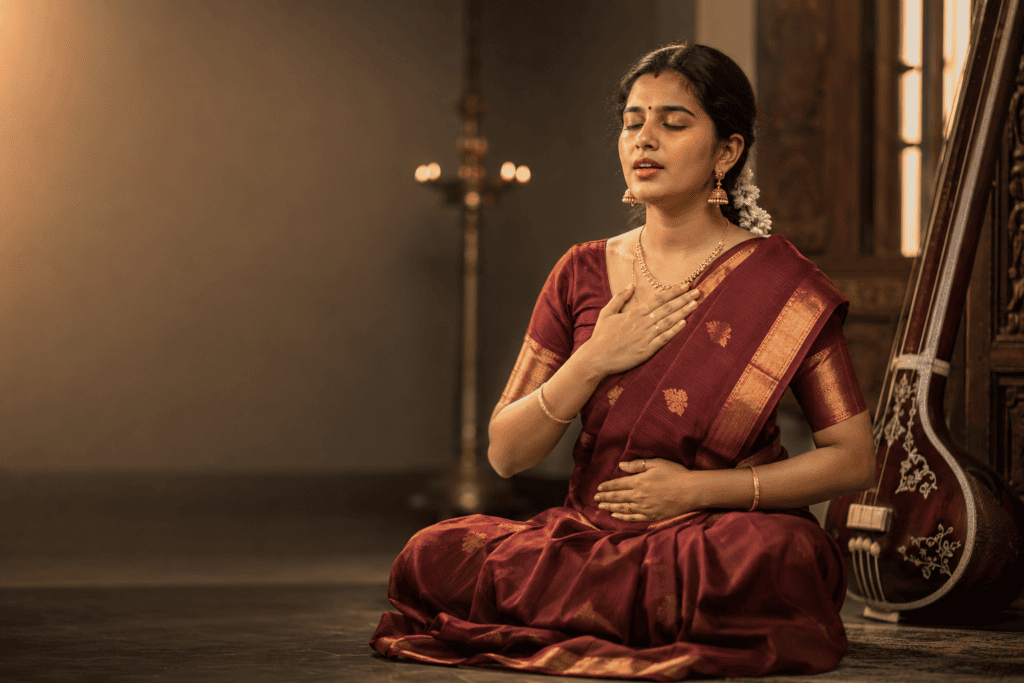
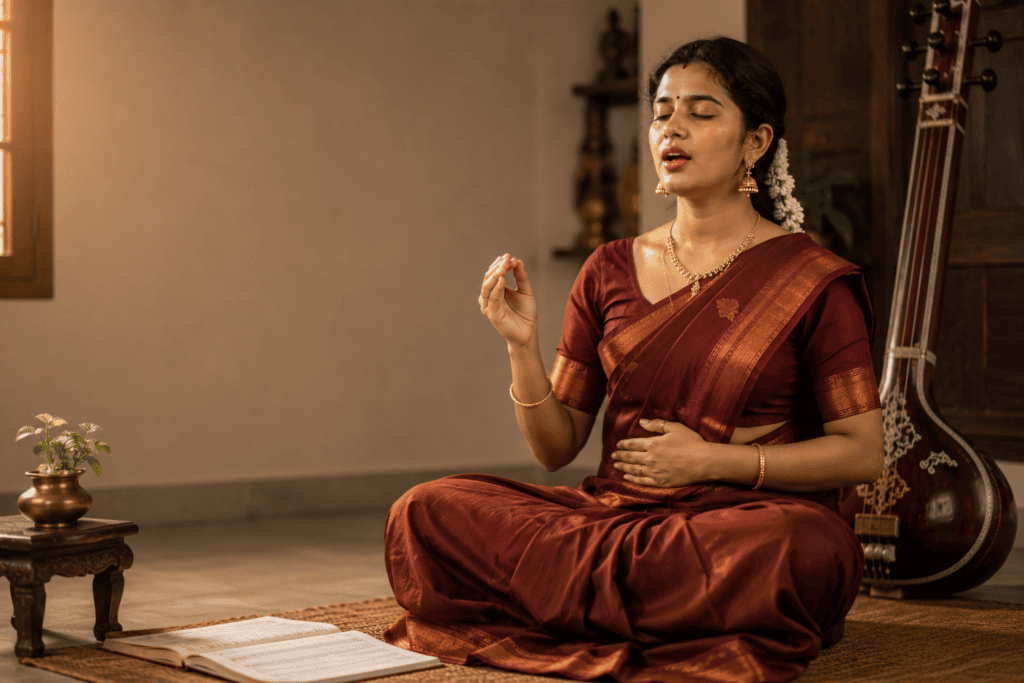
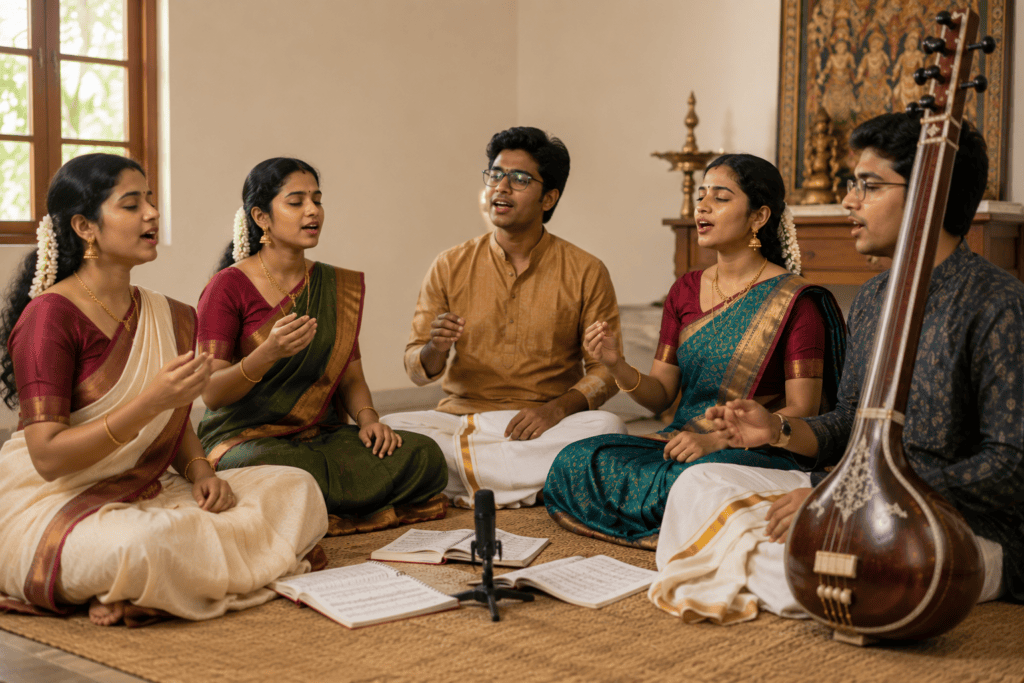
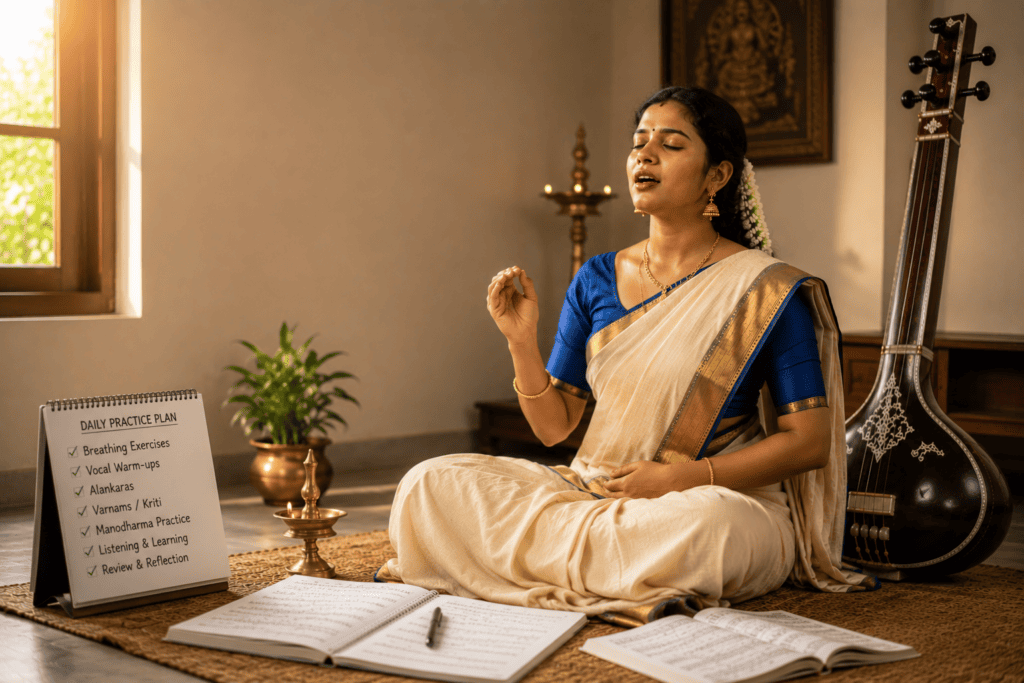
Carnatic music demands precision, control, and emotional expression. One of the most important yet often overlooked aspects of singing is proper breath management. Mastering breathing techniques for Carnatic vocalists helps singers produce a stable tone, sustain long phrases, execute complex gamakas, and perform confidently without vocal strain.
Whether you are a beginner or an advanced learner, developing healthy breathing habits can significantly improve your vocal quality. At The Mystic Keys, students are guided through practical breathing exercises alongside traditional Carnatic vocal training to build a strong musical foundation.
1. Why Breathing Techniques for Carnatic Vocals Are Essential in Carnatic Music
Breath is the foundation of every note you sing. Without proper breath support, even technically accurate singing can sound weak or unstable.
3. Practice Slow and Controlled Exhalation with Breathing Techniques for Carnatic Vocals
Taking a deep breath is only half the process. Learning to release air gradually is equally important.
Carnatic compositions often include long phrases where breath must last until the musical idea is complete.
Try this simple exercise:
Inhale deeply.
Exhale while producing a gentle “sss” sound.
Maintain an even airflow for as long as possible.
Repeat several times.
As your control improves, perform the same exercise while singing a single swara.
This develops steady airflow and stronger vocal endurance.
4. Build Breath Support Through Vocal Exercises
Breathing should always be practiced together with singing.
Some excellent exercises include:
Sustained Swaras
Hold “Sa” or “Pa” for as long as possible without losing pitch.
Sarali Varisai
Practice each exercise using one smooth breath whenever possible.
Alankaras
Focus on maintaining consistent airflow throughout every pattern.
Simple Akaram Practice
Sing vowel sounds like “Aa” with a relaxed throat and controlled breath.
These exercises strengthen both breathing and voice production simultaneously.
5. Coordinate Breathing with Carnatic Phrases
One common mistake beginners make is taking breaths randomly during a composition.
Instead, singers should learn where to breathe naturally within the musical structure.
Proper breath placement helps:
Preserve lyrical meaning.
Maintain rhythm.
Keep musical phrases connected.
Improve overall performance quality.
Listening carefully to experienced Carnatic vocalists can help you identify ideal breathing points in kritis and varnams.
With regular practice, breathing becomes automatic rather than distracting.
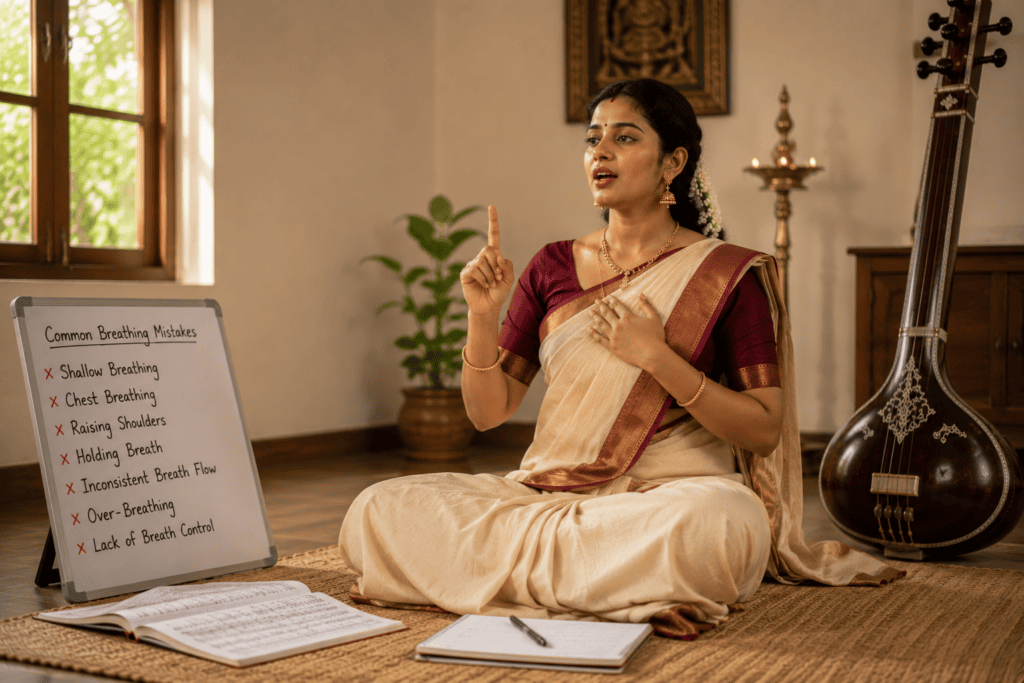
6. Avoid Common Mistakes in Breathing Techniques for Carnatic Vocals
Many singers unknowingly develop habits that reduce vocal efficiency.
Some common mistakes include:
Raising the shoulders while inhaling.
Taking quick shallow breaths.
Holding unnecessary tension in the throat.
Forcing extra air while singing.
Running out of breath because of poor planning.
Correcting these habits early makes singing more comfortable and prevents vocal fatigue.
Working with a qualified vocal instructor helps identify and correct these issues before they become permanent habits.
7. Practice Daily for Stronger Vocal Performance
Like voice training, breath control improves through consistent practice.
A simple daily routine may include:
5 minutes of diaphragmatic breathing
5 minutes of slow exhalation exercises
10 minutes of sustained swaras
Sarali Varisai practice
Alankaras with controlled breathing
Singing one Carnatic composition while focusing on breath placement
Even 20–30 minutes of dedicated daily practice can produce noticeable improvements in voice control, stamina, and confidence.
Conclusion
Developing proper breathing techniques for Carnatic vocalists is one of the most valuable investments any singer can make. Strong breath support allows you to sing longer phrases, produce a richer tone, improve pitch stability, and perform demanding Carnatic compositions with greater ease.
If you’re looking to learn Carnatic vocal lessons online, mastering breath control should be one of your first priorities. Learning under experienced instructors ensures you develop the correct breathing techniques, vocal posture, and voice production from the very beginning, helping you build a strong foundation for long-term musical growth.
At The Mystic Keys, our experienced vocal instructors help students build correct breathing habits from the very beginning. Through personalized one-on-one online Carnatic vocal lessons, learners receive structured guidance to improve vocal technique, musical expression, breath control, and performance confidence at every level.
For more information and exciting resources about learning music, visit our website at The Mystic Keys. For more music content and exciting offers follow us on