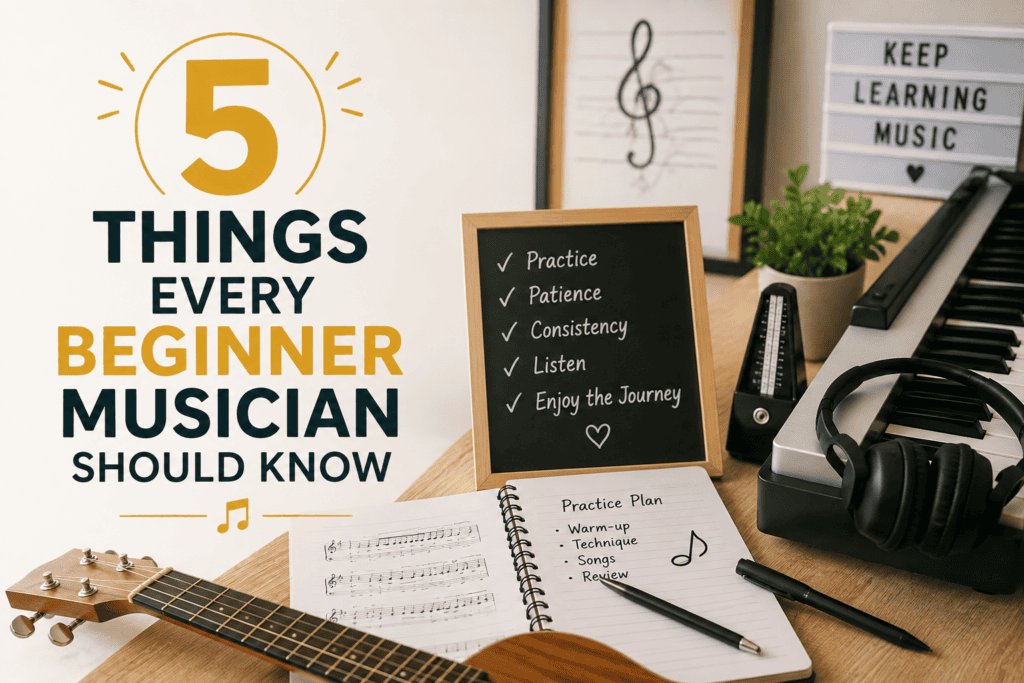
5 Things Every Beginner Musician Should Know
Starting to learn an instrument is exciting. Whether you are picking up a piano, guitar, violin, ukulele, drums, or beginning vocal training, the first few weeks can feel like a mixture of excitement, curiosity, and uncertainty. You may wonder how quickly you should progress, how often you should practice, or whether struggling with certain techniques means you are not naturally musical. The truth is that almost every beginner experiences these questions. Understanding a few important principles from the beginning can make the entire learning journey more enjoyable and productive. These beginner musician tips can help you build realistic expectations, develop healthy practice habits, and stay motivated as your skills grow.
Learning music is not simply about memorizing notes or copying someone else’s movements. It is a gradual process of developing coordination, listening, rhythm, technique, musical understanding, and confidence. Some skills may develop quickly, while others require considerably more repetition. When beginners understand this process, they are less likely to become discouraged by temporary difficulties.
The most important thing to remember is that becoming a musician is a journey rather than a race. You do not need to become excellent immediately. You need to build strong foundations, practice consistently, learn from mistakes, and continue enjoying the music you are creating.
1. Progress Takes Time
One of the first things every beginner musician should understand is that musical progress rarely happens overnight.
You may learn a few chords during your first lesson or play a simple melody after several practice sessions, but becoming comfortable with an instrument takes much longer. Your fingers, ears, brain, and sense of rhythm all need time to work together.
It is completely normal to find certain techniques difficult at first.
Don’t Compare Your Beginning to Someone Else’s Experience
It is easy to watch an experienced musician perform and assume that they learned everything quickly.
What you see is the result of years of practice.
Comparing your first few months with someone else’s years of experience can make your own progress seem slower than it really is.
Instead, compare yourself with your previous abilities.
If you can play a chord progression today that was difficult last month, you are progressing.
If you can maintain a rhythm for longer than you could before, you are progressing.
If you can recognize notes more easily, you are progressing.
Beginner Musician Tips Small Improvements Matter
Musical development is often made up of many small improvements that eventually create major changes.
Do not underestimate the value of learning one new chord, improving one difficult transition, or playing one phrase more accurately.
These small achievements become the foundation for advanced playing.
2. Practice Consistency Matters More Than Long Sessions

One of the most important beginner musician tips is to develop a consistent practice routine.
Many beginners believe that practicing for two or three hours once a week is better than practicing for twenty minutes every day.
In most situations, regular focused practice is more useful.
Your brain and muscles need repeated exposure to musical movements. Frequent practice strengthens coordination and helps techniques become more natural.
Short Practice Sessions Can Be Effective
You do not always need a large amount of free time.
A focused twenty-minute session can include:
- Five minutes of warm-up
- Five minutes of technique
- Five minutes of difficult passages
- Five minutes of playing a song
The exact routine can change depending on your instrument and goals.
The important thing is to practice with intention.
Practice With a Clear Goal
Instead of sitting down and simply playing whatever feels comfortable, decide what you want to improve.
You might focus on smoother chord changes, better rhythm, accurate pitch, finger coordination, or memorizing a specific section.
When every practice session has a purpose, improvement becomes easier to recognize.
3. Mistakes Are Part of Learning Music

Beginners sometimes believe that mistakes mean they are not talented enough.
This is one of the most damaging beliefs a new musician can develop.
Mistakes are a normal part of learning.
You will play wrong notes.
You will lose the rhythm.
You may struggle to coordinate both hands.
You may sing slightly sharp or flat.
You may miss a drum beat.
None of these things mean you cannot become a good musician.
Mistakes Show You What to Practice
Instead of becoming frustrated by mistakes, treat them as information.
If you repeatedly make the same error, identify why it happens.
Perhaps the tempo is too fast.
Maybe the fingering is uncomfortable.
Maybe you have not memorized the transition.
Perhaps you are not hearing the pitch clearly.
Once you understand the problem, you can work directly on it.
Beginner Musician Tips Slow Down When Necessary
One of the best ways to correct mistakes is to slow down.
Playing slowly gives your brain enough time to coordinate the movement correctly.
Once the passage becomes reliable, gradually increase the speed.
Accuracy should come before speed.
4. Technique and Musicality Need to Grow Together

Another important lesson for beginners is that technical ability is only one part of being a musician.
Learning scales, chords, finger exercises, rhythm patterns, and other technical skills is valuable.
However, music is ultimately about communication.
You are not simply pressing keys, moving fingers, striking drums, or changing chords.
You are creating sound with purpose.
Beginner Musician Tips Learn to Listen While You Play
Developing your ears from the beginning can dramatically improve your musicianship.
Listen to your tone.
Listen to your rhythm.
Listen to whether your notes are in tune.
Listen to how loudly or softly you are playing.
Listen to how your part fits with other instruments.
This awareness helps transform technical practice into musical practice.
Expression Matters Even at the Beginner Level
You do not need advanced technique to start developing expression.
A beginner can already practice playing softly and loudly, shaping a phrase, maintaining steady rhythm, and communicating emotion.
These habits will become increasingly important as your technical abilities grow.
5. Enjoyment and Patience Are Essential

The final lesson is perhaps the most important: enjoy the process.
Learning music can sometimes feel challenging, especially when progress seems slow.
There may be days when your playing feels worse than it did the day before.
That is normal.
Musical learning is not always a straight upward line.
Find Music You Love
One of the best ways to stay motivated is to learn songs and styles that genuinely interest you.
If you love pop music, learn pop songs.
If you enjoy classical music, explore classical repertoire.
If worship music inspires you, learn worship songs.
If you enjoy rock, jazz, folk, or film music, let those interests influence your learning.
Enjoyment gives practice a purpose.
Patience Creates Long-Term Progress
There will always be another technique to learn and another challenge to overcome.
Instead of expecting immediate perfection, focus on steady improvement.
The musician you become six months from now will be shaped by the habits you develop today.
Building a Strong Foundation as a Beginner Musician
These five principles work together.
Progress takes time, so patience is necessary.
Consistency improves skills, so regular practice matters.
Mistakes provide valuable information, so you should not fear them.
Technique and musicality develop together, so listening is essential.
Enjoyment keeps you motivated, so choose music that inspires you.
When these ideas become part of your learning routine, you create a much stronger foundation for long-term musical growth.
Learn the Fundamentals Properly
Beginners sometimes want to skip basic exercises because they seem too simple.
However, fundamentals eventually become the skills that support advanced playing.
Good posture, correct technique, rhythm, listening, finger control, breath support, and basic music theory may not always feel exciting, but they make future learning easier.
A strong foundation prevents many technical problems later.
Why Learning with a Teacher Can Help

Self-learning can be useful, especially with the huge amount of educational material available today.
However, a teacher can provide something that videos and tutorials cannot always provide: personalized feedback.
A teacher can identify technical problems early, adjust exercises according to your ability, and help you understand why something is difficult.
Personalized Guidance Saves Time
Instead of spending weeks repeating an ineffective technique, students can receive specific corrections and practical exercises.
A good teacher also helps create realistic goals.
This is particularly valuable for beginners who may not yet know what they should practice or how to organize their sessions.
Don't Be Afraid to Perform
Performance can feel intimidating for beginners, but small performance opportunities can build confidence.
You do not need to perform on a large stage.
Start by playing for a family member, friend, teacher, or small group.
As your comfort increases, you can explore larger performance opportunities.
Performance Teaches You to Trust Your Preparation
Playing for others introduces a different kind of focus.
You learn to continue after mistakes, maintain rhythm under pressure, and communicate with an audience.
These experiences are valuable parts of becoming a complete musician.
Conclusion
These five beginner musician tips can help you approach your musical journey with realistic expectations and a positive mindset. Remember that progress takes time, consistent practice is more valuable than occasional marathon sessions, mistakes are part of learning, technique should develop alongside musicality, and enjoyment is essential for staying motivated.
You do not need to be naturally gifted to begin learning music. You need curiosity, patience, regular practice, and a willingness to keep improving. Every experienced musician was once a beginner who had to learn the first chord, first scale, first rhythm, or first song.
The most important step is simply to keep going. Learn something new, practice it carefully, listen closely, accept your mistakes, and celebrate your progress. With the right habits and guidance, your first steps can become the foundation for a rewarding lifelong relationship with music.
At The Mystic Keys, students can develop their musical skills through personalized Music Lessons Online, with experienced teachers providing structured guidance, individual attention, and practical feedback. Whether you are starting with piano, guitar, vocals, violin, drums, ukulele, or another instrument, the right learning environment can help you build strong foundations and enjoy every stage of your musical journey.
For more information and exciting resources about learning music, visit our website at The Mystic Keys. For more music content and exciting offers follow us on
Facebook, Instagram, YouTube, LinkedIn, Twitter, Pinterest, and Threads.