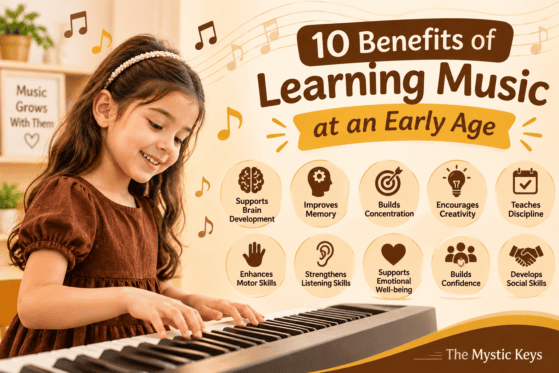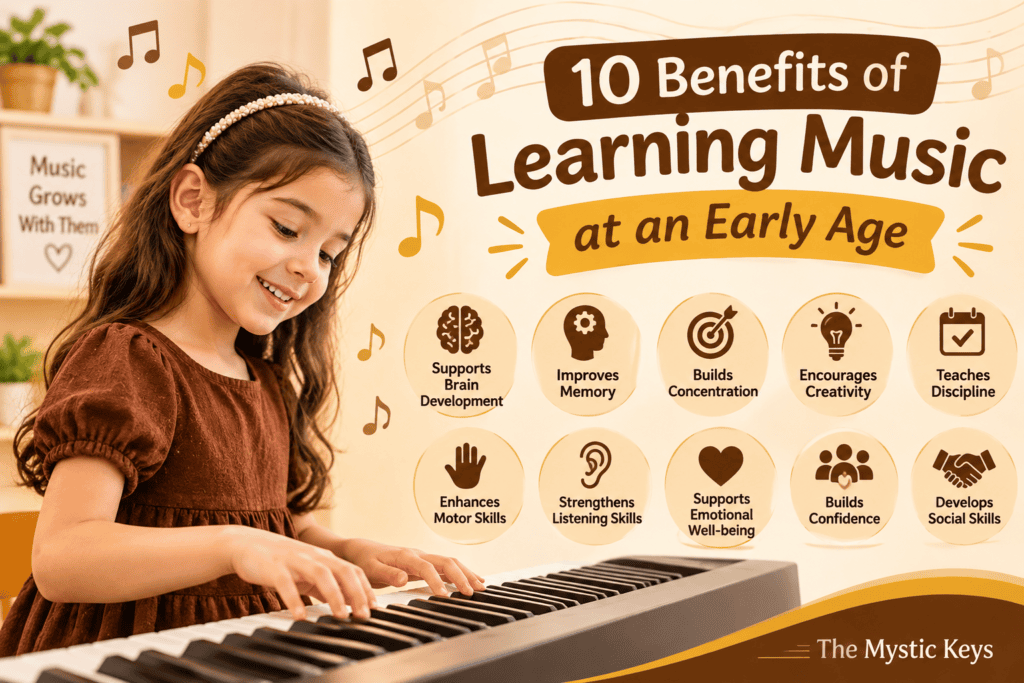
10 Benefits of Learning Music at an Early Age
Introduction
Childhood is an important stage of growth, discovery, and learning. During these years, children develop habits, explore new interests, and build skills that can influence their future. One activity that can make this journey especially rewarding is learning music.
Whether a child begins with piano, guitar, singing, violin, or drums, music offers much more than entertainment. It encourages creativity, strengthens listening skills, develops coordination, and provides opportunities for self-expression. Learning an instrument also teaches children the value of patience, consistency, and practice.
The benefits of learning music at an early age extend beyond musical ability. Regular music lessons can support different aspects of a child’s cognitive, emotional, social, and personal development.
Let’s explore ten important ways music education can positively influence a child’s growth.
1. Learning Music at an Early Age Supports Brain Development
One of the most valuable benefits of learning music at an early age is the opportunity to engage different areas of the brain.
When children learn music, they process sounds, recognise patterns, remember sequences, and coordinate physical movements. Playing an instrument requires them to combine listening, thinking, and movement, creating an engaging learning experience.
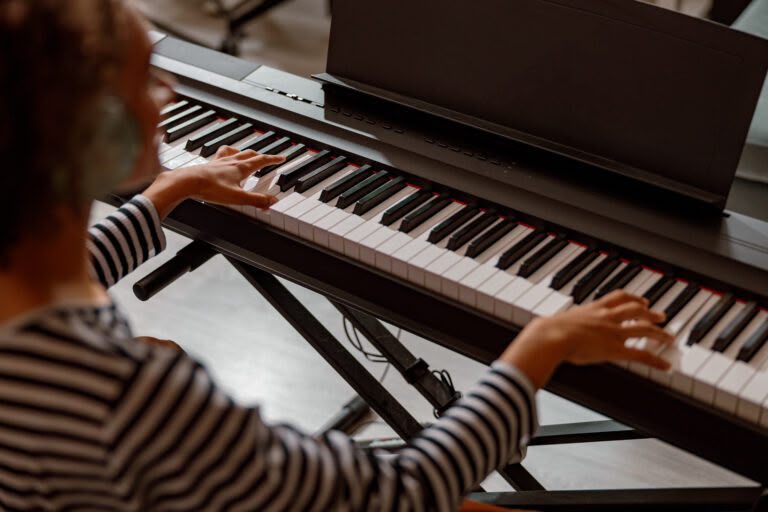
For example, a child learning piano must recognise notes, understand their positions, coordinate finger movements, and listen to the melody being produced.
These activities encourage children to practise several important skills, including:
Recognising patterns and sequences.
Processing auditory information.
Coordinating visual and physical responses.
Remembering musical instructions.
Paying attention to different sounds.
Music education provides children with an enjoyable way to explore learning while developing their musical abilities.
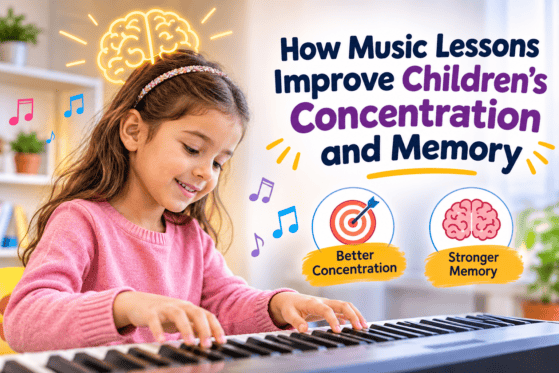
2. Music Lessons Improve Children’s Memory
Benefits of Learning Music involves remembering melodies, lyrics, rhythms, notes, and instructions. As children practise regularly, they become more familiar with musical patterns and learn to recall them independently.
For instance, when learning a song, children need to remember the order of the lyrics, recognise the melody, and maintain the correct rhythm. Instrumental lessons involve similar memory exercises, as children gradually learn to perform musical pieces without constantly referring to written notes.
Music lessons encourage different memory-related skills:
Auditory memory: Remembering melodies, sounds, and rhythms.
Visual memory: Recognising musical symbols and reading notes.
Working memory: Holding musical information in mind while performing.
Long-term memory: Recalling previously learned songs and techniques.
Although music lessons do not guarantee improvements in every academic area, they provide regular opportunities for children to practise remembering and using information.
3. Learning Music Develops Concentration and Focus
Children often need to manage several activities throughout the day, from completing homework to following classroom instructions. Learning music gives them another opportunity to practise focusing on a particular task.
During a music lesson, children must listen carefully, follow their teacher’s instructions, observe demonstrations, and repeat exercises. As they progress, they learn to pay attention to details such as timing, pitch, rhythm, and expression.
For example, learning a new piano piece requires a child to focus on the notes while coordinating both hands. Similarly, a young guitarist must concentrate on finger placement and chord changes.
With consistent practice, children can develop habits such as:
Following instructions more carefully.
Working towards specific goals.
Recognising and correcting mistakes.
Completing tasks with greater patience.
These habits can be useful in everyday learning and other activities that require sustained attention.
4. Music Encourages Creativity and Imagination
Benefits of Learning Music is an excellent way for children to explore their creative abilities. Unlike activities that have only one correct approach, music allows room for experimentation, interpretation, and personal expression.
Children can explore different melodies, experiment with rhythms, create simple compositions, and discover how different sounds work together.
For example, a child learning piano might experiment with different notes to create an original melody. A young singer may explore how changing vocal expression can communicate different emotions.
Creative musical activities encourage children to:
Think independently.
Explore new ideas.
Experiment with sounds and patterns.
Express their imagination.
Develop confidence in their creative choices.
These experiences help children understand that learning is not only about following instructions but also about discovering new possibilities.

5. Learning Music Builds Patience and Discipline
Learning an instrument takes time. Children may not be able to play a complete song perfectly during their first lesson, and certain techniques may require repeated practice.
This teaches an important lesson: improvement happens gradually through effort and consistency.
When children practise a challenging musical passage, they learn to slow down, repeat difficult sections, and continue working until they become more comfortable.
Regular Benefits of Learning Music can help children develop:
Patience when learning something new.
Discipline through consistent practice.
Responsibility for their progress.
Persistence when facing challenges.
The ability to work towards long-term goals.
These qualities are valuable beyond music. They can also help children approach schoolwork, hobbies, and personal responsibilities with a more organised mindset.
6. Music Lessons Improve Hand-Eye Coordination and Motor Skills
Playing an instrument involves coordinating physical movements with what children see and hear. This makes music education a useful activity for practising motor coordination.
For example, piano students coordinate their fingers with musical notes, while guitar students learn to position their fingers on the fretboard and coordinate their strumming hand.
Drumming introduces another form of coordination, requiring children to maintain different rhythmic patterns using their hands and sometimes their feet.
Depending on the instrument, music lessons can encourage:
Finger independence.
Fine motor control.
Hand-eye coordination.
Timing and movement accuracy.
Physical awareness and coordination.
These skills develop gradually as children become more comfortable with their instruments.
7. Learning Music Strengthens Listening and Communication Skills
Listening carefully is an essential part of learning music. Children must recognise sounds, identify differences in pitch, follow rhythms, and respond to musical instructions.
Singing lessons, for example, encourage children to listen to melodies and reproduce them accurately. Group music activities also require children to listen to other performers and adjust their timing accordingly.
These experiences can encourage better listening habits in everyday situations.
Music also provides opportunities for communication. Children who participate in group singing, ensembles, or musical performances learn to cooperate, take turns, and respond to others.
Through these activities, children can practise:
Listening attentively.
Following verbal instructions.
Expressing ideas through music.
Responding to other musicians.
Working towards a shared goal.
8. Music Provides an Outlet for Emotional Expression
Children do not always find it easy to explain how they feel. Music offers another way for them to explore and communicate emotions.
A cheerful melody, a gentle piano piece, or an energetic drum rhythm can help children express different moods and feelings. Singing and playing instruments also give them opportunities to connect with music in a personal way.
Music education can support emotional development by encouraging children to:
Explore different emotions.
Express themselves creatively.
Recognise how music communicates feelings.
Enjoy a positive and meaningful activity.
For many children, learning music can become a rewarding part of their routine and a healthy creative outlet.
9. Learning Music Builds Confidence and Self-Esteem
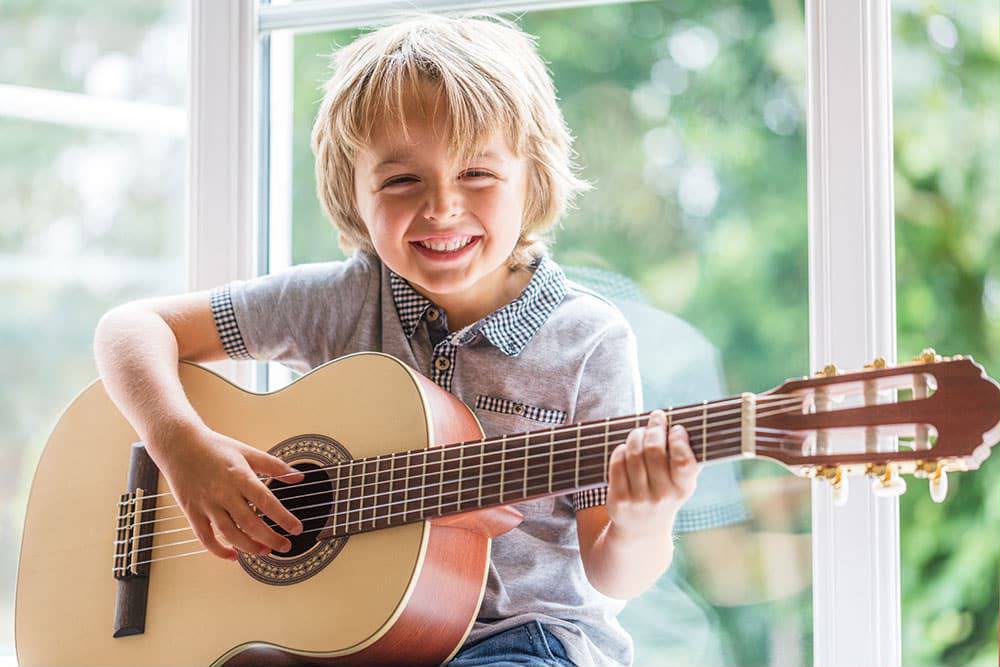
Every small achievement in music can give children a reason to feel proud. Learning a new chord, completing a song, performing a melody, or singing in front of others can help them recognise their own progress.
Initially, children may feel nervous about making mistakes or performing in front of an audience. With encouragement and regular practice, they can gradually become more comfortable sharing their musical abilities.
Music education can help children develop confidence through:
Achieving realistic learning goals.
Recognising personal improvement.
Participating in musical activities.
Performing for family and friends.
Learning to approach mistakes positively.
These experiences can encourage children to become more comfortable taking on new challenges, both inside and outside music.
10. Music Encourages Social Skills and Teamwork
Music does not always have to be a solo activity. Children can also learn through group singing, choir sessions, musical ensembles, and collaborative performances.
Playing music with others teaches children that every participant has an important role. They must listen to one another, maintain the correct timing, and work together to create a balanced performance.
Group musical activities encourage:
Cooperation and teamwork.
Respect for other performers.
Turn-taking and shared responsibility.
Appreciation of different musical abilities.
A sense of belonging and participation.
These experiences can help children become more comfortable interacting with others while enjoying a shared creative activity.
How Parents Can Encourage Children to Learn Music
Parents play an important role in making music a positive part of childhood. Children are more likely to remain interested when they receive encouragement and have the freedom to explore different musical interests.
Here are a few practical ways parents can support their child’s musical journey:
Introduce different instruments: Allow children to explore piano, guitar, drums, violin, and singing before choosing an area of interest.
Make music enjoyable: Listen to songs together, explore different genres, and encourage children to share their favourite music.
Create a regular practice routine: Set aside a manageable amount of time for practice without making it feel like a punishment.
Celebrate small achievements: Appreciate progress, effort, and consistency rather than expecting perfection.
Choose suitable music lessons: Look for teachers who understand children’s learning needs and can make lessons engaging.
Be patient: Every child develops musical skills at a different pace. Give them time to become comfortable with the learning process.
The goal is to help children develop a genuine interest in music rather than making lessons feel like another academic responsibility.
How The Mystic Keys Makes Music Learning Enjoyable for Children
At The Mystic Keys, we believe that music education can be a meaningful part of a child’s overall development. Our online music lessons give young learners the opportunity to explore their musical interests through structured guidance, personalised attention, and engaging teaching methods. Children can discover instruments and subjects such as piano, guitar, drums, violin, and vocals while learning at a pace suited to their individual abilities. With guidance from experienced music educators, students can develop their musical skills, practise consistently, and gain confidence as they progress. Whether your child is taking their first musical steps or looking to improve existing abilities, The Mystic Keys provides a supportive learning environment where creativity, expression, and a love for music can grow.
Conclusion
The benefits of learning music at an early age go far beyond playing an instrument or singing a favourite song. Music education gives children opportunities to explore creativity, practise concentration, strengthen memory, develop coordination, and build confidence.
Through regular lessons and consistent practice, children also learn valuable qualities such as patience, discipline, teamwork, and perseverance. These experiences can become an important part of their personal growth and lifelong learning journey.
Every child deserves the opportunity to discover their interests and explore their creative potential. Introducing music during childhood can be a wonderful way to begin that journey.
With the right guidance and encouragement, music can become more than a hobby. It can become a skill, a passion, and a source of enjoyment that children carry with them as they grow.
For more information and exciting resources about learning music, visit our website at The Mystic Keys. For more music content and exciting offers follow us on
Facebook, Instagram, YouTube, LinkedIn, Twitter, Pinterest, and Threads,