

For more information and exciting resources about learning music, visit our website at The Mystic Keys. For more music content and exciting offers follow us on
Facebook, Instagram, YouTube, LinkedIn, Twitter, Pinterest, and Threads,

Learning how to maintain vocal energy throughout a choir performance is essential for singers who want to deliver a consistent, expressive, and well-balanced performance from beginning to end. Choir performances often involve several songs, changing dynamics, challenging harmonies, and extended periods of singing. Without proper preparation and vocal control, singers may experience fatigue, lose vocal clarity, or struggle to maintain the same level of expression throughout the performance.
Vocal energy is not about singing loudly all the time. It involves managing breath, maintaining good posture, using healthy vocal technique, staying mentally focused, and knowing when to conserve or increase vocal intensity.
Whether you sing in a school choir, church choir, community ensemble, or competition choir, understanding how to maintain vocal energy throughout a choir performance can help you sing with greater confidence, consistency, and musical expression.
A choir’s overall sound depends on the individual singers working together. When some singers become tired, their pitch accuracy, tone quality, breathing, and ability to follow the conductor may be affected.
Maintain vocal energy throughout a choir performance because it helps singers:
Keep their tone clear and consistent.
Maintain accurate pitch and musical timing.
Support long phrases without unnecessary tension.
Follow changes in dynamics more effectively.
Blend their voices with other choir members.
Communicate emotion and musical expression.
Finish the performance with confidence rather than fatigue.
Good vocal energy management also helps the choir maintain a unified sound across multiple songs.

Breath management is one of the most important skills for choir singers. Breath provides the airflow needed for singing, and coordinated breathing helps singers sustain phrases without pushing or straining their voices.
Before rehearsals or performances, practise taking comfortable, quiet breaths. Allow your lower ribs and abdomen to expand naturally instead of lifting your shoulders or creating tension in your neck.
Try this simple exercise:
Stand or sit with relaxed, balanced posture.
Inhale comfortably without forcing a large breath.
Exhale slowly through a gentle hiss.
Repeat several times while keeping your shoulders relaxed.
Use the same calm breathing awareness when singing.
The goal is to develop consistent breath control rather than to hold as much air as possible.
Choir singers should know where to breathe in each musical phrase. Marking suitable breathing points on the score can help you avoid running out of air at important moments.
During long phrases, take advantage of musical rests and agreed-upon staggered breathing when the conductor permits it. In staggered breathing, singers in the same section breathe at slightly different times so the musical line continues smoothly.
Good breathing habits help maintain vocal energy without forcing the voice.
Posture influences breathing, vocal freedom, and the ability to remain physically comfortable during a performance.
Standing rigidly can create unnecessary tension, while slouching can make it harder to breathe freely. A balanced posture helps singers remain alert without becoming stiff.
Keep your feet comfortably apart when standing.
Distribute your weight evenly.
Keep your knees relaxed rather than locked.
Allow your shoulders to rest naturally.
Keep your head balanced instead of pushing your chin forward.
Hold your music at a comfortable height.
Avoid unnecessary tension in your jaw and neck.
If you are seated during a performance, sit upright without stiffening your back. Good posture should feel sustainable throughout the concert, not like a pose you must force yourself to maintain.
A suitable vocal warm-up prepares the voice for the demands of singing. Starting a performance without warming up may make it harder to coordinate breathing, pitch, and vocal resonance comfortably.
Gentle humming: Hum comfortably within your range to ease into vocal activity.
Lip trills: Blow air through loosely closed lips while producing a gentle pitch, if comfortable.
Gentle sirens: Glide between comfortable low and high notes without forcing the extremes of your range.
Vowel exercises: Sing simple patterns using vowels such as “ah,” “ee,” and “oo” at a moderate volume.
Light scales: Practise short scales to prepare pitch accuracy and coordination.
Begin softly and gradually increase the demands of the exercises. Avoid loud, exhausting warm-ups immediately before a performance. A warm-up should prepare your voice, not tire it out.
One common reason singers lose energy is that they sing too loudly throughout the performance. Maintaining vocal energy does not mean using maximum volume from the first song to the last.
Dynamics—the variation between soft and loud singing—help create musical contrast and make performances more expressive.
Sing softer passages with control instead of whispering.
Increase volume gradually when the music calls for a crescendo.
Reduce intensity during quieter sections.
Follow the conductor’s dynamic instructions.
Avoid competing with louder singers by pushing your own voice.
When singers manage their intensity effectively, they can preserve energy for climactic moments while maintaining a balanced choir sound.

Hydration is an important part of general vocal care. Drinking water regularly supports normal body function and helps prevent the discomfort associated with dehydration.
Drink water regularly throughout the day.
Have water available during rehearsals and performances when practical.
Avoid relying on large amounts of water immediately before singing.
Limit habits that leave your mouth feeling dry.
Take breaks when appropriate instead of continuing through discomfort.
Warm drinks may feel soothing to some singers, but they are not a substitute for regular hydration. Water does not instantly fix vocal fatigue, so preparation and healthy technique remain important.
Rehearsal is where singers develop the stamina required for a complete performance. However, singing every song repeatedly at full volume can lead to unnecessary fatigue.
Break demanding songs into smaller sections. Focus on the difficult phrases, transitions, harmonies, and entrances rather than repeating the entire piece without a clear purpose.
If possible, alternate between technically demanding sections and lighter activities, such as rhythm work, score study, listening, or silent marking.
Not every rehearsal repetition needs to be performed at concert volume. Practise notes, rhythm, and phrasing at a comfortable intensity, then rehearse the full dynamic range when necessary.
Increase the duration and demands of rehearsals over time. Gradual preparation can help singers become familiar with the length of a concert without relying on last-minute overpractice.
A well-planned rehearsal schedule supports consistency while giving the voice opportunities to recover.
Healthy vocal technique helps singers produce sound efficiently. Excessive throat tension, forced volume, and singing outside a comfortable range can make a performance more tiring.
If a high note feels difficult, do not force it by tightening your throat or lifting your chin. Follow your teacher’s guidance on breath coordination, resonance, and suitable vowel shapes.
Unnecessary tension can make singing feel harder than it needs to be. Practise releasing your jaw and allowing your neck and shoulders to remain comfortable.
Consistent vowel shapes help choir members blend and make words easier to understand. Follow the conductor’s instructions while avoiding exaggerated mouth movements that create tension.
Singing requires coordination, but it should not consistently cause pain or hoarseness. If your voice becomes painful, unusually rough, or suddenly weak, stop pushing it and seek appropriate professional advice if symptoms persist.
Healthy technique helps singers use their voices more sustainably over long performances.
Vocal energy is influenced by more than physical stamina. Mental concentration also helps singers respond to the music and conductor without wasting effort.
During a long performance, singers may become distracted, anticipate difficult sections nervously, or lose focus between songs.
Keep track of entrances, rests, and transitions.
Listen to the other vocal sections.
Focus on the musical phrase you are singing now.
Use quiet moments to prepare mentally for the next entrance.
Avoid unnecessary movement that distracts from breathing or posture.
Staying mentally engaged can make a performance feel more organised and help singers respond musically even when they are tired.
The time between songs offers an opportunity to reset before the next piece. Instead of continuing to sing or talk loudly, use these breaks to recover.
Take a few comfortable breaths.
Relax your jaw, shoulders, and hands.
Take a small sip of water if needed.
Review the next song’s starting pitch or entrance.
Listen for the conductor’s instructions.
Avoid unnecessary loud conversation.
If the next song is more demanding, use the transition to prepare your breathing and focus. Small, calm habits between songs can help you maintain consistency across the entire performance.
Vocal stamina begins well before the concert. General physical well-being affects concentration, breathing comfort, and the ability to sustain a demanding performance.
Adequate sleep supports concentration and physical recovery. Try to avoid staying up late practising immediately before an important concert.
Choose meals and snacks that provide enough energy without leaving you uncomfortably full before singing. Individual needs vary, so notice which foods help you feel comfortable during performances.
Avoid unnecessary shouting and excessive singing before a demanding performance. If you have been rehearsing intensively, schedule appropriate rest.
Some singers experience throat irritation after certain foods or meals. If you notice recurring symptoms that affect your singing, consider discussing them with a healthcare professional.
A sensible routine of sleep, food, hydration, and vocal rest supports the physical demands of choir singing.

Even experienced singers can develop habits that make long performances more tiring.
Starting every song at maximum intensity leaves less room for musical contrast and may cause early fatigue.
Trying to complete long phrases without sufficient breath preparation can lead to tension and rushed endings.
Beginning demanding singing without preparation may make coordination more difficult.
Missing cues or entrances can create unnecessary stress and force singers to recover quickly.
Repeatedly singing challenging sections at full volume immediately before a performance may tire the voice instead of improving readiness.
Continuing to push through pain, persistent hoarseness, or unusual vocal weakness can worsen the problem. Take these symptoms seriously.
Recognising these mistakes helps singers make practical adjustments before they become habits.
A consistent routine can help singers feel prepared without exhausting their voices.
30–60 minutes before performing
Drink water as needed.
Check your score and confirm difficult entrances.
Complete a gentle, suitable vocal warm-up.
Review breathing points and dynamic markings.
Stand comfortably and release unnecessary tension.
Between songs
Breathe calmly.
Relax your jaw and shoulders.
Take a sip of water if needed.
Focus on the next entrance and the conductor’s cues.
After the performance
Allow yourself to return gradually to normal speaking.
Avoid shouting over background noise.
Rest your voice if it feels tired.
Notice what worked well and what you want to improve before the next concert.
Adjust the routine to the venue, performance length, and advice from your choir director or vocal teacher.
At The Mystic Keys, we believe that confident singing comes from consistent practice, healthy technique, and a strong understanding of music. Developing vocal skills involves learning to manage breathing, control dynamics, maintain pitch accuracy, and express musical ideas clearly.
With structured music learning and guided practice, singers can work towards improving their vocal coordination, listening skills, confidence, and performance preparation. These skills are valuable for school choirs, church choirs, competitions, and other group performances.
Learning how to prepare the voice, follow musical direction, and practise efficiently can help singers approach longer performances with greater confidence and awareness.
Explore the music learning opportunities at The Mystic Keys to continue developing your musical skills.

Learning how to maintain vocal energy throughout a choir performance requires a combination of healthy vocal technique, controlled breathing, suitable warm-ups, hydration, thoughtful rehearsal, and mental focus.
Singers do not need to perform at maximum volume to sound powerful. Instead, they should learn to use their voices efficiently, follow the conductor’s guidance, manage their energy between songs, and prepare their bodies and minds before the concert.
With consistent practice and appropriate rest, choir members can maintain a more balanced sound, express the music effectively, and finish performances with greater confidence.
For more information and exciting resources about learning music, visit our website at The Mystic Keys. For more music content and exciting offers follow us on
Facebook, Instagram, YouTube, LinkedIn, Twitter, Pinterest, and Threads
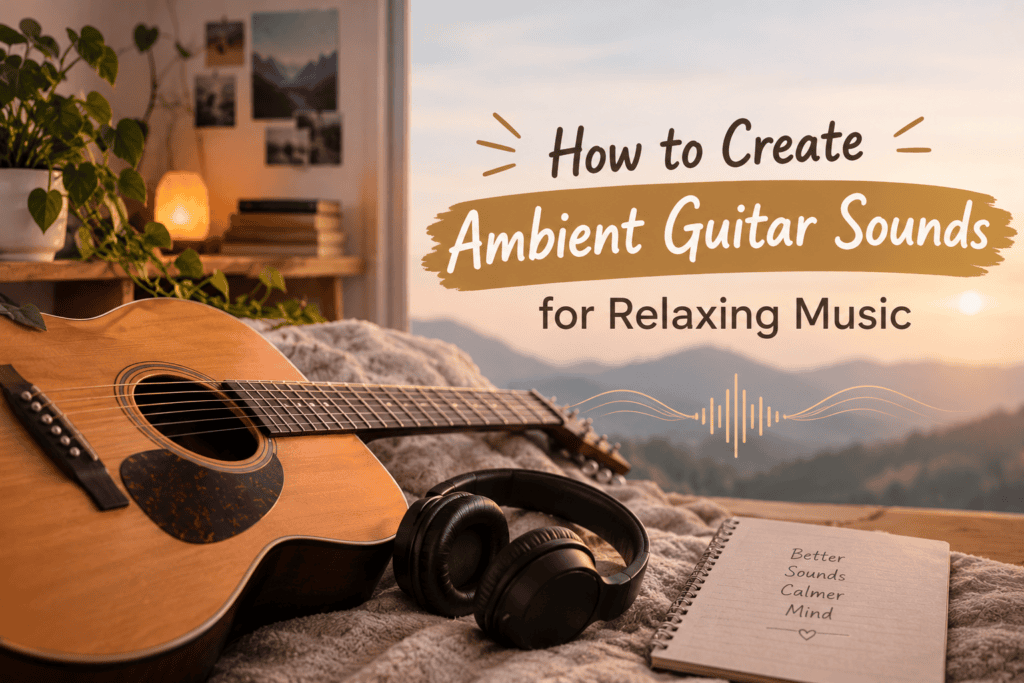
Learning how to create ambient guitar sounds for relaxing music can help guitarists transform simple melodies and chords into peaceful, atmospheric soundscapes. Ambient guitar music is often used for meditation, relaxation, worship, cinematic soundtracks, sleep playlists, and background music because of its spacious tones, gentle textures, and slow-moving harmonies.
Unlike traditional guitar playing, which often focuses on riffs, solos, and strong rhythms, ambient guitar emphasizes atmosphere, sustain, subtle effects, and the emotional feeling created by each note. Even a simple chord progression can sound beautiful when combined with reverb, delay, soft dynamics, and thoughtful playing techniques.
In this guide, we will explore how to create ambient guitar sounds for relaxing music, including the best guitar tones, essential effects, playing techniques, chord progressions, recording tips, and practical exercises for beginners.
Ambient guitar sounds are spacious, atmospheric tones created by combining guitar playing with effects, sustain, and carefully arranged musical textures. These sounds can feel warm, dreamy, gentle, cinematic, or meditative.
Ambient guitar music does not always follow a traditional verse-and-chorus structure. Instead, it often builds gradually through repeating chords, sustained notes, soft melodies, and evolving layers.
Common characteristics of ambient guitar include:
Long, smooth sustain.
Spacious reverb and delay.
Gentle chord changes.
Slow melodies and arpeggios.
Soft dynamics and controlled picking.
Minimal distortion or carefully shaped textures.
A sense of space between musical phrases.
The goal is not simply to make the guitar sound louder or more complicated. It is to create a musical atmosphere that supports relaxation and emotional expression.

Your guitar plays an important role in shaping your ambient sound. However, you do not need an expensive instrument to begin. Both acoustic and electric guitars can produce beautiful ambient textures.
An electric guitar is a popular choice for ambient music because it works well with reverb, delay, volume swells, and modulation effects.
A clean or slightly warm tone provides a useful starting point. It allows the effects to create space without making the original guitar sound too harsh or distorted.
For a relaxing sound, try:
Using a clean amplifier setting.
Keeping distortion low.
Selecting a neck pickup for a warmer tone, if appropriate.
Playing gently with a pick or fingers.
Experimenting with sustained notes and open strings.
An electric guitar is especially useful for dreamy soundscapes, cinematic textures, and atmospheric worship music.
Acoustic guitars can create relaxing textures through fingerpicking, open chords, harmonics, and natural resonance.
A steel-string acoustic guitar often produces a bright, detailed sound, while a nylon-string guitar can create a softer, rounded tone.
To make acoustic guitar sound more ambient, try:
Fingerpicking slowly instead of strumming aggressively.
Letting notes ring naturally.
Using open chords with sustained notes.
Applying subtle reverb during recording.
Playing higher-register melodies over gentle bass notes.
Acoustic guitar can work beautifully for peaceful background music, meditation tracks, and intimate instrumental arrangements.
Reverb is one of the most important effects for ambient guitar. It creates the impression that the instrument is being played in a large room, hall, or spacious environment.
Without reverb, individual guitar notes may sound short and dry. With the right reverb setting, those notes can develop into smooth, lingering textures.
Hall reverb: Creates a large, spacious sound that works well for cinematic and atmospheric music.
Plate reverb: Produces a smooth, dense reverberation that can add richness to guitar melodies.
Shimmer reverb: Adds bright, octave-like tones to the reverberated signal, creating a dreamy or celestial quality.
Room reverb: Provides a more natural sense of space without making the guitar sound extremely distant.
Start with a clean guitar tone and gradually increase the reverb mix until the notes feel spacious but remain clear.
As a starting point, experiment with:
Reverb mix: Around 20–40%.
Decay: Approximately 3–6 seconds for a spacious sound.
Pre-delay: Around 10–30 milliseconds, if available.
These are only starting points, not fixed rules. The ideal settings depend on the guitar, the effect unit, the tempo, and the arrangement.
If the reverb is too strong, the notes may become muddy and lose definition. Adjust the mix and decay until the guitar sounds spacious without overwhelming the music.
Delay repeats the notes you play, creating rhythmic echoes that can make simple guitar parts sound fuller and more immersive.
When used carefully, delay can turn a short melody into a flowing pattern that continues underneath the next musical phrase.
Digital delay: Produces clear, precise repetitions that work well for repeating arpeggios.
Analog-style delay: Often has warmer, softer repeats that gradually blend into the background.
Tape-style delay: Can introduce subtle warmth and character, making the sound feel less clinical.
For a relaxing ambient guitar tone, try:
A moderate delay mix.
Two to four audible repeats.
A tempo-synchronized delay for rhythmic patterns.
A slightly darker tone for the repeated notes.
A feedback level that allows the echoes to fade naturally.
For example, play a slow four-note pattern and let the delay repeat it while you move to the next chord. The previous notes can continue ringing underneath the new harmony, creating a layered effect.
Avoid setting the feedback too high unless you intentionally want the echoes to build into a dense soundscape.

Volume swells allow you to bring notes into the mix gradually instead of hearing a sharp pick attack. This creates a smooth, pad-like sound that can resemble a synthesizer.
Play a note or chord with the volume lowered, then gradually increase the volume using your pedal. The sound will rise smoothly rather than beginning with a sharp attack.
If you do not have a volume pedal, you can use your guitar’s volume knob. Lower the volume before playing a note, then turn it up gradually.
Some guitar plugins include automatic volume-swell effects that soften the beginning of each note. These can be useful when recording ambient guitar directly into a computer.
Volume swells work particularly well with reverb and delay because the effects allow each note to expand into a long, flowing texture.
Fingerpicking is an effective way to create gentle, detailed guitar arrangements. It allows you to control the volume of individual strings and create a natural sense of movement without using heavy strumming.
An arpeggio is a chord played one note at a time rather than all at once.
For example, play a C major chord by picking the notes slowly in sequence. Allow each note to ring before moving to the next.
You can experiment with patterns such as:
Bass note, second string, third string, first string.
Alternating bass notes with a gentle upper melody.
The key is to maintain an even, relaxed touch. You do not need to play every note at exactly the same volume; subtle differences can make the arrangement feel more natural.
Ambient music often benefits from silence. Letting notes fade naturally creates breathing room and prevents the arrangement from feeling crowded.
Try playing a short melody, allowing it to ring, and waiting briefly before playing the next phrase.
Harmony plays a major role in the emotional character of ambient guitar music. You can create a peaceful atmosphere with simple chords, open strings, and slow progressions.
Major seventh chords often create a warm, dreamy quality.
For example, Cmaj7 can be used in a gentle progression with Fmaj7 or Am7. These chords introduce colour without requiring fast or complicated playing.
Minor seventh chords can sound reflective, intimate, or contemplative.
Try a progression such as:
Am7 – Fmaj7 – Cmaj7 – G
Play each chord slowly, allowing the notes to overlap where practical.
Add9 chords can create an open, spacious sound that works well for ambient guitar.
For example, Cadd9 or Gadd9 can introduce extra colour while retaining a familiar harmonic foundation.
Open strings can continue ringing while your fretting hand changes position. This creates natural overlap between chords and can make a progression sound more expansive.
Experiment with chord voicings that share common notes, allowing those notes to remain audible as the harmony changes.
Remember that no chord is automatically relaxing in every musical context. Tempo, dynamics, melody, and the surrounding arrangement all influence the overall feeling.

Layering means combining multiple guitar parts to create a richer musical texture. Instead of asking one guitar part to do everything, you can give each layer a specific role.
Record a slow chord progression using a clean tone. Keep the playing consistent and leave space between changes.
Add long notes or volume swells behind the main chords. Use a spacious reverb to help this layer blend into the background.
Play a simple melody in a higher register. Use fewer notes and allow each phrase to breathe.
Add a repeating picking pattern with delay. Keep it quieter than the main guitar part so it adds movement without distracting from the arrangement.
If needed, add a lightly processed guitar layer with modulation or shimmer effects. Use this sparingly to avoid making the mix too crowded.
Not every ambient track needs five layers. Sometimes one guitar, a carefully chosen chord progression, and a little reverb are enough.
A digital audio workstation (DAW) allows you to record, edit, process, and arrange guitar parts on a computer.
Popular options include GarageBand, Reaper, Ableton Live, Logic Pro, and other recording applications. You can also use a dedicated guitar effects processor without a computer.
Connect your electric guitar to an audio interface or compatible recording device. Record a clean signal with enough headroom to avoid clipping.
For acoustic guitar, you can record using a microphone or a suitable pickup system.
Use reverb to create space and delay to add repeated notes. Start with moderate settings and adjust while listening to the entire arrangement.
Use equalization (EQ) to reduce unnecessary low-frequency rumble or harsh high frequencies. Avoid removing so much bass or treble that the guitar loses its natural character.
Gentle compression can help balance the volume of individual notes. Use it carefully because too much compression can reduce the natural dynamics that make ambient music expressive.
Add a second guitar part, a sustained melody, or a volume-swell layer if the arrangement needs more depth.
Check whether the notes overlap smoothly and whether the reverb and delay leave enough room for the other instruments. Reduce any effects that make the sound unclear.

Learning how to create ambient guitar sounds for relaxing music also means understanding what can make the result less effective.
Excessive reverb can blur chord changes and make melodies difficult to hear. Reduce the mix or decay when notes begin to merge into one indistinct sound.
Combining several delays, reverbs, and modulation effects can make a guitar sound impressive in isolation but cluttered in a full mix. Start with one or two effects and add more only when necessary.
Ambient guitar often depends on simplicity. Leave space between phrases instead of filling every moment with extra notes.
Slow music still needs a sense of pulse. Practise with a metronome or a simple backing track if your timing becomes inconsistent.
A successful ambient arrangement often has a clear hierarchy. Keep the main musical idea audible while background textures support it.
Music designed for relaxation should serve its intended mood. If a sound is too bright, loud, busy, or dramatic for the track, adjust it to fit the overall atmosphere.
You can start developing ambient guitar skills with a short, structured practice session.
5 minutes — Explore your tone
Play single notes and chords with a clean setting. Listen to how your guitar naturally sustains.
5 minutes — Experiment with reverb and delay
Change one setting at a time. Notice how the sound changes as you adjust the mix, decay, or feedback.
5 minutes — Practise a slow chord progression
Choose three or four chords and let them ring. Focus on smooth transitions and consistent dynamics.
5 minutes — Create a simple soundscape
Combine the chord progression with a short melody, a volume swell, or a repeating arpeggio.
Record your practice if possible. Listening back can help you identify which tones and techniques create the most effective atmosphere.
At The Mystic Keys, we believe that developing musical skills involves both technical understanding and creative exploration. Learning guitar can help students discover different playing styles, experiment with sound, and develop their own musical expression.
With structured guidance and regular practice, guitarists can work towards improving their chord knowledge, fingerpicking, rhythm, dynamics, and understanding of musical effects.
These foundations can be especially useful for students interested in ambient guitar, worship music, instrumental compositions, and relaxing soundscapes.
Whether you are a beginner learning your first chords or an experienced player exploring new sounds, a clear learning path can help you develop your technique and creativity.
Explore online guitar lessons at The Mystic Keys to continue your musical journey.

Learning how to create ambient guitar sounds for relaxing music is about combining thoughtful playing with carefully chosen tones and effects. Reverb adds space, delay creates movement, volume swells soften note attacks, and fingerpicking introduces gentle detail. Simple chord progressions and subtle layers can transform an ordinary guitar part into an immersive soundscape.
Start with a clean tone, experiment with one effect at a time, and focus on playing slowly with control. As your confidence grows, you can explore more advanced effects, recording techniques, and layered arrangements.
The most important thing is to listen carefully and let every note serve the atmosphere you want to create.
For more information and exciting resources about learning music, visit our website at The Mystic Keys. For more music content and exciting offers follow us on
Facebook, Instagram, YouTube, LinkedIn, Twitter, Pinterest, and Threads,

Learning the guitar is an exciting way to explore music, express creativity, and develop a new skill. Whether you want to play your favourite songs, accompany a singer, or enjoy music as a hobby, understanding the time to learn guitar can help you set realistic goals and begin your musical journey with confidence.
However, one common question comes up before starting lessons: How long does it take to learn guitar online?
The answer depends on your goals, practice routine, musical background, and the guidance you receive. While some beginners learn simple melodies within a few weeks, mastering chords, rhythm, and complete songs requires consistent effort.
Fortunately, online guitar lessons make learning convenient and accessible. With structured guidance and regular practice, you can gradually build your skills from home.
Every student progresses at a different pace. However, a structured learning plan can help you understand what to expect at each stage.
During the first few weeks, beginners learn correct posture, finger placement, and basic techniques. Over time, they become familiar with simple chords, melodies, and strumming patterns.
Within one to three months, many learners begin playing basic chord progressions and familiar songs. After three to six months of consistent practice, they may develop better rhythm, smoother transitions, and greater confidence.
Beyond six months, students can explore advanced techniques based on their interests. These timelines are only general guidelines, as progress depends on individual goals and practice habits.

Each stage of guitar learning introduces new skills that build upon earlier lessons. Understanding this progression can help you recognise improvements and stay motivated.
The initial weeks focus on understanding the instrument, maintaining correct posture, and learning how to position your fingers. Beginners also practise producing clear notes and coordinating both hands.
At first, pressing strings and changing finger positions may feel challenging. However, regular exercises gradually improve coordination and comfort.
By the end of the first month, many students can recognise basic chords and play simple musical exercises. Some may also begin learning an easy song.
Once the basics become familiar, learners can focus on common chords, strumming patterns, and chord transitions. This stage often feels rewarding because students begin playing recognisable music.
Changing chords smoothly may still require patience. Practising transitions slowly before increasing speed helps improve accuracy and rhythm.
With consistent practice, many beginners can play simplified versions of familiar songs within the first few months.
As basic techniques improve, students can focus on playing more smoothly and maintaining a steady rhythm. Lessons may introduce additional chords, fingerpicking, and simple musical arrangements.
Learners also begin understanding how different rhythms and techniques influence a song’s sound. This helps them move beyond memorising chord shapes towards more expressive playing.
By six months, consistent learners may be comfortable playing several complete songs. More complex arrangements, however, may take longer to master.
Once the fundamentals are secure, students can explore techniques that match their musical interests. These may include fingerstyle guitar, lead playing, improvisation, or music theory.
Someone interested in accompanying singers may focus on chords and rhythm, while an aspiring lead guitarist may practise scales and picking techniques.
Continued practice and constructive feedback help learners develop these skills and work towards more challenging musical goals.
Online guitar lessons can be just as effective as in-person instruction when they include structured teaching, regular feedback, and consistent practice.
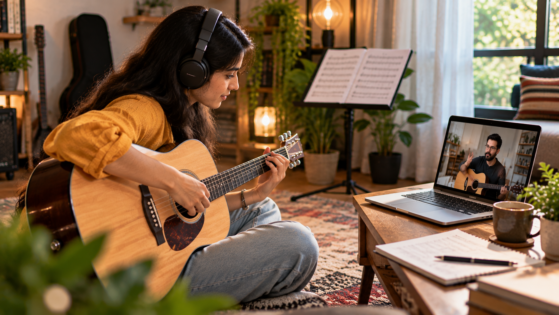
Through live online lessons, teachers can demonstrate techniques and observe students as they play. They can identify problems with finger placement, strumming, posture, or rhythm and suggest corrections.
Moreover, learning from home eliminates travel time and makes lessons easier to fit into busy schedules. Students can use the extra time to practise and revise what they have learned.
A stable internet connection, a well-positioned camera, and a quiet learning environment help ensure effective communication. Recorded lessons and supplementary materials can also support revision between sessions.
Ultimately, online learning does not have to slow your progress. With personalised guidance and regular practice, you can develop your skills at a comfortable pace.
Although beginners often follow similar learning stages, the time needed to develop specific skills varies. Several factors influence how quickly you progress.
Students who have learned another instrument may already understand rhythm, notation, or basic music theory. These skills can make certain aspects of guitar learning easier.
However, complete beginners can also progress steadily. They may simply need additional time to become familiar with musical concepts and develop coordination.
Consistent practice is one of the biggest influences on progress. Spending 15–20 minutes practising regularly can be more effective than completing one lengthy session each week.
The quality of practice matters, too. Focusing on a difficult chord transition or correcting a strumming mistake helps build stronger skills than repeating an entire song without addressing errors.
Different guitar styles require different techniques. Acoustic guitar often involves chord-based accompaniment, while electric guitar may include lead playing and specialised picking techniques. Classical guitar places greater emphasis on fingerstyle technique.
Your goals also influence your timeline. Learning a few favourite songs may take less time than preparing for graded examinations or developing advanced performance skills.
Structured lessons help beginners develop correct techniques from the start. A teacher can explain unfamiliar concepts, identify mistakes, and adjust exercises to suit your progress.
Regular feedback also makes practice more purposeful. Instead of struggling with the same problem, students learn how to address it effectively.

Long practice sessions are not always necessary for beginners. Short, focused sessions can help develop consistency without making learning feel overwhelming.
Starting with 15–20 minutes a day is a reasonable goal. As your coordination improves, you can gradually increase your practice time to 30 minutes or longer, depending on your schedule.
A simple routine might include finger exercises, chord transitions, strumming practice, and a short song. Revisiting previously learned techniques alongside new exercises helps strengthen your foundation.
It is equally important to practise slowly enough to maintain accuracy. Increasing speed before mastering a movement can reinforce mistakes and make them harder to correct.
Above all, choose a routine you can maintain. Regular, focused practice is more valuable than an ambitious schedule that becomes difficult to follow.
Absolutely! Online guitar lessons can be suitable for complete beginners, even if you have never played an instrument before.
A beginner-friendly programme introduces skills gradually, starting with posture and finger placement before progressing to chords, rhythm, and songs. You do not necessarily need prior knowledge of music theory or notation.
For example, students may begin with individual notes before learning simple chords. Once comfortable, they can practise transitions and combine chords with basic strumming patterns.
Live online instruction also allows students to ask questions and receive demonstrations whenever something feels unclear.
Initial challenges, such as buzzing strings and uneven chord changes, are normal. With correct technique, patient guidance, and regular practice, these difficulties gradually become easier to manage.

Every student has different interests, learning preferences, and available practice time. Personalised lessons take these differences into account and adjust instruction accordingly.
For example, someone interested in Bollywood songs may focus on suitable chords and strumming patterns. Meanwhile, a student preparing for graded examinations may need more attention to music theory, technical exercises, and sight-reading.
Regular feedback helps learners recognise their strengths and improve weaker areas. Teachers can also recommend targeted exercises that make practice more productive.
At The Mystic Keys, students receive personalised, one-on-one online music instruction tailored to their individual needs and goals. Live lessons, teacher guidance, and supplementary learning materials support their progress from home.
With a structured learning plan, students can understand what to practise and how each new skill builds upon the previous one.
Trying to learn too many techniques at once can make guitar practice confusing. Beginners benefit from mastering a few fundamental skills before moving on to more challenging exercises.
Another common mistake is practising without a clear objective. Setting a specific goal for each session, such as improving chord transitions or maintaining a steady rhythm, makes progress easier to measure.
Comparing yourself with experienced guitarists can also create unrealistic expectations. Instead, focus on your own improvements and celebrate the skills you develop over time.
Finally, repeating mistakes without seeking feedback may slow your progress. A teacher can identify the cause of a problem and suggest practical ways to correct it.
By practising patiently and following structured guidance, you can overcome these challenges and develop stronger musical skills.

Motivation can fluctuate during any learning journey. Choosing songs you genuinely enjoy can make practice more engaging and give you something exciting to work towards.
It also helps to celebrate small achievements. Playing your first clean chord, changing between chords smoothly, or completing a song are all meaningful milestones.
Recording your practice occasionally allows you to compare performances and notice improvements that might otherwise go unnoticed.
Most importantly, keep your goals realistic. Focus on improving one skill at a time rather than expecting to master the guitar within a few weeks.
Remember that mistakes are a natural part of learning. With patience, regular practice, and supportive guidance, you can make steady progress while enjoying the experience.
Motivation can fluctuate during any learning journey. Choosing songs you genuinely enjoy can make practice more engaging and give you something exciting to work towards.
It also helps to celebrate small achievements. Playing your first clean chord, changing between chords smoothly, or completing a song are all meaningful milestones.
Recording your practice occasionally allows you to compare performances and notice improvements that might otherwise go unnoticed.
Most importantly, keep your goals realistic. Focus on improving one skill at a time rather than expecting to master the guitar within a few weeks.
Remember that mistakes are a natural part of learning. With patience, regular practice, and supportive guidance, you can make steady progress while enjoying the experience.

So, how long does it take to learn guitar online? You may begin playing simple exercises within a few weeks and develop greater confidence with chords and songs over the following months. Your exact timeline depends on your goals, practice habits, and the guidance you receive.
The key is to start with a structured learning plan that suits your needs. Personalised instruction can help you overcome challenges, strengthen your technique, and progress without unnecessary pressure.
The Mystic Keys offers live, one-on-one online Guitar lessons tailored to individual learning needs. With guidance from experienced music educators, you can explore your favourite music and develop your guitar skills from home.
Whether you are a complete beginner or returning to the instrument after a break, your musical journey can begin with one lesson and a commitment to keep practising.
Ready to begin? Explore online guitar lessons with The Mystic Keys and take your first step towards playing guitar with confidence.
For more information and exciting resources about learning music, visit our website at The Mystic Keys. For more music content and exciting offers follow us on
Facebook, Instagram, YouTube, LinkedIn, Twitter, Pinterest, and Threads,

Singing in a choir brings people together through music, harmony, and shared emotions. However, performing in front of an audience can make even experienced singers nervous. Learning how to overcome stage fear is essential for building confidence, managing the fear of forgetting lyrics or missing notes, and enjoying the experience of performing together.
Fortunately, stage fear can be managed with regular practice, supportive rehearsals, and a positive mindset. By learning to control nervousness and trust their abilities, choir members can become more confident performers and enjoy singing on stage.
Stage fear, also known as performance anxiety, occurs when singers feel nervous about performing in front of an audience. Choir members may worry about forgetting lyrics, singing incorrectly, or missing the conductor’s cues.
Although singing in a group provides support, it also requires coordination and concentration. Understanding that nervousness is natural helps singers approach performances with greater confidence and less pressure.

Fear of making mistakes is one of the most common causes of stage anxiety. Singers may also compare themselves with others or worry about how the audience will judge their voices.
Additionally, unfamiliar venues, bright lights, and limited performance experience can increase nervousness. Recognising these challenges helps singers identify what they need to improve before stepping onto the stage.
Regular practice helps singers become familiar with their music and reduces uncertainty during performances. Learning lyrics, practising vocal parts, and understanding musical transitions can make singing feel more natural.
Instead of trying to perfect everything at once, choir members can practise difficult sections separately. As preparation improves, singers can focus more on musical expression and less on the fear of making mistakes.

Nervousness can cause a racing heartbeat, tense muscles, and irregular breathing. Gentle breathing exercises, relaxed shoulders, and comfortable posture can help singers feel more settled before performing.
Developing a pre-performance routine is equally helpful. Vocal warm-ups, reviewing the opening section, and using positive self-talk can prepare the mind for the concert. The goal is not to eliminate nervousness completely but to perform confidently despite it.
Confidence grows when choir members feel supported by their fellow singers. A friendly rehearsal environment encourages everyone to learn from mistakes without feeling embarrassed.
Listening to other vocal sections, following the conductor, and practising together strengthen coordination and trust. When singers feel connected to the group, performing becomes a shared musical experience rather than an individual challenge.

Constantly worrying about the audience can distract singers from their performance. Focusing on the conductor’s gestures, musical timing, and the voices around them helps maintain concentration.
Understanding the emotion behind a song also makes singing more meaningful. When performers concentrate on communicating the music rather than worrying about judgement, they can express themselves more naturally.
Singers who feel anxious can begin with informal performances in front of friends, family, or small groups. Gradually progressing to community events and larger concerts helps them become comfortable performing in different settings.
Each experience teaches singers how to manage nervousness and recover from mistakes. Over time, the stage becomes more familiar, making future performances less intimidating.

Expecting every performance to be perfect creates unnecessary pressure. A missed note or forgotten lyric does not define a singer’s ability, especially when they can regain focus and continue singing.
Instead of dwelling on mistakes, choir members should identify areas for improvement and celebrate their progress. Treating each performance as a learning opportunity builds resilience and encourages long-term confidence.
Choir directors play an important role in helping singers feel prepared and supported. Clear instructions, structured rehearsals, and constructive feedback reduce uncertainty and encourage improvement.
Providing opportunities to sing in small groups or practise individual sections can also help members become comfortable being heard. With patient guidance, choir directors can create an environment where musical skills and confidence develop together.

Recording rehearsals allows singers to review their pitch, timing, and expression. Listening to their progress can improve self-awareness and help them identify areas that need attention.
Online rehearsals and virtual performances can also help singers practise in front of a camera. However, combining these methods with live rehearsals is important for developing ensemble coordination, listening skills, and stage presence.
Small, consistent habits can make a significant difference in overcoming stage fear. Learning music thoroughly, practising breathing techniques, and arriving prepared for rehearsals help singers feel more confident.
Supporting fellow choir members and celebrating group achievements also strengthens the sense of belonging. Every time singers perform despite nervousness or recover from a mistake, they take another step towards greater confidence.

Overcoming stage fear takes time, practice, and encouragement. By preparing thoroughly, managing nervousness, and learning from mistakes, choir members can become more comfortable performing before an audience. The Mystic Keys supports musical growth through personalised online training, including Worship Piano & Singing Lessons Online, helping learners develop their skills, confidence, and musical expression.
Ultimately, choir singing is about more than hitting the right notes. It is about connection, expression, and creating harmony together. With patience and consistent effort, singers can transform stage anxiety into confidence and share their music with greater joy.
For more information and exciting resources about learning music, visit our website at The Mystic Keys. For more music content and exciting offers follow us on
Facebook, Instagram, YouTube, LinkedIn, Twitter, Pinterest, and Threads,