How to Master Repeated Notes on the Piano
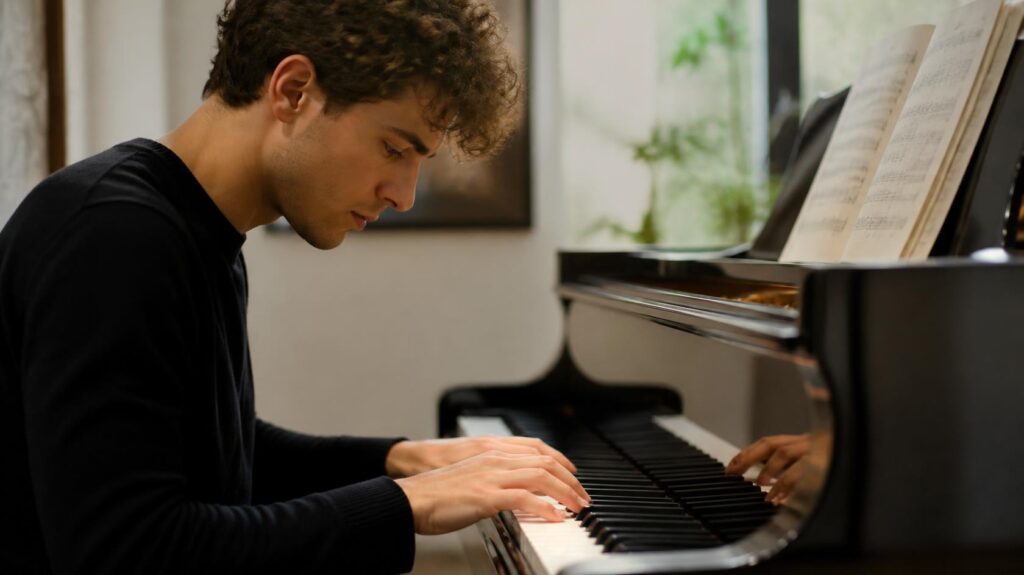
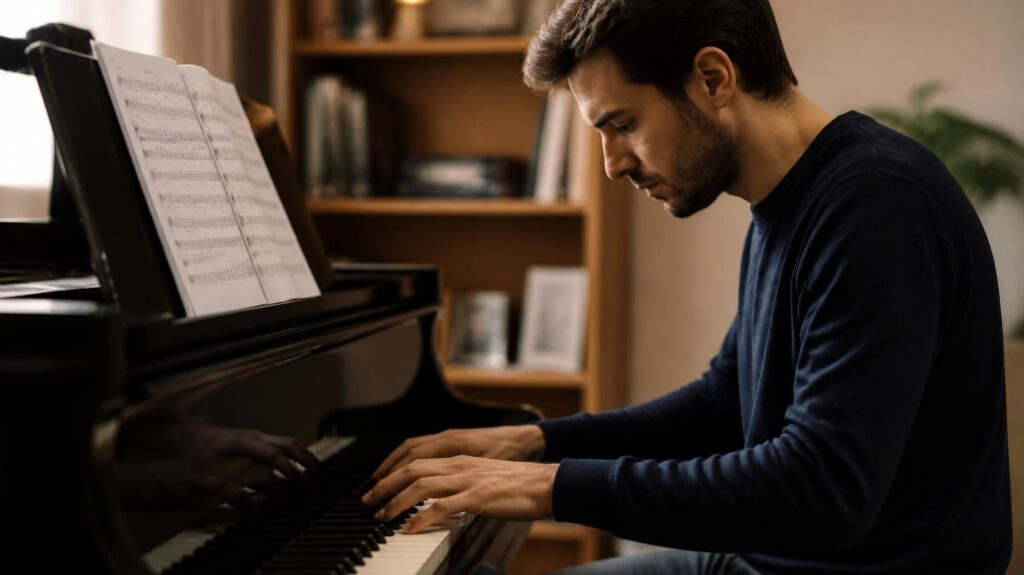
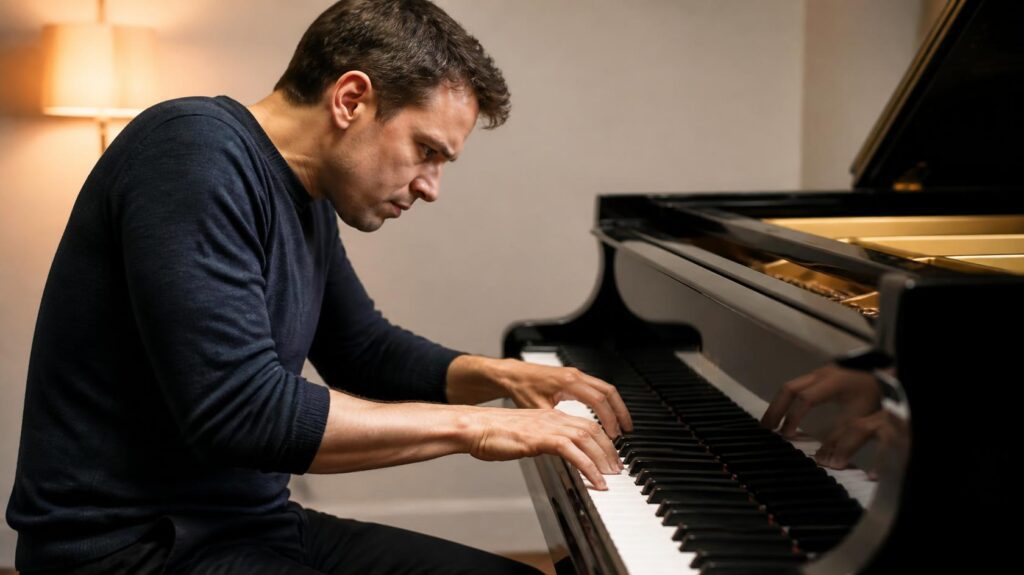
Repeated notes are an essential technique that every pianist must learn to play with confidence and precision. From classical compositions to modern worship songs and contemporary pieces, repeated notes add rhythm, excitement, and expression to music. However, many beginners struggle to play them smoothly, often experiencing tension, uneven timing, or a lack of control. Learning how to master repeated notes on the piano requires proper technique, consistent practice, and an understanding of hand movement. With the right approach, pianists can develop speed, accuracy, and musicality while avoiding unnecessary strain.
Why Learning How to Master Repeated Notes on the Piano Is Important
Repeated notes appear in almost every style of music, including classical, jazz, pop, worship, and film scores. They create momentum, emphasize melodies, and add dramatic effects to musical passages. Mastering this technique allows pianists to perform difficult pieces with greater confidence and expression.
Many famous composers, such as Mozart, Beethoven, and Chopin, used repeated notes extensively in their compositions. Modern pianists also encounter repeated-note patterns in worship music, accompaniment styles, and contemporary arrangements. Developing control over these patterns improves finger strength, coordination, rhythm, and overall keyboard technique.
Repeated notes are not simply about pressing the same key multiple times; they require careful attention to timing, hand position, and finger flexibility. Strong fundamentals in this area will enhance every aspect of your piano playing.
Exercises That Help You Master Repeated Notes on the Piano
One of the biggest mistakes pianists make is relying on a single finger to play repeated notes continuously. This often leads to fatigue and uneven sound. Instead, pianists should learn to alternate fingers whenever possible, allowing the hand to remain relaxed and flexible.
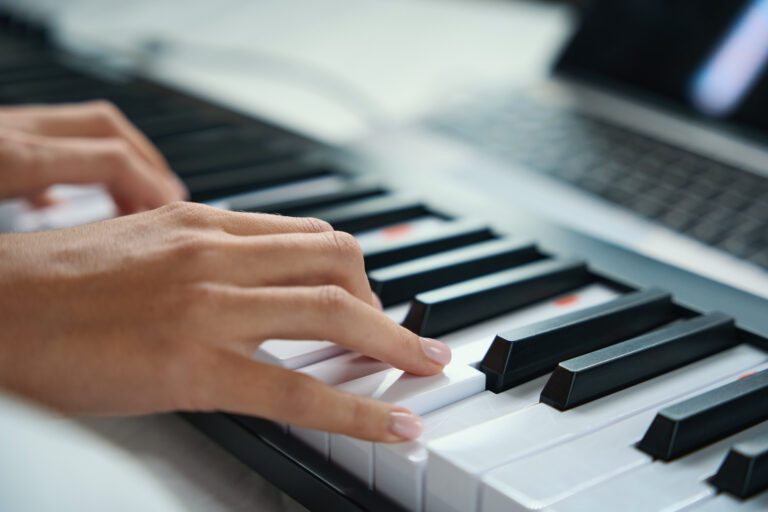
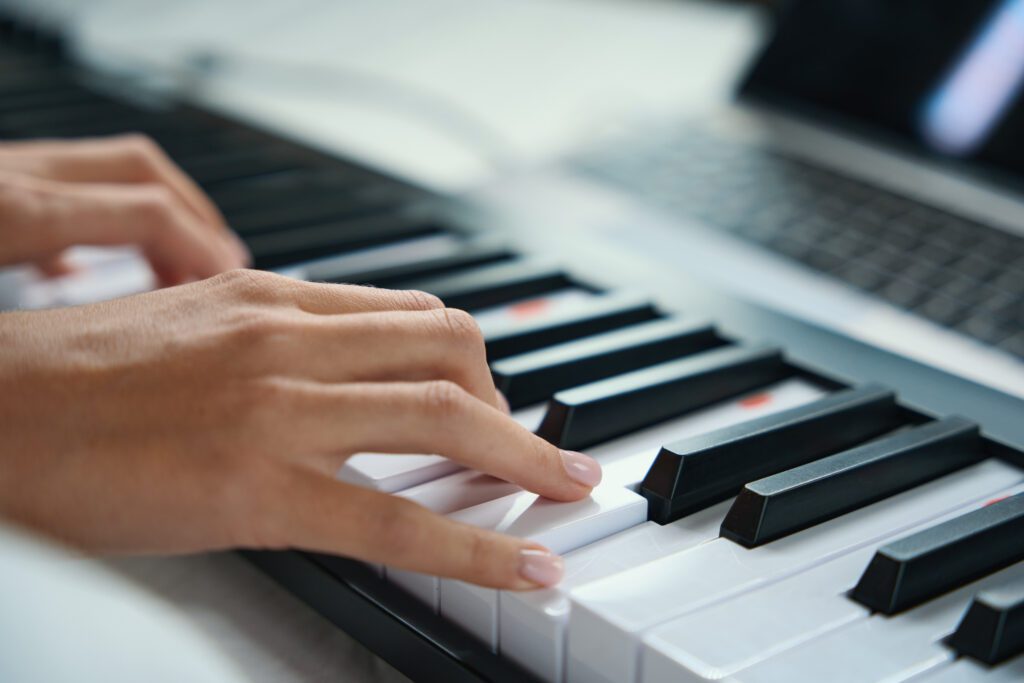
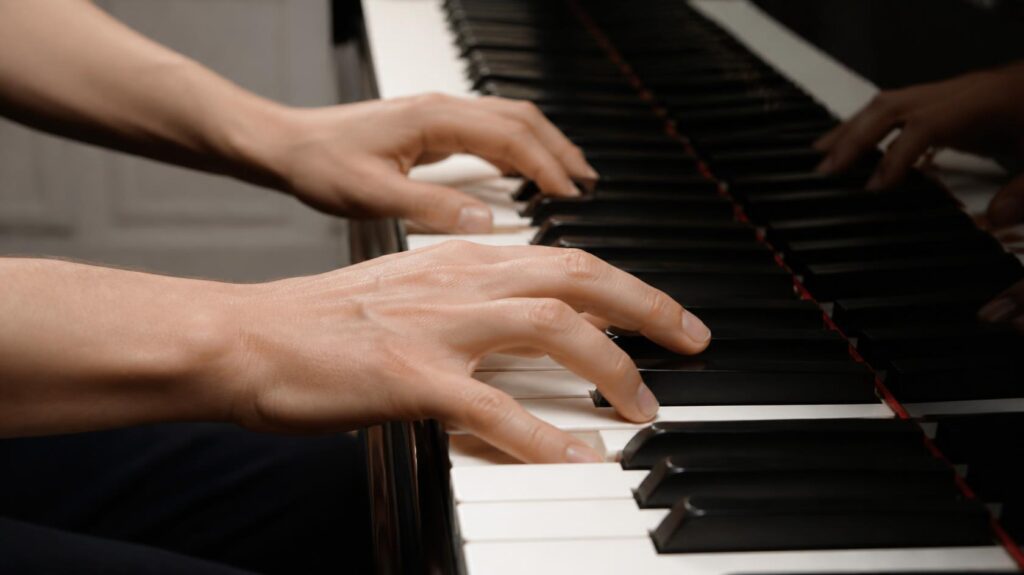
Maintaining a curved hand position is equally important. The fingers should stay close to the keys while the wrist remains loose and natural. Excessive tension in the wrist or forearm can slow down movement and reduce accuracy.
When practicing repeated notes, focus on producing an even tone and consistent volume. Start slowly and pay attention to the quality of each note. Gradually increase the speed while maintaining complete control. Developing proper technique early will prevent bad habits and improve long-term performance.
How to Master Repeated Notes on the Piano by Building Finger Strength and Independence
Finger strength and independence play a crucial role in mastering repeated notes on the piano. Weak fingers often struggle to maintain speed and consistency, making dedicated exercises essential for improvement.
Simple exercises such as repeated-note drills, finger patterns, and scales can significantly strengthen the hands. Practice repeating a single note using different finger combinations, such as 1-2, 2-3, or 3-4. This develops flexibility and teaches the fingers to work independently.
In addition, practicing scales and arpeggios improves overall hand coordination and prepares pianists for more advanced musical passages. Consistent technical exercises not only increase finger strength but also improve endurance, allowing pianists to perform repeated-note sections comfortably.
How to Master Repeated Notes on the Piano by Developing Speed Without Losing Control
Many students try to play repeated notes quickly before mastering accuracy, which often leads to mistakes and tension. Speed should always be built gradually. Begin practicing at a slow tempo and use a metronome to maintain steady rhythm.
Increase the tempo in small increments only after achieving complete control at the current speed. Focus on keeping the hand relaxed and avoid lifting the fingers too high above the keyboard. Efficient movement allows pianists to play faster while conserving energy.
Another helpful technique is practicing in rhythmic variations. Alternate between long and short note patterns to improve finger coordination and control. Over time, these exercises will help pianists achieve speed while maintaining clarity and precision.
Common Mistakes to Avoid When Practicing Repeated Notes
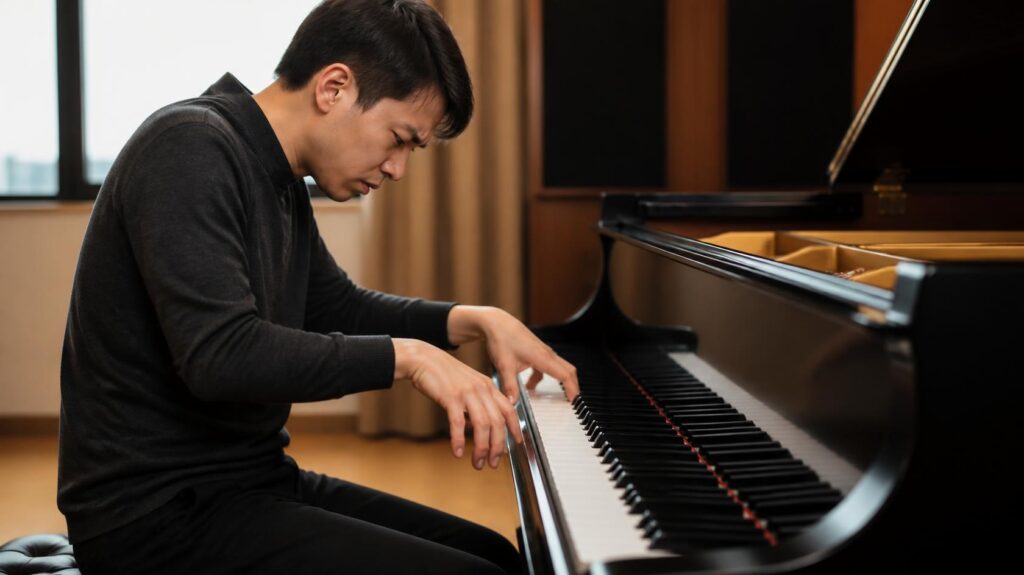
Many piano students unknowingly develop habits that make repeated notes more difficult to play. One common mistake is creating unnecessary tension in the fingers, wrists, and shoulders. Tension limits movement and can lead to fatigue or discomfort.
Another mistake is practicing too quickly without focusing on accuracy. Rushing through exercises often results in uneven rhythm and inconsistent sound. Students should also avoid striking the keys with excessive force, as repeated notes rely more on control and efficiency than on strength.
Ignoring proper posture and hand position can also affect performance. Sitting at the correct height and maintaining relaxed shoulders will improve technique and make repeated-note passages feel much easier to play.
Effective Exercises to Improve Repeated Notes
Regular exercises are essential for developing confidence with repeated notes. Start by choosing a single note in the middle register and play it repeatedly using different fingers. Practice slowly, ensuring that each note sounds clear and even.
You can also create simple rhythmic patterns, such as groups of two, three, or four repeated notes, and gradually increase the tempo. Practicing scales with repeated-note variations is another effective way to improve coordination.
Using a metronome during practice sessions helps maintain consistent timing and allows students to track their progress. Spending just ten to fifteen minutes each day on these exercises can lead to noticeable improvements in speed, endurance, and control.
Applying Repeated Notes in Real Music
Technical exercises are important, but the ultimate goal is to apply repeated-note techniques in actual musical pieces. Students should practice songs that include repeated-note patterns in different styles, such as classical compositions, worship music, and contemporary piano arrangements.
Pay close attention to musical expression, dynamics, and phrasing. Repeated notes should contribute to the emotion of the music rather than sounding mechanical. Experiment with different levels of volume and articulation to create a more engaging performance.
As confidence grows, pianists will find that repeated notes become a natural part of their playing, allowing them to tackle more challenging repertoire with ease.
Master Repeated Notes Through Consistent Practice
Learning how to master repeated notes on the piano is a gradual process that requires patience, proper technique, and regular practice. By focusing on finger independence, hand relaxation, rhythmic accuracy, and controlled speed, pianists can transform this challenging technique into one of their greatest strengths.
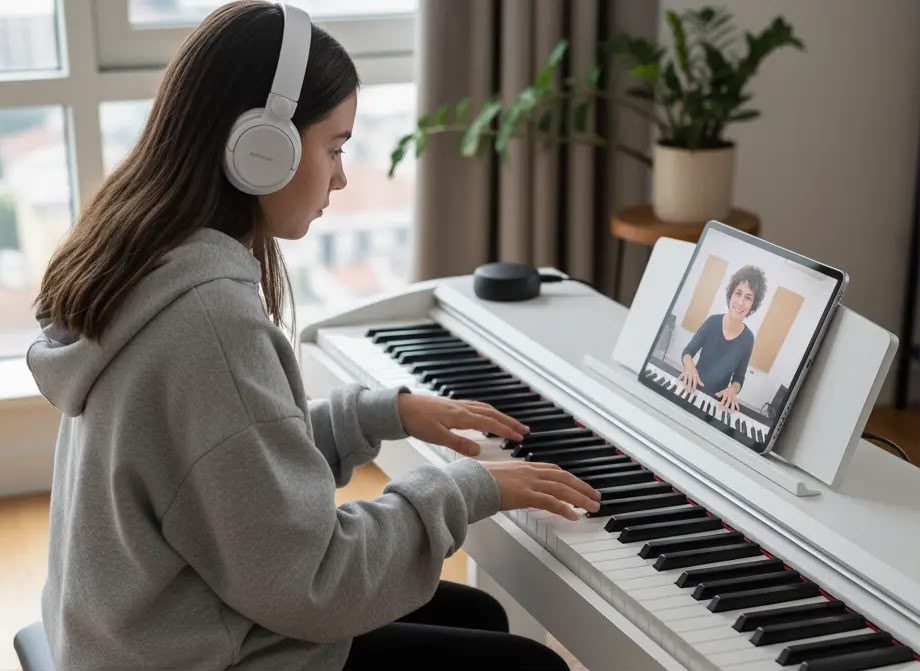
At The Mystic Keys, students receive personalized guidance that helps them build strong technical foundations while developing musical expression and confidence. Students who want to learn piano lessons online can benefit from structured one-on-one sessions designed for beginners and advanced players alike. Through expert instruction and consistent practice, pianists of all levels can master repeated notes and explore new possibilities in their musical journey.
For more information and exciting resources about learning music, visit our website at The Mystic Keys. For more music content and exciting offers follow us on
Facebook, Instagram, YouTube, LinkedIn, Twitter, Pinterest, and Threads.

Follow a Worship Leader | A Beginner’s Guide for Pianists
Follow a Worship Leader | A Beginner's Guide for Pianists
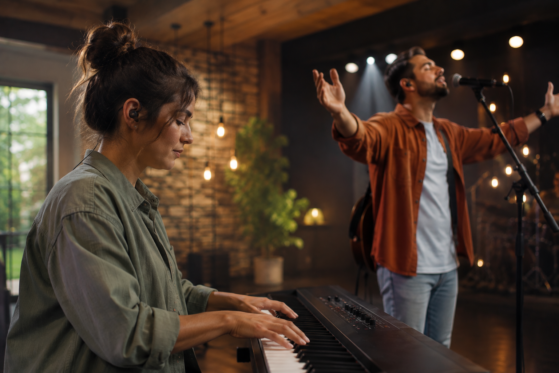
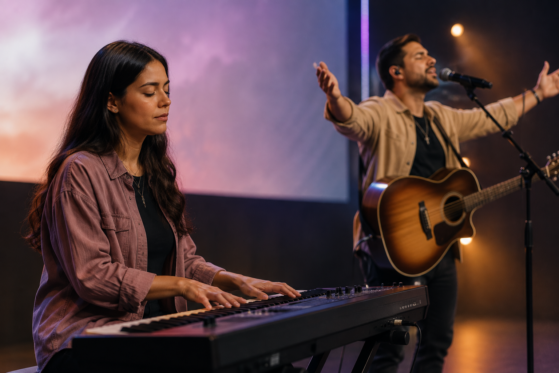
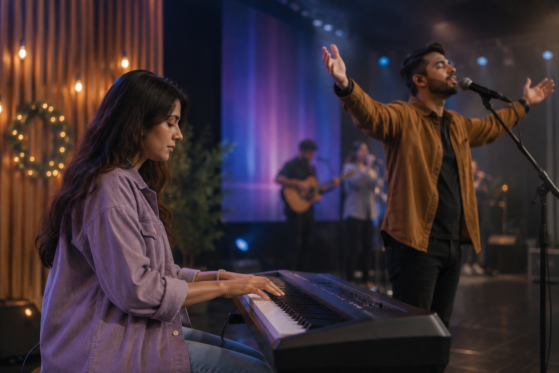
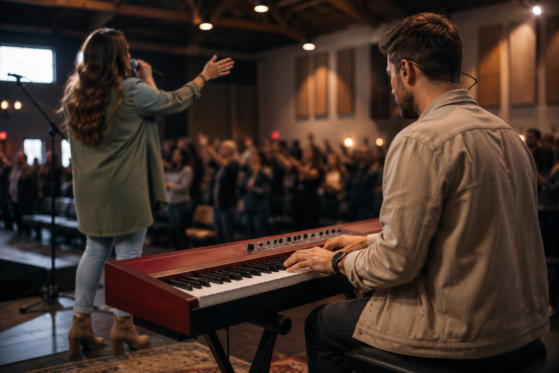
Learning to play the piano for worship is a rewarding experience. One of the most important skills every beginner should develop is learning to follow a worship leader with confidence and sensitivity. Unlike performing a solo piece, worship piano is about serving the song, supporting the congregation, and responding to the direction of the worship leader. Every service is unique. Sometimes a song may last longer than expected, a key may change without prior notice, or the worship leader may repeat a chorus several times. As a pianist, your role is to adapt naturally while maintaining a smooth musical flow.
Many beginners focus heavily on learning chords, scales, and songs. Although these skills are essential, they represent only one part of becoming an effective worship pianist. Listening carefully, anticipating musical changes, and responding confidently to the worship leader are equally important. Developing these abilities allows you to play with greater freedom rather than relying entirely on sheet music.
Fortunately, following a worship leader is a skill that improves with practice. By understanding how worship teams communicate and learning to recognize musical cues, you can become a dependable pianist who enhances every worship experience.
Understand Your Role When You Follow a Worship Leader
Before learning how to follow a worship leader, it is important to understand your purpose within the worship team. Worship piano is not about showcasing technical ability or playing complicated arrangements. Instead, your playing should help create an atmosphere where the congregation can focus on worship rather than the musicians.
A worship leader guides the flow of each song and responds to the needs of the congregation. Because of this, services rarely follow the rehearsal exactly. Unexpected transitions, spontaneous moments, and repeated sections are common. Consequently, flexibility becomes one of the most valuable qualities for any worship pianist.
Rather than thinking of yourself as a solo performer, imagine yourself as part of a conversation. The worship leader communicates through singing, gestures, and musical cues, while you respond with supportive accompaniment. This partnership creates a seamless worship experience.
Learn the Songs Thoroughly Before Rehearsal
Preparation makes following a worship leader much easier. When you already know the structure and chord progression of each song, you can spend less time reading music and more time paying attention to what is happening around you.
Listening to different recordings of the same worship song is extremely helpful. Since many churches perform songs differently from the original versions, becoming familiar with multiple arrangements prepares you for unexpected variations. At the same time, practicing chord progressions in several keys builds confidence if the worship leader decides to change the key during rehearsal or the service.
Instead of memorizing every note, focus on understanding the foundation of the song. Knowing where the verses, choruses, bridges, and instrumental sections occur allows you to adjust quickly whenever the worship leader changes the arrangement.
Watch the Worship Leader to Follow Every Musical Cue
One of the biggest mistakes beginner pianists make is keeping their eyes fixed on the keyboard or sheet music. Although accuracy is important, maintaining visual contact with the worship leader is equally essential.
Experienced worship leaders often communicate without speaking. A simple nod, raised hand, eye contact, or subtle movement can signal an upcoming transition. Missing these cues may cause the entire band to enter the wrong section or end the song too early.
For this reason, try to glance at the worship leader regularly while playing. Over time, this habit becomes natural, allowing you to anticipate changes before they happen. As your awareness improves, your confidence on stage will grow as well.
Listen Carefully to Follow a Worship Leader Confidently
Great worship pianists listen more than they play. Every member of the worship team contributes to the overall sound, making active listening an essential part of your musical development.
Instead of concentrating solely on your own part, pay attention to the vocals, guitars, bass, drums, and other instruments. Notice how the worship leader phrases each line and how the rest of the band responds. These details provide valuable clues about upcoming transitions.
Furthermore, listening carefully helps you balance your playing. During quiet moments, softer piano accompaniment may be more appropriate. On the other hand, larger musical sections often benefit from fuller chords and stronger rhythmic patterns. Adjusting your dynamics according to what you hear creates a more unified sound.
Learn to Recognize Common Worship Cues
Most worship leaders use similar musical signals during rehearsals and services. Becoming familiar with these patterns makes it much easier to respond confidently.
For example, the worship leader may repeat the final line of a chorus several times before moving into spontaneous worship. In other situations, the bridge may continue longer than originally planned, or the ending may be extended to allow the congregation additional time to worship.
Instead of becoming anxious when these moments occur, learn to expect them. Once you recognize these common patterns, you will begin reacting naturally without needing verbal instructions.
Eventually, these musical conversations become second nature, allowing the entire team to move together effortlessly.
Keep Your Chord Knowledge Strong
Solid chord knowledge gives worship pianists tremendous freedom. Since worship music often follows chord charts instead of detailed sheet music, understanding chord relationships is more valuable than memorizing every arrangement.
Spend time practicing major, minor, suspended, diminished, and seventh chords in every key. As your familiarity increases, changing keys or extending sections becomes much less intimidating.
In addition, understanding chord inversions helps your transitions sound smoother. Rather than jumping across the keyboard, inversions allow your hands to move efficiently while maintaining a connected musical flow. This creates a polished sound that supports the worship leader without drawing unnecessary attention.
Stay Calm When Something Changes
Unexpected changes happen in almost every worship service. Perhaps the worship leader skips a verse, repeats the chorus, starts singing spontaneously, or asks the band to continue playing softly after the song officially ends.
Although these moments may feel overwhelming for beginners, remaining calm is the best response. If you lose your place, listen carefully to the bass player or guitarist. Their chord progression will usually guide you back into the song.
Even experienced musicians occasionally make mistakes. What matters most is recovering smoothly instead of allowing panic to affect your performance. Maintaining a peaceful attitude often prevents small errors from becoming noticeable.
Support the Worship Leader Instead of Dominating the Music
The piano is a beautiful instrument with a wide dynamic range. However, playing too many fills or overly complex arrangements can distract from the purpose of worship.
Simple accompaniment often serves the congregation more effectively than elaborate improvisation. During verses, leaving space allows the vocals to remain the primary focus. As the song builds, you can gradually add fuller chords, octaves, or gentle melodic lines to increase intensity.
Remember that effective worship piano is measured not by how much you play but by how well your playing supports the worship leader and the congregation.
Practice Transitions Between Songs
One area many beginners overlook is transitioning smoothly from one song to another. In many churches, worship leaders connect songs without stopping completely, creating a continuous worship experience.
Learning to sustain chords, create gentle instrumental pads, or improvise simple progressions helps bridge these moments naturally. As a result, the worship leader has the freedom to pray, speak, or transition into the next song without awkward silence.
Practicing these transitions at home can significantly improve your confidence during live worship.
Rehearse Like It’s a Live Service
Rehearsal should involve more than simply playing through songs once. Treat each practice session as though you are participating in an actual worship service.
Rather than stopping whenever someone makes a mistake, continue playing while adapting to unexpected situations. Ask the worship leader to intentionally repeat sections, shorten songs, or extend instrumental moments during rehearsal. These exercises prepare you for real-life scenarios where flexibility is required.
Moreover, recording rehearsals allows you to evaluate how well you responded to musical cues. Watching yourself later often reveals habits you may not notice while performing.
Build Trust to Follow a Worship Leader More Effectively
Strong worship teams are built on trust rather than perfect musicianship. Consistently arriving prepared, communicating respectfully, and maintaining a positive attitude make you someone others enjoy serving alongside.
Reliability also builds confidence between you and the worship leader. When they know you are attentive and adaptable, they can lead worship freely without worrying about whether the band will follow.
As relationships strengthen, musical communication becomes increasingly natural. Often, a single glance or subtle gesture is all that is needed to guide the next transition.
Continue Growing as You Follow a Worship Leader
Following a worship leader involves more than musical ability. Developing spiritual maturity, humility, patience, and a servant’s heart greatly influences how you contribute to the worship team.
Take time to study worship music, observe experienced musicians, and seek feedback from your worship leader. Every rehearsal provides opportunities to learn something new. Even small improvements in listening, timing, and awareness accumulate over time.
Growth rarely happens overnight. Nevertheless, consistent practice combined with a willingness to learn will gradually transform you into a more confident and dependable worship pianist.
Final Thoughts
Following a worship leader is one of the most valuable skills a beginner worship pianist can develop. Technical ability certainly matters, but attentive listening, musical awareness, flexibility, and teamwork often have an even greater impact during a worship service.
As you continue practicing, focus not only on mastering songs but also on recognizing cues, strengthening your chord knowledge, and supporting the worship leader with confidence. Every rehearsal will improve your ability to anticipate changes, respond naturally, and contribute meaningfully to the worship experience.
Ultimately, the goal of worship piano is not to impress the audience but to faithfully support the worship leader, encourage the congregation, and create music that points hearts toward God. If you are looking to build these practical skills through structured guidance, Worship Piano & Singing Lessons Online can help you gain the confidence to play effectively in a live worship setting.
At The Mystic Keys, students are encouraged to grow not only as skilled musicians but also as supportive members of a worship team. With patience, preparation, and consistent practice, you will become a pianist who serves both the team and the worship experience with excellence.
For more information and exciting resources about learning music, visit our website at The Mystic Keys. For more music content and exciting offers follow us on
Facebook, Instagram, YouTube, LinkedIn, Twitter, Pinterest, and Threads.