

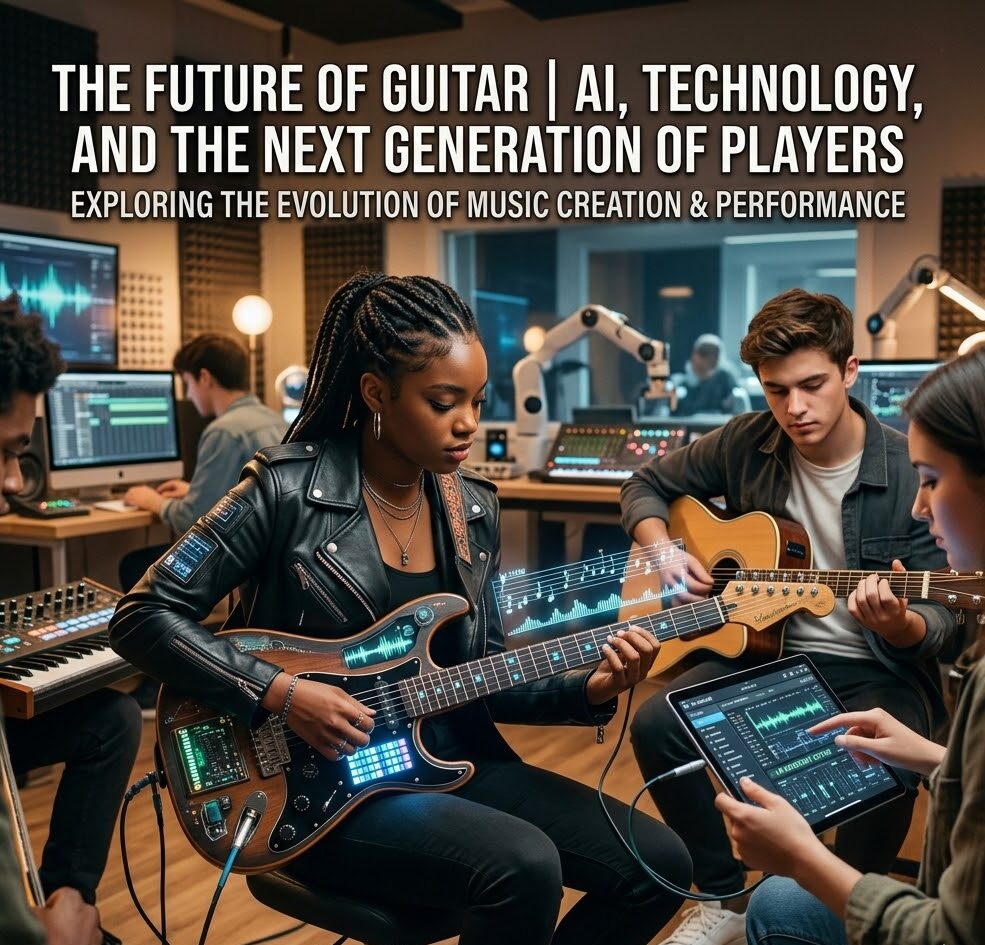
Future of Guitar | AI, Technology, and Next-Generation Players
Future of Guitar | AI, Technology, and Next-Generation Players
For centuries, the guitar has remained one of the most beloved musical instruments in the world. From classical compositions and blues legends to rock anthems and modern pop hits, it has continuously evolved alongside changing musical trends. Today, the future of guitar is being shaped by unprecedented advancements in technology, artificial intelligence, and digital innovation. Yet, despite its rich history, the instrument is entering one of the most transformative periods it has ever experienced, redefining how musicians learn, create, perform, and connect with audiences.
Artificial intelligence, smart technology, digital learning platforms, and advanced manufacturing techniques are reshaping how people learn, play, create, and experience music. What once required years of traditional instruction can now be accelerated through intelligent software and interactive tools. Meanwhile, new generations of players are approaching the instrument with fresh expectations, blending creativity with technology in ways that were unimaginable just a decade ago.
As innovation continues to accelerate, the future of the guitar is not about replacing musicians. Instead, it is about expanding possibilities, lowering barriers, and creating new opportunities for artistic expression. The next generation of guitarists will likely have access to tools that make learning easier, creativity more accessible, and performance more immersive than ever before.
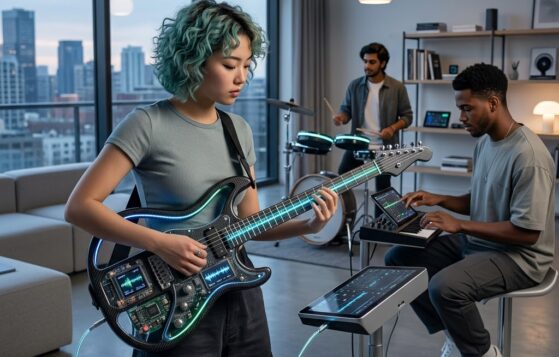
The Future of Guitar Learning Through AI-Powered Education
Learning the guitar has traditionally required patience, discipline, and consistent guidance from teachers or instructional materials. While those fundamentals remain important, artificial intelligence is transforming the educational journey.
Modern learning platforms can already analyze a student’s playing in real time. Rather than simply presenting lessons, AI systems can listen to notes, identify mistakes, monitor timing, and provide instant feedback. This creates a highly personalized learning experience where lessons adapt according to individual strengths and weaknesses.
As these technologies improve, guitar education may become increasingly customized. A beginner struggling with chord transitions could receive targeted exercises specifically designed to address that challenge. Likewise, an intermediate player working on improvisation might receive practice routines tailored to their musical preferences and skill level.
The result is a learning environment that feels more like having a personal coach available at any time. Instead of following a rigid curriculum, students can progress at their own pace while receiving guidance that continuously adapts to their development.
The Future of Guitar with Smart and Connected Instruments
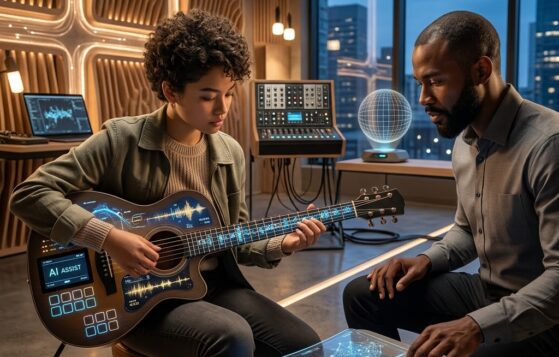
Technology is also changing the instruments themselves. Smart guitars equipped with sensors, Bluetooth connectivity, and integrated learning systems are becoming more sophisticated every year.
These instruments can provide visual guidance for finger placement, track practice sessions, and connect directly to mobile applications. Some models even feature illuminated fretboards that help beginners learn scales, chords, and songs more intuitively.
Beyond education, connected guitars offer valuable insights into playing habits. Musicians can monitor practice consistency, identify recurring mistakes, and measure improvement over time. Such data-driven feedback was once available only through dedicated instructors and careful self-assessment.
As hardware continues to evolve, future guitars may incorporate even more advanced capabilities. Built-in AI assistants could analyze technique during practice sessions, suggest exercises, or recommend songs based on a player’s interests. Consequently, the guitar may become not only an instrument but also an intelligent learning companion.
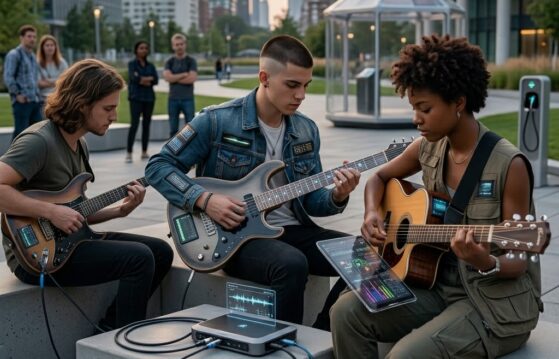
Creativity in the Age of Artificial Intelligence
Perhaps one of the most fascinating developments involves the role of AI in the creative process. Music generation tools are becoming increasingly capable of producing chord progressions, melodies, backing tracks, and arrangement ideas.
For guitarists, these technologies can serve as powerful creative partners. A musician experiencing writer’s block might use AI to generate fresh harmonic ideas or explore unfamiliar musical styles. Rather than replacing creativity, such tools can help spark inspiration and encourage experimentation.
Many artists already use technology to explore new sounds and compositional approaches. AI simply adds another layer to that creative toolkit. By generating possibilities that a player may not have considered, it can open doors to innovative musical directions.
Nevertheless, human emotion, interpretation, and personal experience remain at the heart of meaningful music. Technology can suggest ideas, but it cannot replicate the unique perspective that each musician brings to their art. The future is therefore likely to be defined by collaboration between human creativity and intelligent systems rather than competition between the two.
Virtual Reality and Immersive Practice
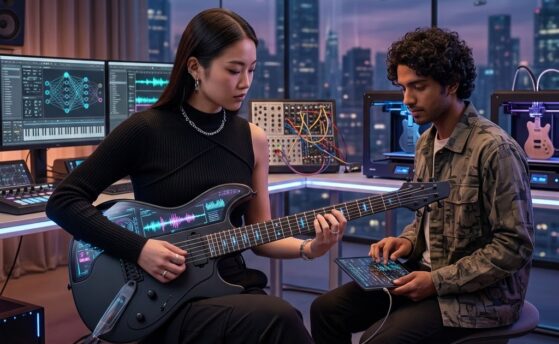
Learning and performing music may soon extend beyond physical environments. Virtual reality and augmented reality technologies are creating new ways for guitarists to engage with their instrument.
Imagine practicing in a virtual concert hall, receiving visual feedback projected directly onto your guitar, or attending interactive lessons with instructors from different parts of the world. These experiences are becoming increasingly realistic as immersive technologies continue to mature.
Augmented reality could also revolutionize instruction by displaying chord diagrams, scale patterns, and performance guidance directly within a player’s field of view. Instead of constantly looking at books, screens, or printed materials, students could learn in a more natural and engaging manner.
Such innovations have the potential to make practice sessions more interactive and enjoyable, particularly for younger learners who have grown up in highly digital environments. As a result, music education may become more accessible and engaging than ever before.
The Future of Guitar Performance and Live Music Experiences
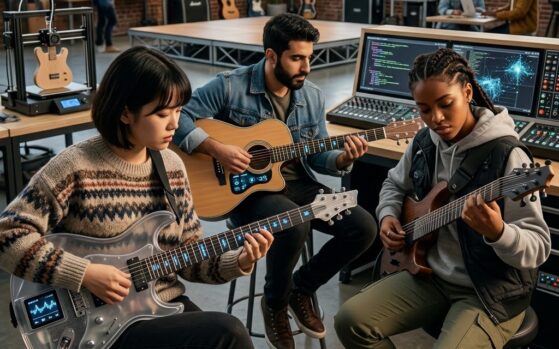
Technology is not only influencing how guitarists learn but also how they perform. Advances in digital signal processing, wireless systems, and intelligent effects are expanding the possibilities of live performance.
Today’s performers already have access to sophisticated modeling technology capable of recreating the sounds of legendary amplifiers and effects units. Looking ahead, AI-powered systems may automatically adjust tones based on the venue, audience size, or musical style being performed.
Live performances themselves could become increasingly interactive. Audience members might influence visual effects, song arrangements, or even certain musical elements through digital platforms. Meanwhile, hybrid performances combining physical stages with virtual experiences may allow artists to connect with global audiences in entirely new ways.
Although technology can enhance the performance experience, audiences will continue to value authenticity and emotional connection. The excitement of watching a guitarist deliver a passionate performance remains something that technology can support but never fully replace.
The Future of Guitar Manufacturing and Sustainability
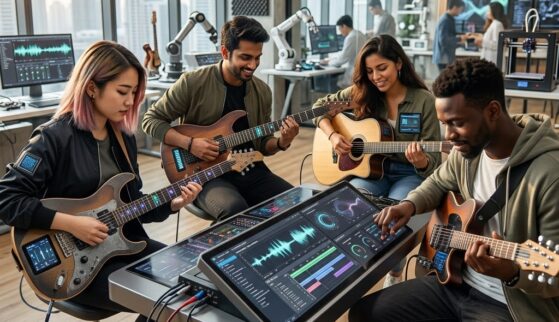
Environmental concerns are influencing nearly every industry, and guitar manufacturing is no exception. Traditional tonewoods have become increasingly difficult to source sustainably, prompting manufacturers to explore alternative materials and production methods.
Innovative companies are experimenting with recycled materials, engineered woods, carbon fiber, and other sustainable solutions. Improvements in manufacturing technology are enabling these materials to achieve impressive acoustic and structural performance.
At the same time, digital design tools allow manufacturers to create instruments with greater precision and consistency. This combination of sustainability and technological advancement may help ensure that future generations can continue enjoying high-quality instruments without placing excessive pressure on natural resources.
Consequently, the guitars of tomorrow may look somewhat different from those of the past while still delivering the sound, feel, and expressive potential that players expect.
A New Generation of Guitarists
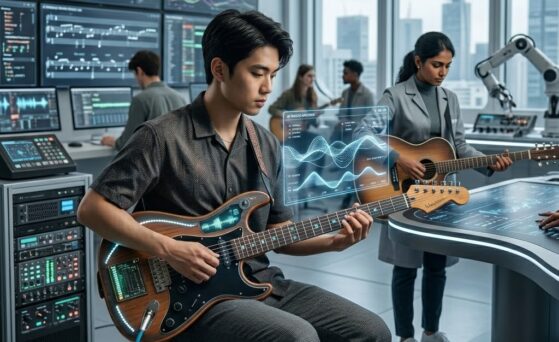
The next generation of guitar players is growing up in a world where information is available instantly. Lessons, performances, tutorials, and collaborations are accessible from virtually anywhere with an internet connection.
This unprecedented access is shaping a generation of musicians who are highly adaptable and stylistically diverse. Young guitarists are often exposed to multiple genres simultaneously, blending influences from rock, jazz, classical, pop, electronic music, and global traditions.
Social media platforms have further accelerated this trend by allowing musicians to share ideas, showcase talent, and connect with audiences worldwide. A guitarist can now build a following, collaborate internationally, and launch a musical career without relying exclusively on traditional industry pathways.
Because of these opportunities, future players may become more versatile than any generation before them. Their approach to music is likely to be characterized by openness, experimentation, and a willingness to embrace emerging technologies.
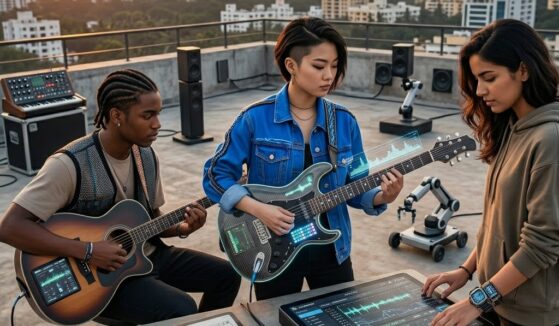
The Future of Guitar | Balancing Tradition and Innovation
Despite all the technological advancements on the horizon, the essence of guitar playing remains unchanged. The instrument continues to provide a direct connection between human emotion and musical expression.
Innovation will undoubtedly reshape the ways people learn, create, and perform. However, the fundamental appeal of the guitar lies in its ability to communicate feelings that words often cannot express. That emotional connection has sustained its popularity for centuries and will continue to do so in the future.
Rather than replacing traditional musicianship, technology is expanding the possibilities available to players. Those who embrace both craftsmanship and innovation may find themselves at the forefront of a new era in music.
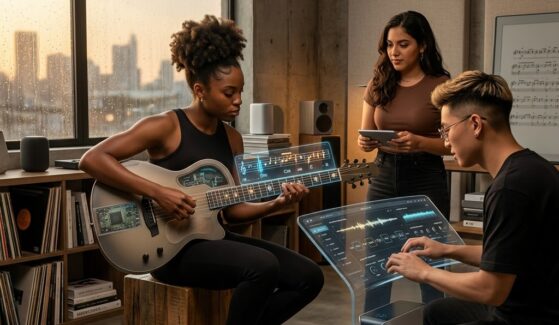
Conclusion | What the Future of Guitar Really Looks Like
The future of the guitar is both exciting and full of possibilities. Artificial intelligence is transforming education, smart instruments are redefining practice, and immersive technologies are creating entirely new musical experiences. At the same time, sustainable manufacturing and global connectivity are ensuring that the instrument continues to evolve in meaningful ways.
While the tools may change, the heart of guitar playing remains deeply human. Passion, creativity, and self-expression will always be the driving forces behind great music. As technology and artistry continue to converge, the next generation of guitarists will have more opportunities than ever to learn, innovate, and inspire. This evolution is also making quality music education more accessible, with platforms offering Guitar Lessons Online helping aspiring musicians learn from anywhere in the world.
The guitar has successfully adapted through countless musical eras. Given its remarkable history and enduring appeal, there is every reason to believe that its most exciting chapter may still be ahead. As music education and technology continue to advance, institutions like The Mystic Keys remain committed to nurturing the musicians of tomorrow while embracing the innovations that are shaping the future of guitar playing.
For more information and exciting resources about learning music, visit our website at The Mystic Keys. For more music content and exciting offers follow us on
Facebook, Instagram, YouTube, LinkedIn, Twitter, Pinterest, and Threads.