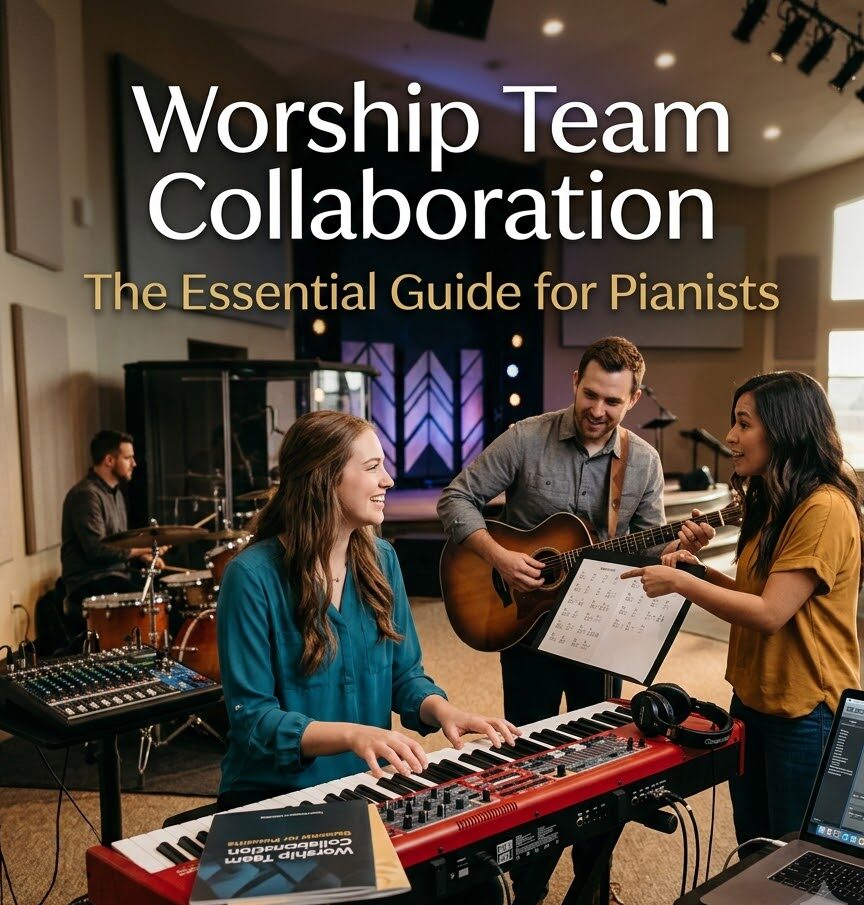
Worship Team Collaboration | The Essential Guide for Pianists
In a worship setting, the piano is much more than a musical instrument. It is a voice that supports prayer, creates atmosphere, strengthens melodies, and helps the congregation connect emotionally with the song. Through effective worship team collaboration, a pianist becomes an essential part of a larger musical expression, working alongside vocalists and other musicians to create a meaningful worship experience. The role of a worship pianist is not simply to play the right chords at the right time, but to listen, respond, and contribute in a way that supports the entire team and enhances the message of the music.
Unlike a solo performance, worship music depends on collaboration. Every instrument, every vocal line, and every musical decision contributes to the overall expression of worship. The pianist must learn to listen, adapt, communicate, and serve the collective vision of the team.
True worship collaboration begins when musicians understand that the goal is not individual excellence but unity. A beautifully played piano part can become even more powerful when it blends naturally with the worship leader, the singers, the drummer, the guitarist, and the entire team.
For pianists, learning how to collaborate effectively can transform the way they approach worship music. It develops musical maturity, strengthens teamwork, and allows the piano to become a tool of connection rather than just performance.
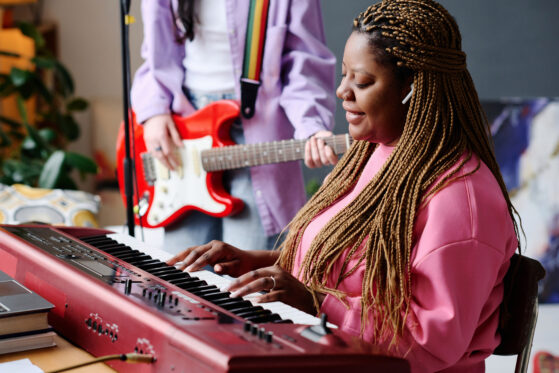
Understanding the Purpose of Worship Team Collaboration
A worship team is built around a shared purpose. While musicians bring different skills, backgrounds, and musical styles, everyone comes together to support one central message. The pianist plays an essential role in helping that message come alive through sound.
Collaboration means understanding when to lead and when to support. There are moments when the piano may carry the emotional direction of a song, creating a gentle introduction or building intensity during a powerful section. At other times, the best musical choice may be to play fewer notes, allowing the vocals or another instrument to take focus.
Many developing pianists struggle with the idea that playing less can actually create a stronger impact. However, worship music often requires sensitivity rather than complexity. The ability to leave space, follow the dynamics of the team, and respond to the moment is a sign of a mature worship musician.
A worship pianist should always remember that every musical decision affects the entire team. The question is not only, “What can I play?” but also, “What does this moment need?”

Worship Team Collaboration Through Listening
One of the most important skills for any worship pianist is active listening. Great collaboration begins when musicians learn to hear beyond their own instrument.
During a worship set, the pianist must pay attention to the worship leader’s vocal phrasing, the drummer’s groove, the guitarist’s patterns, and the overall energy of the song. Listening helps the pianist understand where the music is moving and how their playing can complement the direction.
A common mistake among musicians is focusing primarily on their own performance. They may concentrate on remembering chords, playing accurate transitions, or executing impressive techniques while missing the musical conversation happening around them.
A collaborative pianist approaches the worship environment differently. They listen first, respond thoughtfully, and adjust their playing based on what the team needs. This creates a more natural and unified sound.
Developing this skill takes practice. Playing along with worship recordings, rehearsing with other musicians, and intentionally observing different instruments can improve a pianist’s ability to listen and respond.
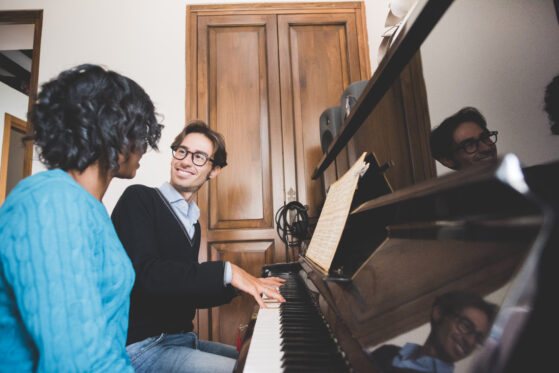
Building Strong Communication Within the Team
Musical communication is just as important as musical ability. A worship team becomes stronger when members openly share ideas, discuss arrangements, and understand each other’s expectations.
Before a rehearsal or worship service, clear communication about song choices, keys, arrangements, and transitions can prevent confusion. A pianist should know whether the team prefers a simple arrangement, a more expressive interpretation, or a specific musical direction.
Non-verbal communication is equally valuable during worship. Eye contact, gestures, and awareness of body language help musicians navigate unexpected moments. A worship leader may repeat a section, slow down the tempo, or move into spontaneous worship without warning. A prepared pianist learns to recognize these signals and respond smoothly.
Good communication also requires humility. Every musician has creative ideas, but collaboration means being open to different perspectives. The strongest teams are not built by everyone trying to prove their own musical ability; they are built by people willing to serve one another.

Supporting the Worship Leader Through Worship Team Collaboration
Technical skill is important, but worship collaboration requires a deeper level of musical awareness. A pianist needs to understand harmony, rhythm, dynamics, and arrangement in a way that supports the entire team.
Knowing chords is only the beginning. A skilled worship pianist understands how different chord voicings affect the atmosphere of a song. They recognize when a fuller sound is appropriate and when a simple progression creates more emotional impact.
Dynamics also play a major role in worship music. A quiet verse may require gentle playing with open spaces, while a powerful chorus may call for stronger chords and increased energy. The ability to shape the emotional journey of a song allows the pianist to contribute meaningfully.
Another important aspect is adaptability. Worship songs may not always follow a fixed structure. Leaders may extend a section, change the arrangement, or move into a spontaneous moment. A flexible pianist can follow these changes without losing connection with the team.

Supporting the Worship Leader Through Music
The relationship between a worship leader and a pianist is one of the most important collaborations within a worship team. The pianist often acts as a musical bridge, helping translate the leader’s vision into sound.
Supporting the worship leader does not mean simply following instructions. It means understanding the emotional direction of the song and enhancing it through thoughtful musical choices.
A pianist can support the worship leader by creating strong introductions, providing smooth transitions, and reinforcing important moments. Sometimes a simple musical phrase behind a vocal line can add more impact than a complicated arrangement.
The pianist should also be aware of vocal needs. Playing too loudly, using crowded voicings, or filling every empty space can make it difficult for singers to communicate effectively. A supportive musician understands that the voice carries the message, while the instruments help strengthen it.

Rehearsal | Where Worship Team Collaboration and Unity Are Built
Rehearsals are not just about learning songs; they are opportunities to build trust and develop a shared musical language. A worship team that rehearses well is better prepared to respond naturally during a service.
For pianists, preparation before rehearsal makes a significant difference. Knowing the songs, understanding the chord progressions, and practicing transitions allows more time to focus on teamwork rather than simply trying to remember notes.
During rehearsals, musicians should focus on more than their individual parts. Listening to the complete arrangement helps pianists understand how their playing fits into the bigger picture.
A productive rehearsal environment is created when team members give and receive feedback respectfully. Constructive conversations help everyone grow and improve while maintaining a positive atmosphere.

Balancing Creativity and Simplicity in Worship Team Collaboration
Creativity is a wonderful gift for a worship pianist, but creativity must always serve the purpose of the music. The most effective players know how to add beauty without distracting from the worship experience.
A creative pianist may use different chord inversions, melodic movements, textures, and musical ideas to enhance a song. However, these choices should support the emotional message rather than become a display of personal ability.
Sometimes the most powerful musical moment comes from simplicity. A few carefully chosen notes, a gentle pad-like texture, or a quiet response to the melody can create an atmosphere that deeply connects with listeners.
Finding this balance requires experience and sensitivity. The goal is not to remove creativity but to use creativity with wisdom.

Growing as a Team-Oriented Worship Pianist
Becoming a better collaborator is a lifelong journey. Musical skills can always improve, but the heart behind the music is equally important.
A team-oriented pianist continues learning, accepts feedback, and remains open to growth. They understand that every rehearsal, every service, and every interaction with other musicians is an opportunity to develop.
Studying different worship styles, learning from experienced musicians, and practicing with other instruments can expand a pianist’s understanding of teamwork. Growth happens when musicians move beyond individual improvement and focus on becoming better contributors to the group.
A great worship pianist is not remembered only for their technique. They are remembered for their ability to strengthen the team, support others, and help create meaningful moments through music.

Conclusion | Playing Together With Purpose
Worship team collaboration is built on more than musical ability. It requires listening, communication, humility, preparation, and a willingness to serve the larger purpose of the music. The Mystic Keys encourages pianists to develop not only their technique but also their understanding of worship expression and teamwork.
For pianists, the journey is not simply about mastering chords or improving skills. It is about becoming part of a musical conversation where every instrument and voice has a meaningful role. Learning through resources like Worship Piano & Singing Lessons Online can help musicians grow in both confidence and sensitivity.
When a worship team collaborates with unity, the result is more than a well-arranged song—it becomes an experience that creates connection, encourages participation, and supports a deeper expression of worship. The most impactful worship pianists understand that their greatest contribution is not how much they play, but how beautifully they help the entire team come together.
For more information and exciting resources about learning music, visit our website at The Mystic Keys. For more music content and exciting offers follow us on
Facebook, Instagram, YouTube, LinkedIn, Twitter, Pinterest, and Threads.