Worship Repetition | Creating Powerful Worship Moments
Worship is often described as a moment of connection between the heart and God. It can happen through a quiet prayer, a familiar hymn, a spontaneous song, or a congregation singing together with one voice. Yet, some of the most powerful worship moments are created through something that may initially seem simple: repetition.
A worship song may repeat the same chorus several times. A congregation may sing a particular line again and again. A worship leader may return to a single phrase, allowing the music to become quieter, stronger, or more reflective with each repetition. Far from being unnecessary or predictable, this repetition can create space for people to move beyond simply singing words and begin experiencing them.
When repetition is intentional, it can help worshippers slow down, reflect more deeply, and engage emotionally and spiritually with what they are singing. The words may remain the same, but the experience surrounding those words can change completely.

What Does Repetition Mean in Worship?
Repetition in worship refers to intentionally returning to a particular lyric, phrase, prayer, musical section, or spiritual theme during a worship experience. It can be as simple as repeating a short declaration of faith or returning to the chorus of a worship song several times.
The purpose, however, goes beyond simply saying or singing the same thing repeatedly. Meaningful repetition gives people an opportunity to absorb the message instead of immediately moving on to the next line. A phrase that may initially sound like lyrics can gradually become a personal declaration.
For example, a worship song might repeat a simple statement about God’s faithfulness. During the first repetition, the congregation may simply sing along. By the third or fourth time, those words can begin to feel more personal, especially when people connect them with their own experiences, struggles, hopes, or prayers.
That gradual shift is what makes repetition such a valuable part of worship.
Why Does Repetition Feel So Powerful?
The human mind naturally responds to patterns. Repeated sounds, melodies, rhythms, and words become increasingly familiar, allowing people to participate without having to concentrate constantly on what comes next.
In worship, this familiarity can create a sense of comfort and freedom. Once a congregation knows a particular phrase or musical section, attention can move away from learning the song and toward experiencing it.
A repeated lyric can also give people time to process its meaning. Instead of encountering an idea once and immediately moving to another thought, worshippers are given room to sit with it. The words have time to settle, and their emotional significance can become stronger with each repetition.
This is where repetition begins to transform from a musical technique into a meaningful worship experience.

Repetition Helps Move Worship from Words to Meaning
The first time a worshipper hears a lyric, the focus may naturally be on understanding the words. Repetition allows that initial understanding to develop into personal reflection.
Consider a simple line such as “You are faithful.” At first, it may simply be another lyric in a song. As the line returns, someone might begin thinking about a difficult season they have come through. Another person may remember a prayer that was answered. Someone else might be holding onto those words because they are currently facing uncertainty.
The lyric remains the same, but its meaning can become different for each person.
With every repetition, the words have another opportunity to connect with personal experience. That is one reason a short worship refrain can sometimes leave a stronger impression than an entire song filled with different lyrics.

The Role of Music in Creating Repeated Worship Moments
Repetition becomes particularly powerful when words and music work together. A repeated lyric accompanied by a familiar chord progression can create a musical environment that feels increasingly immersive.
Musicians often use dynamics to shape this experience. A worship leader may begin with a gentle arrangement before gradually adding harmonies, instruments, or vocal layers. The same phrase might then be repeated while the musical intensity changes around it.
Because the words remain familiar, listeners can focus on the emotional and spiritual movement created by the music. A quiet repetition can encourage reflection, while a stronger musical build can create a sense of collective expression.
This balance between familiarity and musical development prevents repetition from feeling completely static. The words may stay the same, but the experience surrounding them can continue to evolve.

Repetition Creates Space for Participation
Another important quality of repetition is that it allows more people to participate comfortably.
Not everyone processes worship in the same way. Some people may immediately sing along, while others may listen quietly before joining in. A repeated chorus gives those who are less familiar with the song time to become comfortable with the words and melody.
As familiarity grows, participation often becomes more natural. The congregation no longer needs to rely entirely on the worship leader to guide every line. People can sing confidently because they already know what comes next.
That shared familiarity can create a powerful sense of togetherness. Hundreds of individual voices begin expressing the same words, turning repetition into a collective musical and spiritual experience.

Repetition Can Deepen Emotional Connection
Music already has a strong connection with memory and emotion. When a meaningful lyric is repeated, that connection can become even more pronounced.
A worshipper might begin a song feeling distracted, tired, or emotionally distant. As the same phrase returns, the repetition can provide a steady point of focus. Gradually, attention may shift away from outside distractions and toward the message being expressed.
The emotional response does not necessarily come from the repetition alone. Rather, repetition creates the space for emotions to emerge naturally. It gives people permission to remain with a thought instead of feeling pressured to move quickly from one section of a song to another.
That slower process can make a worship moment feel personal rather than simply performative.

When Repetition Becomes More Than a Musical Technique
There is an important distinction between repetition with purpose and repetition simply for the sake of filling time.
Powerful worship repetition usually has intention behind it. A phrase is repeated because it carries a message worth dwelling on. A chorus returns because the congregation needs time to respond. A musical section continues because the moment is developing rather than because the song needs to be extended.
When repetition has meaning, listeners can sense that there is a reason for returning to the same words.
On the other hand, excessive repetition without musical, lyrical, or emotional purpose can eventually feel predictable. The effectiveness of repetition depends on context, timing, arrangement, and authenticity.
The goal is therefore not to repeat as much as possible. The goal is to repeat what is meaningful enough to be experienced more than once.

How Worship Leaders Can Use Repetition Effectively
Worship leaders have an important role in recognizing when repetition is helping the congregation connect with a song and when it is simply becoming repetitive.
A thoughtful worship leader listens to the room, observes the congregation, and allows the moment to develop naturally. Sometimes a chorus needs to be repeated because people are engaging deeply with it. At other times, moving forward may be more appropriate.
Musical arrangement can also make a significant difference. Changing the instrumentation, vocal harmony, dynamics, or tempo slightly can give a repeated section a fresh emotional perspective without changing its central message.
Most importantly, repetition should support the purpose of worship rather than becoming a performance technique. The focus remains on the message and the worship experience, not on creating an impressive musical moment.

Repetition and the Power of Simplicity
Modern music can sometimes place enormous emphasis on complexity. Intricate melodies, sophisticated arrangements, and constantly changing sections can certainly create beautiful music. Worship, however, does not always need complexity to be powerful.
A simple phrase repeated sincerely can sometimes communicate more than a complicated lyric that disappears after one hearing.
Simplicity gives people something they can remember. It provides a musical and lyrical anchor that can remain with them long after the service or worship session has ended.
That lingering quality is particularly important. A powerful worship moment does not necessarily end when the final note stops. Sometimes, the words continue to return in someone’s mind later that day, during a difficult moment, or while they are praying alone.

Why Repeated Worship Can Stay With Us
Memory plays a major role in why certain worship moments remain unforgettable. Repeated melodies and lyrics can become closely associated with specific emotions, places, people, or experiences.
A person may hear a particular worship song months later and immediately remember where they were when they first sang it. The melody becomes connected to the emotional experience surrounding it.
This is one of the beautiful qualities of repetition. It does not only strengthen familiarity in the moment; it can also help create lasting musical and emotional memories.
A repeated line may eventually become something a person carries beyond the worship setting.

Repetition as a Form of Collective Expression
Perhaps one of the most remarkable aspects of worship repetition is how it can bring individuals together.
When an entire congregation repeats the same words, individual voices become part of a larger expression. Differences in age, background, musical ability, and personal experience become less important for that moment.
Everyone knows the phrase. Everyone can participate.
The resulting sound can feel powerful precisely because it is simple. There is no need for every person to sing perfectly. What matters is the shared expression behind the words.
In this way, repetition can transform a song from something people are listening to into something they are collectively experiencing.

Creating Powerful Worship Moments Through Repetition
Powerful worship moments are shaped by lyrics, melody, harmony, rhythm, dynamics, and participation. Repetition connects these elements, giving worshippers space to reflect, respond, and connect more deeply with the message.
For worship musicians, understanding repetition also helps create meaningful musical moments — knowing when to repeat a phrase, build intensity, or create space can make worship feel intentional and expressive.
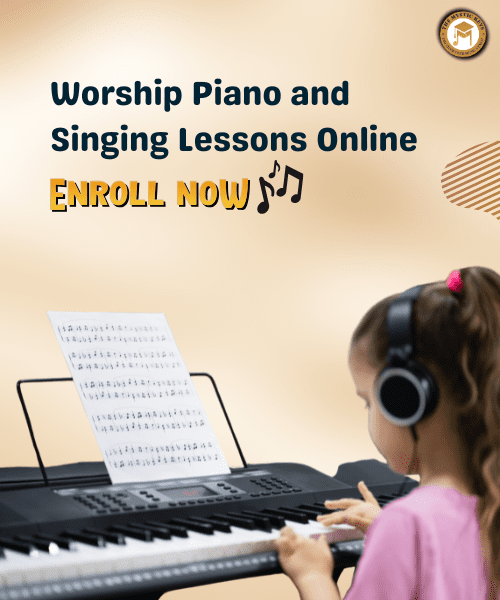
At The Mystic Keys, our Worship Piano & Singing Lessons Online help students develop these skills through personalized one-on-one guidance, from chords and accompaniment to vocal expression and worship song techniques.
Ultimately, repetition allows people to remain present. The words may stay the same, but their meaning can deepen with every return. The phrase stays familiar while the experience continues to grow.
For more information and exciting resources about learning music, visit our website at The Mystic Keys. For more music content and exciting offers follow us on
Facebook, Instagram, YouTube, LinkedIn, Twitter, Pinterest, and Threads.