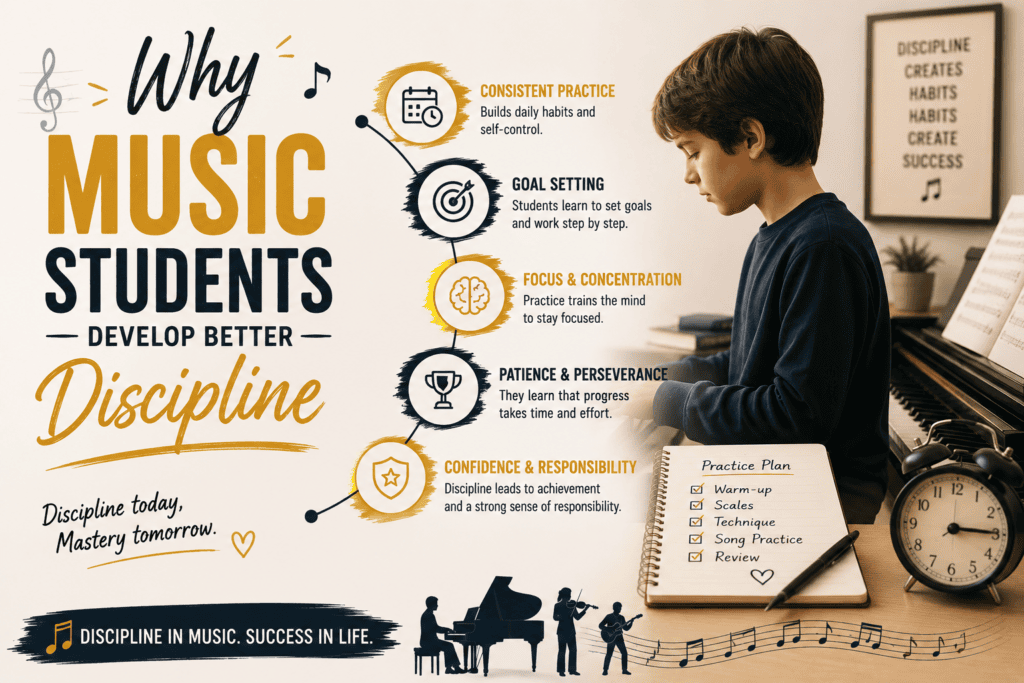
Why Music Students Develop Better Discipline
Learning a musical instrument is often described as a creative activity, but behind every confident performance is a significant amount of discipline. Students need to practice regularly, repeat difficult passages, correct mistakes, remember instructions, and continue working even when progress feels slow. Over time, these habits help students develop better discipline and understand how consistent effort produces meaningful results.
Unlike activities where improvement may happen simply through participation, musical development requires active practice. A student cannot expect to master a difficult piano passage, guitar chord progression, violin technique, drum rhythm, or vocal exercise simply by attending lessons. Progress happens between lessons, when students return to their instruments and apply what they have learned.
This is one of the reasons music education can teach valuable habits beyond music itself. Students learn to manage their time, set goals, concentrate on specific tasks, accept correction, and remain patient with long-term progress. These skills can influence how they approach other areas of learning and personal development.
Music Requires Consistent Practice

One of the first lessons music teaches is that improvement depends on consistency.
A student may have an excellent lesson one week, but if they do not practice afterward, much of what they learned can become difficult to remember.
Regular practice keeps skills active and allows new techniques to become more comfortable.
Small Habits Create Strong Discipline
Students do not need to practice for several hours every day to develop discipline.
A short, focused daily routine can be highly effective.
Even fifteen or twenty minutes of intentional practice teaches students to make time for an important goal instead of waiting until they feel motivated.
Over time, practice becomes part of their routine.
Music Teaches Students to Follow a Routine
Discipline becomes easier when an activity has a consistent place in the day.
Students who practice at approximately the same time each day begin to develop a predictable routine.
They learn that progress does not depend entirely on whether they feel like practicing.
Routine Reduces Procrastination
A student who has a clear practice routine spends less time deciding when to begin.
The activity becomes a normal part of the day, much like homework, exercise, or other responsibilities.
This simple habit can teach students how routines support long-term goals.
Learning Music Requires Patience

Musical progress is rarely immediate.
A student may spend several days working on a difficult chord change or musical passage before it becomes comfortable.
This teaches an important lesson: not every worthwhile result happens quickly.
Students Learn to Stay with Difficult Tasks
When a student continues practicing despite temporary frustration, they develop patience.
They begin to understand that difficulty is not necessarily a reason to stop.
This mindset can be valuable in academic learning, sports, creative work, and many other areas of life.
Music Teaches Goal Setting
Learning an instrument naturally creates goals.
A beginner might want to learn a simple song.
Later, they may want to perform in front of others, complete an examination, master a difficult technique, or learn a more advanced piece.
Each goal gives practice a clear purpose.
Small Goals Make Progress Measurable
Instead of focusing only on a large goal, students can break it into smaller steps.
They might learn four measures today, improve a chord transition tomorrow, and work on dynamics later in the week.
This teaches students how large goals can be achieved through manageable actions.
Practice Develops Concentration

Music requires focused attention.
Students must listen carefully, read instructions, coordinate physical movements, maintain rhythm, and notice mistakes.
This makes practice an excellent exercise in concentration.
Focused Practice Builds Mental Discipline
A student cannot improve effectively while constantly checking a phone, talking, or allowing attention to wander.
Musical practice encourages students to remain engaged with one task for a specific period.
Over time, they can become more comfortable with sustained concentration.
Mistakes Teach Responsibility
Music provides immediate feedback.
If a student plays the wrong note, loses the rhythm, or forgets a chord, the result is immediately noticeable.
Instead of hiding mistakes, students learn to identify them and work on correcting them.
Correction Develop Better Discipline Is Part of Progress
A teacher may point out a technical problem or suggest a different way to practice.
Students who accept feedback learn that correction is not criticism—it is part of improvement.
This develops a healthy attitude toward learning.
Music Teaches Students to Be Accountable
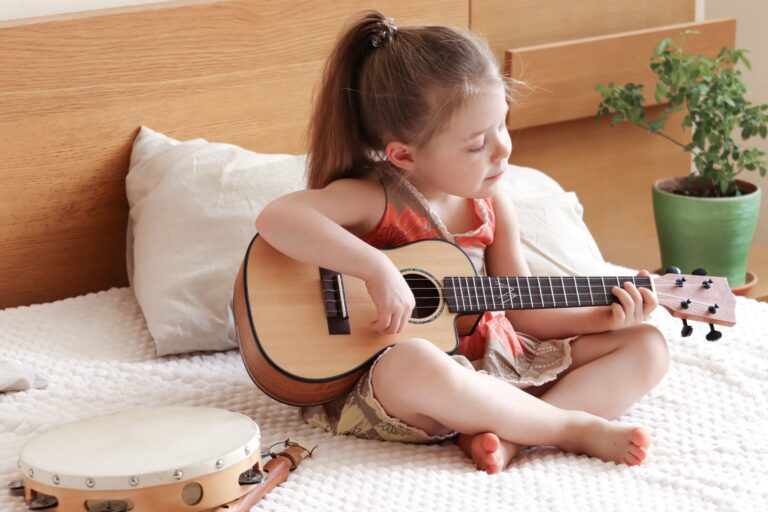
A music lesson provides guidance, but the student is responsible for what happens between lessons.
If an assignment is not practiced, the next lesson may reveal that immediately.
This creates a natural connection between effort and results.
Students See the Consequences of Their Choices
When students practice consistently, they often return to lessons with noticeable improvement.
When they do not practice, they may find that the same problems remain.
This direct feedback can help students understand personal responsibility.
Repetition Builds Discipline
Musicians repeat movements many times.
A scale may be practiced repeatedly.
A difficult chord transition may require dozens of repetitions.
A rhythm pattern may need to be played until it becomes automatic.
At first, repetition can feel boring.
Students Learn That Repetition Has a Purpose
Over time, students begin to recognize that repetition is how skills become reliable.
They learn that mastery is often the result of doing simple things correctly many times.
This is one of the strongest lessons music can teach about discipline.
Music Teaches Delayed Gratification

Many musical goals require patience.
A student may want to perform an advanced song but first needs to learn scales, chords, rhythm, technique, and simpler repertoire.
They cannot always skip directly to the final result.
Effort Comes Before Achievement
Music teaches students that some rewards become more meaningful because they required sustained effort.
Finally performing a difficult piece can feel especially satisfying because the student remembers how challenging it was at the beginning.
This experience reinforces the value of persistence.
Performing Builds Self-Control
Performance requires preparation and concentration.
A student may feel nervous before playing in front of others, but they must learn to remain focused on the music.
They need to continue even if they make a small mistake.
Students Learn to Manage Pressure
Performances provide opportunities to practice staying calm, recovering from mistakes, and maintaining focus.
These experiences can strengthen emotional control and confidence.
Music Teaches Time Management
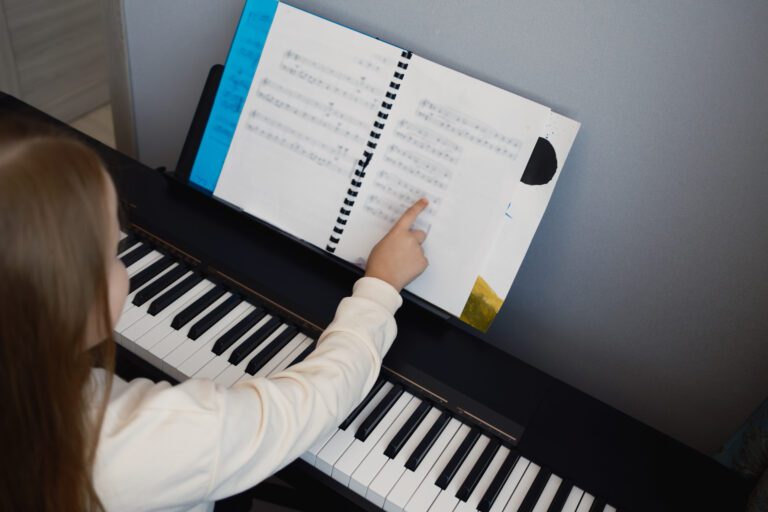
Students often have multiple responsibilities.
Schoolwork, family activities, sports, hobbies, and music lessons all compete for time.
Learning an instrument encourages students to think about when practice can fit into their schedule.
Practice Teaches Prioritization
A student may discover that twenty minutes of focused practice after school is more effective than repeatedly postponing practice until late at night.
This helps them understand how planning and prioritization can make busy schedules more manageable.
Discipline Does Not Mean Practicing Without Enjoyment
Discipline is sometimes misunderstood as forcing yourself to do something unpleasant every day.
Music shows that discipline and enjoyment can exist together.
Students can practice songs they love while still working on technical exercises.
Enjoyment Makes Discipline Sustainable
When students genuinely enjoy music, they are more likely to maintain their practice habits.
A good teacher can also balance structured learning with songs and activities that keep students motivated.
The goal is to build a routine that is both productive and enjoyable.
Teachers Help Develop Musical Discipline

A supportive teacher can make a significant difference in how students approach practice.
Teachers provide structure, explain techniques, set appropriate goals, and offer feedback.
They can also adjust the learning process when a student becomes frustrated or loses motivation.
Guidance Creates Accountability
Knowing that a teacher will review their progress can encourage students to practice more consistently.
At the same time, good teachers help students gradually become independent learners who understand how to organize their own practice.
Music Encourages Long-Term Thinking
Musical development is measured in months and years rather than days.
A student may not notice a major difference after one practice session, but the results of consistent work can become obvious after several months.
Students Learn to Think Beyond Immediate Results
This long-term perspective is valuable because many important goals in life require sustained effort.
Music provides students with a practical example of how small actions accumulate over time.
Discipline Becomes a Musical Habit
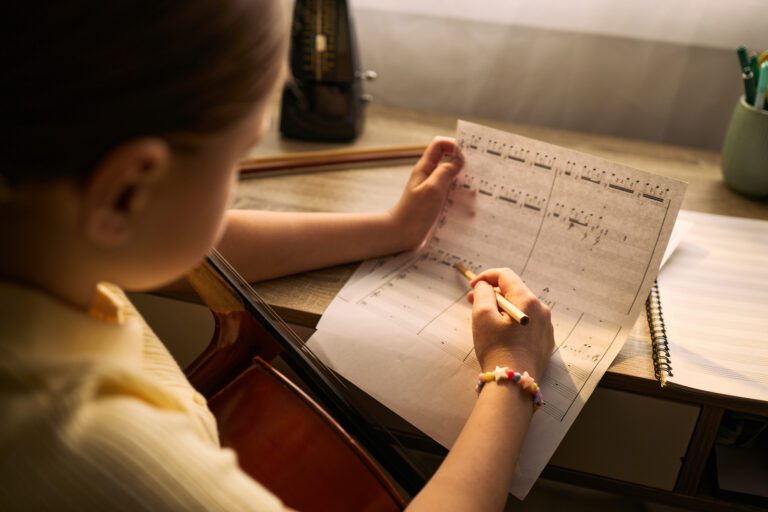
Eventually, many students stop thinking of practice as a task they have to force themselves to complete.
They simply pick up their instrument because it has become part of their routine.
This is one of the strongest forms of discipline: turning a positive behavior into a habit.
Habits Reduce Dependence on Motivation
Motivation can change from day to day.
Habits provide consistency even when motivation is low.
Music helps students experience this difference firsthand.
How Parents Can Encourage Musical Discipline
Parents can support healthy practice habits without turning music into a source of pressure.
A consistent practice time, a quiet space, encouragement, and recognition of progress can all help.
Focus on Effort Rather Than Perfection
Instead of asking only whether a child played perfectly, parents can ask what they learned or what they improved.
Praising consistent effort helps children understand that progress comes from practice rather than natural ability alone.
Conclusion
Developing better discipline through music happens naturally through the everyday requirements of learning an instrument. Regular practice, repetition, concentration, goal setting, patience, accountability, and performance preparation all teach students how consistent effort can lead to meaningful results. These lessons extend far beyond music because they help students understand how habits, persistence, and focused effort contribute to long-term achievement.
The goal is not to make students practice endlessly. It is to help them develop a healthy relationship with practice and learning. When students learn to set realistic goals, work through challenges, accept feedback, and celebrate gradual progress, they develop better discipline in a way that feels purposeful rather than forced.
Music therefore becomes more than an extracurricular activity. It becomes an opportunity to learn how to commit to something, work through difficulty, manage time, and continue improving. Those habits can remain valuable long after a student has finished a particular song or moved on to a new musical challenge.
At The Mystic Keys, our personalized Music Lessons Online help students develop strong musical foundations alongside effective practice habits, concentration, confidence, and discipline. With one-on-one guidance from experienced teachers, students can learn at their own pace while building the consistent habits needed for long-term musical growth.
For more information and exciting resources about learning music, visit our website at The Mystic Keys. For more music content and exciting offers follow us on
Facebook, Instagram, YouTube, LinkedIn, Twitter, Pinterest, and Threads.