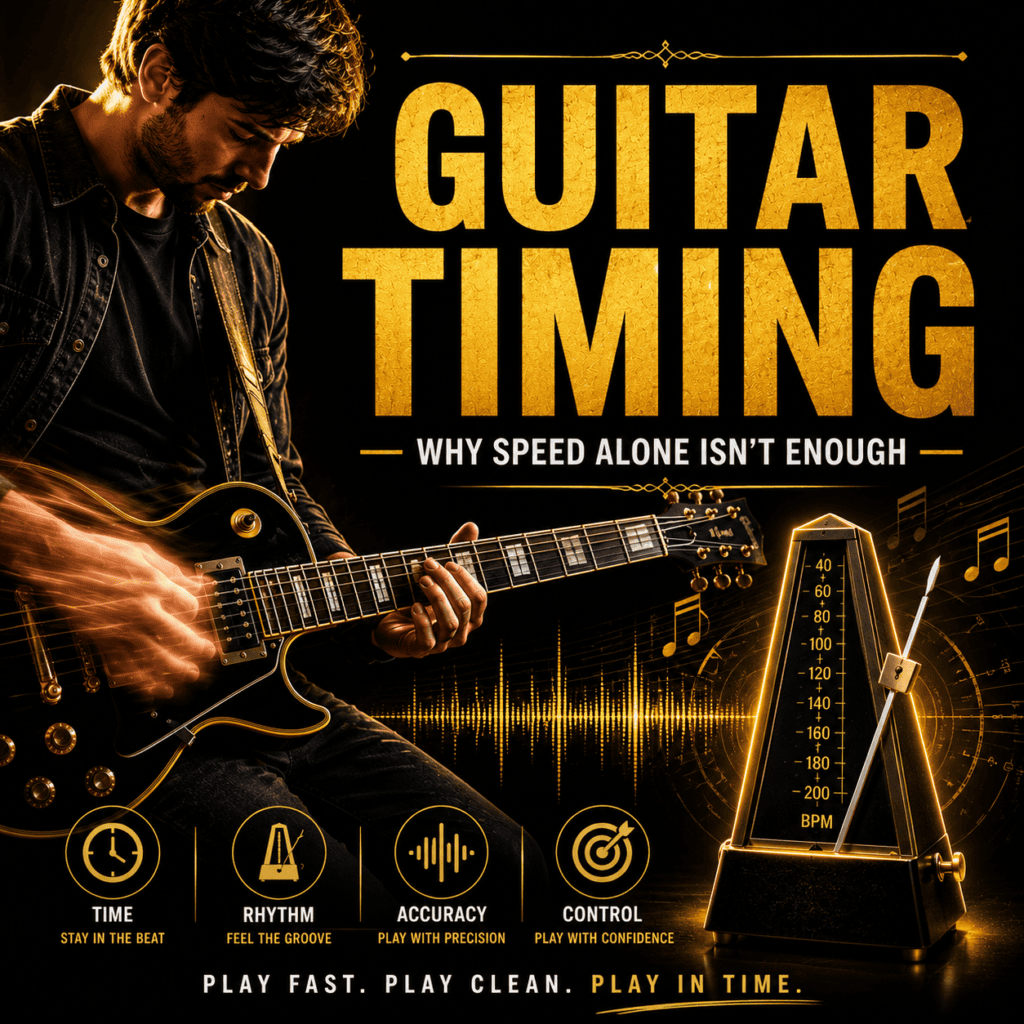
Why Many Guitarists Have Great Speed but Poor Guitar Timing
Many guitarists dream of playing lightning-fast solos and impressive riffs. While speed can be exciting, it doesn’t always make someone a great musician. One of the biggest reasons players struggle is guitar timing. You may be able to play fast, but if your notes don’t land at the right moment, your performance will sound rushed, uneven, or out of sync.
Developing strong guitar timing is what separates a technically skilled guitarist from a truly musical one. Whether you’re a beginner or an advanced player, improving your timing will instantly make your playing sound cleaner, tighter, and more professional.
In this blog, you’ll learn why guitar timing is more important than speed and discover practical ways to improve it.
What Is Guitar Timing?
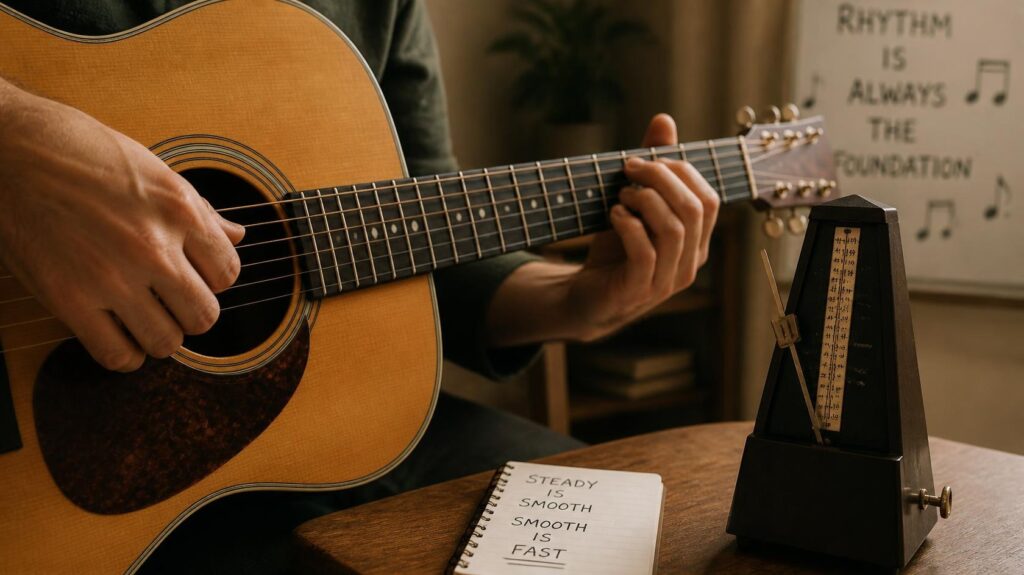
Guitar timing is the ability to play every note, chord, or rhythm at the correct moment within a beat. Good timing means staying perfectly in sync with the tempo of the music.
A guitarist with excellent timing can:
- Stay locked in with the drummer or backing track.
- Play rhythm guitar consistently.
- Perform solos with confidence.
- Make simple songs sound polished and professional.
Without solid timing, even the fastest guitarist can sound messy and inconsistent.
Why Rhythm Matters More Than Speed
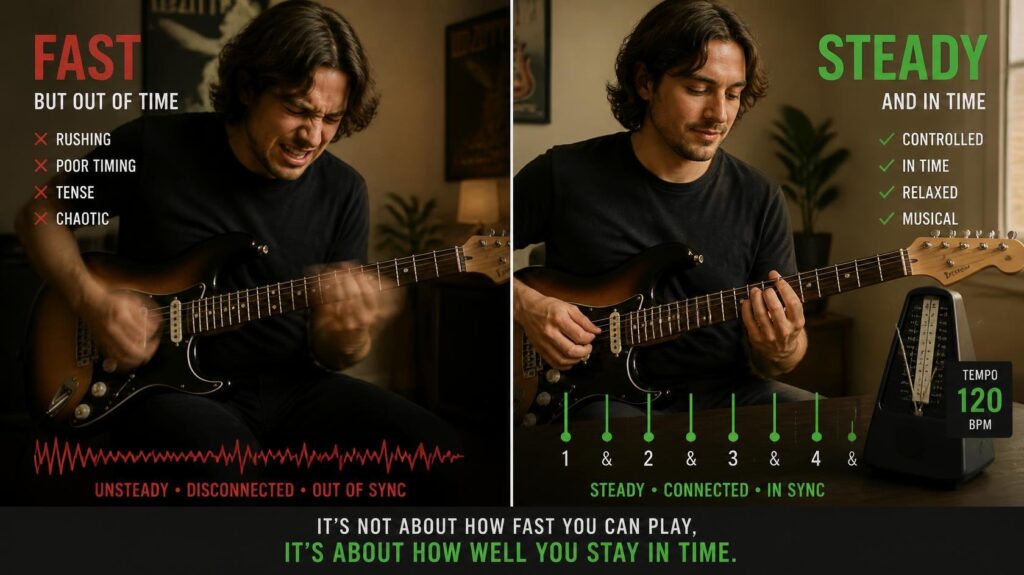
Many guitarists spend hours practicing scales and increasing their speed but forget to develop their rhythm. In reality, listeners notice rhythm before they notice speed.
Great guitar timing helps you:
- Play confidently with other musicians.
- Maintain a steady groove.
- Improve your musical expression.
- Perform accurately during live shows.
- Learn new songs more easily.
Fast playing only sounds impressive when every note falls exactly where it should.
Common Mistakes That Affect Guitar Timing
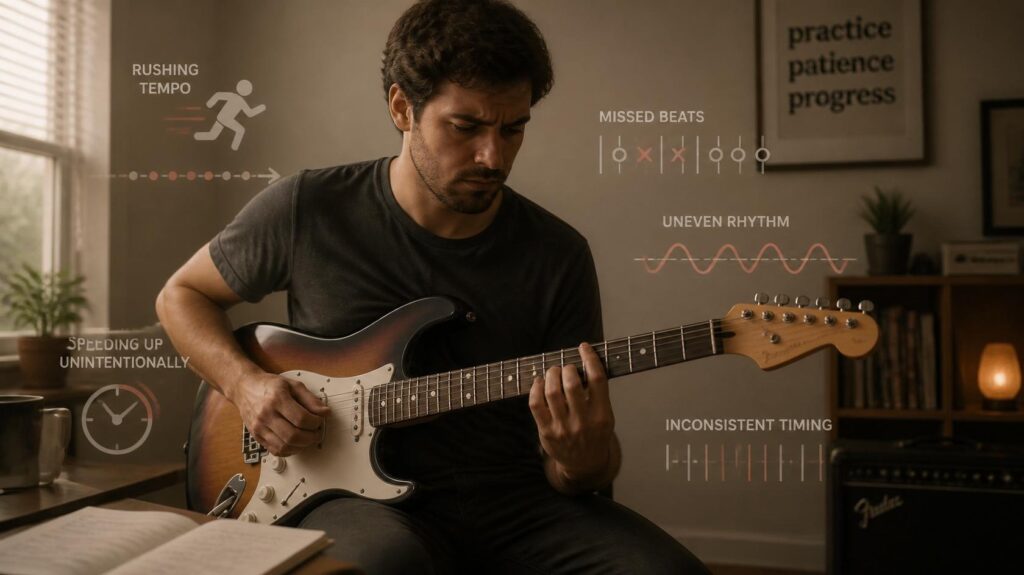
If your playing feels inconsistent, one or more of these habits may be affecting your guitar timing.
1. Practicing Without a Metronome
One of the biggest mistakes guitarists make is practicing without a metronome. While your fingers may become faster, your rhythm doesn’t improve.
A metronome helps you:
- Build consistency.
- Develop an internal sense of rhythm.
- Keep every note evenly spaced.
Even ten minutes of daily metronome practice can dramatically improve your guitar timing.
2. Chasing Speed Too Early
Many players increase the tempo before mastering slower speeds.
If you can’t play cleanly at 70 BPM, you’ll struggle even more at 140 BPM.
Always remember:
Accuracy builds speed—not the other way around.
3. Ignoring Rhythm Guitar
Lead guitar often gets all the attention, but rhythm guitar is where strong guitar timing is developed.
Practicing rhythm improves:
- Beat awareness
- Groove
- Chord transitions
- Musical consistency
Many professional guitarists became excellent rhythm players before mastering solos.
4. Never Counting the Beat
Many beginners rely only on muscle memory.
Instead, count while playing:
1 & 2 & 3 & 4 &
Counting helps you understand exactly where each note belongs and strengthens your rhythmic accuracy.
5. Avoiding Difficult Rhythms
Triplets, syncopation, rests, and sixteenth-note patterns may seem challenging, but avoiding them slows your progress.
Practicing different rhythms strengthens your overall guitar timing and prepares you for more advanced music.
How to Improve Your Timing
Improving guitar timing doesn’t happen overnight, but consistent practice makes a huge difference.
Practice With a Metronome Every Day
Start at a comfortable tempo and don’t increase the speed until every note sounds clean.
Slow practice develops precision, while rushed practice creates mistakes.
Play Along With Backing Tracks
Backing tracks simulate real musical situations and help you stay in time with drums and bass.
This improves your listening skills and makes practice more enjoyable.
Record Your Practice Sessions
Recording yourself is one of the fastest ways to improve guitar timing.
When you listen back, you’ll notice:
- Rushing
- Dragging
- Uneven rhythms
- Missed beats
Small corrections during each practice session lead to steady improvement.
Clap Rhythms Before Playing
Professional musicians often clap rhythmic patterns before picking up their instruments.
This simple exercise develops your internal pulse and helps you feel the rhythm naturally.
Increase Speed Gradually
Don’t jump from 80 BPM to 120 BPM.
Instead, increase your tempo by only 5 BPM after playing perfectly several times.
This method builds both speed and accuracy.
Exercises for Better Rhythm and Accuracy
Play one note for every metronome click.
Focus on consistency instead of speed.
2. Alternate Picking Exercise
Practice alternate picking slowly while keeping every note evenly spaced.
This develops both technique and guitar timing.
Practice different strumming patterns using:
- Quarter notes
- Eighth notes
- Sixteenth notes
- Syncopated rhythms
Strong rhythm skills lead to better overall guitar playing.
4. Play With Drum Loops
Drum loops feel more musical than a metronome and help you lock into a groove.
They’re excellent for improving guitar timing in real-world playing situations.
5. Jam With Other Musicians
Nothing improves timing faster than playing with others.
You’ll naturally learn to listen, adjust, and stay in sync with the group.
How The Mystic Keys Helps You Master Guitar Timing
At The Mystic Keys, we believe that becoming a great guitarist is about much more than playing fast. Our one-on-one Guitar Lessons Online focus on building a strong musical foundation, including guitar timing, rhythm, technique, and expression.
Our experienced instructors guide students through structured exercises, metronome practice, rhythm training, and real-song applications that help develop confident and accurate playing. Whether you’re learning acoustic or electric guitar, our personalized lessons are designed to help you improve steadily and enjoy every step of your musical journey.
every step of your musical journey.
Speed can grab attention, but guitar timing is what truly makes a guitarist sound professional. A player with excellent timing will always sound more musical than someone who simply plays fast.
The good news is that guitar timing is a skill anyone can develop. By practicing with a metronome, playing along with backing tracks, recording yourself, and focusing on rhythm before speed, you’ll build the confidence and precision needed to perform at your best.
Remember, every great guitarist started by mastering the basics. Improve your guitar timing, and you’ll notice a remarkable difference in every song you play.
Intersted in learning music with us? Register now
For more information and exciting resources about learning music, visit our website at The Mystic Keys. For more music content and exciting offers follow us on
Facebook, Instagram, YouTube, LinkedIn, Twitter, Pinterest, and Threads.