
Waka Waka | The Story Behind Shakira's World Cup Anthem
Few songs have transcended the boundaries of sport to become global cultural phenomena quite like Waka Waka (This Time for Africa). More than the official anthem of the 2010 FIFA World Cup, it became a celebration of unity, resilience, and joy that still echoes through stadiums, celebrations, and playlists worldwide.
Released over a decade ago, the song remains one of the most iconic World Cup anthems ever created. Even today, its opening beats instantly bring back memories of football fever, colorful celebrations, and unforgettable sporting moments.
What made it so special? How did it become one of the most successful football anthems in history? The story behind this global hit is even more fascinating than many people realize.

A Historic World Cup Deserved a Historic Anthem
he 2010 FIFA World Cup was unlike any tournament before it. For the first time, football’s biggest event was held in Africa, with South Africa welcoming fans from around the world. More than just a sporting event, it marked a historic moment that celebrated diversity, inclusion, and the unifying power of football.
To match the occasion, FIFA wanted an official anthem that reflected its significance. The song needed to capture Africa’s vibrant spirit while appealing to a global audience. It also had to inspire players, energize fans, and create lasting memories.
That challenge was ultimately entrusted to Colombian superstar Shakira.

Why Shakira Was the Perfect Choice for Waka Waka
By 2010, Shakira had established herself as one of the world’s biggest pop stars. Her music blended Latin rhythms, pop melodies, rock influences, and world music, helping her connect with audiences across the globe.
Beyond her chart-topping success, she was known for energetic performances filled with dance, passion, and cultural influences. These qualities made her a natural choice for a tournament that celebrated global unity.
Instead of creating a typical pop anthem, Shakira wanted something more authentic. She aimed to honor Africa’s rich musical heritage while ensuring the song reflected the spirit of the continent hosting the World Cup.
That vision shaped the anthem from beginning to end.

The African Roots Behind Waka Waka
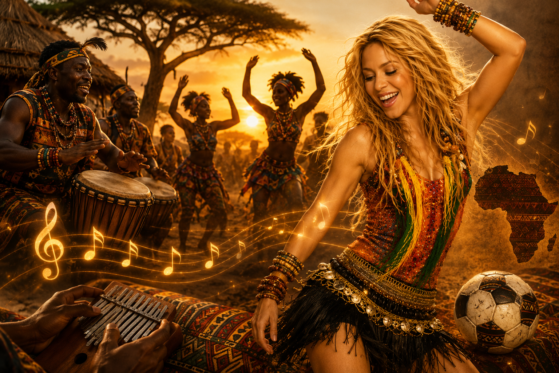
One of the most fascinating facts about Waka Waka is that its melody was inspired by “Zangaléwa,” a popular song released in the 1980s by the Cameroonian group Golden Sounds.
Originally performed by former military musicians, Zangaléwa became a hit across Africa thanks to its lively rhythm and memorable chorus. Over time, it became an important part of the continent’s musical culture.
Recognizing its significance, Shakira and her team worked with the original creators to legally adapt elements of the song. This allowed the iconic chorus to reach a global audience while honoring its African roots.
What Does “Waka Waka” Actually Mean?
Many fans enthusiastically sing along to the chorus without ever knowing what the phrase actually means.
It comes from expressions used by soldiers in parts of Central Africa and is often interpreted as “Do it,” “Keep going,” or “Move forward.” In the song, it serves as a powerful message to face challenges with determination and confidence.
That uplifting meaning perfectly matches the spirit of the World Cup. Every match is built on perseverance, teamwork, courage, and the belief that victory is possible until the final whistle.
As a result, the lyrics resonated not only with footballers but also with people striving to achieve their own goals.
Waka Waka and the Collaboration That Celebrated Africa
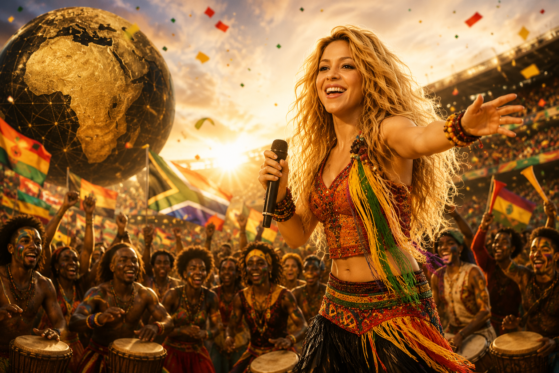
Another reason the song felt authentic was Shakira’s collaboration with South African band Freshlyground.
Freshlyground brought distinctive African musical textures, traditional rhythms, and local artistic identity into the production. Their contribution ensured that the anthem represented more than international pop—it genuinely reflected the culture of the tournament’s host nation.
Throughout the song, African percussion, vibrant instrumentation, and energetic vocals blend seamlessly with Shakira’s signature style. Instead of competing with one another, these musical influences complement each other beautifully.
The result was a sound that felt both globally accessible and proudly African.
The Music Video That Captured the Spirit of Football
The official music video played an enormous role in the song’s worldwide success.
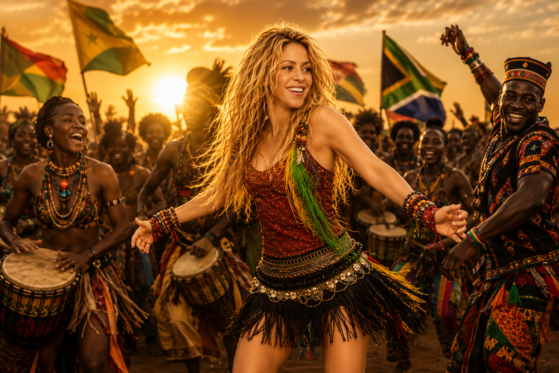
Rather than focusing solely on Shakira, the video showcased football players, passionate supporters, children, dancers, and communities coming together through sport. Bright colors, joyful celebrations, and traditional African dance styles filled nearly every frame.
Clips featuring legendary football stars were woven together with scenes of ordinary fans, reinforcing the idea that football belongs to everyone, regardless of nationality or background.
As millions watched the video online, its message became increasingly clear: football is more than a competition—it is a shared global language.

How Waka Waka United Fans Across the Globe
Every World Cup has an official anthem, but only a few remain popular long after the tournament ends.
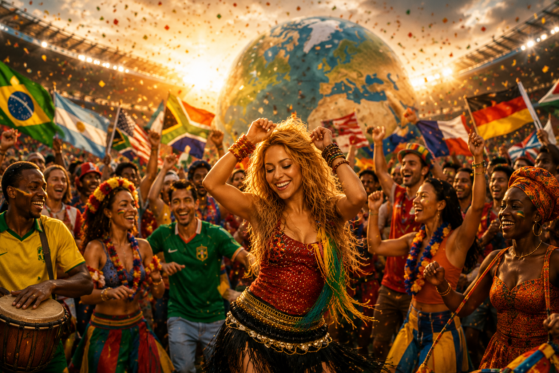
Waka Waka became one of those rare songs. It moved beyond football to become a global pop culture phenomenon. Schools performed it, dance groups created routines, fitness classes embraced it, and celebrations around the world echoed with its infectious rhythm.
Wherever football fans gathered, the anthem became a symbol of joy and togetherness.
Its lasting appeal came from its uplifting spirit. Even people who weren’t football fans found themselves singing along to its catchy, energetic melody.
Breaking Records Beyond the Football Field
Commercially, Waka Waka exceeded nearly every expectation.
The single topped charts in numerous countries, accumulated billions of views across digital platforms, and became one of the highest-selling World Cup songs ever released. Over time, it evolved into one of Shakira’s defining hits, standing alongside classics such as Hips Don’t Lie and Whenever, Wherever.
Unlike many event-specific songs that fade once the competition ends, this song continued to thrive for years afterward. Each new football tournament introduced another generation of listeners to the anthem, ensuring its popularity never truly disappeared.
Its longevity is perhaps the greatest measure of its success.

Waka Waka Was Not Without Controversy
Despite its widespread popularity, Waka Waka was not without criticism.
Some observers questioned whether a Colombian artist should perform the anthem for Africa’s first World Cup. Others expressed concerns about the adaptation of Zangaléwa and the broader conversation surrounding cultural representation.
However, supporters argued that the project celebrated African music rather than replacing it. Since the original creators were officially credited and involved in the adaptation process, many viewed the collaboration as a respectful tribute that brought African musical traditions to an unprecedented global audience.
The discussions highlighted the complexities of cultural exchange while also demonstrating how music can spark meaningful conversations beyond entertainment.

Why Waka Waka Still Feels Timeless
Many World Cup songs become nostalgic memories tied to a single tournament.
Waka Waka, however, continues to feel fresh even years later. Its uplifting message, vibrant rhythm, and unforgettable chorus make it just as enjoyable today as it was in 2010.
Part of its lasting appeal comes from its emotional connection. For countless fans, the song recalls childhood memories, family gatherings, thrilling football matches, and the excitement of watching nations compete on the world’s biggest stage.
Even listeners who never experienced the 2010 tournament firsthand often discover the anthem through social media, streaming platforms, or sporting events, proving that great music can transcend generations.

More Than a Football Song
At its heart, the anthem is about much more than football.
It celebrates courage, unity across cultures, and the joy of coming together for a shared purpose. While the World Cup provided the stage, its message remains universal and timeless.
Every chorus inspires listeners to believe in themselves, keep moving forward, and embrace life’s biggest moments with confidence. Those themes resonate just as strongly beyond the stadium.
Perhaps that is the real reason it continues to endure. More than the soundtrack of a single tournament, it has become a symbol of hope, celebration, and togetherness for millions around the world.

Final Thoughts
More than fifteen years after its release, Waka Waka (This Time for Africa) remains the gold standard for World Cup anthems. It successfully blended African musical heritage with international pop, delivered an uplifting message that resonated across cultures, and created memories that still bring smiles to football fans everywhere.
Some songs entertain for a season. Others define an era. this song achieved something even rarer—it became part of sporting history itself, proving that when music and football come together in perfect harmony, the result can inspire the entire world.
At The Mystic Keys, we believe great music tells stories that transcend generations. Waka Waka is a perfect example of how one song can unite cultures, ignite emotions, and create memories that last a lifetime.
For more information and exciting resources about learning music, visit our website at The Mystic Keys. For more music content and exciting offers follow us on
Facebook, Instagram, YouTube, LinkedIn, Twitter, Pinterest, and Threads.