


Vocal Ensemble | How Singing Together Improves Vocal Skills
Singing is often viewed as an individual art, but bringing different voices together creates a unique musical experience. A vocal ensemble allows singers to explore harmonies, improve their technique, and develop a deeper understanding of music.
Beyond creating beautiful melodies, singing together strengthens essential vocal skills such as pitch accuracy, rhythm, breath control, and expression. It also encourages confidence, teamwork, and active listening, helping individuals grow as musicians.
Whether performing in a small vocal group or a choir, ensemble singing offers valuable opportunities to learn, practise, and improve. Let’s explore how singing together can enhance individual vocal abilities.

What Is a Vocal Ensemble?
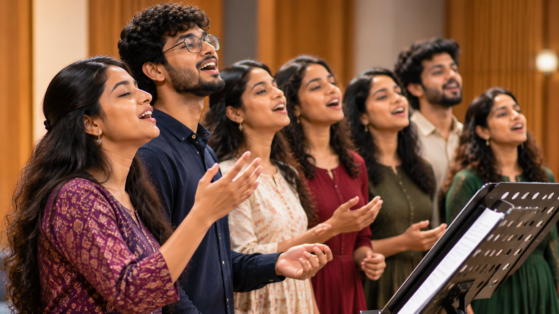
A vocal ensemble is a group of singers who perform together, combining different vocal ranges and musical parts to create a balanced sound. Depending on the composition, singers may perform the same melody in unison or different notes in harmony.
These groups often include soprano, alto, tenor, and bass voices. Each singer contributes a distinct part while working towards a common musical goal.
This experience teaches vocalists to understand their individual roles and recognise how their voices complement others. As a result, they develop better musical awareness and coordination.
How Singing Together Strengthens Pitch Accuracy
Pitch accuracy is one of the foundations of good singing. It involves recognising musical notes and reproducing them correctly without going flat or sharp.
In a vocal ensemble, singers must maintain their assigned notes while listening to other vocal parts. For instance, an alto singer must confidently follow a lower harmony even when the soprano melody is more prominent.
Regular practice helps vocalists recognise musical intervals, identify pitch inconsistencies, and maintain accurate notes. Consequently, they become more confident and controlled singers.

Developing Better Listening Skills and Musical Awareness
Good singing involves more than producing the right notes. Listening carefully and responding to the music around you are equally important.
During rehearsals, ensemble singers learn to balance their own voices with others. They become more attentive to different melodies, harmonies, musical changes, and dynamics.
This active listening improves musical awareness and helps singers understand how individual vocal parts contribute to the complete composition. Over time, they become more responsive and expressive performers.
How a Vocal Ensemble Improves Vocal Harmony and Blend
One of the most rewarding aspects of ensemble singing is learning to create beautiful harmonies. Combining different notes adds depth, richness, and emotion to a musical composition.
However, achieving a well-blended sound requires singers to balance their volume, tone, and pronunciation. A naturally powerful vocalist may need to adjust their volume to complement softer voices.
Through regular rehearsals, singers learn when to bring out their voices and when to blend with others. This develops greater vocal control and flexibility while creating a more unified performance.
Building Stronger Rhythm and Timing
Rhythm and timing are essential for keeping a musical performance coordinated. Even when singers know their parts well, differences in timing can make an ensemble sound disconnected.
Group singing teaches vocalists to follow a shared musical pulse, begin phrases together, maintain consistent timing, and observe pauses. They also learn to respond to conducting cues and musical transitions.
With practice, these skills improve rhythmic accuracy and help singers perform confidently, even when working with complex arrangements.
How a Vocal Ensemble Enhances Breath Control and Vocal Stamina
Proper breathing helps singers maintain a steady tone, sustain longer phrases, and avoid unnecessary vocal strain.
Ensemble rehearsals provide opportunities to practise sustained notes, longer passages, and coordinated breathing. Singers also learn to recognise appropriate breathing points without interrupting the musical flow.
These exercises gradually improve breath management and vocal endurance, making it easier to maintain consistent vocal quality throughout a performance.

Improving Pronunciation, Diction, and Vocal Expression
Clear pronunciation helps singers communicate the meaning and emotion of a song. In an ensemble, maintaining consistent articulation and phrasing is particularly important for creating a unified sound.
Rehearsing together helps vocalists improve their pronunciation of vowels and consonants while maintaining musical flow. They also explore dynamics, tone, and phrasing to express different emotions.
As a result, singers develop a more expressive style that combines technical accuracy with meaningful musical interpretation.
Increasing Confidence Through Group Performances
Performing in front of an audience can feel intimidating, especially for beginners. A vocal ensemble provides a supportive environment where singers can gradually become comfortable performing with others.
Sharing the performance with fellow vocalists often reduces nervousness and encourages individuals to participate more confidently. Regular rehearsals also familiarise singers with stage arrangements, musical cues, and performance expectations.
This experience can positively influence their confidence during solo performances as well.

Learning Teamwork, Discipline, and Musical Responsibility
A successful vocal ensemble depends on teamwork and commitment. Every singer has a specific role, and each contribution affects the overall performance.
Group rehearsals encourage vocalists to practise their parts, follow instructions, attend sessions consistently, and respect other performers. Working with singers of different experience levels also creates opportunities to observe, share feedback, and learn from one another.
These experiences develop patience, adaptability, and collaboration, qualities that extend beyond music.
Exploring Different Musical Styles and Vocal Techniques
Ensemble singing exposes vocalists to different musical genres, including classical, contemporary, gospel, worship, and traditional music.
Each style introduces unique vocal requirements. Classical compositions may demand controlled tone and careful phrasing, while contemporary arrangements often involve rhythmic precision and expressive delivery.
Similarly, gospel and worship music encourage singers to explore rich harmonies and dynamic expression. This variety develops vocal flexibility and helps individuals become more versatile performers.

Vocal Ensemble Singing and Individual Vocal Development
Although ensemble singing focuses on group performances, its benefits extend to individual vocal development.
Improved pitch awareness, breath control, rhythm, and listening skills can all contribute to better solo performances. Singers also become more conscious of their tone, volume, and expression.
However, group singing should complement individual vocal practice rather than replace it. Dedicated vocal exercises, proper warm-ups, and personalised guidance remain essential for developing healthy singing habits.
Combining individual training with ensemble participation creates a balanced musical learning experience.
How to Make the Most of a Vocal Ensemble Experience
Making the most of ensemble singing requires active participation and a willingness to improve. Practising assigned parts before rehearsals helps singers understand their roles and contribute more confidently.
During sessions, listening carefully, following the conductor, and being receptive to feedback can improve coordination. Proper warm-ups, hydration, and healthy vocal habits are equally important for maintaining vocal quality.
Most importantly, singers should view mistakes as learning opportunities. Every rehearsal offers a chance to refine a technique and strengthen musical understanding.

Conclusion | Growing Together Through the Power of a Vocal Ensemble
A vocal ensemble is much more than a group of people singing together. It is a shared musical experience that encourages individuals to improve their pitch, rhythm, vocal control, and expression.
From developing better listening skills to building confidence and teamwork, ensemble singing supports several aspects of vocal growth. Every voice brings something unique, and combining these individual contributions creates a truly harmonious performance.
At The Mystic Keys, we believe that learning music involves developing individual abilities alongside a deeper appreciation for musical expression. Through personalised, one-on-one online music lessons, learners can strengthen their vocal foundations, explore different singing techniques, and build confidence as performers.
Whether you are just beginning your singing journey or looking to refine your existing abilities, every opportunity to sing, listen, and learn brings you closer to becoming a better vocalist. After all, when voices come together, the result is more than music—it is harmony, connection, and growth.
For more information and exciting resources about learning music, visit our website at The Mystic Keys. For more music content and exciting offers follow us on
Facebook, Instagram, YouTube, LinkedIn, Twitter, Pinterest, and Threads.