
Worship Piano Chords | Understanding Major and Minor Chords
Music has a unique way of expressing emotions that words alone cannot capture. In worship music, every note, melody, and Worship Piano Chords contributes to creating an atmosphere of praise, reflection, and connection.
Among the essential elements of piano playing, chords form the foundation of harmony. They support melodies, establish the mood of a song, and bring musical arrangements to life.
For anyone learning worship piano, understanding major and minor chords is an important step towards playing with confidence and expression. Although these chords may look similar on the keyboard, they create distinctly different musical feelings.
What Are Piano Chords?
A piano chord is a combination of three or more notes played together to create harmony. While individual notes form melodies, chords provide the musical support that gives a song depth and character.
In worship music, the left hand often plays bass notes, while the right hand provides chords that complement the melody. Together, they create a fuller and more balanced sound.
Learning basic chords also makes it easier to accompany worship songs. Instead of memorising every note, pianists can use familiar chord patterns to play different compositions.
Two of the most important chord types to understand are major and minor chords.
Understanding Major Chords | Creating a Bright and Uplifting Sound
Major chords are commonly associated with happiness, hope, joy, and celebration. Their bright quality makes them particularly effective in worship songs that express praise, gratitude, and faith.
A major chord consists of three notes: the root, major third, and perfect fifth. These notes combine to create a stable and harmonious sound.
For example, the C Major chord consists of C, E, and G. When played together, these notes produce the familiar uplifting quality of a major chord.
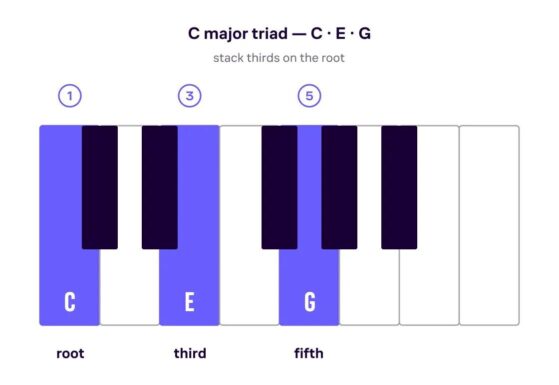
In worship music, major chords frequently appear in uplifting choruses and celebratory sections. Their bright character helps create a sense of musical openness and positivity.
Understanding Minor Chords | Adding Emotion and Depth
While major chords create a bright sound, minor chords introduce a more reflective and emotional quality. They are often associated with longing, tenderness, seriousness, and contemplation.
Like major chords, minor chords also consist of three notes: the root, minor third, and perfect fifth. The difference lies in the middle note, which is lowered by one semitone compared to a major chord.
For example, C Minor consists of C, E-flat, and G. Notice how E-flat replaces the E found in C Major. Although only one note changes, the overall character becomes noticeably different.
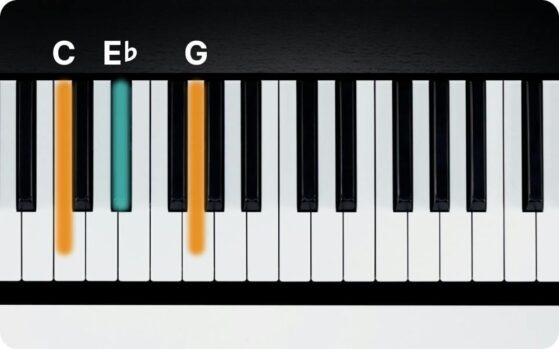
These chords are frequently used in worship arrangements to introduce emotional depth. They work particularly well during gentle verses, reflective passages, and intimate musical moments.

Major vs Minor Chords | Understanding the Difference
Although major and minor chords share the same basic three-note structure, their difference in the third note changes how they sound and feel.
A major chord contains a major third, which is four semitones above the root. In comparison, a minor chord contains a minor third, which is three semitones above the root. Both use a perfect fifth, seven semitones above the root.
Consider C Major and C Minor. C Major uses C–E–G, whereas C Minor uses C–E♭–G. The root and fifth remain unchanged, but the middle note creates a different musical character.
Feature | Major Chord | Minor Chord |
|---|---|---|
Structure | Root + Major 3rd + Perfect 5th | Root + Minor 3rd + Perfect 5th |
Third interval | 4 semitones | 3 semitones |
Example | C–E–G | C–E♭–G |
Musical character | Bright and uplifting | Reflective and emotional |
Understanding this distinction helps pianists recognise chords more easily and make better musical choices while playing worship songs.
How Major and Minor Chords Work Together in Worship Music
One of the beautiful aspects of worship piano is how different chords work together to support the message of a song. A composition can move between joyful, reflective, and powerful musical moments through changes in harmony.
For example, a worship song may begin with gentle minor harmonies during a reflective verse. As the lyrics progress towards a chorus, major chords can introduce a brighter and more uplifting atmosphere.
These transitions help create musical expression without making the arrangement feel forced.
Chord progressions play an important role here. A chord progression is simply a sequence of chords played in a particular order. Many contemporary worship songs use familiar progressions that repeat throughout verses and choruses.
Consider this common progression in the key of C Major:
C – G – Am – F
This progression combines three major chords (C, G, and F) with one minor chord (Am). The combination creates a familiar and expressive sound used in many contemporary worship arrangements.
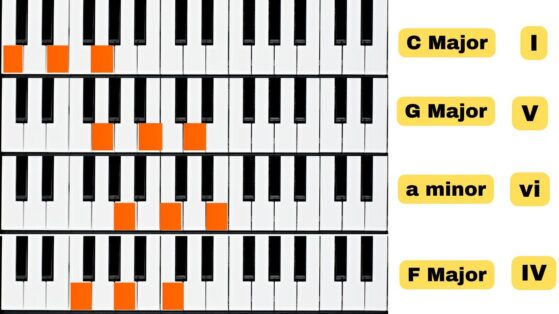
As pianists become more comfortable with these combinations, they can experiment with different inversions, rhythms, and playing styles. Even a simple progression can become an engaging accompaniment with the right technique.

The Role of Chord Inversions in Worship Piano
Once you understand basic major and minor chords, the next step is exploring chord inversions. An inversion changes the order of the notes within a chord without changing the chord itself.
For example, C Major is played in its root position as C–E–G. Its first inversion is E–G–C, while its second inversion is G–C–E.
Chord inversions are especially useful in worship piano because they allow smoother transitions between chords. Instead of moving the hands across large distances, pianists can choose nearby notes and maintain a connected sound.
This technique is particularly valuable when accompanying singers, as smooth chord changes help maintain the flow of the music.
Practical Ways to Practise Major and Minor Chords
Understanding music theory becomes easier when combined with regular keyboard practice. Begin with a few familiar chords and gradually expand your knowledge.
Start by practising C Major and C Minor separately. Pay attention to their individual notes and listen carefully to the difference in their sounds.
Next, practise G Major, F Major, A Minor, and D Minor. Repeating these combinations will improve finger familiarity and help you locate notes more confidently.
Once comfortable with individual chords, try playing the progression C–G–Am–F. Focus on smooth transitions, correct finger positioning, and maintaining an even rhythm.
Listening is equally important. Try identifying major and minor chords in familiar worship songs. Over time, this exercise can improve your musical ear and help you recognise chord changes naturally.
Applying Chord Knowledge to Worship Piano Accompaniment
Playing worship piano involves more than pressing the correct notes. It also requires understanding the song’s mood, following the vocalist, and adjusting musical intensity. For this reason, worship piano chords play an important role in creating expressive accompaniment.
For instance, gentle arrangements can support reflective moments, while fuller chords and stronger dynamics gradually build musical energy. As a result, major and minor chords help musicians create meaningful musical variations.
Moreover, expressive playing does not always require complicated patterns. Even simple chords, when played with the right timing and sensitivity, can make an accompaniment more engaging.
With regular practice, pianists can explore improvisation, create smoother transitions, and ultimately accompany worship songs with greater confidence and expression.
Common Mistakes Beginners Should Avoid
Beginners sometimes focus too much on memorising finger positions without understanding how chords are constructed. Knowing the intervals between notes makes it easier to form chords in different keys.
Another common mistake is playing every chord with the same volume and intensity. Since worship music moves between gentle and powerful sections, paying attention to dynamics is essential.
It is equally important not to rush through chord changes. Practising slowly and accurately helps develop better coordination and builds a strong foundation for advanced techniques.
With consistent practice, these challenges become easier to manage, allowing pianists to play with greater control and confidence.
Conclusion | Build a Strong Foundation for Worship Piano
Major and minor chords are among the most essential building blocks of worship piano. While major chords bring brightness and uplifting energy, minor chords, on the other hand, introduce emotional depth and reflection.
By understanding how these chords are formed and recognising their differences, beginners can gradually develop their musical skills. Additionally, practising common chord progressions helps them accompany worship songs with greater confidence.
As they become more comfortable, pianists can move on to chord inversions, smoother transitions, and expressive dynamics. With consistent practice, they can also explore advanced accompaniment techniques and develop their individual playing style.
Ultimately, learning worship piano is not simply about playing the right notes. Rather, it involves understanding how music works and using that knowledge to bring greater expression to every melody, lyric, and moment of worship.
Learn Worship Piano with The Mystic Keys
Developing strong chord knowledge becomes easier with the right guidance and structured practice. At The Mystic Keys, our Worship Piano & Singing Lessons Online help aspiring musicians build their musical foundation through personalised, one-on-one online lessons.
With guidance from experienced mentors, students can not only strengthen their chord knowledge but also understand worship arrangements and develop effective accompaniment techniques. Moreover, personalised lessons help them apply these skills with greater confidence and musical expression.
So, start building your worship piano skills with The Mystic Keys and bring more musical expression to every note you play!
For more information and exciting resources about learning music, visit our website at The Mystic Keys. For more music content and exciting offers follow us on
Facebook, Instagram, YouTube, LinkedIn, Twitter, Pinterest, and Threads,